#retro

570 bookmarks tagged with #retro · RSS Feed · ← All Tags

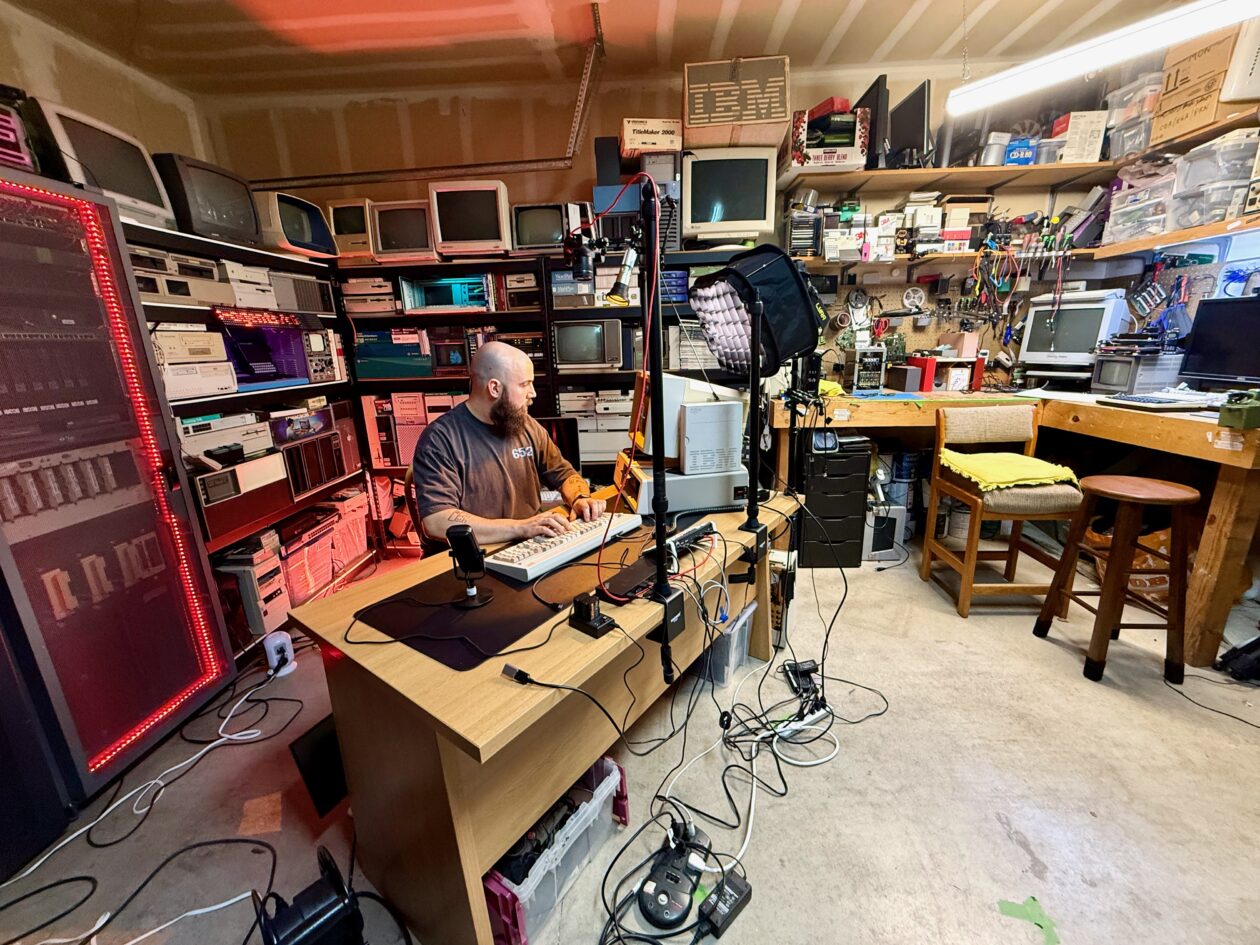
Retro tech meets modern AI: Inside an Amazon developer's garage turned working computer museum – GeekWire

https://www.geekwire.com/2026/retro-tech-meets-modern-ai-inside-an-amazon-developers-garage-turned-working-computer-museum/
“I started getting stuff, and then … it just kind of snowballed to a point I actually had to slow down because I legitimately don’t have space for it anymore,” Mesaros told GeekWire during a recent tour of his retro hardware labyrinth.
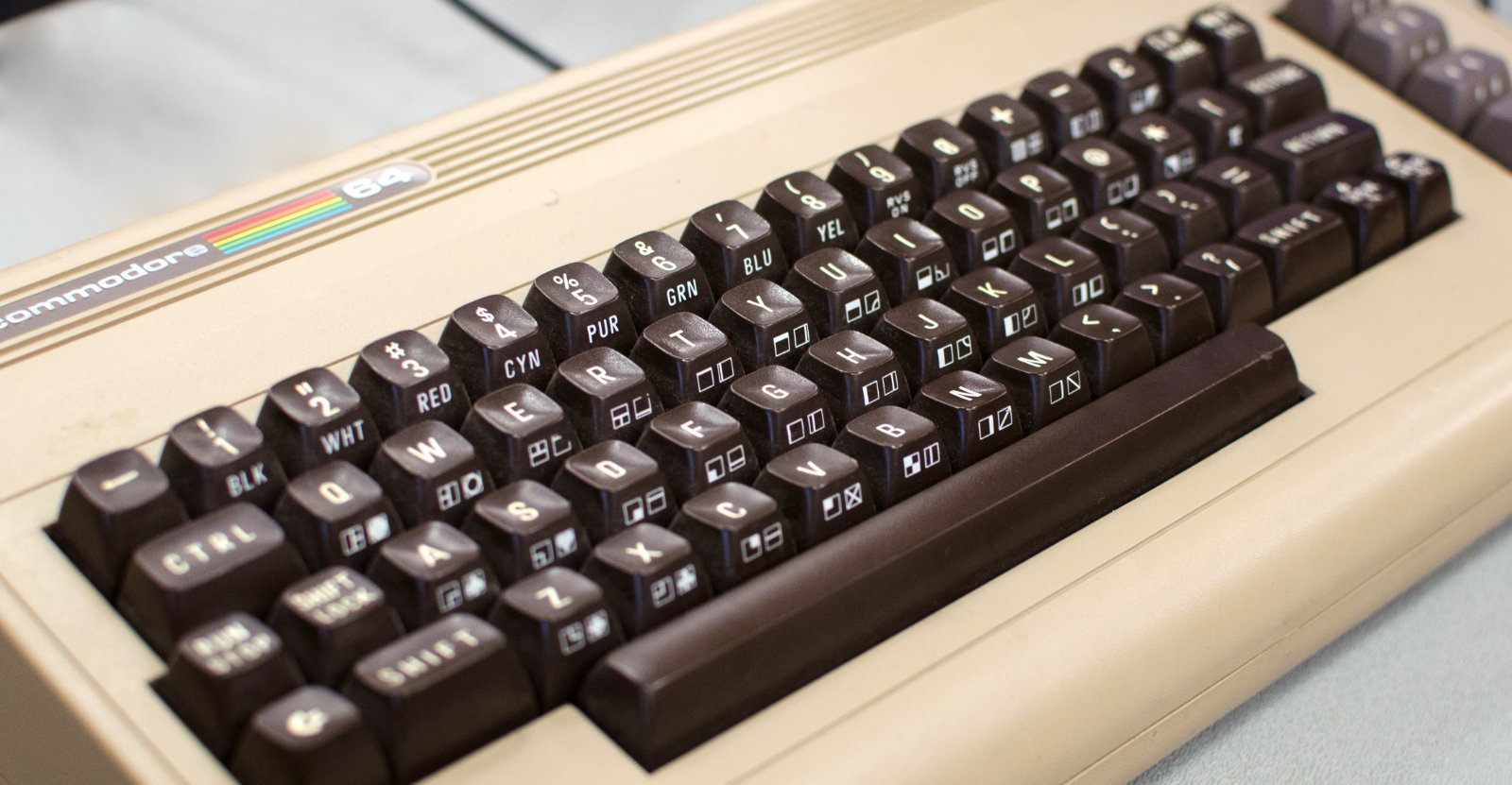
How to install an app on your Commodore 64 - Anil Dash

https://www.anildash.com/2026/10/08/install-an-app-commodore-64/
You will need to ask your mom if you can ride your bike to the mall. The dirt mall is closer, but the magazine stand at the dirt mall doesn’t carry any computer magazines, so you’ll need to take a longer ride to the good mall, where the book store actually has computer magazines. It’s a couple of miles to the mall, so usually you would have a friend come with you, but you called their house and nobody picked up, so today it’s a solo trip.
Mille Bornes

http://codex99.com/design/28.html
The game was a popular alternative to Bridge and, as Parker Brothers stated in the US introduction, became “a French Card Game Craze.” To keep up with demand Dujardin moved production from the basement of his family’s home in Arcachon to a renovated fish factory. In all, more than a million copies were sold in France in the 1950s.
MCU-less teletype terminal using Alphacom printer | Hackaday.io

https://hackaday.io/project/206469-mcu-less-teletype-terminal-using-alphacom-printer
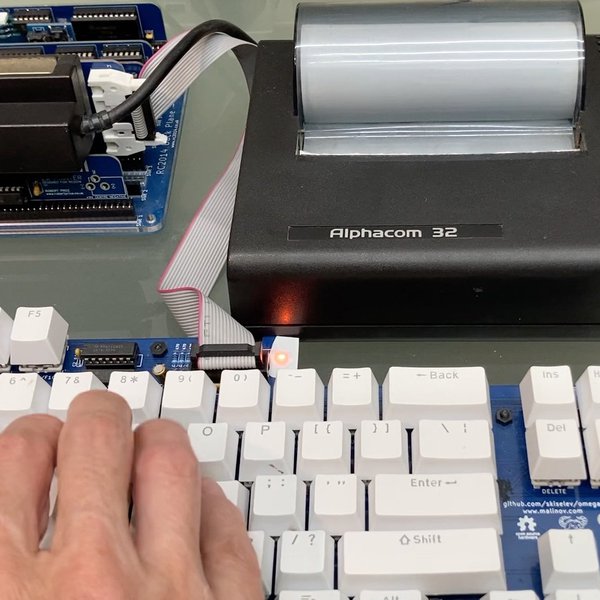
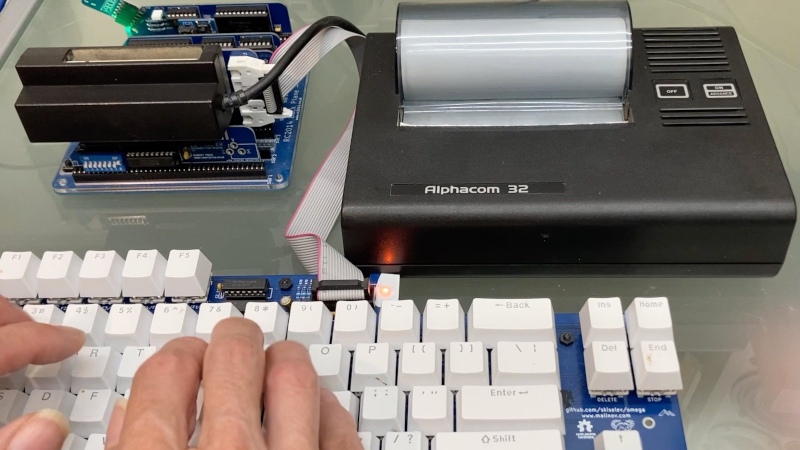
Period-correct technology would probably be a VDU terminal or its predecessor, a teletype terminal, which is an electric typewriter that sends serial output from its keyboard and prints serial input onto paper. Here's where the Alphacom printer comes in. It was compatible and contemporary with the ZX81 and was a better option in many ways than Sinclair's ZX Printer. (The ZX computers had built-in line-printer capabilities.) Importantly there are plenty of the Alphacoms around today, working fine.
A Computer Terminal The Old Way | Hackaday

https://hackaday.com/2026/09/21/a-computer-terminal-the-old-way/
Here in 2026 if we need a terminal the chances are we fire one up on our computer and continue on our way without a thought. What we are doing of course is emulating the experience of earlier hardware terminals, ones with a serial port on the back, a keyboard, a screen, or if they are a bit older, a teletype printer. [Sheila Dixon] is recreating that experience for the RC2014 retrocomputer, and she’s using some period-appropriate hardware and techniques.
Byte - a visual archive

https://byte.tsundoku.io/#about
This zoomable map shows every page of every issue of BYTE starting from the front cover of the first issue (top left) to the last page of the final edition (bottom right). The search bar runs RE2 regex over the full text of all 100k pages. The archive itself is not new, scans of BYTE have long existed on the Internet Archive and elsewhere on the net – but I hope seeing everything in single, searchable place offers a unique perspective.

USBSID-Pico: Bridging Real Commodore 64 Sound to Modern USB - SmallRun

https://smallrun.net/blog/loud/usbsid-pico-sids-on-usb
I am LouD (short for loudness) and I created USBSID-Pico to bridge real SID silicon directly to modern workstations, phones, and media players over USB (CDC/WebUSB/WebSerial), MIDI, ASID and in the future possibly WiFi and Bluetooth. Powered by the Raspberry Pi Pico microcontroller series (rp2040 and rp2350), the board acts as a flexible controller for up to two (and soon four) physical SID chips or modern hardware replacements.

talk: the P2P chat from 1983 that a VPN brought back to life | Andros Fenollosa

https://en.andros.dev/blog/03a4ffb9/talk-the-p2p-chat-from-1983-that-a-vpn-brought-back-to-life/
Before the internet, people could already chat. It is a topic that has always intrigued me: how was it possible? As a kid I had already heard about a command called talk, and the most impressive part is that you can still use it today, with no sign-ups and straight from the terminal, even in workplaces where I work over a VPN. It is not dead: it is just that few people know its potential.

How the Vectrex game console sunk a 124-year-old company - The Silicon Underground

https://dfarq.homeip.net/how-the-vectrex-game-console-sunk-a-124-year-old-company/?utm_campaign=how-the-vectrex-game-console-sunk-a-124-year-old-company&utm_medium=rss&utm_source=rss
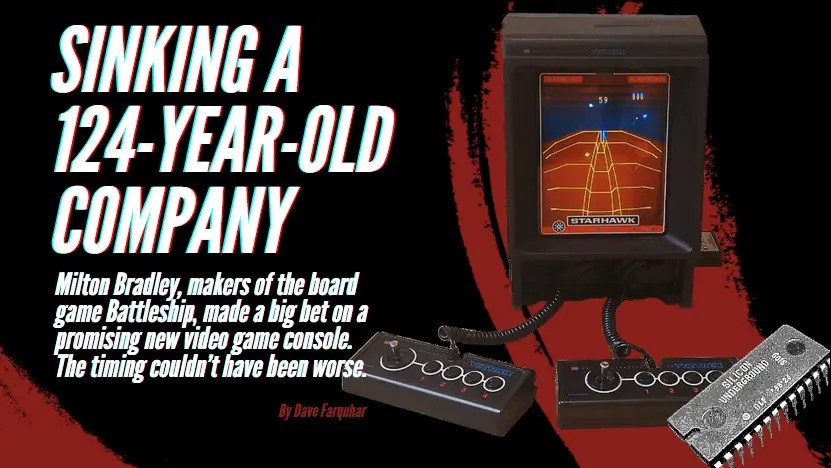
On May 4, 1984, Milton Bradley, a leading producer of board games for 124 years, agreed to sell itself to Hasbro. Changes in the way people played games in the 80s, especially kids, put pressure on the company. In this blog post, I’ll explain how changing times led Milton Bradley to make a transformational bet at the worst possible time that ultimately sunk the maker of the game Battleship, and what happened to what was left of Milton Bradley.

When Club Med Met Atari - The Retroist

https://www.retroist.com/p/when-club-med-met-atari
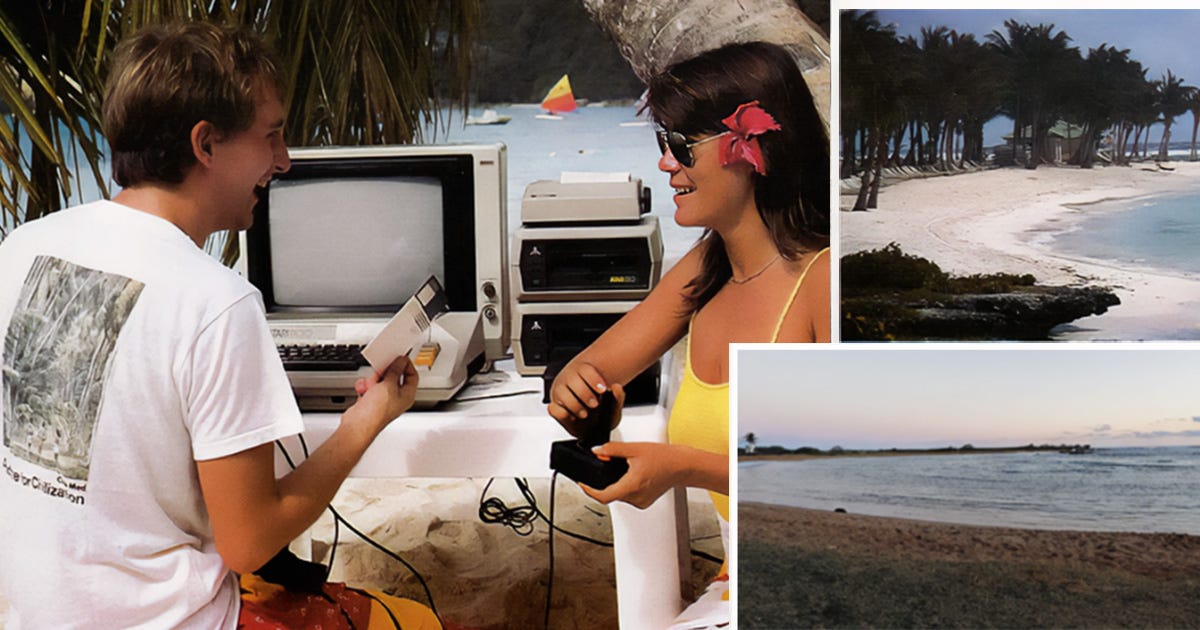
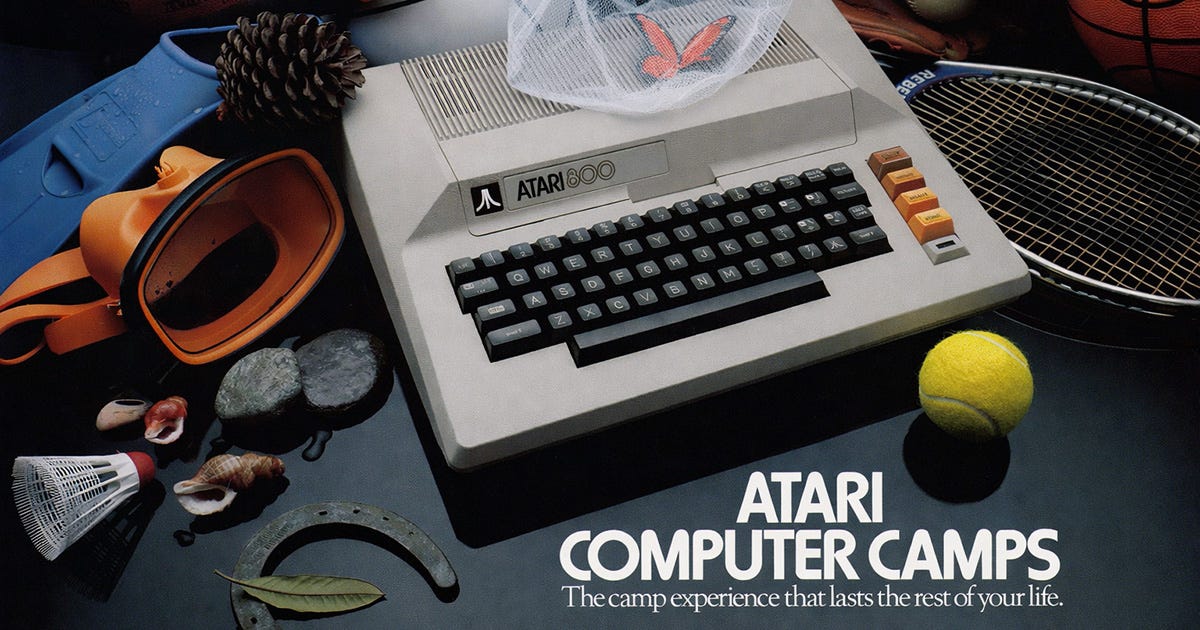
Club Med eventually moved upmarket and away from experiments like this one. Atari eventually became something else entirely. But for thirteen weeks in the summer of 1983, on a beach in the Dominican Republic, you could sit down at an Atari 800 between windsurfing sessions and learn to program in BASIC, compose a piece of music, or weave a headband from a design you made yourself on a computer with 256 colors to choose from. Nobody made you. It was just there if you wanted it, which is very Club Med.
Atari Computer Camps - The Retroist

https://www.retroist.com/p/atari-computer-camps
For three summers, Atari gave kids a chance to spend real time with computers right at the moment those machines were starting to move from curiosity to necessity. Then the company collapsed, the camps ended, and what remains is mostly what people held onto, brochures, clippings, a little film, and the memories that still surface online from people who were lucky enough to go.

Introducing talkie: a 13B vintage language model from 1930

https://talkie-lm.com/introducing-talkie
Have you ever daydreamed about talking to someone from the past? What would you ask someone with no knowledge of the modern world? What would they ask you? While we don’t have time machines yet, we can simulate this experience by training, in Owain Evans’s phrase, ‘vintage’ language models: LMs trained only on historical text.

Netrunner – Convolution BBS

https://convolutionbbs.org/netrunner-2/
Finally, an online ‘cyberpunk’ game that comes close to portraying computing as depicted in classic cyberpunk works like Neuromancer by William Gibson. In this game the player is a NetRunner, an arrogant and bold futuristic hacker. Armed with his cyberdeck and an arsenal of offensive, defensive and analysis software he’s ready to invade corporate systems in the grid and raid their credits, for fame and fortune! It’s no cakewalk though! Waiting for the unwary are Intrusion Counter-measures (IC). Machine controlled defenses that can inflict damage to hardware and software, steal the players own credits and even cause… death.

Add a Solid State Hard Drive to Your Amiga 600 or 1200 Using a Compact Flash Card with IDE Adapter (30-60 mins) – Retro Projects

https://retroprojects.org/add-a-solid-state-hard-drive-to-your-amiga-600-or-1200-using-a-compact-flash-card-with-ide-adapter-30-60-mins/
I recently purchased an Amiga 1200 which has hard drive support through an internal IDE connector. Adding a hard drive is appealing since booting from floppy disk or a Gotek floppy drive emulator can be quite tedious and slow. The good news is that there are solid state options using compact flash (CF) or secure digital (SD) card solutions through an IDE adapter. I went with a CF card adapter that I purchased for less than $30 from AmiKit on eBay. This is shown below inserted into the IDE slot on my 1200.

UNIX99, a UNIX-like OS for the TI-99/4A - TI-99/4A Development - AtariAge Forums

https://forums.atariage.com/topic/380883-unix99-a-unix-like-os-for-the-ti-994a/
I’ve been working on developing an operating system for the TI-99 for the last 18 months or so. I didn’t intend this—my original plan was to develop enough of the standard C libraries to help with writing cartridge-based and EA5 programs. But that trek led me quickly towards developing an OS. As Unix is by far my preferred OS, this OS is an approximation. Developing an OS within the resources available, particularly the RAM, has been challenging, but also surprisingly doable.

Home - HstWB Installer

https://hstwb.firstrealize.com/
HstWB Installer is an application, which can automate installation of Amiga OS, Kickstart roms and packages with additional content. Creating new harddrive images for Classic Amiga and installing Amiga OS, Kickstart roms, ClassicWB, WHDLoad games and demos properly can be a cumbersome task unless you spend a lot of time figuring out how this is done step by step.
Defeating a 40-year-old copy protection dongle – Dmitry Brant

https://dmitrybrant.com/2026/02/01/defeating-a-40-year-old-copy-protection-dongle
That’s right — this little device is what stood between me and the ability to run an even older piece of software that I recently unearthed during an expedition of software archaeology. For a bit more background, I was recently involved in helping a friend’s accounting firm to move away from using an extremely legacy software package that they had locked themselves into using for the last four decades.
Adventure 751 (1980) | Renga in Blue

https://bluerenga.blog/2026/01/01/adventure-751-1980/
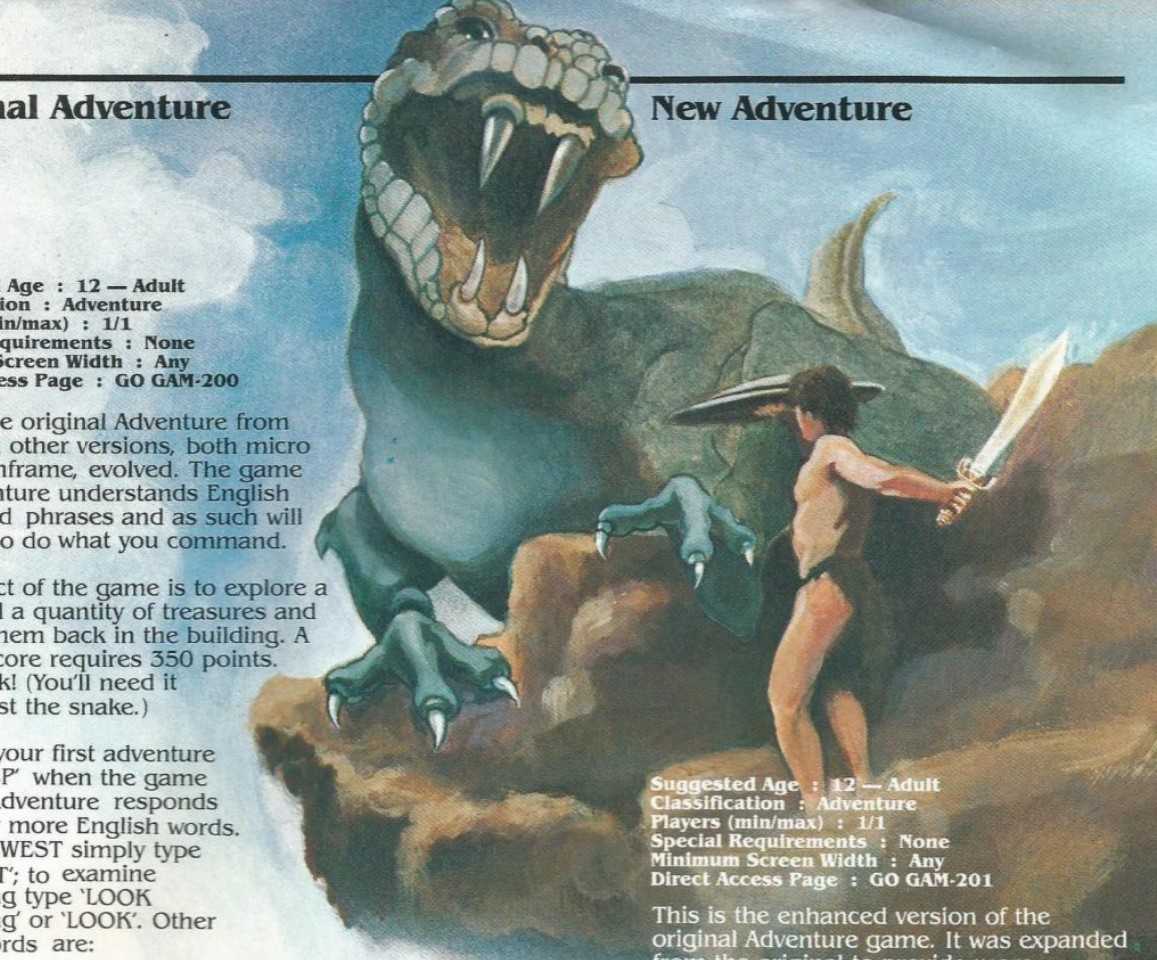
Adventure 751 has been, by my reckoning, the most sought-after variation of Crowther/Woods Adventure. It was generally available on the online portal CompuServe from nearly the beginning of the service and it disappeared when they shut down their games in the 90s. Arthur O’Dwyer started a web page in 2012 (with semi-regular updates!) dedicated to hunting down a copy. To finish off a wild 2025 in game preservation, Arthur O’Dwyer announced the game has been found (by LanHawk, a regular amongst the comments here) and is playable.
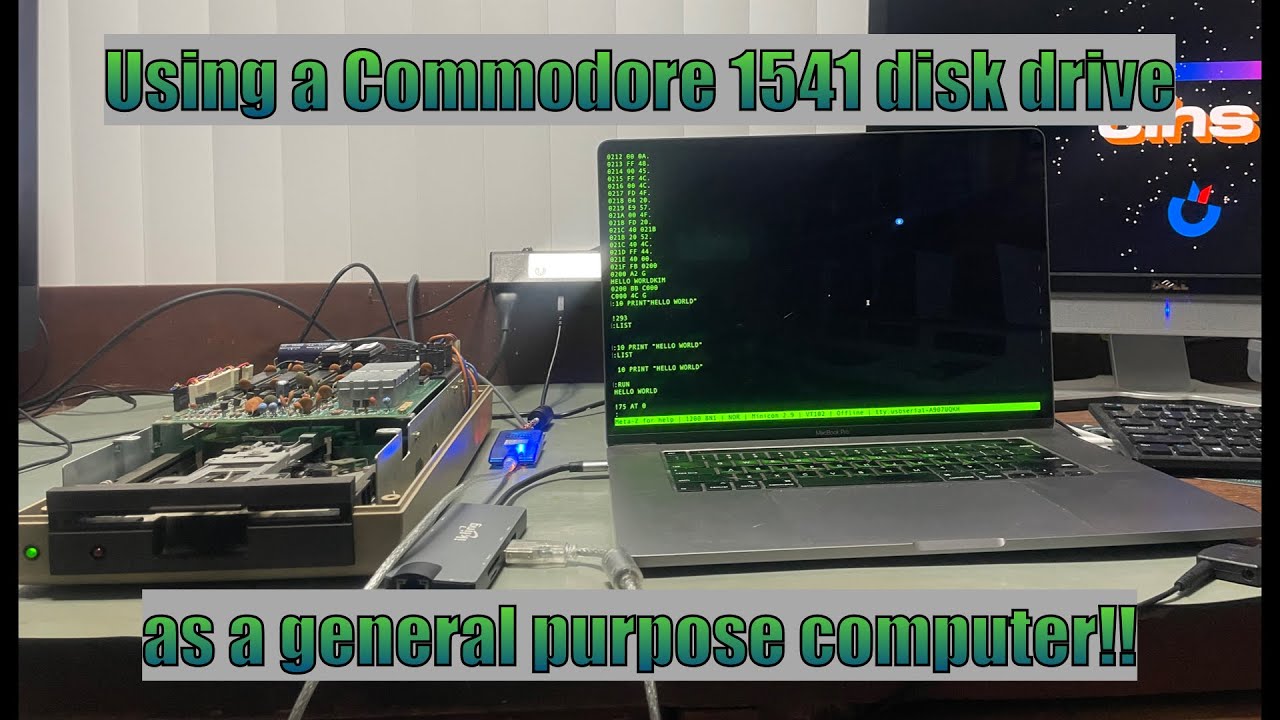
Can a Commodore 1541 disk drive be used as a general purpose computer? - YouTube

https://www.youtube.com/watch?v=6loDwvG4CP8&t=327s
I modified the KIM-1 kernal to run on a bone stock Commodore 1541 disk drive. That's right -- zero hardware modifications. I'll walk you through the theory behind this, and everything I needed to do to make it work, then I'll show you a Hello World example in both BASIC and machine language running on a Commodore 1541 disk drive.

1984 Toys “R” Us Christmas Sale Circular - The Retroist

https://www.retroist.com/p/1984-toys-r-us-christmas-sale-circular
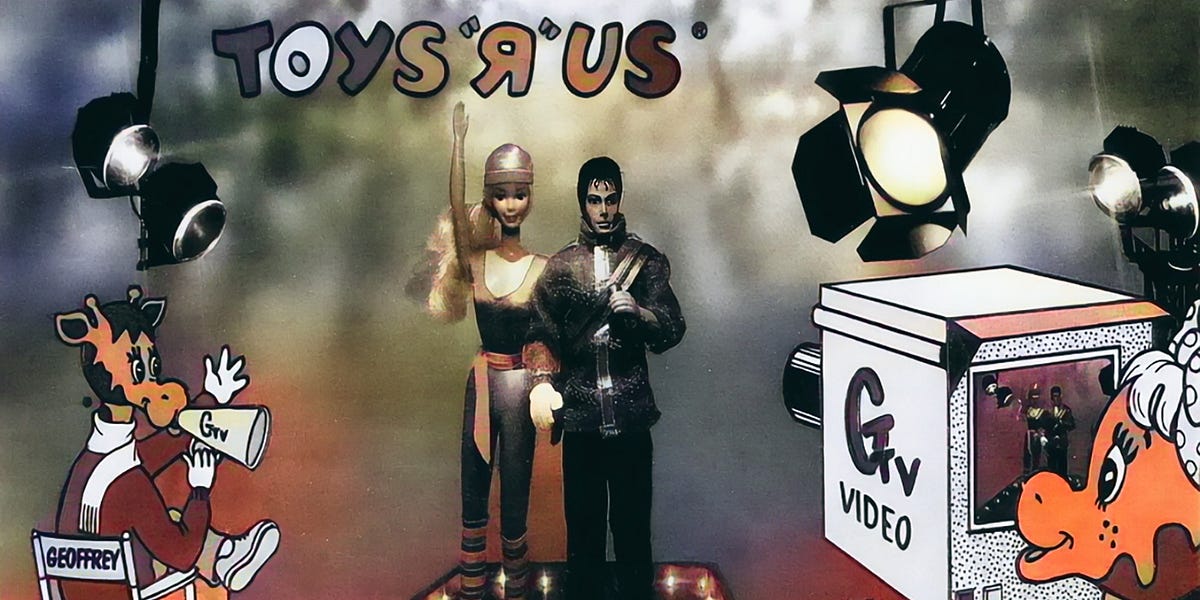
Nowadays, I still enjoy looking at the old relics of sales past. They are wonderful historical artifacts and they take me right back to when I was a kid. So, I would like to share with you a Toys “R” Us circular from 1984. It was published right after December of that year. Like most of their sales offering during these years, it promised that their “prices will be no higher through Dec. 25th.” So no matter when you shop at the store this month, this is what you would have paid. Let’s jump in and look at some of the highlights on each page.
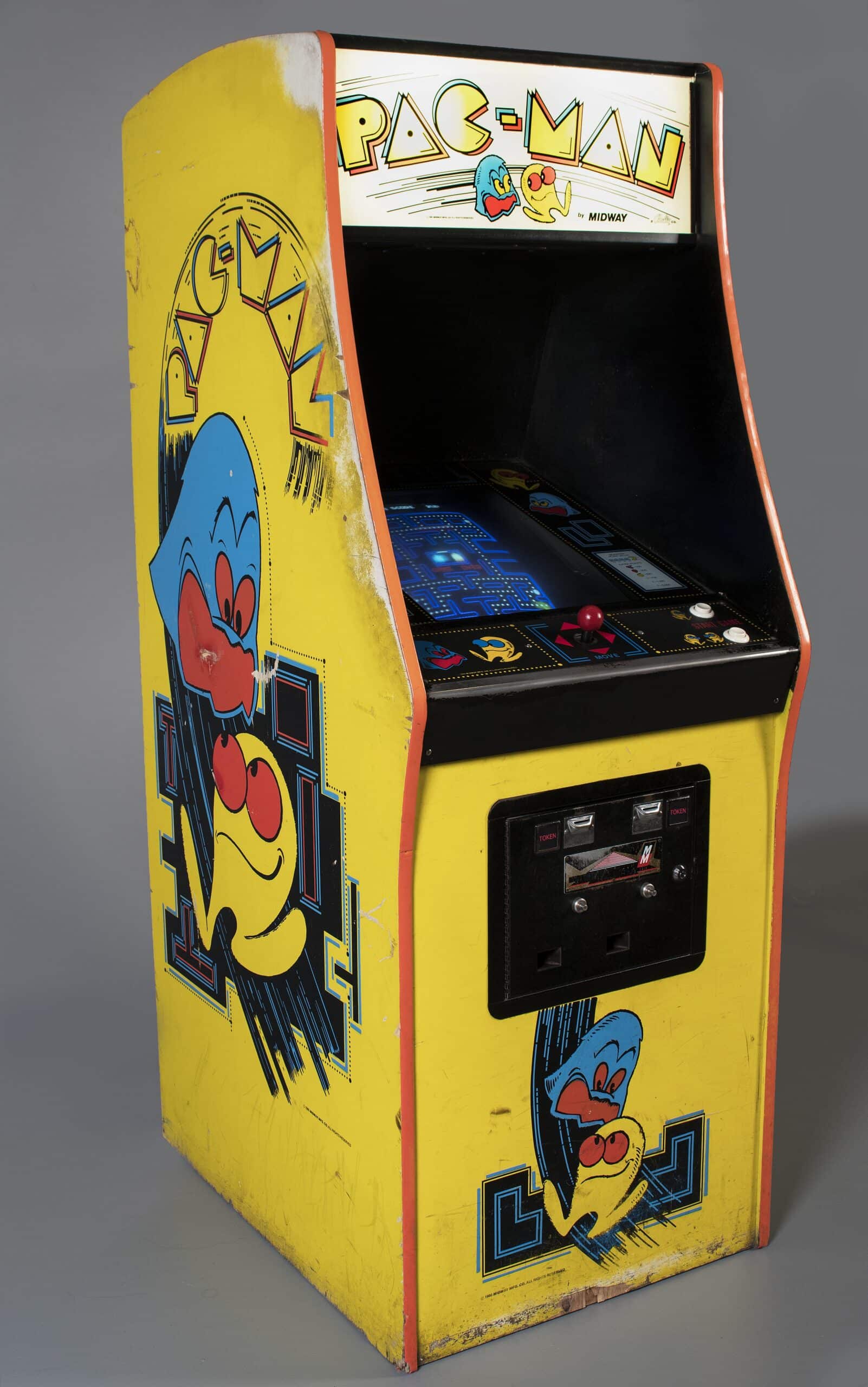
The Same Game, Twice - The Strong National Museum of Play

https://www.museumofplay.org/blog/the-same-game-twice/
Our arcade games are wonderful examples of living traditions (to use Mansfield’s term), and so we approach their conservation in the same philosophical way. We haven’t replaced the CRT in our Pac-Man yet, and perhaps we never will, but the key principle is to preserve these incredible machines, as ethically as we can, as living traditions.

wavephoenix/hardware/mini-receiver at main · loopj/wavephoenix

https://github.com/loopj/wavephoenix/tree/main/hardware/mini-receiver
The WavePhoenix Mini Receiver is a small, low-cost WaveBird receiver replacement. It has been designed to be as cheap as possible (~$4 in parts) and simple to build. The receiver uses a cheap, off-the-shelf wireless module (the RF-BM-BG22C3), which can either be hand-wired, or assembled onto a custom PCB.
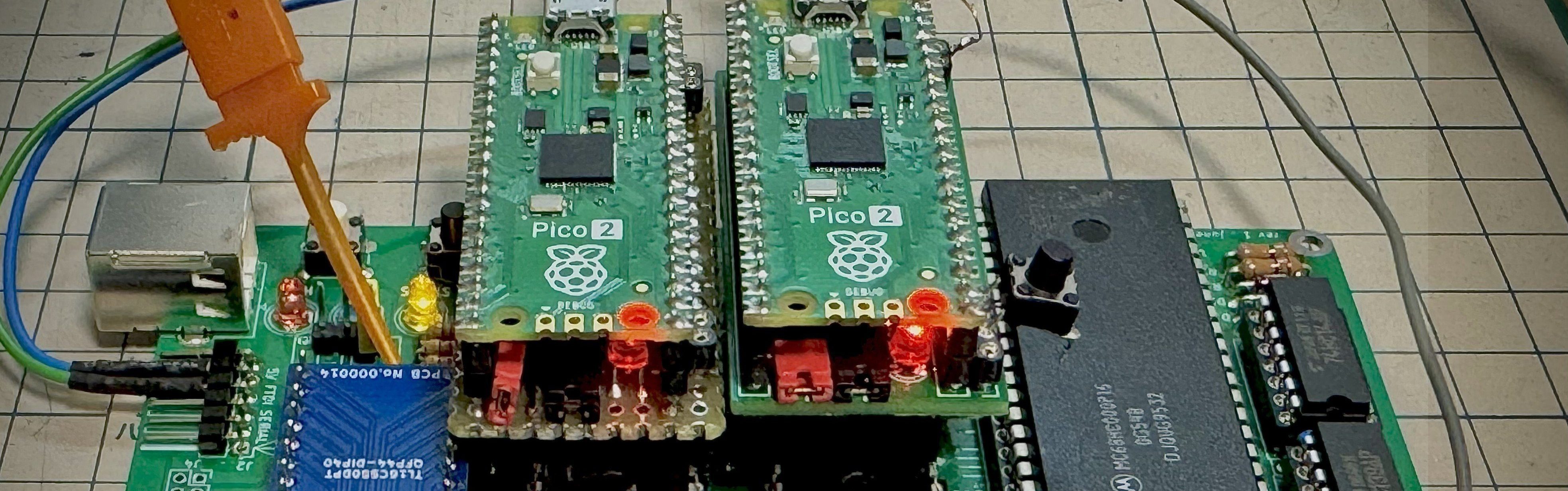
Emulate ROMs At 12MHz With Pico2 PIO | Hackaday

https://hackaday.com/2025/12/06/emulate-roms-at-12mhz-with-pico2-pio/
Nothing lasts forever, and that includes the ROMs required to make a retrocomputer run. Even worse, what if you’re rolling your own firmware? Period-appropriate EPROMs and their programmers aren’t always cheap or easy to get a hold of these days. [Kyo-ta04] had that problem, and thanks to them, we now all have a solution: Pico2ROMEmu, a ROM emulator based on, you guessed it, the Raspberry Pi Pico2.

Ribbons - Kinotone

https://kinotoneaudio.com/products/ribbons/
Customize a massive range of sounds from pristine hi-fi clarity to haunting lo-fi textures — all in stereo. You can emulate magnetic tape, vinyl, an old radio, or a vintage telephone. Even skipping CDs, and spectral mishaps of MP3s and early digital media.
Celebrate the fictitious 35th anniversary of Ruin, a faux point-and-click adventure game that never was | Rock Paper Shotgun

https://www.rockpapershotgun.com/celebrate-the-fictitious-35th-anniversary-of-ruin-a-faux-point-and-click-adventure-game-that-never-was
The actual game in question here is Ruin: Chapter 0, an interactive fiction game in the stylings of something you might have seen on the ZX Spectrum, albeit with a lot more flair. And, perhaps, a lot more glitches - a big flashing imagery warning is needed for this one. Playable within your browser, it's kind of hard to describe what you do, or even what you're doing, in Ruin. From what I can gather, you are a knight, the hero of rune, tasked by the king to retrieve a sword and defeat evil forever. But no matter what, I just keep getting my ass kicked by this evil, and every time I die it just says "get owned" at me! Rude!
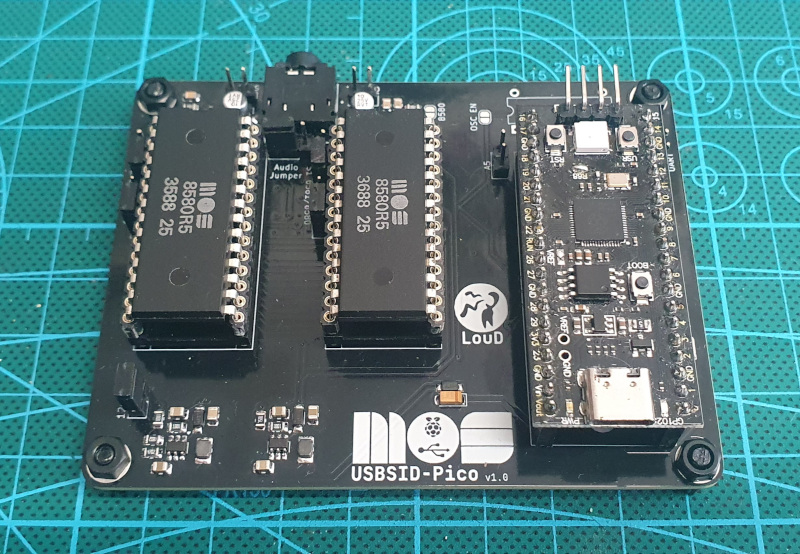
LouDnl/USBSID-Pico: USBSID-Pico is a RPi Pico (RP2040/W RP2350/W) based board for interfacing one or two MOS SID chips and/or hardware SID emulators over (WEB)USB with your computer, phone, ASID supporting player or USB midi controller

https://github.com/LouDnl/USBSID-Pico
USBSID-Pico is a RaspberryPi Pico/PicoW (RP2040) & Pico2/Pico2W (RP2350) based board for interfacing one or two MOS SID chips and/or hardware SID emulators over (WEB)USB with your computer, phone, ASID supporting player or USB midi controller.

Preserving code that shaped generations: Zork I, II, and III go Open Source

https://opensource.microsoft.com/blog/2025/11/20/preserving-code-that-shaped-generations-zork-i-ii-and-iii-go-open-source
Today, we’re preserving a cornerstone of gaming history that is near and dear to our hearts. Together, Microsoft’s Open Source Programs Office (OSPO), Team Xbox, and Activision are making Zork I, Zork II, and Zork III available under the MIT License. Our goal is simple: to place historically important code in the hands of students, teachers, and developers so they can study it, learn from it, and, perhaps most importantly, play it.

DOOMed to Fail: A Horror Story With Rebecca Heineman (Burger Becky) - CoRecursive Podcast

https://corecursive.com/doomed-to-fail-with-burger-becky/
Today Rebecca Burger Becky Heineman shares the tale of porting Doom to the 3DO console under extreme conditions. There is an engine to tweak, deadlines to hit, hardware acceleration to get working, and dramatic rock anthems to record. We also learn about how game piracy led her to game development and what it was like to do game development in the mania of the mid-nineties. Finally, we close with Becky’s advice on learning bare metal development skills.

The invalid 68030 instruction that accidentally allowed the Mac Classic II to successfully boot Up

https://www.downtowndougbrown.com/2025/01/the-invalid-68030-instruction-that-accidentally-allowed-the-mac-classic-ii-to-successfully-boot-up/
This is the story of how Apple made a mistake in the ROM of the Macintosh Classic II that probably should have prevented it from booting, but instead, miraculously, its Motorola MC68030 CPU accidentally prevented a crash and saved the day by executing an undefined instruction.

ThinkTank on the PC w/DOS

https://stonetools.ghost.io/thinktank-dos/
Obsession takes many forms. Some of us sift through decades of ancient software for a blog, while others spend decades reinventing the same software repeatedly. Outliner software seems to attract the latter, but can this genre win over the former?

u/Quick_Butterfly_4571 passionately explains why geeky 80’s kids are confused with ChatGPT : r/bestof

https://www.reddit.com/r/bestof/comments/1ovxrk6/uquick_butterfly_4571_passionately_explains_why/
So, it is the vernacular of the first globally connected generation of kids, who — working in tandem and free from constraints, oversight, or rules — developed an epistolary style designed to facilitate belonging by wire to communities that were virtual and spread across the globe. To connect with other lonely oddballs who were thrilled to discuss geeky things. It is the first ever, democratically developed, global, epistolary style and the first consistent style developed in the age of the internet for the internet. We also drew boobs and said vulger things and developed new ways of slinging insults and enraging each other. Like, it wasn't a utopia.

Some context on why some 80's kids keep getting mistaken for GPT

https://www.reddit.com/r/diypedals/comments/1ovmx4l/comment/nokigif/
So, when you got online, you pulled or copied or saved all your messages, drafted up what was...essentially an essay of a response — trying to anticipate follow up questions or points of confusion. You planned it ahead of time. You studied your ass off to equip yourself with knowledge in the hopes of getting some replies off the same day you read them (it sounds stupid now, but that was fucking incredible — send and receive a letter same day!? Eesh. I am getting old). Also, because communication was fast, but our time was limited, it was more like faster letters at first than it was like texts. It was a horror to waste round trips on misunderstandings — the person you were collaborating with might only get online Wednesday afternoons. If you were ambiguous, you might waste a whole week of progress just by not being clear! So, we were explicit.

The death of Glitch, the birth of Slack

https://www.johnnyrodgers.is/the-death-of-glitch-the-birth-of-slack/
Glitch was an unusual, clever, heartfelt game. Within the realm of Ur, dreamt by eleven magical Giants, players created playful new identities for themselves. They designed and clothed their avatars to their heart’s content, delighting in new hats and a rainbow of possible skin tones. They crafted working music boxes and decorated their architecturally-unlikely homes.

Making WiFi Sound Like Dial-Up Internet | Hackaday

https://hackaday.com/2025/10/24/making-wifi-sound-like-dial-up-internet/
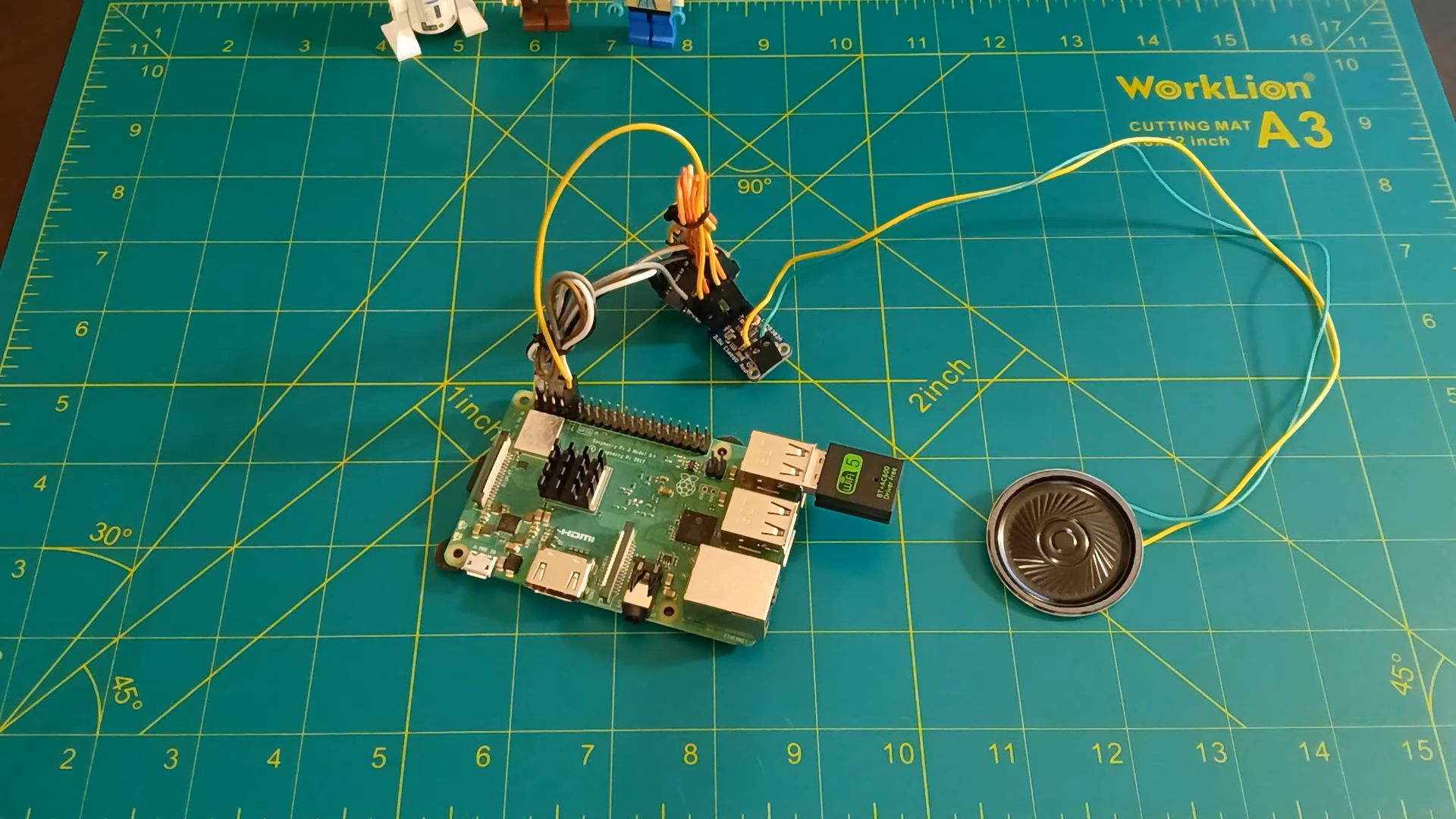
Dial-up modems had a distinctive sound when connecting, with the glittering, screeching song becoming a familiar melody to those jumping online in the early days of the Internet. Modern digital connections don’t really have an analog to this, by virtue of being entirely digital. And yet, [Nick Bild] decided to make WiFi audible in a pleasing tribute to the modems of yore.

Meshtastic 64 Radio Demo on Commodore 64 - The Oasis BBS

https://theoasisbbs.com/meshtastic-64-radio-demo-on-commodore-64/?feed_id=5678&_unique_id=68dfcf2d76f81
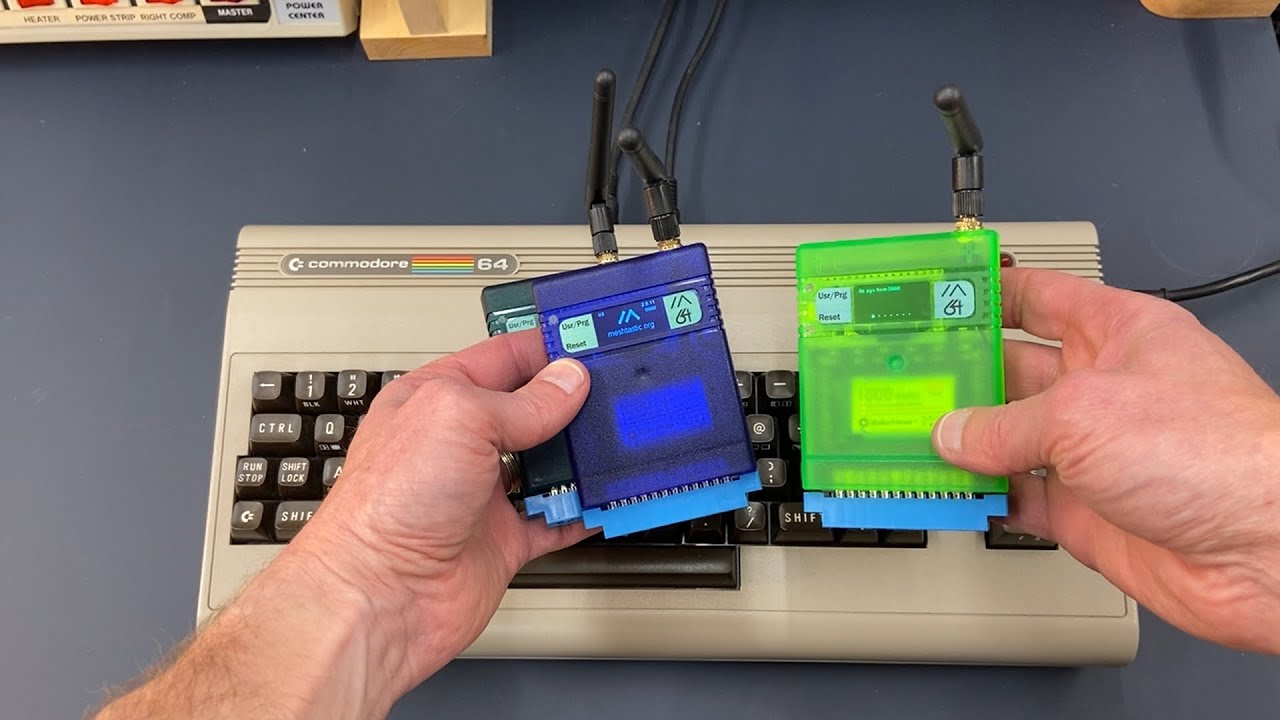
The Meshtastic 64 Radio connects through the user port and sits inside a cartridge shell with a built-in battery. Once installed, the device powers up and runs with a custom BASIC program loaded from floppy disk. This software lets the Commodore 64 send and receive text messages across the Meshtastic network, linking retro hardware with modern mesh communication.
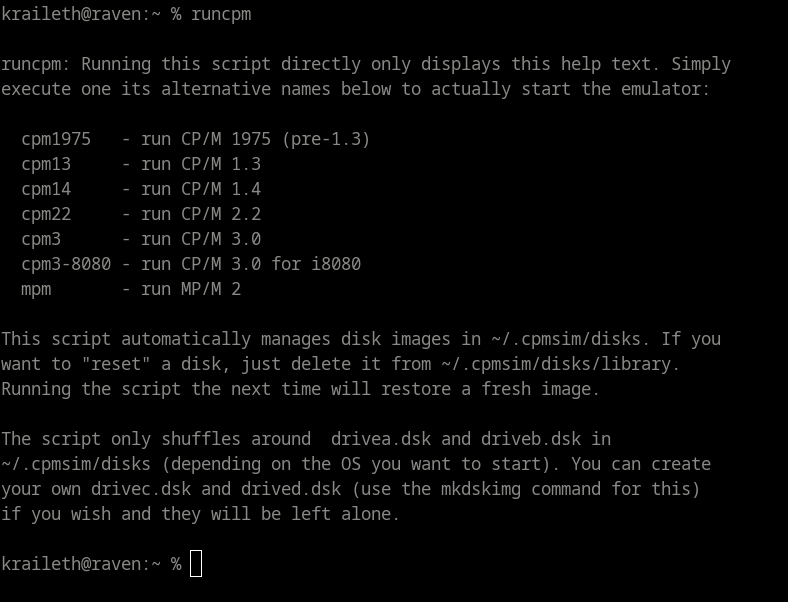
A gentle introduction to CP/M – eerielinux

https://eerielinux.wordpress.com/2025/08/28/a-gentle-introduction-to-cp-m/
This article is just what the headline promises: an introduction to the CP/M operating system. No previous knowledge of 1970s and early ’80s operating systems is required. However, some familiarity with Linux or a BSD-style operating system is assumed, as the setup process suggested here involves using a package manager and command-line tools. But why explore CP/M in the 2020s? There are (at least) two good reasons: 1) historical education 2) gaining a better understanding of how computers actually work.

GlyphDrawing.Club -blog

https://blog.glyphdrawing.club/amiga-ascii-art/
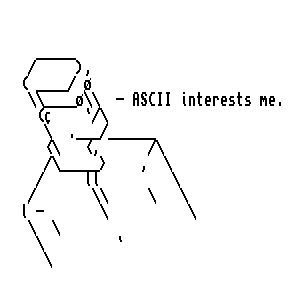
In my thesis, I study Amiga ASCII text art. Amiga ASCII is a form of text art where the composition of letter characters set in the Amiga computer's font forms a two-dimensional representation or image. The Amiga scene is a subculture of computer enthusiasts that was popular in the 1990s. At its core are the logos and other visual materials created for BBS systems and the competitive rivalry among artists who create text art over their image-making prowess.

Deluxe Paint on the Commodore Amiga

https://stonetools.ghost.io/deluxepaint-amiga/
VisiCalc on the Apple II. Lotus 1-2-3 on the IBM PC. Aldus PageMaker on the Macintosh. Deluxe Paint on the Amiga. The computer industry loves a “killer app,” that unique piece of software that compels consumers to purchase new computer hardware just for the privilege of running it. I can personally attest to Deluxe Paint as it compelled even my technophobic mother to buy into its potential.

HulkOutList

https://www.kennethjohnson.us/hulkoutlist/
Kenny writes..."While directing on JAG I was privileged to work with a brilliant Assistant Director named Kevin Koster. He has an amazing memory. He's able to tell you instantly all the details of every single JAG episode. -- Kevin's also a serious Hulk fan, and he gifted me with this list of EVERY reason that Dr. David Banner was driven to Hulk out. It makes very funny reading. Two of my personal faves have always been #20 & #47.

More retrocomputing, less nostalgia | datagubbe.se

https://datagubbe.se/retnost/
Music, art and games are timeless human pursuits. Why should those pursuits be about nostalgia or reminiscing just because they happen to take place on an old computer? When creating, a home computer - just like any other tool - provides certain intrinsic qualities that affect both the process and the outcome. This happens to appeal to some people, while others would rather choose an aerosol, a violin or a brand new PC: the guitarist doesn't want to switch to a keytar, the chess player wouldn't trade chess for Quake, and the painter doesn't think of her brushes as artifacts of her childhood.

Cidco MailStation as a Z80 Development Platform - joshua stein

https://jcs.org/2019/05/03/mailstation
The Cidco MailStation is a series of dedicated e-mail terminals sold in the 2000s as simple, standalone devices for people to use to send and receive e-mail over dialup modem. While their POP3 e-mail functionality is of little use today, the hardware is a neat Z80 development platform that integrates a 320x128 LCD, full QWERTY keyboard, and an internal modem. After purchasing one (ok, four) on eBay some months ago, I've learned enough about the platform to write my own software that allows it to be a terminal for accessing BBSes via its modem or as a terminal for a Unix machine connected over parallel cable.

The VMU Pro turns the Dreamcast’s memory card into a handheld emulator | The Verge

https://www.theverge.com/news/665012/8bitmods-sega-dreamcast-virtual-memory-unit-vmu-pro-emulator-nes-sega
8BitMod’s upcoming VMU Pro offers the same functionality as Sega’s original, but it’s rebuilt from the ground up with upgrades that include a full-color screen and enough processing power to use it as a handheld emulator for retro games.
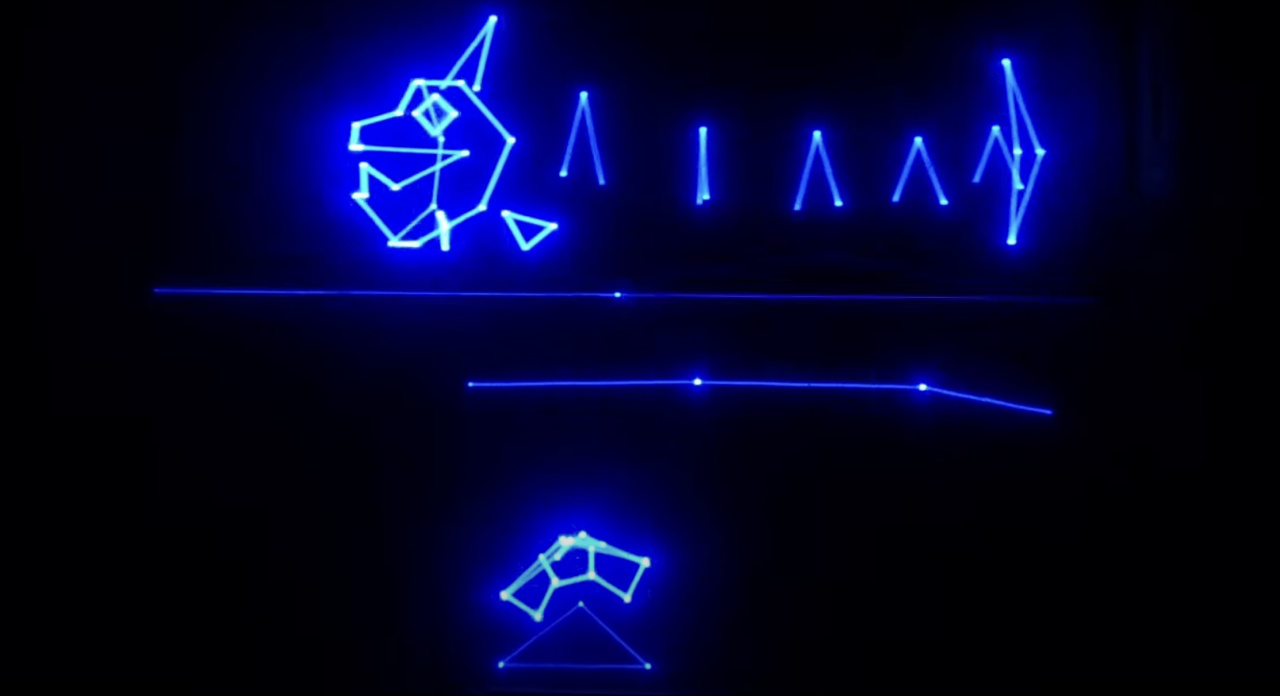
Why is there a "small house" in IBM's Code page 437? - GlyphDrawing.Club -blog

https://blog.glyphdrawing.club/why-is-there-a-small-house-in-ibm-s-code-page-437/
There's a small house ( ⌂ ) in the middle of IBM's infamous character set Code Page 437. "Small house"—that's the official IBM name given to the glyph at code position 0x7F, where a control character for "Delete" (DEL) should logically exist. It's cute, but a little strange. I wonder, how did it get there? Why did IBM represent DEL as a house, of all things?
MicroW8

https://exoticorn.github.io/microw8/
MicroW8 is a WebAssembly based fantasy console inspired by the likes of TIC-80, WASM-4 and PICO-8. The initial motivation behind MicroW8 was to explore whether there was a way to make WebAssembly viable for size-coding. (Size coding being the art of creating tiny (often <= 256 bytes) graphical effects and games.) The available examples so far are all in this space, however, I very carefully made sure that all design decisions make sense from the point of view of bigger projects as well.

The Sorbus Computer

https://xayax.net/sorbus/
The Sorbus Computer started with the idea on building a very simple and cheap 65C02 based computer. It was intended to show the operation of the CPU for a talk about historic computers during a talk and workshop (slides blow).

Attention K-Mart Shoppers : Free Audio : Free Download, Borrow and Streaming : Internet Archive

https://archive.org/details/attentionkmartshoppers
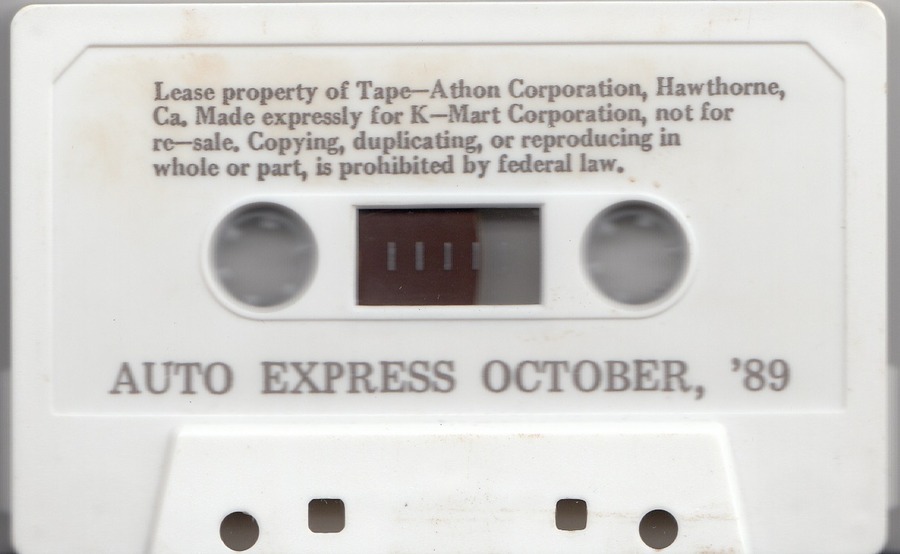
OK, I have to admit this this is a strange collection. In the late 1980's and early 1990's, I worked for Kmart behind the service desk and the store played specific pre-recorded cassettes issued by corporate. This was background music, or perhaps you could call it elevator music. Anyways, I saved these tapes from the trash during this period and this video shows you my extensive, odd collection.

Michael Kohn - modern 6502

https://www.mikekohn.net/micro/modern_6502.php
while doing my daily hackaday.com reading, I discovered the W65C265SXB board, a modern microcontroller with a 6502 (actually 65C816) at its core. I did a really good job resisting buying one for a while, but eventually gave in. To put this board to use I decided to put up this page with 3 small projects (added a 4th more recently) to show off some things that can be done with this newer 6502 chip

BRA and KET: String Interpolation in AmigaDOS | datagubbe.se

https://www.datagubbe.se/braket/
By default, the parser does string interpolation using the characters < (less than) and > (greater than). The cleverness of this is debatable: these characters are also used for I/O redirection, which can quickly make things confusing. Luckily, the parser also accepts the directives .BRA and .KET, each followed by a single character, which lets the programmer override the default interpolation characters. The terms BRA and KET are most likely borrowed from Dirac notation.

MilkyTracker | About

https://milkytracker.org/about/
MilkyTracker is an open source, multi-platform music application for creating .MOD and .XM module files. It attempts to recreate the module replay and user experience of the popular DOS program Fasttracker II, with special playback modes available for improved Amiga ProTracker 2/3 compatibility.

The first perfect computer - Celso Martinho

https://celso.io/posts/2025/01/26/the-first-perfect-computer/
That was solved recently when I bought an Amiga 1000 on eBay. This is the long-overdue story about how I restored, fixed, and upgraded it and my future plans. If you’re the rabbit hole type, I added as many links and references as I could so you can dive deeper into the Amiga world. I hope you enjoy reading it.

BBS PETSCII, 1986-1993 (WIP) | text-mode.org

https://text-mode.org/?p=27470
Old Commodore 64 BBS graphics are not easy to find. A lot of it was probably never saved, and there’s not really any obvious place for it online either. So I was thrilled to get a whole bunch disk images from Sixx: more than 1,000 PETSCII graphics and animations! I’ve gone through it, removed duplicates, identified artists, etc, and captured it as images and videos. I’m not done yet, but I’m presenting it as is.

Quantity recipes for school food service : United States. Food and Nutrition Service. Nutrition and Technical Services Division : Free Download, Borrow, and Streaming : Internet Archive

https://archive.org/details/CAT92970475/page/n131/mode/2up
This publication contains quantity recipes and other information useful to food service personnel to prepare meals in schools participating in the National School Lunch Program (NSLP). Recipes are generally in 50 and 100 portion size

Indiana bakery still using Commodore 64s originally released in 1982 as cash registers — Hilligoss Bakery in Brownsburg sticks to the BASICs | Tom's Hardware

https://www.tomshardware.com/desktops/indiana-bakery-still-using-commodore-64s-originally-released-in-1982-as-point-of-sale-terminals
Aside from the technical curiosity, it would seem that Hilligoss Bakery is actually well-appreciated in its local Brownsburg community for the quality of its pastries and not simply the oddity of using a "microcomputer" originally released in 1982— though to Hilligoss' credit, the shop actually opened back in 1974, which would make the Commodore 64s a year-eight acquirement at the earliest. We can only suppose that further upgrades haven't been needed since.

Getting a dial-up modem working with VoIP – Peter Mount's Blog

https://area-51.blog/2021/01/16/getting-a-dial-up-modem-working-with-voip/
Most people don’t have a land line anymore, nor are there many BBS’s online that are connected to the old phone system, so the only option is using VoIP to connect them. However if you read online, most people say it’s either not possible or would be painfully slow. So, let’s see if we can get something working.

Tripos, the Roots of AmigaDOS – pagetable.com

https://www.pagetable.com/?p=193
The core of the Amiga Operating systems consists of the three major components Exec (scheduling, memory management, IPC), Intuition (GUI library) and AmigaDOS (process and file management). AmigaDOS is based on the Tripos operating system which Commodore bought because development of their own DOS subsystem failed to meet deadlines. In this article, I am presenting searchable PDFs of the very rare Tripos manuals (638 pages) as well as the AmigaDOS manual (304 pages). Comparing the two documents will share some insight in the relationship between Tripos and Amiga OS.

Advent of Code on the Nintendo DS

https://sailor.li/aocnds.html
The problem with Advent of Code is that it is a waste of time. Most of the puzzles are in the realm of either string processing (somewhat applicable to programming), logic puzzles (not really applicable to most programming), or stupid gotchas in the input format (annoyingly, very applicable to most programming). So to combat this a lot of people use Advent of Code as an excuse to learn a new programming language that they wouldn't otherwise have a reason to use.

The NES Expansion Port Is Finally Emerging From The Darkness. Why Now?

https://tedium.co/2024/12/02/nintendo-expansion-port-history/
After 39 years, console modders have begun to develop ways to use the Nintendo Entertainment System’s infamous expansion slot, a key example of vestigial manufacturing. In honor of this amazing feat, which is being used to add Bluetooth and Famicom Disk System support to the console, I thought it might be good to take a look back at this fascinating wrinkle of history. Today’s Tedium ponders the legacy of the NES Expansion Port, and where it’s going next.

Trackers, video games, soldering irons and bitter rivalries: 5 reasons why the '80s was the ultimate decade for computer music-making | MusicRadar

https://www.musicradar.com/news/5-reasons-the-1980s-was-the-ultimate-decade-for-computer-music-making
When it comes to music production, the '80s will probably be remembered for great synths, rubbish synths, great music and terrible music. What it probably won’t be remembered for is its contribution to the history of computer music making. This is, frankly, wrong. Here's why…

“It’s rumoured to have been used by everyone from Björk to Aphex Twin”: The history of making music with video games consoles | MusicRadar

https://www.musicradar.com/music-tech/its-rumoured-to-have-been-used-by-everyone-from-bjork-to-aphex-twin-the-history-of-making-music-with-video-games-consoles
For many of us, video games were a potent point of introduction to the world of music production. We take a look back at the games and consoles that have inspired music-makers over the years

The JawnCon 0x1 Badge Dials Up A Simpler Time | Hackaday

https://hackaday.com/2024/09/16/the-jawncon-0x1-badge-dials-up-a-simpler-time/
While the design is admittedly pushing the definition of what can realistically be called a “badge,” there’s a lanyard attached so it’s technically wearable. If the idea of being surrounded by a bunch of nerds wearing tiny modems around their necks is as enticing to you as it is to us, you’ll absolutely be among friends during this Philadelphia-area hacker con.

JawnCon0x1: The Modem Badge

https://jawncon.org/0x1-modem.html
Having decided the retro late-80s early-90s theme for JawnCon 0x1, the inspiration for the badge seemed almost immediately obvious: the iconic, venerable Hayes SmartModem oozes industrial design of the era and is instantly recognizable to any of us who grew up when computers had the decency to shriek like digital banshees to let us know when they were plotting against us.

frntc/SIDKick: SIDKick -- the first complete SID 6581/8580-drop-in-replacement that you can build yourself

https://github.com/frntc/SIDKick
SIDKick is a versatile sound device for C64s and C128s: it serves as a drop-in replacement for the SID 6581/8580 sound chips, and at the same time provides Sound Expander-emulation (Yamaha OPL-based FM sound), a MIDI interface and can control LED stripes. It is based on a Teensy 4.1 and makes no compromises with regard to quality: the emulation is based on reSID and fmOPL. It also comes with a few extras.

too much Fun: The five lives of the commodore 64 computer - About the book

https://www.jesperjuul.net/c64/about.html
With interviews of Commodore engineers and with its insightful look at C64 games, music, and software, from Summer Games to International Karate to Simons' BASIC, Too Much Fun will appeal to those who used a Commodore 64, those interested in the history of computing and video games and computational literacy, or just those who wish their technological devices would last longer.

An explanation of the USB C charging issues on the RG35XX Plus : r/ANBERNIC

https://www.reddit.com/r/ANBERNIC/comments/1f1iun2/an_explanation_of_the_usb_c_charging_issues_on/
Can some chargers damage my device? Yes. Not all, but definitely some. The damage is caused by the RG35XX Plus mistakenly detecting that some USB C chargers are an external device (like a USB gamepad) that needs power, and trying to apply 5V to the charger itself. This can result in either or both the RG35XX Plus and the charger to heat up - sometimes just a bit, sometimes enough to damage components or the nearby battery. Read below for an explanation about how this happens. If I want to be safe, what chargers are definitely going to be okay to use? Anything that uses a cable with USB A on one end, and USB C on the other. The voltage and current rating of the charger itself makes no difference. This doesn't mean that no other setups will work (for instance, most tethered USB C chargers, or non e-marked C<->C cables will), but using an A<->C cable is the only straightforward way for most people to be sure. Is there a mod to enable charging on all USB C chargers? Yes, but you lose the ability to power other devices from the USB C port on the RG35XX Plus, and it involves soldering tiny SMD components. Is this relevant to other RG35XX family devices? Probably, but I don't know - I've only had a look at the RG35XX Plus. Specifically, mine is marked as a "RG35XX Plus V6.0, 2024-01-09" inside on the PCB.

Famicom Party | Introduction

https://famicom.party/book/00-introduction/
That dream stuck with me, and after years of being a professional web developer I started learning NES development. (I got a strong nudge in the right direction from Nathan Altice’s excellent I Am Error.) I Am Error. It was hard to know where to begin. There were plenty of resources around the internet, but they were all incomplete or inaccurate in some way. I got started with bunnyboy’s “Nerdy Nights” series on the NintendoAge forums. Then I found tepples’ NROM template on GitHub, and started learning the ca65 assembler. After months of struggling to understand PPU writes, attribute tables, and scroll registers, it all started to click. I’m glad that I had the experience of fighting with these concepts to learn on my own, but I wish that I could have had a guide that started from scratch and taught all of the essentials of NES development.

Community | Back to the future: Writing 6502 assembler with Amazon Q Developer

https://community.aws/content/2oEqDGCIsQwoPrL3wjoSReyHnan/back-to-the-future-writing-6502-assembler-with-amazon-q-developer
In a recent post I talked about how I was able to quickly create a sideways scrolling arcade game with the help of Amazon Q Developer. I was talking to a few folk online who had got in touch to know more, and the subject turned to whether Amazon Q Developer could write a different kind of game, one that would run on the first computer I ever owned, the Commodore 64. Well there was only one way to find out, so I spent around an hour experimenting and this post is what I learned. Buckle up for some retro computing fun!

RC2024 – Part 15 – Building A Music Player That Uses The Rotary Encoder Module - Robert Price

https://www.robertprice.co.uk/robblog/rc2024-part-15-building-a-music-player-that-uses-the-rotary-encoder-module/
I wanted to put together all my learning and build a music player for the RC2014. This will run using my RC2014 Classic 2 computer. It uses the LCD Driver Module, and the YM2149 Sound Card Module from Z80Kits. In addition, it also uses my ROM board, and of course the Rotary Encoder Module.

Engine — ANTIRUINS

https://antiruins.com/engine
ANTIRUINS Engine is a minimal game engine for the SEGA Dreamcast. The goal of this project is to offer an easy access to the SEGA Dreamcast as a creative platform. The engine can be programmed with Lua, an fast and flexible programming language. This greatly reduces the friction associated with prototyping game on the Dreamcast.

Can we do the thing people do when fictional history is made and pretend that the games from UFO 50 were our childhood games? : r/ufo50

https://www.reddit.com/r/ufo50/comments/1fp3h81/can_we_do_the_thing_people_do_when_fictional/
I grew up in the 2000s, around the mid 2010s I discovered emulators and started playing a bunch of LX games. I remember playing some of them for hours at a time. Now the collection is out and I'm replaying them all. UFOsoft really just knew what they were doing

Introducing Jelly-Load! – TFW8b.com

https://www.tfw8b.com/introducing-jelly-load/
Why load your 8bit things via the convenience of Cassette, Disk or Cartridge when you can load things via YouTube video? Because it’s horribly slow that’s why! But it is rather cool! And if like me you’ve got a million electronic bits and bobs lying around the house, you may have enough electronic purchase left-overs to start making your own Jelly-Load interface right now! 😀

A.N. Lucas's 88x31 button Collection

https://anlucas.neocities.org/88x31Buttons
Here is a collection of more than 700 88x31 web buttons from the 1990's and 2000's, including the famous "Netscape NOW" and "Internet Explorer" buttons as well as various other buttons for websites of past and present. All were rescued from a now defunct http://harrypagerubbish.webs.com/buttons just before it disappeared without warning. These buttons are an historic example of advertising in the earlier days of the World Wide Web. Enjoy these buttons and use them to your liking.

UFO 50 Reddit is roleplaying as if the LX console was real | Polygon

https://www.polygon.com/culture/457296/ufo-50-subreddit-roleplay-metafiction
It started on Wednesday with a simple thread prompt from redditor DorikoBac: “Can we do the thing people do when fictional history is made and pretend that the games from UFO 50 were our childhood games?” DorikoBac, too young to have owned an LX in the ’80s, imagined discovering UFO Soft via emulators in the mid-2010s.

Elite 40th Anniversary

http://www.elitehomepage.org/fourty/index.htm
Today, 20th September 2024, is the 40th anniversary of the day the world first experienced Elite, the 3D space trading and combat game written by Ian Bell and David Braben, first on the BBC Microcomputer in conjunction with Acornsoft. To commemorate this, I have added further sources (Apple, Atari, C64, NES, SNES (unfinished) "Elite"; and BBC "Elite II" (unfinished)) to the Elite Archive.

An archive of RadioShack Catalogs (1939-2011)

https://www.radioshackcatalogs.com/
Highlight:In the virtual corridors of RadioShackCatalogs.com, a digital archive unfolds like a time capsule, preserving the history of RadioShack from its inception in 1921.  As a venerable retailer, RadioShack had been a cornerstone of innovation for over 100 years, providing an array of cutting-edge technology products and services that spanned personal, mobile, and home technology. Flip-through every RadioShack electronics & computer catalog. These catalogs include vintage electronics, stereos, speakers, CB radios, tube radios, computers, communication equipment, electronic test equipment, gadgets, technology & more!

Early Computer Art in the 50’s & 60’s — Amy Goodchild

https://www.amygoodchild.com/blog/computer-art-50s-and-60s
My original vision for this article was to cover the development of computer art from the 50’s to the 90’s, but it turns out there’s an abundance of things without even getting half way through that era. So in this article we’ll look at how Lovelace’s ideas for creativity with a computer first came to life in the 50’s and 60’s, and I’ll cover later decades in future articles.

Fun with Kermit and ZMODEM over SSH | Frederic Cambus

https://www.cambus.net/fun-with-kermit-and-zmodem-over-ssh
For the purpose of this article, I used two Fedora machines and installed the ckermit and lrzsz packages to handle the Kermit and ZMODEM protocols respectively. There is a qodem package as well, but it only bundles the X11 binary. I prefer to use the curses version, so I built it from source.

FloppyEMU HD20: Using a FloppyEMU emulated HD20 with my Macintosh Plus – David and Steve's Blog

https://www.savagetaylor.com/2020/03/29/booting-a-macintosh-plus-with-floppyemus-hd20-support/
Recently I pickup a few Macintosh Plus systems, so I’ve decided to play around with the FloppyEMU’s HD20 support with the hopes of writing some future blog posts for maxing out a Macintosh Plus. This guide will also work for the SE, Classic, Classic II, Portable, IIci, IIsi, or LC.

FloppyEMU HD20: Using a FloppyEMU emulated HD20 with my Macintosh Plus – David and Steve's Blog

https://www.savagetaylor.com/2020/03/29/booting-a-macintosh-plus-with-floppyemus-hd20-support
Recently I pickup a few Macintosh Plus systems, so I’ve decided to play around with the FloppyEMU’s HD20 support with the hopes of writing some future blog posts for maxing out a Macintosh Plus. This guide will also work for the SE, Classic, Classic II, Portable, IIci, IIsi, or LC.

Pi Zero Serial Terminal « RC2014

https://rc2014.co.uk/modules/pi-zero-serial-terminal
The Pi Zero Serial Terminal module allows you to plug the RC2014 in to an HDMI monitor or TV and a USB keyboard, thus use it without the reliance on another computer. [Ok, yes, you are still relying on another computer – the Pi Zero – but it’s small and neat within the RC2014 footprint]

SAM: Software Automatic Mouth

https://www.simulationcorner.net/index.php?page=sam
Sam is a very small Text-To-Speech (TTS) program written in C, that runs on most popular platforms. It is an adaption to C of the speech software SAM (Software Automatic Mouth) for the Commodore C64 published in the year 1982 by Don't Ask Software (now SoftVoice, Inc.). It includes a Text-To-Phoneme converter called reciter and a Phoneme-To-Speech routine for the final output. It is so small that it will work also on embedded computers. On my computer it takes less than 39KB (much smaller on embedded devices as the executable-overhead is not necessary) of disk space and is a fully stand alone program.

SAM: Software Automatic Mouth

https://simulationcorner.net/index.php?page=sam
Sam is a very small Text-To-Speech (TTS) program written in C, that runs on most popular platforms. It is an adaption to C of the speech software SAM (Software Automatic Mouth) for the Commodore C64 published in the year 1982 by Don't Ask Software (now SoftVoice, Inc.). It includes a Text-To-Phoneme converter called reciter and a Phoneme-To-Speech routine for the final output. It is so small that it will work also on embedded computers. On my computer it takes less than 39KB (much smaller on embedded devices as the executable-overhead is not necessary) of disk space and is a fully stand alone program.

<Now Go Bang!> Raster CRT Typography (According to DEC)

https://www.masswerk.at/nowgobang/2019/dec-crt-typography
The time it takes for the phosphor to become fully activated is actually longer than the pulse representing the timing to draw a single pixel (40 nanoseconds). Meaning, if we were to attempt to display just a single pixel, the phosphor on this particular spot will never reach its full activation level resulting in a fuzzy image of varying brightnesses between dimmer, thin strokes and heavier, thick strokes. So the typography has to adjust for this, by streching the pulses to double width (80 ns), at least, in order to provide an even image and legible text and to work around the shallow flanks of the screen intensification.

All you ever wanted to know about the colors of the commodore 64

http://unusedino.de/ec64/technical/misc/vic656x/colors/
The whole issue of VIC-II color-emulation is so mis-guiding and irritating, because every c64-emulator uses different palettes and these have been created by using cheap frame-grabbers/digitizers with strange color-behaviour or by moving around some rgb-sliders until it looks quite right. Many people have forgotten how the colors on a real C64 look, because they use emulators for a long time.

All you ever wanted to know about the colors of the commodore 64

http://unusedino.de/ec64/technical/misc/vic656x/colors
The whole issue of VIC-II color-emulation is so mis-guiding and irritating, because every c64-emulator uses different palettes and these have been created by using cheap frame-grabbers/digitizers with strange color-behaviour or by moving around some rgb-sliders until it looks quite right. Many people have forgotten how the colors on a real C64 look, because they use emulators for a long time.

Raspberry PiBoy – Building a Handheld Gaming System from Walnut and Carbon Fiber – MICHAEL K CASTOR

http://www.mkcastor.com/raspberry-piboy-handheld-gaming-system-in-walnut-and-carbon-fiber/
Portable Raspberry Pi enabled gaming system projects seem to be everywhere. The concept is relatively simple; get an old GameBoy (or other old portable) shell, stuff in a Raspberry Pi Zero as well as some switches, LiPo battery and charger, an LCD screen, and maybe an audio amplifier and you’re set (except for the giant mess of wires.)

Raspberry PiBoy – Building a Handheld Gaming System from Walnut and Carbon Fiber – MICHAEL K CASTOR

http://www.mkcastor.com/raspberry-piboy-handheld-gaming-system-in-walnut-and-carbon-fiber
Portable Raspberry Pi enabled gaming system projects seem to be everywhere. The concept is relatively simple; get an old GameBoy (or other old portable) shell, stuff in a Raspberry Pi Zero as well as some switches, LiPo battery and charger, an LCD screen, and maybe an audio amplifier and you’re set (except for the giant mess of wires.)

The underground story of Cobra, the 1980s’ illicit handmade computer | Ars Technica

https://arstechnica.com/gadgets/2017/11/the-underground-story-of-cobra-the-1980s-illicit-handmade-computer/
Among the clones manufactured by the Communists was the Cobra or CoBra. The name stands for COmputere BRAsov, with Brasov being the town in central Romania where these machines were assembled to be used by enterprises. Of course, ordinary people couldn’t buy them—which is what first led several students at the Politehnica University of Bucharest deciding to build them themselves.

The underground story of Cobra, the 1980s’ illicit handmade computer | Ars Technica

https://arstechnica.com/gadgets/2017/11/the-underground-story-of-cobra-the-1980s-illicit-handmade-computer
Among the clones manufactured by the Communists was the Cobra or CoBra. The name stands for COmputere BRAsov, with Brasov being the town in central Romania where these machines were assembled to be used by enterprises. Of course, ordinary people couldn’t buy them—which is what first led several students at the Politehnica University of Bucharest deciding to build them themselves.

Web Audio Modem

https://martinmelhus.com/web-audio-modem/
Lately, I've been working with a client where my development computer is not connected to the Internet. This is a huge inconvenience, as the unavailability of Google and Stack Overflow vastly impact my productivity. Only recently have I begun to grasp how much of my time is actually spent copy/pasting between Visual Studio and the browser. My office also features an Internet connected laptop and my development computer expose 3,5 mm jack sockets for audio devices. And thus my problems can be solved! Here's how I made a modem for closing the gap with Web Audio.

Web Audio Modem

https://martinmelhus.com/web-audio-modem
Lately, I've been working with a client where my development computer is not connected to the Internet. This is a huge inconvenience, as the unavailability of Google and Stack Overflow vastly impact my productivity. Only recently have I begun to grasp how much of my time is actually spent copy/pasting between Visual Studio and the browser. My office also features an Internet connected laptop and my development computer expose 3,5 mm jack sockets for audio devices. And thus my problems can be solved! Here's how I made a modem for closing the gap with Web Audio.

tapDancer Virtual Datasette - Android Apps on Google Play

https://play.google.com/store/apps/details?id=co.kica.tapdancer
tapDancer converts archives of vintage games and other software into audio waveforms that your classic 1980's-era computer(s) can understand and plays them back, allowing you to once again use these programs on your cherished system(s) using your mobile Android device, and a tape-interface cable or CD-to-cassette adaptor (depending on the computer.)

CBM FileBrowser

http://www.vic20.it/cbmfilebrowser/
CBM-FileBrowser is a program launcher for Commodore machines. Even if it was originally intended for devices with sd2iec firmware, it works also with any CBM drive (without sd2iec functions of course).

CBM FileBrowser

http://www.vic20.it/cbmfilebrowser
CBM-FileBrowser is a program launcher for Commodore machines. Even if it was originally intended for devices with sd2iec firmware, it works also with any CBM drive (without sd2iec functions of course).

Hobbyist inter-networking and the popular Internet imaginary: forgotten histories of networked personal computing, 1978-1998 :: University of Southern California Dissertations and Theses

http://digitallibrary.usc.edu/cdm/compoundobject/collection/p15799coll3/id/444362/rec/2
Popular social computing began in the late‐1970s with the emergence of dial‐up bulletin‐board systems (BBS). For nearly two decades before the privatization of the state‐sponsored internet, tens of thousands of dial‐up computer networks were run out of the homes and offices of hobbyists, volunteers, and entrepreneurs throughout North America. It was on these bulletin‐board systems that personal computer owners first began to use their machines for popular communication. The history of BBSing portrays amateurs, hobbyists, and enthusiasts as key agents in the development and diffusion of social computing. Indeed, the users and administrators of early BBSes were the first to confront the fundamental challenges of living and working in online communities. Their experiences and experiments with anonymity, identity, privacy, sexuality, and trust established norms and values that were reproduced in the commercial services and social media systems to follow. Restoring the popular memory of the BBS movement confers legitimacy on amateur users to speak with authority about the present and future of internet technology and policy.

About Us | The Digital Game Museum

http://www.digitalgamemuseum.org/about-us/
Our office and collection storage in at 3553 Ryder Street, Santa Clara, CA. We don’t have enough space to put up exhibits, so we show exhibits at events like Maker Faire Bay Area, PAX Prime, and others, and we place small exhibits in interesting places. We hope to move to a space that will include changing exhibits and game play space in the near future. To do that, we need your financial support and the support of corporations. Can you help?

About Us | The Digital Game Museum

http://www.digitalgamemuseum.org/about-us
Our office and collection storage in at 3553 Ryder Street, Santa Clara, CA. We don’t have enough space to put up exhibits, so we show exhibits at events like Maker Faire Bay Area, PAX Prime, and others, and we place small exhibits in interesting places. We hope to move to a space that will include changing exhibits and game play space in the near future. To do that, we need your financial support and the support of corporations. Can you help?

Insentricity :: Making a Raspberry Pi into an unified retro peripheral ::

http://www.insentricity.com/a.cl/207/MakingARaspberryPiIn
If you've been following along here or on Twitter or Google+ you've no doubt seen the experimenting I've been doing with interfacing a Raspberry Pi in various ways with several retro computers like the Atari 800 and Commodore 64. My first project was using the Raspberry Pi to act as a converter for a USB gamepad to turn it into an Atari 2600 style joystick.

Rocky's Boots (1982) (The Learning Company) : Free Streaming : Internet Archive

https://archive.org/details/Rockys_Boots_1982_Learning_Company
Rocky's Boots is an educational logic puzzle game by Warren Robinett and Leslie Grimm, published by The Learning Company in 1982. It was released for the Apple II, the CoCo, the Commodore 64 and the IBM PC. It was followed by a more difficult sequel, Robot Odyssey. It won Software of the Year awards from Learning Magazine (1983), Parent's Choice magazine (1983), and Infoworld magazine (1982, runner-up), and received the Gold Award (for selling 100,000 copies) from the Software Publishers Association. It was one of the first educational software products for personal computers to successfully use an interactive graphical simulation as a learning environment.

How Atari box art turned 8-bit games into virtual wonderlands | The Verge

http://www.theverge.com/2013/9/19/4716444/how-atari-box-art-turned-8-bit-games-into-virtual-wonderlands
The original Atari featured a wealth of games with box art that was quite a bit more imaginative than the “grizzled man holding a gun” template that’s so popular today. The concept of playing a video game in your house, on your television, was still in its infancy in the late 1970s, and Atari needed a way to market its games. One solution was to commission intricately detailed covers that sold the idea of a game much better than any simple screenshot could. “The game-playing experience wasn’t 100 percent of the experience,” says Tim Lapetino, an artist and designer currently working on a book about the history of Atari cover art. “Part of what made the world complete was the artwork that conjured up this other place. I wasn’t sitting in my living room anymore; I was on this desolate planet or in space. And it was mostly because of that art.”

NextDraft: Adolescence in the Age of Pay-Per-Minute Porn

http://nextdraft.com/2010/09/08/adolescence-in-the-age-of-pay-per-minute-porn/
The four-finger method worked for seven days. And during that unforgettable week, my neighborhood shut down. Nerf footballs sat untouched on driveway blacktops, tumbleweed rolled across emptied bike paths, dust gathered on Intellivision gaming consoles, zero progress was made on bar mitzvah haftorah portions.

NextDraft: Adolescence in the Age of Pay-Per-Minute Porn

http://nextdraft.com/2010/09/08/adolescence-in-the-age-of-pay-per-minute-porn
The four-finger method worked for seven days. And during that unforgettable week, my neighborhood shut down. Nerf footballs sat untouched on driveway blacktops, tumbleweed rolled across emptied bike paths, dust gathered on Intellivision gaming consoles, zero progress was made on bar mitzvah haftorah portions.

In Search of Scanlines: The Best CRT Monitor for Retro Gaming - Tested

http://www.tested.com/tech/gaming/456719-best-crt-retro-games/
Your 1080p HDTV may be great for Blu-ray movies, but it sucks for SNES games. Adopting new television technology means saying goodbye to the advantages of older hardware. And yes, there are advantages. There's no such thing as a best TV for all eras of content. And for retro gaming, diehard gamers and collectors turn to old CRTs and specialty scaling hardware in search for that perfect picture.

In Search of Scanlines: The Best CRT Monitor for Retro Gaming - Tested

http://www.tested.com/tech/gaming/456719-best-crt-retro-games
Your 1080p HDTV may be great for Blu-ray movies, but it sucks for SNES games. Adopting new television technology means saying goodbye to the advantages of older hardware. And yes, there are advantages. There's no such thing as a best TV for all eras of content. And for retro gaming, diehard gamers and collectors turn to old CRTs and specialty scaling hardware in search for that perfect picture.

BearDuino: Hacking Teddy Ruxpin with Arduino | Ars Technica

http://arstechnica.com/information-technology/2013/07/bearduino-hacking-teddy-ruxpin-with-arduino/
The BearDuino is a hardware-hacked Teddy Ruxpin—the infamous animatronic talking story-time teddy bear unleashed in all its uncanniness on the world in the 1980s—that has been turned into a kit for use with an Arduino microcontroller, ready for would-be makers to use for good or evil.

BearDuino: Hacking Teddy Ruxpin with Arduino | Ars Technica

http://arstechnica.com/information-technology/2013/07/bearduino-hacking-teddy-ruxpin-with-arduino
The BearDuino is a hardware-hacked Teddy Ruxpin—the infamous animatronic talking story-time teddy bear unleashed in all its uncanniness on the world in the 1980s—that has been turned into a kit for use with an Arduino microcontroller, ready for would-be makers to use for good or evil.

Huenison

http://www.retream.com/Huenison
Do you know those weird, abstract games that you find yourself instantly drowned in and hopelessly addicted to? Be warned: you just stumbled upon one. A great one. Amiga and PC versions

Fixing E.T. for the Atari 2600

http://www.neocomputer.org/projects/et/
It turns out that E.T. isn't a bad game after all. With a few simple changes we were able to dramatically improve an already good game by eliminating the most common complaints. With a few additional changes, we were able to clear up any confusion for players who care about the score, and were confused by the differences between what the manual claims and what actually happens in-game. Next time someone tells you that "E.T. for the Atari 2600 is the worst game ever made" you can tell them that this is not the case. It's been fixed, and you know how.

Fixing E.T. for the Atari 2600

http://www.neocomputer.org/projects/et
It turns out that E.T. isn't a bad game after all. With a few simple changes we were able to dramatically improve an already good game by eliminating the most common complaints. With a few additional changes, we were able to clear up any confusion for players who care about the score, and were confused by the differences between what the manual claims and what actually happens in-game. Next time someone tells you that "E.T. for the Atari 2600 is the worst game ever made" you can tell them that this is not the case. It's been fixed, and you know how.

Basic instinct: how we used to code • Reg Hardware

http://www.reghardware.com/2012/04/27/retro_week_basic_instinct/
I’ve recently caught myself, like some horrific solo re-write of the Monty Python Four Yorkshiremen sketch, waxing lyrical to my two iPod-wielding young ‘uns about the good old days; when men were men, computers were effectively clockwork, and computer games… well, come to think about it, they still cost about 69p. But you didn’t download them from an app store. Oh no. They came bound into computer magazines and had to be typed in by hand. And oh yes, they were in an arcane language called Basic.

Basic instinct: how we used to code • Reg Hardware

http://www.reghardware.com/2012/04/27/retro_week_basic_instinct
I’ve recently caught myself, like some horrific solo re-write of the Monty Python Four Yorkshiremen sketch, waxing lyrical to my two iPod-wielding young ‘uns about the good old days; when men were men, computers were effectively clockwork, and computer games… well, come to think about it, they still cost about 69p. But you didn’t download them from an app store. Oh no. They came bound into computer magazines and had to be typed in by hand. And oh yes, they were in an arcane language called Basic.

Sit, Ubu, sit! …Good dog! | The Retroist

http://www.retroist.com/2012/05/08/sit-ubu-sit-good-dog/
Ubu Productions is an independent production company founded in 1982 by producer Gary David Goldberg. Ubu’s had made some pretty famous shows, including Family Ties and Spin City. If the name sounds familiar, it might be that you love those shows or it is more likely because at the end of many Ubu produced shows, you had a photo of a black Labrador Retriever with a Frisbee in his mouth.

Sit, Ubu, sit! …Good dog! | The Retroist

http://www.retroist.com/2012/05/08/sit-ubu-sit-good-dog
Ubu Productions is an independent production company founded in 1982 by producer Gary David Goldberg. Ubu’s had made some pretty famous shows, including Family Ties and Spin City. If the name sounds familiar, it might be that you love those shows or it is more likely because at the end of many Ubu produced shows, you had a photo of a black Labrador Retriever with a Frisbee in his mouth.

The Geeks Who Saved Prince of Persia's Source Code From Digital Death | Game|Life | Wired.com

http://www.wired.com/gamelife/2012/04/prince-of-persia-source-code/?pid=2480&viewall=true
He saved all the videotape he took in October 1985 of his brother running and jumping around their old neighborhood, footage that he rotoscoped into the animations for his Apple II game Prince of Persia. He saved all of the meticulous journals he kept of the production process, documenting each tiny step of the creation of the landmark hit game.

The Geeks Who Saved Prince of Persia's Source Code From Digital Death | Game|Life | Wired.com

http://www.wired.com/gamelife/2012/04/prince-of-persia-source-code?pid=2480&viewall=true
He saved all the videotape he took in October 1985 of his brother running and jumping around their old neighborhood, footage that he rotoscoped into the animations for his Apple II game Prince of Persia. He saved all of the meticulous journals he kept of the production process, documenting each tiny step of the creation of the landmark hit game.

Prince of Persia creator finds lost source code 23 years later – Video Games Reviews, Cheats | Geek.com

http://www.geek.com/articles/games/prince-of-persia-creator-finds-lost-source-code-23-years-later-20120329/
he managed to misplace the original source code for that first Prince of Persia game and has been searching for it ever since. Yesterday he found it, and the discovery is all thanks to his father. The three packs of 3.5″ Apple ProDOS disks had been safely stored away in a brown box along with a load of Amstrad copies of his 1984 game Karateka. The problem he faces now is how to extract the code from those old 3.5″ disks to his MacBook Air, but he has a friend on board with the requisite skill set.

Prince of Persia creator finds lost source code 23 years later – Video Games Reviews, Cheats | Geek.com

http://www.geek.com/articles/games/prince-of-persia-creator-finds-lost-source-code-23-years-later-20120329
he managed to misplace the original source code for that first Prince of Persia game and has been searching for it ever since. Yesterday he found it, and the discovery is all thanks to his father. The three packs of 3.5″ Apple ProDOS disks had been safely stored away in a brown box along with a load of Amstrad copies of his 1984 game Karateka. The problem he faces now is how to extract the code from those old 3.5″ disks to his MacBook Air, but he has a friend on board with the requisite skill set.

Great Gifts: Computers on Christmas Morning - Slideshow from PCMag.com

http://www.pcmag.com/slideshow/story/291990/great-gifts-computers-on-christmas-morning
Ah, the anticipation of Christmas morning. Who could ever forget that frenzied level of excitement we felt as children as we climbed into bed on Christmas Eve, with our palms sweating and our hearts racing. If you grew up celebrating Christmas, it's likely that you've felt this way at least once in your life (maybe you still do). The experience of waking up on Christmas morning and discovering a cache of otherwise unattainable goodies is one that you will never, ever forget. I have to tell you that my heart is pounding right now just writing this.

Apple II drum sequencer surfaces for chiptune composers -- Engadget

http://www.engadget.com/2011/11/30/apple-ii-drum-sequencer-surfaces-for-chiptune-composers
No, this isn't a recycled news item from the 1980s -- it's 2011, and MJ Mahon and 8 Bit Weapon have just announced the release of the Apple II DMS Drummer, a wavetable-based drum sequencer for Apple II-era machines. The monophonic synth reproduces eight drum sounds like bass, snare, rim shot, hand clap, tom, hat open, hat closed and "lazer," along with a sequencer that lets you plug in up to 16 drum patterns across 256 slots. Seems like just the thing for chiptune composers hankering for a way to make authentic eight-bit drum tracks using vintage Apple hardware. System requirements call for an Apple IIe, IIc, IIc+ or IIgs with 80-column capability and a 5.25-inch floppy drive -- you know, pretty modern stuff. A limited demo version is available, but if that doesn't satisfy, you can either buy it on a floppy for $14.95 or download a .dsk disk image for $9.95. Oh, and neither require a time-traveling DeLorean to go back to 1985.

robohara.com » The Commodore 64 Moves In

http://www.robohara.com/?p=4124
My parents bought my Uncle Kenny’s Commodore 64 for me back in 1985. If I remember correctly the sound chip had blown out, so the first thing we they did was have it fixed. Sixteen years later, I still own (and use) that same Commodore computer. I’ve owned dozens of other Commodore computers ov...

How to Rediscover the Obscure TV Shows and Movies that Made Your Childhood Weird

http://io9.com/5863935/how-to-rediscover-the-obscure-tv-shows-and-movies-that-made-your-childhood-weird
It's usually pretty easy to track down most big Hollywood releases and major TV shows on DVD, or on Netflix. But what about those works that aren't popular enough for mass production, such as old TV movies, pilots that never made it to air, or lost films that only a die-hard film fan could appr...

Why Haunted House for the Atari 2600 so Great? | The Retroist

http://www.retroist.com/2011/11/28/why-haunted-house-for-the-atari-2600-so-great
As I sat upon the creaky wooden steps, I felt as though my grip on sanity was beginning to loosen. My breaths came in rapid, gasping spurts, and my heart was beating with such ferocity, I felt for certain it would leap from my chest and fall to the unforgiving floor where it would flop to and fro like a great crimson fish. My skin was slick with a veneer of cool, clammy sweat, and my hands, which held the source of my terror, shook a bit as I read each cursed word inscribed in that hellish tome. Why did I ever allow my curiosity concerning the priceless urn of the Graves Mansion get the better of me?

The Joy of Tinkertoys | The Retroist

http://www.retroist.com/2011/11/23/the-joy-of-tinkertoys
Tinkertoys were created in 1914 by Charles H. Pajeau and Robert Pettit in Evanston, Illinois. Pajeau, designed the toy after seeing children play with pencils and empty spools of thread. It did not take long for the toys to catch on and after 2 years they had sold millions of their sets.

Report: Good Old Games to offer Good New(ish) Games | Joystiq

http://www.joystiq.com/2011/11/17/report-good-old-games-to-offer-good-new-ish-games
"Traditionally, GOG.com has looked for great classics that are three years old or older," he said. "We will continue to add classic games, of course, but we are actively working to sign newer titles now." Rambourg noted that the newer games will cost more than most GOG releases --$13.99 to $16.99, but that the company plans to maintain its DRM-free model. The low prices suggest that these won't be brand new games, but simply games more recent than GOG's current three-year cutoff period.

Dinosaur Jr. reissuing first three albums on cassette, harnessing the latest jurassic technology -- Engadget

http://www.engadget.com/2011/11/15/dinosaur-jr-reissuing-first-three-records-on-cassette-harnessi
Forget your Google Musics and Spotifys -- J Mascis, indie rock's favorite guitar-shredding gray haired curmudgeon and the rest of Dinosaur Jr. are stepping into the format time machine to reissue their first three LPs on cassette. Yep, Dinosaur, You're Living All Over Me and Bug will once again be heard the way they were meant to be: on the terrible, tiny speakers of your dusty old RadioShack tape deck. The three tapes are being sold as the Cassette Trilogy, a $39 screen-printed box set, limited to 500 copies -- one for every working tape player in America. The box set follows the cassette release of 1988's Bug this summer. You can pick the box up online now, for the rock and roll luddite on your holiday shopping list.

Stupid Raymond talent: Screaming carrier - The Old New Thing - Site Home - MSDN Blogs

http://blogs.msdn.com/b/oldnewthing/archive/2011/11/11/10235970.aspx
Similar to Mike, I was able to scream (not whistle: scream) a 300 baud carrier tone. This skill proved useful when I was in college and the mainframe system was down. Instead of sitting around waiting for the system to come back, I just went about my regular business around campus. Every so often, I would go to a nearby campus phone (like a free public phone but it can only make calls to other locations on campus), dial the 300 baud dial-up number, and scream the carrier tone. If I got a response, that meant that the mainframe was back online and I should wrap up what I was doing and head back to the lab.

Crisco TV Commercial featuring the Atari 2600 (1983) | The Retroist

http://www.retroist.com/2011/11/09/crisco-tv-commercial-featuring-the-atari-2600-1983
When frying chicken for your family it is important to never stop to play video games for an hour and leave your chicken floating in a pool of oil the entire time. But if you must insist on this behavior, make sure you hare using Crisco oil. It somehow goes against all logic and will allow your oil soaked chicken to not be oily or greasy.

Tron Legacy 8-bit

http://www.retroist.com/2011/01/03/tron-legacy-8-bit
Not only are the graphics adorable (Megaman jump!), but the 8-bit version of Daft Punk’s “Derezzed” works perfectly. I just wish it was longer.

Hydorah - Locomalito

http://www.locomalito.com/juegos_hydorah.php
"Hydorah is a game designed for classic shoot em up players, who still love clean designs and challenging adventuresThe whole game takes obvious influence from Gradius, Castlevania or R-Type, but also from other classics treated worse by the time: Turrican, Enforcer, Space Manbow, Hellfire, Guardian, Hydefos, Armalyte and many others..."

Java Now Running on Apple IIc

http://www.desnoix.com/apple2
"I strongly believe in WORA. Java is able to run on a lot of devices, from the credit card to the server. Today I'm pleased to announce the availability of Java(tm) [1] on the Apple II family [2]. This runtime is a partial port of Kaffe 1.1.4 (only the interpreter) and Classpath 0.08. Curently only a subset is available but the goal is to be fully compliant with the JRE 1.4."

modernity tumbling by - How to Use Good Old Games on Your Mac

http://blog.hypomodern.com/post/594049451/how-to-use-good-old-games-on-your-mac
"If you’re like me—a nostalgic 90s gamer—then you’ve probably looked at the ever-expanding catalog at Good Old Games with some envy. There they all are again, the classics! Betrayal at Krondor! Master of Orion! But you’ve grown up and moved on to a Mac. Well, envy no more; I’ve figured out a fairly straightforward path to get you some nostalgic gaming action… DOS gaming action, at least."

cbm-hackers mailing list: Professional-1541-DOS (was: Re: Big-PET)

http://www.softwolves.com/arkiv/cbm-hackers/0/0727.html
"The "Professional-1541-DOS" from Mikrotronic System is an add-on for the 1541 and a C64 or a C128 in C64 mode, which is supposed to speedup all read- and write-operations of the drive. The Professional-DOS is an expansion for an already installed speeder with a parallel cable, like SpeedDOS, SpeedDOS Plus, Floppy Flash User System and Floppy Flash Toolkit System."

The C64 Floppy-Speeder Professional-DOS from Mikrotronic

http://d81.de/ProfessionalDOS
"The Professional-DOS Floppy-Speeder from Mikrotronic for the Commodore home computers C64, C128 and C128D and it's peripherals C1541, C1541-C and C1571 was one of the Super-Floppy-Speeders. This class of speeder systems were mostly equipped with hardware modification boards and a parallel cable of course. Well known products are Dolphin-DOS from Dolphin-Software, Prologic-DOS (Classic) from Jann Datentechnik, Turbo-Trans from Roßmöller and Professional-DOS from Mikrotronic."

Mike Taylor - The Causes of Chaos

http://www.miketaylor.org.uk/tech/advent/coc
"An image of the original game is available for download as a C64 tape-image file. I found this image, pirated, out there on the Internet. The people who did it rather sneakily removed my name, and that of the publisher, from the cracked version that's in circulation, so I've restored them in this version of the image; but if you want the cracked version, you can have it - my feeling is that if it weren't for these people stealing my game, I wouldn't have a running version of it myself. So they can have some credit. "

Retro Fun - Yorkville - Toronto, ON

http://www.yelp.ca/biz/retro-fun-toronto#hrid:yn4OlajAdnSP9ZNI4fCUXw
"Sadness: Retro Fun appears to be closed. It had been a few years since last I was in Toronto, and this shop had been one of my favorite stops on the trip. Only place I've ever seen Whacky Packages trading cards, still in the package. Also, an official Knight Rider poster and random 80's toys."

Countercomplex: Defining Computationally Minimal Art (Or, taking the "8" out of "8-Bit")

http://www.pelulamu.net/countercomplex/computationally-minimal-art
"The defining element is LOW COMPUTATIONAL COMPLEXITY, as expressed in all aspects of the audiovisual system: the complexity of the platform (i.e. the number of transistors or logic gates in the hardware), the complexity of the software (i.e. the length in bits of the program code and static data), as well as the time complexity (i.e. how many state changes the computational tasks require). A more theoretical approach would eliminate the differentiation of software and hardware and talk about description/program length, memory complexity and time complexity."

Welcome to A & C Games Online

http://www.acgamesonline.com
"We buy, sell, trade Video Games and consoles and accessories (NES, SNES, Sega Genesis, Nintendo 64, Playstation, Dreamcast, Playstation 2, XBOX, PSP, Gameboy, Nintendo DS, XBOX 360, PS3, Atari, PC, and more, even Neo Geo AES, MVS, CD and PC Engine, japanese imports and arcade sticks) "

:: Commodore C64 Modifications ::

http://www.bigmech.com/misc/c64mods/index.html
"In early June, 2006 Prophet64 made the bold move of releasing its SID music software on C64 cartridges. This completed the transition of the C64 from a computer system dependant on floppy and/or tape drives, to an independent piece of pro audio studio equipment. Could the union of Prophet64 with the C64 as a musical instrument be further improved upon? I thought so. The following pages explain what I have done."

Clifford Stoll: Why Web Won't Be Nirvana - Newsweek.com

http://www.newsweek.com/id/106554
This sounds so much more funny when read with a REALLY sarcastic voice. "Baloney. Do our computer pundits lack all common sense? The truth in no online database will replace your daily newspaper, no CD-ROM can take the place of a competent teacher and no computer network will change the way government works."

Lallafa’s Blog » OpenCBM on Mac

http://lallafa.de/blog/opencbm-on-mac
"OpenCBM is a library and a set of command line tools that allow to control old Commodore IEC devices like the famous 1541 floppy disk drive. You can transfer disk image to and from old discs. As modern computers do not provide a IEC connector, OpenCBM allows to control adapters that attach to your PC. Older PCs use parallel port cables (like the XA1541 or XS1541) and newer ones use a USB adapter (XU1541 or XUM1541). This pages shows you how to use OpenCBM on your Mac. As modern Macs only support USB connectors and no parallel ones, we focus on setting up the XU1541 or XUM1541 devices."

Retrode - Home of the world's first USB reader for classic console games.

http://www.retrode.org/wordpress
"This web site is dedicated to my USB reader for 16-bit games, the Retrode (was: snega2usb). Feed your SNES or Mega Drive / Genesis emulator with games from your original cartridges! The project started as a little proof of concept for myself, but eventually turned out way larger (and cooler!) than that."

David Simons, the author of Simons' Basic - Commodore 64 (C64) Forum

http://www.lemon64.com/forum/viewtopic.php?p=394597&sid=5186e8a3fc0f2c10e1271ffdb34afddb#394597
"After Simon's basic I went to university and studied computing and economics. From there I joined SCO (Santa Cruz Operation) and worked on their Unix kernel which was something I always wanted to do. I then joined a startup which unfortunately didn't make it but had a lot of fun (implementing an open source J2EE app server). I've since worked for a number of other companies including Sun and I now work for the leading virtualization company."

Dave Farquhar's Silicon Underground - How to connect a Commodore 64 to a television

http://dfarq.homeip.net/article/20050104084808610
"What if you can't find a Commodore video cable? If you're handy with a soldering iron, you can make your own cable with parts from Radio Shack. You'll need a 5-pin DIN plug, two male RCA plugs, and two lengths of speaker wire. Shielded cable like RGU-58 would be better, but isn't totally necessary. "

C64 Standard Tape Interface

http://www.zimmers.net/anonftp/pub/cbm/documents/projects/interfaces/soundcard2tape.html
"This is an interface which lets you connect your C64 to ANY standard Tape Player instead of the custom made C1531 device, which can be hard to get today. Also it means you can connect your C64 to any PC with a sound card and let the PC act as a Tape Player with a perfectly clear sound - so there are no Load errors possible."

FC5025 USB 5.25" Floppy Controller - Device Side Data

http://www.deviceside.com/fc5025.html
"Device Side Data's FC5025 USB 5.25" floppy controller plugs into any computer's USB port and enables you to attach a 5.25" floppy drive. Even if your computer has no built-in floppy controller, the FC5025 lets you read those old disks. And it's not just for IBM PC disks – it also understands formats used by Apple, Atari, Commodore and TI, among others."

ANSI lives! Viewtronics, Flash Player 10 textmode viewer - peter nitsch.net

http://www.peternitsch.net/blog?p=618
"The best things in life are often silly, and in this case gloriously retro. Blocktronics, a collective of the best textmode artists around the world, have released their second art pack entitled “Codename Chris Wirth” in homage to the legendary ANSI artist RaD Man. No, it’s not 1995, and yes, this kind of art is still being produced in stunning fashion. "

D&D camp, circa 1982 - Boing Boing

http://www.boingboing.net/2009/09/27/dd-camp-circa-1982.html
"Here's a lovely interview with an alumnus of the Shippensburg Adventure Game Camp, a residential D&D camp for 10-17 year olds held at Shippensburg College (now Shippensburg University) in Pennsylvania. Campers played a series of rotating adventures in aged-grouped parties, with the councillors comparing notes behind the scenes to keep all the groups in synch and to ensure maximum fun and mayhem for all the players."

Atari 1200XL vs. Dell Inspiron 1525

http://www.newbreedsoftware.com/bill/photos/atari1200xl_vs_dellinspiron1525
"I decided: why not ignore the fact that my first computer and my latest computer are 27 years apart? Why not stack them on top of each other, take some silly photos, and put up a chart comparing how many kilo-whatsits of X the Atari had to how many giga-whosits the Dell had. So you have it... a brief comparison of the classic and short-lived Atari 1200XL to the modern and also short-lived Dell Inspiron 1525."

A trip down memory lane and beyond at Vintage Computer Fest - Ars Technica

http://arstechnica.com/hardware/news/2009/09/a-trip-down-memory-lane-and-beyond-at-vintage-computer-fest.ars
"A photo essay featuring some hardware you may remember, some you may have only heard of, and a few things that you were probably never aware existed. One thing we learned: the older a computer is, the more likely it is to be blue."

Good Deal Games - Classic Videogame Games ARTICLE - Activision Patches ( Atari, Colecovision, Intellivision )

http://www.gooddealgames.com/articles/Activision_Patches.html
I had no idea these existed. I so totally would have had a full set of Starmaster patches. "To obtain any of the coveted Activision patches, a player would need to play a particular game, reach a pre-determined score, and mail a photograph prooving the accomplishment to Activision. Weeks later the Activision patch would arrive in your mailbox compliments of Activision, accompanied by a nice letter from the company congratulating you on your game-playing skills and welcoming you to the club."

Nintendo Famicom / NES 101: A Beginner’s Guide - racketboy.com

http://www.racketboy.com/retro/nintendo/nes/2009/07/nintendo-famicom-nes-101-a-beginners-guide.html
"The Nintendo Entertainment System is one of the most iconic video game consoles of all time and was the machine that got many 80s kids hooked on this interactive medium. There’s a lot of ground to cover when talking about this landmark console, but hopefully we cover the most important points here."

BBC NEWS | UK | Magazine | Giving up my iPod for a Walkman

http://news.bbc.co.uk/2/hi/uk_news/magazine/8117619.stm
"It took me three days to figure out that there was another side to the tape. That was not the only naive mistake that I made; I mistook the metal/normal switch on the Walkman for a genre-specific equaliser, but later I discovered that it was in fact used to switch between two different types of cassette."

Source Code of Several Atari 7800 Games Released! | ProgrammerFish - Everything that's programmed!

http://www.programmerfish.com/source-code-of-several-7800-games-released
"Remember the Dig Dug or Centipede or Robotron? They used to be favorites wheimagen Atari’s 7800 series was still around. Now since the era of those consoles is over and a different world of interactive reality gaming has taken over, Atari Museum, a site run by Atari enthusiast, has got hold of has unofficially source code of over 15 games for the coders and enthusiasts to admire the state-of-the-art (because this is what it was back then) of game development."

Internet Archive: Free Download: Apple II Forever

http://www.archive.org/details/CC605_apple_ii_forever
"Today they're called "mac heads", but way back in the 1980's, Apple users were in love with the Apple II. Despite the introduction of the Mac in 1984, the Apple II continued to have its devoted fans. This program looks at the Apple II culture during the early Mac era. Included are the Apple IIc+, the Apple II-GS, and a rare Apple I. Guests include John Sculley and Gary Kildall. Software demonstrations are of Math Blaster, Paintworks Gold, and Microsoft Bookshelf. Also a look at the newest Macintosh at the time, the Mac IIx. Originally broadcast in 1988."

What were arcades like? - RPGnet Forums

http://forum.rpg.net/showthread.php?t=440112
"I was reading about arcades and how you'd have to queue to play popular games as well as follow rules like no throwing in fighting game or the others wouldn't let you play. This seems rather strange. The money cost must have gotten expensive pretty quickly as well. I'm not old enough to have been to them when they were around so I'm curious about what they were like."

Jumpman

http://forums.tigsource.com/index.php?topic=4821.msg156004#msg156004
"The idea of this game ( if it's OK for me to get pretentious for a minute Smiley ) was to kind of imagine this platonic form of the generic "really old platformer"*, like from the age of the 2600 and the Apple //, and then to try to take the world that these games described sort of "at face value". All those old games (for hardware reasons, of course) seemed to kind of take place in a world of floating neon blocks where faceless creatures slide endlessly back and forth for no reason. I wanted to imagine a world that was really just built that way."

A Tribute to Fallen Sodas | Gunaxin

http://www.gunaxin.com/a-tribute-to-fallen-dead-discontinued-sodas/11115
"Ecto Cooler was the Hi-C tangerine and orange flavored drink featuring a picture of Slimer plastered on each box or can. Unfortunately, it’s long since ceased production, or at least ceased to exist under the Ecto Cooler brand. But the reminiscing of all drinks got me thinking, why not profile some of the hits, or more accurately misses, of the drink world? Good or bad, sometimes remembering such things can be fun. So this is a great look back on some of the sodas and soft drinks of years past:"

ASCII by Jason Scott / What Is BBS?

http://ascii.textfiles.com/archives/1789
"In its most fundamental form, the BBS was simply a computer connected via a modem to a phone line. On the computer was software that, when it detected that someone was calling the modem, would pick up, connect, and then provide the calling person with a menu. From this menu you could post and read messages from other users, send or receive files, or play games. What happened to BBSes, especially as it looked like they’d be around in some form forever, was multi-threaded connection to the Internet, especially Trumpet Winsock, a program that allowed PPP (Point to Point Protocol) on Windows systems."

Atari’s 1984 Touch Tablet: A Retro-Unboxing | Technologizer

http://technologizer.com/2009/01/19/ataris-1984-touch-tablet-a-retro-unboxing
"The next time you use your shiny new Wacom tablet and Adobe Photoshop CS4, think back to a time before time–a time before blends, morphs, heal brushes, and 10-megapixel images. A time like 1984, which, for computer graphics, was darker than the Dark Ages. It was a time when you could buy an $89.95 Atari CX77 Touch Tablet for your Atari 8-bit home computer. Luckily, I bought mine for considerably less last year, although it was still in new, unopened condition. Safely sequestered in the official Vintage Computing and Gaming computer lab, I recently began the task of unpacking the antique peripheral and documenting the process. Here’s an account of the experience."

Unreality - Ten of the Most Devastating Weapons from NES Games |

http://unrealitymag.com/index.php/2009/01/12/ten-of-the-most-devastating-weapons-from-nes-games
"Obtaining a new, more powerful weapon during the course on an old-school NES game was always a rush. Tough enemies were suddenly wusses, and an upgraded or new weapon leveled the playing field tremendously. It was tough not to take pleasure in the increased body count of your foes. For this article, I’m not writing about standard or default weapons - like, say, Pit’s bow in Kid Icarus - no matter how cool they may be. Instead, here’s a look at ten of the most devastating weapons that one can acquire in games for the original NES."

95 Old School Games You Can Play Online | AMOG - Alpha Males of the Group

http://amog.com/tech/gaming/oldschool-videogames
"Remember the classic video games? The 8-bit masterpieces of our sweaty-palmed youth. Inviting some friends over for a Maniac Mansion all-nighter, huffing asthmatically into a cartridge to clear out the dust, or the thrill and crushing disappointment of rescuing a princess, only to discover you’ve really just saved a fungus. ... These games aren’t lost forever. You can still play many of them online. If you love the old classics, this list should have you busy for months. Below is a list of 95 old school video games that you can play online. Click on each title to link directly to the game. Also, we’ve reviewed and rated each game for you, our loyal AMOG readers."

The Video Game Systems of the 1983 Sears Wishbook - The Retroist

http://www.retroist.com/2008/12/17/the-video-game-systems-of-the-1983-sears-wishbook
At the age of 8, I can clearly remember staring for hours at every page of this wishbook, and I wanted everything in it. "1983 was the year of the video game crash and that year’s Sears Wishbook was chock full of the detritus of a bloated dying industry. You got the handhelds, Vectrex, Gemini, Colecovision, Intellivision, Odyssey 2, Atari 2600 and Atari 5200 in this issue. Along with some great games and accessories. My favorite is the Handsome Hassock storage system on Page 9. I would love one of those now."

Thats Incredible

http://www.rtnville.com/show_pages/thatsincred.html
"Following in the footsteps of "Real People" (1979), this show took a look at the more unusual sides of nature, medicine and human endeavor. Segments ranged from the uplifting (young people overcoming severe handicaps to lead normal lives) to the unexplainable (a park ranger who had been hit by lightning over 7 times) to the simply stupid (a stunt man jumping a motorcycle over the spinning rotors of 3 helicopters). Popularized the phrase "don't try this at home.""

Retro Television Network - Wikipedia, the free encyclopedia

http://en.wikipedia.org/wiki/Retro_Television_Network
"The Retro Television Network (RTN) is a system of television stations primarily airing classic television programming from the 1950s through the 1980s, such as Leave it to Beaver, Kojak, McHale's Navy, Adam-12, Emergency!, and The Rockford Files.The network is specifically designed to air on a digital subchannel for a local broadcast station, allowing channels an easy way to expand their programming options. With the 2009 switch to digital television drawing closer, RTN has added many affiliates in 2007 and 2008."

Marshall Alexander

http://marshallalexander.net
"Growing up in the seventies and eighties, my childhood memories basically consist of videogames, bright plastic toys and TV cartoons. Any time that was left I spent drawing and programming games for my Commodore 64. At a later age a few of my childhood dreams became a reality when I temporarily moved to Melbourne, where I worked as a videogame programmer, did oil-painting in a studio and had my work displayed in one of the local galleries. After a course in Graphic Design I made a career-switch and became a graphic designer/illustrator. Currently back in The Netherlands I work at a small design company and spend my spare time illustrating my childhood memories and designing papertoys. I specialize in one-piece papertoys that consist of a single flat piece of paper, which by intricate folding is transformed into a 3-dimensional model."

Bad Hacks

http://www.badhacks.net
"If you came here hoping to find a well executed difficulty hack for Super Mario World, a lovingly crafted graphics hack of Zelda 3 or maybe an accurate translation of a Japanese RPG, prepare to be disappointed. This site solely caters for crass mutilations that nobody else wants to deal with. Expect foul language, warped logic, and crude 8-bit nudity. Prepare to journey into worlds crafted by the mentally disturbed and chronically lazy. You have been warned."

ATARI SDrive

http://raster.infos.cz/atari/hw/sdrive/sdriveen.htm
"The SDrive is a device that connects to Atari XL/XE's serial (SIO) port and simulates an Atari floppy disk drive with full read/write access to programs and data stored on a SecureDigital flash card (SD)."

The diskette that blew Trixter’s mind « Oldskooler Ramblings

http://trixter.wordpress.com/2008/09/28/the-diskette-that-blew-trixters-mind
"The manual for Mental Blocks claims that, for both C64 and IBM, you put the diskette in label-side up. I thought that had to be a typo, since every single mixed C64/IBM or Apple/IBM diskette I have ever seen is a “flippy” disk where one side is IBM and the other side is C64 or Apple — until I looked at the FAT12 for the disk and saw that tons of sectors in an interleaved pattern were marked as BAD — very strange usage."

Atari 2700 - Wikipedia, the free encyclopedia

http://en.wikipedia.org/wiki/Atari_2700
"The Atari 2700 (also referred to as the Atari Remote Control VCS) was an unreleased console by Atari. Intended for release in 1981, its main standout features were wireless controllers that featured a combination of a joystick and paddle. The fire button was touch-sensitive, as were the buttons on the console. The Reset and Select buttons were relocated to the controllers themselves. The 2700 also featured a storage bin at the top of the console to store the controllers. Focus groups used to test the system noted that the controllers were comfortable, sleek, responsive, and very easy to use."

The Stupid Gamer » Extremely rare Atari 2700 prototype sells on eBay

http://stupidgamer.com/2008/09/11/extremely-rare-atari-2700-prototype-sells-on-ebay
"It’s pretty awesome seeing ultra rare and collectable stuff show up for sale, and this one is a true gem. Earlier today, an Atari 2700 prototype sold on eBay for over $5,000. It sounds crazy that someone would bid that much, but the winning bidder is definitely going to be in possession of something they don’t have to worry about finding over at their buddy’s house any time soon. The seller apparently was a game developer from Atari and was given the 2700 as a gift from Leonard Tramiel himself. "

Atari: The Golden Years -- A History, 1978-1981

http://www.gamasutra.com/view/feature/3766/atari_the_golden_years__a_.php?print=1
"This four-year period -- from 1977 to 1981 -- contains some of the most exciting developments the company ever saw in its history: the rise of the 2600, the development of some of the company's most enduringly popular games (Centipede, Asteroids) and the development and release of its first home computing platforms."

Chop Shop / Tee Shirts / Mens / weRobot for Men (with Glow)

http://www.chopshopstore.com/product.php?productid=16186
"PRE-ORDER new GLOW-IN-THE-DARK variant! The next round of prints will be available on both American Apparel and Alstyle stock AND now all the robot eyes glow-in-the-dark (new pre-order stock only!). 51 celebrity robots pulled from popular culture references from literature, film, tv, cartoon, children’s literature, video games and even rock music."

Wired News Blog: My Apple laptop broke

http://wiredblogs.tripod.com/sterling/index.blog?entry_id=507875
"This rugged little Commodore is still working fine here at Utopiales, though." That's a fine looking early-vintage C64. Wondering what's up with the Amiga nearby though