 MCU-less teletype terminal using Alphacom printer | Hackaday.io
https://hackaday.io/project/206469-mcu-less-teletype-terminal-using-alphacom-printer
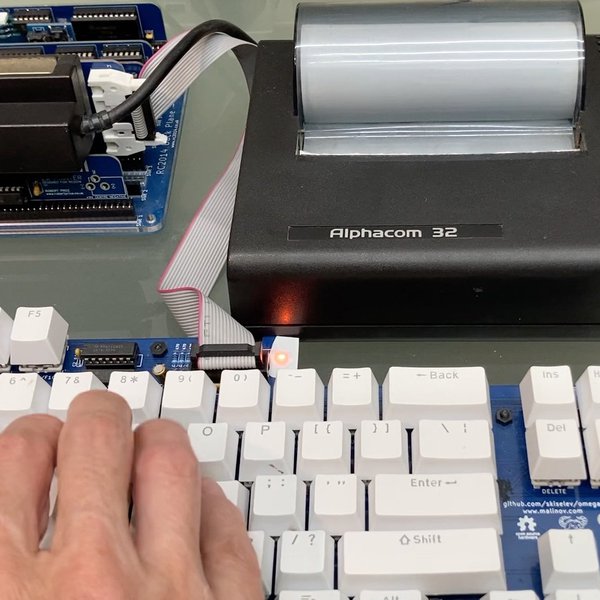
Period-correct technology would probably be a VDU terminal or its predecessor, a teletype terminal, which is an electric typewriter that sends serial output from its keyboard and prints serial input onto paper.
Here's where the Alphacom printer comes in. It was compatible and contemporary with the ZX81 and was a better option in many ways than Sinclair's ZX Printer. (The ZX computers had built-in line-printer capabilities.) Importantly there are plenty of the Alphacoms around today, working fine.
 A gentle introduction to CP/M – eerielinux
https://eerielinux.wordpress.com/2025/08/28/a-gentle-introduction-to-cp-m/
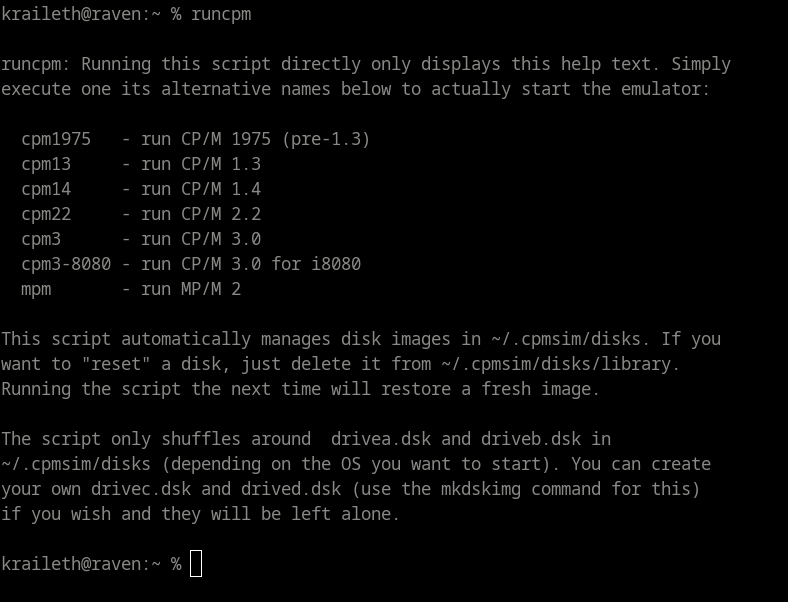
This article is just what the headline promises: an introduction to the CP/M operating system. No previous knowledge of 1970s and early ’80s operating systems is required. However, some familiarity with Linux or a BSD-style operating system is assumed, as the setup process suggested here involves using a package manager and command-line tools. But why explore CP/M in the 2020s? There are (at least) two good reasons: 1) historical education 2) gaining a better understanding of how computers actually work.
 Cidco MailStation as a Z80 Development Platform - joshua stein
https://jcs.org/2019/05/03/mailstation
The Cidco MailStation is a series of dedicated e-mail terminals sold in the 2000s as simple, standalone devices for people to use to send and receive e-mail over dialup modem. While their POP3 e-mail functionality is of little use today, the hardware is a neat Z80 development platform that integrates a 320x128 LCD, full QWERTY keyboard, and an internal modem.
After purchasing one (ok, four) on eBay some months ago, I've learned enough about the platform to write my own software that allows it to be a terminal for accessing BBSes via its modem or as a terminal for a Unix machine connected over parallel cable.
 The VTech Socratic Method | Leaded Solder
https://www.leadedsolder.com/2025/04/22/vtech-socrates-pickup.html
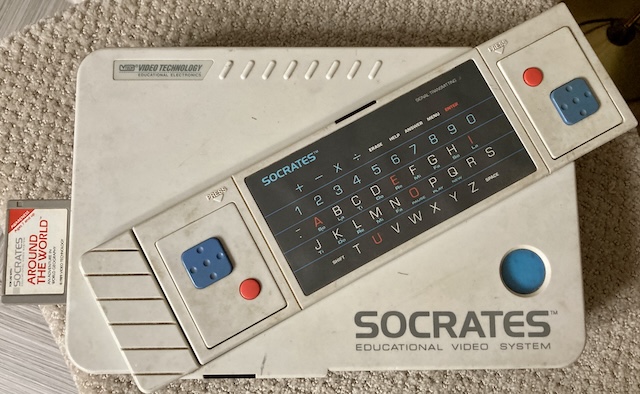
So we’ve managed to pick up an arbitrary educational computer off the side of the road, figure out its ROM pinout, make a composite mod for it, and draw pixels to the screen. Why am I still feeling dissatisfied? It’s because I don’t have printf working still.
 Pi Zero Serial Terminal « RC2014
https://rc2014.co.uk/modules/pi-zero-serial-terminal/
The Pi Zero Serial Terminal module allows you to plug the RC2014 in to an HDMI monitor or TV and a USB keyboard, thus use it without the reliance on another computer. [Ok, yes, you are still relying on another computer – the Pi Zero – but it’s small and neat within the RC2014 footprint]
Pi Zero Serial Terminal « RC2014
https://rc2014.co.uk/modules/pi-zero-serial-terminal
The Pi Zero Serial Terminal module allows you to plug the RC2014 in to an HDMI monitor or TV and a USB keyboard, thus use it without the reliance on another computer. [Ok, yes, you are still relying on another computer – the Pi Zero – but it’s small and neat within the RC2014 footprint]
 The RUM 80 – a home brew Z80 computer built from scratch | Hackaday
http://hackaday.com/2015/04/15/the-rum-80-a-home-brew-z80-computer-built-from-scratch/
hacker [Lumir Vanek] from the Czech Republic. Between 1985 and 1989, [Lumir] built his own home brew, Z80 based computer.
The RUM 80 – a home brew Z80 computer built from scratch | Hackaday
http://hackaday.com/2015/04/15/the-rum-80-a-home-brew-z80-computer-built-from-scratch
hacker [Lumir Vanek] from the Czech Republic. Between 1985 and 1989, [Lumir] built his own home brew, Z80 based computer.