
 What the AI era owes you. No one is going to save your career… | by Dan Maccarone | Oct, 2026 | UX Collective
https://uxdesign.cc/what-the-ai-era-owes-you-d472b3859bf3
This is not the pep talk anyone wants. The pep talk is that it’ll be fine, new jobs are coming, somebody’s got it handled, but that’s a lie. The reality is, nobody is coming to retrain you, but that is not the end of the story.
 Thorsten Ball - What I believe about the future of software development
https://thorstenball.com/blog/2026/09/19/what-i-believe-about-the-future-of-software-development/
This was originally posted on X and blew up. To plant my flag, to say that these are things I believed in September 2026, here it is on the blog, non-ephemeral. Some of these predictions are just observations, they’ve long been true at companies like Amp. Others will take some time to play out.
Technology Is Over - by James Taylor Foreman
https://www.taylorforeman.com/p/technology-is-over
Just like all the people who were worried about the nuclear bomb earlier in this age: the thing to do is to get on with living. Building a house, having a family, and being useful to people, and making things beautiful: making a garden, making a little hut where you can write your essays, cutting the grass and weed-eating. When all is said and done, twenty or fifty years from now, I have a strong feeling that most people will wish they had been doing that all along. That is what it practically means to believe that Technology Is Over.

 Alex Karp Says There's 2 Ways to Know If You Have a Future - Business Insider
https://www.businessinsider.com/alex-karp-future-ai-neurodivergent-vocational-skills-2026-3?op=1
Palantir CEO Alex Karp says there are two groups of people who shouldn't be worried about AI advancements.
"There are basically two ways to know you have a future," Karp said during a recent interview on TBPN. "One, you have some vocational training. Or two, you're neurodivergent."
 500 applications, 0 callbacks
https://mailchi.mp/rawsignal/500-applications-0-callbacks?e=688b6720bf
Once you accept that the front door is pointless, you get so much time back. Yeah, you still need a gig, we get it. But what if, instead of applying all your creativity and energy to the attempt to pass some invisible set of hurdles, or to writing exactly the right tone of follow up email when an interviewer ghosts you, what if instead of all that you just abandon the front door entirely and find another way?
That other way, by the way, is human connection.
OMG stop. Don't roll your eyes. You hate networking. It's so transactional and fake. It's all small talk and you hate small talk. Yes yes yes. We hate it, too. That's not what we mean. We mean that if the Applicant Tracking System Jello isn't where the hiring managers are any more, then you should start spending time elsewhere.
 2026 has been the most pivotal year in my career… and it's only March
https://nullprogram.com/blog/2026/03/29/
A small part of me is sad at what is lost. A bigger part is excited about the possibilities of the future. I’ve always had more ideas than time or energy to pursue them. With AI at my command, the problem changes shape. I can comfortably take on complexity from which I previously shied away, and I can take a shot at any idea sufficiently formed in my mind to prompt an AI — a whole skill of its own that I’m actively developing.

 The diminished art of coding | Read the Tea Leaves
https://nolanlawson.com/2026/03/22/the-diminished-art-of-coding/
My advice to other coders, or at least the advice I’m taking myself, is that if you’re looking for art in coding: stop looking. If you’ve never taken an interest in poetry, or painting, or dance, or whatever, now would be a good time. In an era where the internet is increasingly full of bots pumping their bland bot ideas into everybody’s brains, seeking out distinctly human forms of expression has become vital.

 Jeff Bezos makes brash statement about the future of popular hobby: 'It makes no sense'
https://tech.yahoo.com/ai/articles/jeff-bezos-makes-brash-statement-180000257.html?utm_source=flipboard&utm_content=topic/environment
As Tom's Guide reported, Bezos explained in a New York Times interview how the era of everyone having their own PC is coming to an end.
"This is what computation is like today; everyone has their own data center," Bezos said. "That's not going to last. It makes no sense. You're going to buy compute off the grid."
 マリウス . Hold on to Your Hardware
https://xn--gckvb8fzb.com/hold-on-to-your-hardware/
There is a darker, conspiratorial interpretation of today’s hardware trends that reads less like market economics and more like a rehearsal for a managed future. Businesses, having discovered that ownership is inefficient and obedience is profitable, are quietly steering society toward a world where no one owns compute at all, where hardware exists only as an abstraction rented back to the public through virtual servers, SaaS subscriptions, and metered experiences, and where digital sovereignty, that anyone with a PC tower under their desk once had, becomes an outdated, eccentric, and even suspicious concept.
 Something Big Is Happening — matt shumer
https://shumer.dev/something-big-is-happening
We're past the point where this is an interesting dinner conversation about the future. The future is already here. It just hasn't knocked on your door yet.
It's about to.
 Deciphering Glyph :: The Next Thing Will Not Be Big
https://blog.glyph.im/2026/01/the-next-thing-will-not-be-big.html
So, please design your open source libraries, applications, and services to run on smaller devices, with less complexity. It will be worth your time as well as your users’.
 The rise of AI denialism - Big Think
https://bigthink.com/the-present/the-rise-of-ai-denialism/
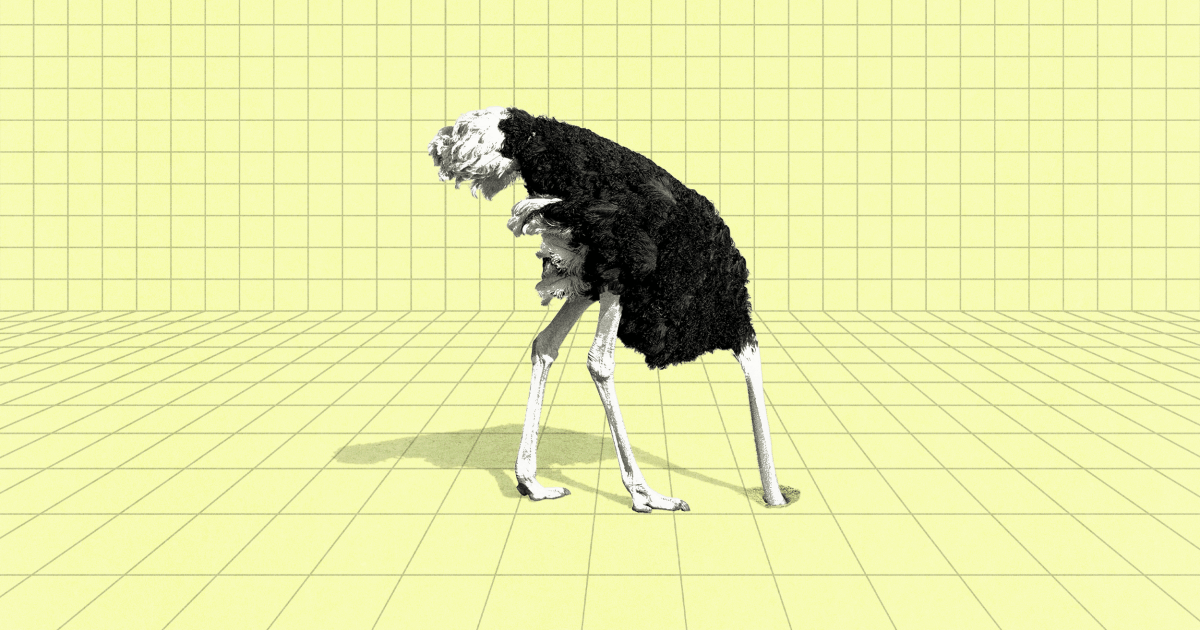
In other words, we are not watching a bubble expand with blustery vapors. We are watching a planet form from churning magma, and it will solidify into a new framework for society. Denial will only make us unprepared. This is not an AI bubble. This is real.
 China's Clean Energy Push is Powering Flying Taxis, Food Delivery Drones and Bullet Trains - The New York Times
https://www.nytimes.com/interactive/2025/12/17/climate/china-hefei-clean-energy-drones-evs-robots.html?unlocked_article_code=1.9k8.1fIH.r6yQXTdljzCN&smid=bs-share
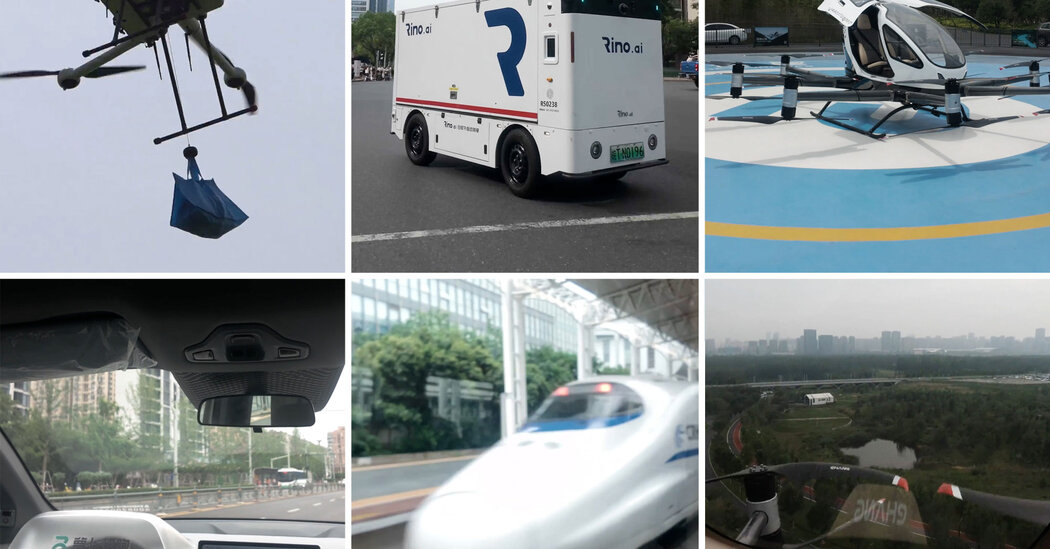
If all that sounds futuristic and perhaps bizarre, it also shows China’s ambition to dominate clean energy technologies of all kinds, not just solar panels or battery-powered cars, then sell them to the rest of the world. China has incurred huge debts to put trillions of dollars into efforts like these, along with the full force of its state-planned economy.
 Durable Consumables - Travers Nisbet
https://travers.fyi/durables?ref=sidebar
The frontier keeps moving. Progress keeps accelerating. The rational response is shorter time horizons, faster replacement cycles, less investment in permanence. I understand the logic. I just wonder what we lose when fewer objects around us are built with the assumption that they'll still be here, still working, still ours, decades from now.
Black Mirror is not a Pinterest board. - by Dave Karpf
https://davekarpf.substack.com/p/black-mirror-is-not-a-pinterest-board
Okay, now I need to yell about two news items. Because it seems like tech companies are treating Black Mirror like a goddamn Pinterest board.
Inside the Behind the Scenes Battle for the Future of the Web - Business Insider
https://www.businessinsider.com/google-microsoft-openai-fight-standards-limit-ai-access-websites-2025-9
In today's new AI era, products such as Google's AI Overviews and AI Mode, OpenAI's ChatGPT, and Perplexity deliver answers directly, often eliminating the need to visit the original source. These systems still rely on content scraped for free, but by cutting off traffic, they threaten the revenue that funds the creation of quality information online.
 Building the Hundred-Year Web Service with htmx - Alexander Petros - YouTube
https://www.youtube.com/watch?v=lASLZ9TgXyc
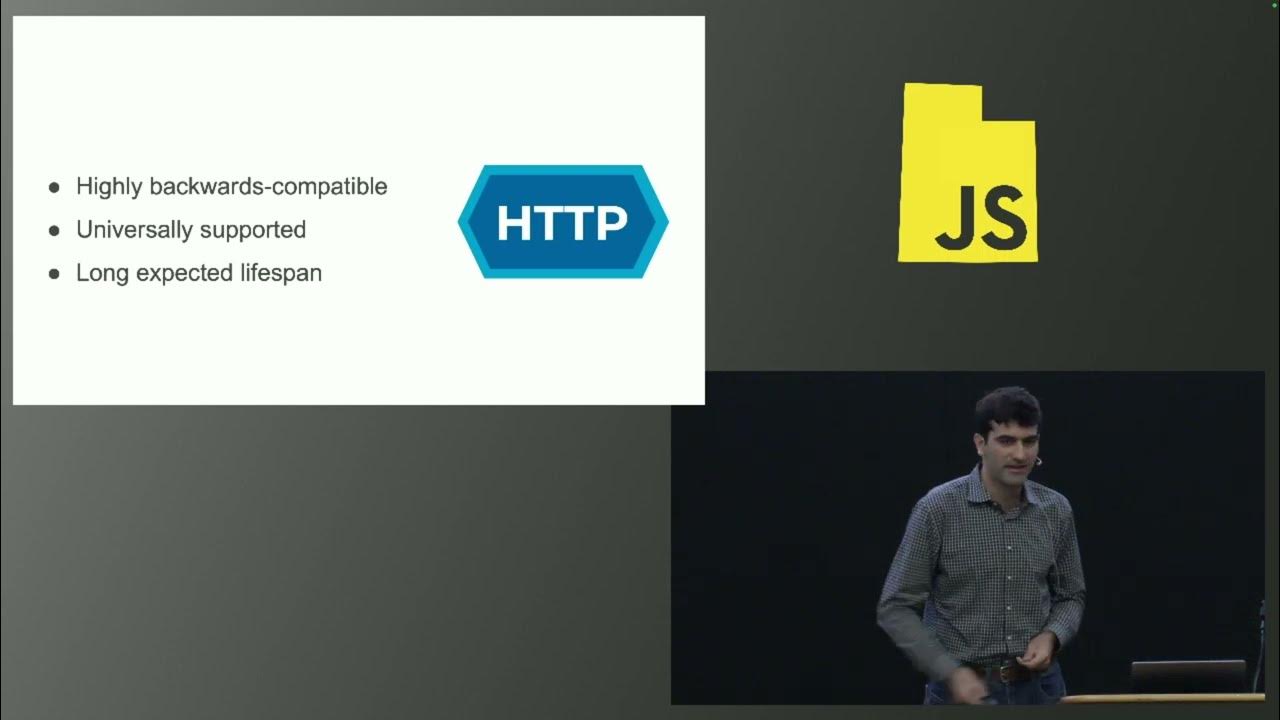
In the fast-moving JS ecosystem, keeping your software current can be a huge drain on resources. But what if there was way to write software that had minimal maintenance burden today and didn't inspire dread in the junior developers of tomorrow? Built into the web platform are all the capabilities necessary to create useful, networked services that last for decades—we just have to build in ways that takes advantage of them.
 You Want Technology With Warts
https://entropicthoughts.com/you-want-technology-with-warts
Every single wart that annoys us today, used to be a reasonable feature that someone relied on in their production code. Every wart we see today is a testament to the care the maintainers put into backward compatibility. If we choose a technology today, we want one that saves us from future maintenance by keeping our wartful code running – even if we don’t yet know it is wartful. The best indicator of this is whether the technology has warts today.

 this is why we don't read the Golden Age anymore.
https://undercover-in-the-apocalypse.ghost.io/this-is-why-we-dont-read-the-golden-age-anymore/

 AI Is a Mass-Delusion Event - The Atlantic
https://www.theatlantic.com/technology/archive/2025/08/ai-mass-delusion-event/683909/
Good enough has been keeping me up at night. Because good enough would likely mean that not enough people recognize what’s really being built—and what’s being sacrificed—until it’s too late. What if the real doomer scenario is that we pollute the internet and the planet, reorient our economy and leverage ourselves, outsource big chunks of our minds, realign our geopolitics and culture, and fight endlessly over a technology that never comes close to delivering on its grandest promises? What if we spend so much time waiting and arguing that we fail to marshal our energy toward addressing the problems that exist here and now? That would be a tragedy—the product of a mass delusion. What scares me the most about this scenario is that it’s the only one that doesn’t sound all that insane.

 GPT5 and the end of naive AI futurism - by Dave Karpf
https://davekarpf.substack.com/p/gpt5-and-the-end-of-naive-ai-futurism
The most noteworthy thing about the public reaction to GPT5 (which Max Read summarizes as “A.I. as normal technology (derogatory)” is that it blew no one’s mind. If you find ChatGPT to be remarkable and life changing, then this next advance is pretty sweet. It’s a stepwise improvement on the existing product offerings. But it isn’t a quantum leap. No radical new capabilities have been unlocked. GPT5 is to GPT4 as the iPhone16 is to the iPhone 15 (or, to be charitable, the iPhone 12).
 They Let Me Live
https://blog.bovid.space/they-let-me-live
"The friend-guild shows up for all kinds of people in need. We're visiting nurses. We're aid advocates. We're often first responders. My grandma lost her legs to a mine in the Horrors, and there wasn't enough medicine to keep it from getting a lot worse. I volunteered when I was sixteen so I could be the one appointed to feed her and bathe her, because she found it more dignified when it was family. She spent her last years in pain, but the guy who laid the mine? Who knows if they'll ever think about it? What would it change, if they did? The mine was laid. We can disarm the mines, we can demolish the munitions factories, we can even abolish war itself, but there was no restoring her. We have to live with the damage. We have to live in reality."
 My 20 Year Career is Technical Debt or Deprecated
https://blog.visionarycto.com/p/my-20-year-career-is-technical-debt
My entire career is now technical debt, or the code has been deprecated.
 Opinion | How to meet the climate crisis? Redefine ‘abundance.’ - The Washington Post
https://www.washingtonpost.com/opinions/2023/03/15/rebecca-solnit-climate-change-wealth-abundance/
What if we imagined “wealth” consisting not of the money we stuff into banks or the fossil-fuel-derived goods we pile up, but of joy, beauty, friendship, community, closeness to flourishing nature, to good food produced without abuse of labor? What if we were to think of wealth as security in our environments and societies, and as confidence in a viable future?
Opinion | How to meet the climate crisis? Redefine ‘abundance.’ - The Washington Post
https://www.washingtonpost.com/opinions/2023/03/15/rebecca-solnit-climate-change-wealth-abundance
What if we imagined “wealth” consisting not of the money we stuff into banks or the fossil-fuel-derived goods we pile up, but of joy, beauty, friendship, community, closeness to flourishing nature, to good food produced without abuse of labor? What if we were to think of wealth as security in our environments and societies, and as confidence in a viable future?
 What does it look like for the web to lose? - Chris Coyier
https://chriscoyier.net/2023/01/04/what-does-it-look-like-for-the-web-to-lose/
Better yet, let’s ditch the idea of native apps. All web! All web! All web!
What does it look like for the web to lose? - Chris Coyier
https://chriscoyier.net/2023/01/04/what-does-it-look-like-for-the-web-to-lose
Better yet, let’s ditch the idea of native apps. All web! All web! All web!
 Transcribing all our conversations 24/7 will be weird and also useful maybe (Interconnected)
https://interconnected.org/home/2022/12/14/transcription
Sooner or later, every single conversation I have will be recorded and transcribed and I’ll be able to look back at it later – details from a phone call with the bank, in the hardware store asking a question, someone mentions a book at the pub, an idea in a workshop. Ignoring the societal consequences for a sec lol ahem… how should the app to manage all that chatter work?
 The End of Affordable Travel – 2069 – Medium
https://medium.com/s/2069/the-end-of-affordable-travel-2c6301d2073d
It could well be that future generations spend a fraction of the time we do today in transit but see far more of the world. Like preindustrial humans, they may work mostly in their homes
 WIPP Exhibit: Message to 12,000 A.D.
http://www.wipp.energy.gov/picsprog/articles/wipp%20exhibit%20message%20to%2012,000%20a_d.htm
This place is not a place of honor.
No highly esteemed deed is commemorated here.
Nothing valued is here.
This place is a message and part of a system of messages.
Pay attention to it!
Sending this message was important to us.
We considered ourselves to be a powerful culture.
 The Future of Work is "Turking for Uber" and you Won't Like it
http://www.homefreeamerica.us/future-work-turking-uber-wont-like/
80-90% of the work that is currently being done will be automated in the next 20-30 years.
The Future of Work is "Turking for Uber" and you Won't Like it
http://www.homefreeamerica.us/future-work-turking-uber-wont-like
80-90% of the work that is currently being done will be automated in the next 20-30 years.
 Paul O’Shannessy - Do We Need Node?
http://zpao.com/posts/do-we-need-node/
So what do I want? I want a world where the core JS engine is swappable. Maybe I’m deploying on an architecture not supported by V8 (Node on SPARC came up while working on SpiderNode). Maybe my employer only wants to use the JVM. Or maybe Microsoft can get some performance wins by using Chakra for Windows Azure. Back to modules, I don’t want to get rid of npm. Or maybe I do and I want something that only supports ES6+ modules.
Paul O’Shannessy - Do We Need Node?
http://zpao.com/posts/do-we-need-node
So what do I want? I want a world where the core JS engine is swappable. Maybe I’m deploying on an architecture not supported by V8 (Node on SPARC came up while working on SpiderNode). Maybe my employer only wants to use the JVM. Or maybe Microsoft can get some performance wins by using Chakra for Windows Azure. Back to modules, I don’t want to get rid of npm. Or maybe I do and I want something that only supports ES6+ modules.
 How the internet is making us poor – Quartz
http://qz.com/67323/how-the-internet-made-us-poor/
Barring a civilization-ending event, technology is not going to move backward. More and more of our world will be controlled by software. It’s already become so ubiquitous that, argues one of my colleagues, it’s now ridiculous to call some firms as “tech” companies when all companies depend on it so much.
How the internet is making us poor – Quartz
http://qz.com/67323/how-the-internet-made-us-poor
Barring a civilization-ending event, technology is not going to move backward. More and more of our world will be controlled by software. It’s already become so ubiquitous that, argues one of my colleagues, it’s now ridiculous to call some firms as “tech” companies when all companies depend on it so much.
 Firefox's birthday present to us: Teaching tech titans about DIY upstarts • The Register
http://www.theregister.co.uk/2012/09/28/firefox_legacy/
Given technology's focus on the latest and greatest, it's easy to forget that much of this "latest and greatest" wouldn't even be possible without the work Mozilla did for years with Firefox. Or that dominating the browser market was never Mozilla's aim with Firefox.
Quixotic as it may sound, the purpose of Firefox was always to spread Web freedom.
Firefox's birthday present to us: Teaching tech titans about DIY upstarts • The Register
http://www.theregister.co.uk/2012/09/28/firefox_legacy
Given technology's focus on the latest and greatest, it's easy to forget that much of this "latest and greatest" wouldn't even be possible without the work Mozilla did for years with Firefox. Or that dominating the browser market was never Mozilla's aim with Firefox.
Quixotic as it may sound, the purpose of Firefox was always to spread Web freedom.
 #shitsiskosays - Charlie's Diary
http://www.antipope.org/charlie/blog-static/2012/02/shitsiskosays.html
I've been struck particularly by two things missing from the DS9 universe--one unpredictable in the 1993-99 span of the series, and one predictable but unattractive from the creators' standpoint.
Nobody uses social media, and nobody wastes time.
 You knew the old Mozilla, meet the new Mozilla – david ascher
http://blog.ascher.ca/2011/12/19/you-knew-the-old-mozilla-meet-the-new-mozilla
While that fight is far from over, we’re now at a distinct point in the evolution of the web, and Mozilla has appropriately looked around, and broadened its reach. In particular, the browser isn’t the only strategic front in the struggle to promote and maintain people’s sovereignty over their online lives. There are now at least three other fronts where Mozilla is making significant investments of time, energy, passion, sweat & tears. They’re still in their infancy, but they’re important to understand if you want to understand Mozilla:
 No Copyright Intended - Waxy.org
http://waxy.org/2011/12/no_copyright_intended
Remix culture is the new Prohibition, with massive media companies as the lone voices calling for temperance. You can criminalize commonplace activities from law-abiding people, but eventually, something has to give.
 Zittrain in Technology Review: The personal computer is dead
http://www.law.harvard.edu/news/2011/11/30_zittrain-the-personal-computer-is-dead.html
Both software developers and users should demand more. Developers should look for ways to reach their users unimpeded, through still-open platforms, or through pressure on the terms imposed by the closed ones. And users should be ready to try "off-roading" with the platforms that still allow it—hewing to the original spirit of the PC, perhaps amplified by systems that let apps have a trial run on a device without being given the keys to the kingdom. If we allow ourselves to be lulled into satisfaction with walled gardens, we'll miss out on innovations to which the gardeners object, and we'll set ourselves up for censorship of code and content that was previously impossible. We need some angry nerds.
 LukeW | The Web OS is Already Here…
http://www.lukew.com/ff/entry.asp?1441=
Let me restate that simply. The Web (browser) is inside of every application instead of every application being inside the Web (browser).
 Must Watch: Bill Nye, Neil deGrasse Tyson, Pamela Gay, and Lawrence Krauss discuss our future in space [Video]
http://feeds.gawker.com/~r/io9/vip/~3/du8yiu5mRr4/must-watch-bill-nye-neil-degrasse-tyson-pamela-gay-and-lawrence-krauss-discuss-our-future-in-space
 Smartphone brain scanner
http://www.kurzweilai.net/smartphone-brain-scanner
Are jobs obsolete?
http://www.kurzweilai.net/are-jobs-obsolete
 Makers and breakers
http://futurismic.com/2011/08/08/makers-and-breakers
Karl Schroeder’s Space Shuttle send-off
http://futurismic.com/2011/07/22/karl-schroeders-space-shuttle-send-off
Blood sugar tech’s magic
http://futurismic.com/2011/07/20/blood-sugar-techs-magic
David Brin talks sousveillance | Blog | Futurismic
http://futurismic.com/2011/05/23/david-brin-talks-sousveillance
Digging into our consciousness
http://www.kurzweilai.net/consiousness-is-rooted-brain-stem-animals-possess-consciousness-says-neuroscience-professor
US and China to have manufacturing costs parity by 2015? | Blog | Futurismic
http://futurismic.com/2011/05/09/us-and-china-to-have-manufacturing-costs-parity-by-2015
Evidence suggests that caffeine is a healthful antioxidant
http://www.kurzweilai.net/evidence-suggests-that-caffeine-is-a-healthful-antioxidant
Meditation may help the brain reduce distractions and focus
http://www.kurzweilai.net/meditation-may-help-the-brain-reduce-distractions-and-focus
Smartphone app produces 3D scans
http://www.kurzweilai.net/smartphone-app-produces-3d-scans
Transcendent Men: is transhumanism ready for its close-up? | Blog | Futurismic
http://futurismic.com/2011/04/06/transcendent-men-is-transhumanism-ready-for-its-close-up
First complete millimeter-scale computing system to be implanted in the eye
http://www.kurzweilai.net/first-complete-millimeter-scale-computing-system-to-be-implanted-in-the-eye
This is why trying to prevent book piracy is utterly futile | Blog | Futurismic
http://futurismic.com/2011/02/16/this-is-why-trying-to-prevent-book-piracy-is-utterly-futile
Chinese Could Replace English as Dominant Internet Language
http://www.kurzweilai.net/chinese-could-replace-english-as-dominant-internet-language
Nanowire ‘racetrack’ memory could be 100,000 times faster
http://www.kurzweilai.net/nanowire-racetrack-memory-could-be-100000-times-faster
Scientists suggest that cancer is purely man-made
http://www.kurzweilai.net/scientists-suggest-that-cancer-is-purely-man-made
Emotiv EPOC EEG Headset Hacked
http://www.kurzweilai.net/emotiv-epoc-eeg-headset-hacked
 Sugar Within Human Bodies Could Power Future Artificial Organs: Scientific American
http://www.scientificamerican.com/article.cfm?id=glucose-body-fuel-cell
"Now there is hope that future implants might be powered not by batteries but by the fuels in our bodies that are used for energy. Scientists have shown that fuel cells implanted in rats can successfully generate electricity from sugar in the rodent's bodies. The devices kept going for months at a time."
 Will Wall Street require Python? | ITworld
http://www.itworld.com/government/105031/will-wall-street-require-python
Charles Stross was right. "with Release 33-9117, the SEC is considering substitution of Python or another programming language for legal English as a basis for some of its regulations."
 Clifford Stoll: Why Web Won't Be Nirvana - Newsweek.com
http://www.newsweek.com/id/106554
This sounds so much more funny when read with a REALLY sarcastic voice. "Baloney. Do our computer pundits lack all common sense? The truth in no online database will replace your daily newspaper, no CD-ROM can take the place of a competent teacher and no computer network will change the way government works."
Redefining friendship: Facebook, MMORPGs and Dragon Age Origins | Blasphemous Geometries | Futurismic
http://futurismic.com/2010/01/06/redefining-friendship-facebook-mmorpgs-and-dragon-age-origins
"The end of human civilisation is millions of World of Warcraft servers with only one human player on each of them. Dragon Age: Origins seems to bring that day one step closer."
 Lost in the Filth Simulacrum | h+ Magazine
http://hplusmagazine.com/articles/art-entertainment/lost-filth-simulacrum
"Yet what the media has failed to grasp is what 4chan can tell us about where we're headed. The Chans aren't the freak sideshow of the Internet. They are the heart and soul of the Internet. And they are the ones furthest ahead of the pack, leading us. At this point there should be little doubt that the Internet is mutating the human species into something completely different. Therefore it's instructive to look at the most extreme, freebased forms of the Internet to see where we're going -- and 4chan is that freebased version of mankind's new drug of choice."
Detroit: the new frontier? | Blog | Futurismic
http://futurismic.com/2009/11/09/detroit-the-new-frontier
HAHAHAHAHAHAHAHAHAHA. Oh, wait, that's not The Onion. "Imagine for a moment that this trend continues – might Detroit become some sort of independent city-state, a mildly anarchic rough-and-ready town where the price of freedom is a willingness to work hard for yourself and with your neighbours?"
 Reasons to be optimistic for the future - opinion - 09 September 2009 - New Scientist
http://www.newscientist.com/article/mg20327252.700-reasons-to-be-optimistic-for-the-future.html
"Now, more than ever, science and reason must prevail. The scale of the challenge is hard to overstate, but New Scientist is optimistic that we can succeed: our boundless doomsaying is more than matched by our boundless creativity and our ability to, eventually, do the right thing."
 A Virtual Revolution Is Brewing for Colleges - washingtonpost.com
http://www.washingtonpost.com/wp-dyn/content/article/2009/09/11/AR2009091104312.html
"If the mainstream of "college teaching" becomes a set of atomistic, underpaid adjuncts, we'll lose a precious academic tradition that is not easily replaced."
 Videogames And The Impossibility Of Escape From Planet Earth | jim rossignol
http://rossignol.cream.org/?p=844
"if space flight is really going to take thousands of years, hundreds of generations, and immense resources that could be better spent on having a good time, why should millions of sentient beings be expected to sink their lives into making it happen?"
 Ann Arbor and Warren: A Tale of Two Economies - WSJ.com
http://online.wsj.com/article/SB124329299105252505.html
 Op-Ed Columnist - Time to Reboot America - NYTimes.com
http://www.nytimes.com/2008/12/24/opinion/24friedman.html
 Schneier on Security: The Future of Ephemeral Conversation
http://www.schneier.com/blog/archives/2008/11/the_future_of_e.html
 Where will all the web developers go? | Morethanseven
http://morethanseven.net/2008/11/30/where-will-all-web-developers-go
"So. What happens in 10–20 years time to the now quite large number of professional web developers.Do we all just do the same thing we’re doing now. Just with higher version numbers? ... Do we all become managers? ... Is their another industry that will have us?"
 Human Computer Interaction in Science Fiction Movies
http://w5.cs.uni-sb.de/~butz/teaching/ie-ss03/papers/HCIinSF
"Science Fiction movies have been a source for speculation about the future of technology and human computer interaction. This paper presents a survey of different kinds of interaction designs in movies during the past decades and relates the techniques of the films to existing technologies and prototypes where possible. The interactions will be categorized with respect to their domain of real-life applications and also evaluated in regard to results of current research in human computer interaction."
 Dan Simmons - Author's Official Web Site
http://www.dansimmons.com/news/message/2006_04.htm
"Athens failed in Syracuse – and doomed their democracy – not because they fought in the wrong place and at the wrong time, but because they weren’t ruthless enough."
 Barack Obama | Obama HQ Blogger: Barack in Lansing, MI: "We must end the age of oil in our time."
http://my.barackobama.com/page/community/post/stateupdates/gG5zCW
"We simply cannot pretend, as Senator McCain does, that we can drill our way out of this problem. We need a much bolder and much bigger set of solutions. We have to make a serious, nationwide commitment to developing new sources of energy and we have to do it right away. "
 Learning from King and Whedon, and getting out of the ghetto | J.C. Hutchins' 7th Son: OBSIDIAN (Current Shows)
http://jchutchins.net/site/2008/07/26/learning-from-king-and-whedon-and-getting-out-of-the-ghetto
"You’re never just a blogger, or a podcaster, or a YouTube Director. If we mentally adhere to these labels, we willfully paint ourselves into creative corners. If the fumes don’t kill you, the frustration will."
 disambiguity - » Some unformed thoughts on Ambient Intimacy for the next generation
http://www.disambiguity.com/some-unformed-thoughts-on-ambient-intimacy-for-the-next-generation
"For example, assuming that within the next few years, more and more people will have a social presence online, my little guy will have no real excuse to ‘lost contact’ with anyone he makes contact with."
 Berners-Lee: Challenge of the web is 'creative connectivity' - Education - Macworld UK
http://www.macworld.co.uk/education/news/index.cfm?NewsID=21635&RSS=
"In the future, the web should be able to connect people's ideas in such a way that one person could store his partly formed ideas and leave a trail of his thinking for other people trying to solve the same problem, he said."
 THE FUTUROLOGIAN CONGRESS
http://burri.to/~joshua/fut.html
"In The Futurological Congress, Stanislaw Lem's protagonist finds himself discussing futurology with a scientist and discovers it has been superceded by futurology — the science of predicting the future by making up words and guessing what they might me
 Daily Kos: Tech illiterate
http://www.dailykos.com/story/2008/6/11/134456/659/888/534064
"How can a candidate who admits he is stuck in the 20th century lead a country in the 21st, when he lacks even the most basic understanding of how this brave new century operates? He doesn't know how people interact and communicate. He doesn't know have t
 jkOnTheRun: I'm taking the web-only challenge. Are you in?
http://www.jkontherun.com/2008/06/im-taking-the-w.html
"A paradigm shift. A glimpse into what I expect we'll see in the future. Namely: a centralized heavy-duty box for the home, but lighter, portable web devices for the home's inhabitants."
 Tinselman: The Mother of All Demos
http://tinselman.typepad.com/tinselman/2008/06/the-mother-of-a.html
"Douglas Engelbart's whirling vision of the future; it was the first public use of a mouse, as well as examples of cutting, copying, pasting, teleconferencing, video conferencing, email, and... hypertext. It's just too damn much for 1968!"
 The Future Without IPv6 - Vox
http://jhw.vox.com/library/post/the-future-without-ipv6.html
"It's time to start talking about what the Internet will be like in a future where we abandon all our efforts toward the IPv6 transition. Because the transition isn't happening."
 Steal This Pitch: How To Bring The Weird In Your Near-Future Stories
http://io9.com/382916/how-to-bring-the-weird-in-your-near+future-stories
"The weirdness will swarm exponentially, making the world of 2028 easily as jarring as 2008 would seem to a visitor from the Reagan era. So how can we, as writers and storytellers, create a believable medium-near-future world?"
 Kevin Kelly -- The Technium
http://www.kk.org/thetechnium/archives/2008/02/the_bottom_is_n.php
"I think the top-down function of editors -- to select, prune, guide, solicit, shape, and guide the results from the crowd -- is essential to excellence."
 Unasked-For Advice to New Writers About Money
http://scalzi.com/whatever?p=362
"it very often appears to me that regardless of how smart and clever and interesting and fun my fellow writers are on every other imaginable subject, when it comes to money — and specifically their own money — writers have as much sense as chimps on c
 uwnews.org | Contact lenses with circuits, lights a possible platform for superhuman vision | University of Washington News and Information
http://uwnews.washington.edu/ni/article.asp?articleID=39094
"A full-fledged display won't be available for a while, but a version that has a basic display with just a few pixels could be operational "fairly quickly," according to Parviz."
 Coming Soon to a Theater Near You: The Singularity
http://www.wired.com/entertainment/hollywood/news/2007/11/kurzweil_qa
"Ray Kurzweil ... [is] adapting his latest book to make a movie titled The Singularity Is Near: A True Story About The Future."
 ongoing · The Intimate Internet
http://www.tbray.org/ongoing/When/200x/2007/10/04/Intimate-Internet
"The Next Big Thing? · Two fearless predictions: it’ll be about a new way to connect to people, and it won’t show up first on either Techmeme or TechCrunch."
 I, Cringely . The Pulpit . Surviving Immortality | PBS
http://www.pbs.org/cringely/pulpit/2007/pulpit_20070817_002727.html
"The Singularity may well bring with it the end of death, but I am 100 percent certain that taxes will survive."
 The Physics of Extraterrestrial Civilizations | Dr. Michio Kaku | Theoretical Physicist. Author. Professor.
http://www.mkaku.org/articles/physics_of_et.html
"How advanced could they possibly be?"
 ASCII by Jason Scott: Fails Under Load
http://ascii.textfiles.com/archives/000444.html
"If you refuse to recognize its importance, if you think of people issues as minor annoyances towards a glory of a newly minted era of freedom midwifed by connectivity, your project will fail under load."
I Love It, It’s Perfect, Now It Changes - New York Times
http://www.nytimes.com/2007/07/15/fashion/15discontinued.html?ei=5124&en=fc9b0f3f8acefe3d&ex=1342324800&exprod=permalink&partner=permalink
"the truth is, many consumers bemoan the incessant rush of innovation that pushes manufacturers to tamper with products the consumers feel are already perfect."
Charlie's Diary: Unpacking the Zeitgeist
http://www.antipope.org/charlie/blog-static/2007/07/unpacking_the_zeitgeist.html
"There are thirty years' worth of future shock condensed into this one news item."
 Wired Science Wonders 003: David Brin - Wired Blogs
http://blog.wired.com/wiredscience/2007/06/wired_science_w.html
"Then, we might roll up our sleeves and start negotiating with each other like adults, using all the tools of science and art, finding ways to heal the world."
 YouTube - Flight Of The Conchords - The Humans Are Dead
http://youtube.com/watch?v=WGoi1MSGu64
"The mighty folk comedy duo New Zealand's Flight Of The Conchords proform their song "Humans Are Dead" Enjoy"
 warrenellis.com » Blog Archive » It’s BIOTECH VAGINA Day
http://www.warrenellis.com/?p=4424
"Five years from now? Biotech vagina case-mods on Boing Boing. I’m telling you."
 Technological singularity - Wikipedia, the free encyclopedia
http://en.wikipedia.org/wiki/Technological_singularity
"The Technological Singularity is the hypothesized creation, usually via AI or brain-computer interfaces, of smarter-than-human entities that rapidly accelerate technological progress."
Charlie's Diary: Shaping the future
http://www.antipope.org/charlie/blog-static/2007/05/shaping_the_future.html
"I'm going to ignore the temptation to talk about a whole lot of subjects — global warming, bioengineering, the green revolution, the intellectual property wars — and explain why, sooner or later, everyone in this room is going to end up in Wikipedia.
 Forbes.com - Magazine Article - The Inside-Out Web
http://www.forbes.com/forbes/2007/0507/156_print.html
"What will replace the Internet? Something safer, more personal, more manageable."
Justin Timberlake - Culture - Hollywood - Idea Lab - New York Times
http://www.nytimes.com/2007/04/15/magazine/15wwlnidealab.t.html?ei=5124&en=79be2f770fc76c6d&ex=1334203200&exprod=permalink&pagewanted=all&partner=permalink
"we should treat both the predictions and the explanations we are served — whether about the next hit single, the next great company or even the next war — with the skepticism they deserve."
 Open the Future: Augmented Fluid Intelligence
http://www.openthefuture.com/2007/04/augmented_fluid_intelligence.html
"These kinds of bots -- attention filters, perhaps, or focus assistants -- are likely to become important parts of how we handle our daily lives."
 What If the Singularity Does NOT Happen
http://www-rohan.sdsu.edu/faculty/vinge/longnow
Here are the "slides" for my talk at Seminars about Long-Term Thinking, 15 February 2007.
 YouTube - I am the very model of a Singularitarian
http://www.youtube.com/watch?eurl=http://lifeboat.com/ex/videos&v=qnreVTKtpMs
"Charlie Kam has written and recorded a humorous Singularitarian version of Gilbert & Sullivan's "I Am The Very Model of a Modern Major General," from the Gilbert & Sullivan opera, "The Pirates of Penzance.""
 Alan Kay: The PC Must Be Revamped--Now
http://www.cioinsight.com/print_article2/0,1217,a=200162,00.asp
"in the last few years I've been asking computer scientists and programmers whether they've ever typed E-N-G-E-L-B-A-R-T into Google-and none of them have."
 Don Norman's jnd.org / UI Breakthrough-Command Line Interfaces
http://www.jnd.org/dn.mss/ui_breakthroughcomma.html
"So now command line interfaces are back again, hiding under the name of search. ... And they will get better and better with time: mark my words, that is my prediction for the future of interfaces."
 The persistent blogosphere « Jon Udell
http://blog.jonudell.net/2007/01/29/the-persistent-blogosphere
"Just because most blog entries aren’t written for posterity doesn’t mean that many can’t be or shouldn’t be. My view is that blogs are becoming our resumes, our digital portfolios, our public identities."
 Neural 'extension cord' developed for brain implants - tech - 19 January 2007 - New Scientist Tech
http://www.newscientisttech.com/article/dn10997-neural-extension-cord-developed-for-brain-implants.html
"A "data cable" made from stretched nerve cells could someday help connect computers to the human nervous system. The modified cells should form better connections with human tissue than the metal electrodes currently used for purposes such as remotely co
 SoldierTech: The DREAD Weapon System
http://www.military.com/soldiertech/0,14632,Soldiertech_DREAD,,00.html
"No heat, no recoil, no sound, no gunpowder, no flash -- just 120,000 rounds per minute of pulverizing power."
 Ray Kurzweil: Computers Will Extend Human Lifespan - VARBusiness
http://www.varbusiness.com/sections/news/breakingnews.jhtml?articleId=195800050&cid=VARBusinessNews
"In just 15 years, we'll begin to see the merger of human and computer intelligence that ultimately will enable people to live forever. At least that's the prediction of author and futurist Ray Kurzweil."
 Laser Furniture | MetaFilter
http://www.metafilter.com/mefi/55982
"Sketch Furniture, aka Furniture Made With Frickin' Lasers. Swedish designers use motion capture technology to draw chairs and tables with light in mid-air. Their sketches are then built out of plastic by a laser into real pieces of furniture."
 365 tomorrows ‽ If You Love Someone
http://www.365tomorrows.com/10/03/if-you-love-someone
"She had no choice but to let him die tonight. She knew neither of them could survive him ever being killed again."
365 tomorrows - What is a Soul?
http://www.365tomorrows.com/09/28/what-is-a-soul
"He could keep writing forever at this point. He knew writing was important, but he could no longer remember why."
 3pointD.com - Blog Archive - Vernor Vinge Paints the Future at AGC
http://www.3pointd.com/20060908/vernor-vinge-paints-the-future-at-agc
"Think back to that time, what would it be like to be the first human to ever tell a joke, or the first storyteller. Anything you did would be new — and the fact that it was crap wouldn’t matter."
 Lab-Grown Meat (Schulze & Webb)
http://www.schulzeandwebb.com/2005/meat
"While at the RCA, Jack took part in a brief run by Tony Dunne on the industrial future of food and lab-grown meat (a staple of the newspaper columns in 2005)."
 The Ambassador from the Next Economy
http://www.strategy-business.com/press/article/06309?gko=e3a5a-1876-18060308
"Just as some people are obsessed with money and are willing to do boring things day in and day out to be wealthy, I’m obsessed with always being in a state of wonder."
365 tomorrows - Revenge
http://www.365tomorrows.com/06/07/revenge
"It's legal as long as you grow the clone without a functional brain stem."
 Defense Tech: Set Cammos to Vibrate
http://www.defensetech.org/archives/002461.html
"In other words, it may soon be possible for budding Bene Gesserits, with appropriate training, to receive volumes of material via the sensitive parts of the body."
 BBC NEWS | Technology | Libraries fear digital lockdown
http://news.bbc.co.uk/1/hi/technology/4675280.stm
"Libraries have warned that the rise of digital publishing may make it harder or even impossible to access items in their collections in the future."
 The next big bang: Man meets machine | CNET News.com
http://news.com.com/The+next+big+bang+Man+meets+machine/2100-1008_3-6076627.html
"research on multiple fronts in digital technology, biotechnology and nanotechnology may, over the next half century, alter the way we think about computers and information, and our relationship to them"
365 tomorrows - Always Summer
http://www.365tomorrows.com/05/29/always-summer
"You can't buy weather like that. Somewhere, its always sunny and its always summer. The trick is to find that place and build a house."