talk: the P2P chat from 1983 that a VPN brought back to life | Andros Fenollosa
https://en.andros.dev/blog/03a4ffb9/talk-the-p2p-chat-from-1983-that-a-vpn-brought-back-to-life/
Before the internet, people could already chat. It is a topic that has always intrigued me: how was it possible? As a kid I had already heard about a command called talk, and the most impressive part is that you can still use it today, with no sign-ups and straight from the terminal, even in workplaces where I work over a VPN. It is not dead: it is just that few people know its potential.
 The Boring Internet (text) | Terry Godier
https://www.terrygodier.com/the-boring-internet/ascii
Some things need to become enormous to survive. Other things survive because they never needed to become enormous.

 gradient.horse
https://gradient.horse/
Honestly I just wanted to play around with gradients. But gradients without anything on the horizon lack something, so I added horses. Since I can't draw horses, now you can draw them. And watch them parade across the screen alongside horses drawn by people you probably wouldn't like. Or maybe you would, how should I know?!

 The Zurich protocol
https://werd.io/the-zurich-protocol/
They lined up the editors first, zip tying their hands together and leading them into vans downstairs. Then they began to gather the rest of the journalists. Laptops were gathered from desks. The server room, such as it was in the wake of zero trust and enterprise cloud services, had its door kicked in, switches and rack servers ripped out of their frames. One IT support engineer objected and found a gun in his face, the safety off, its owner ready to make them into an example.
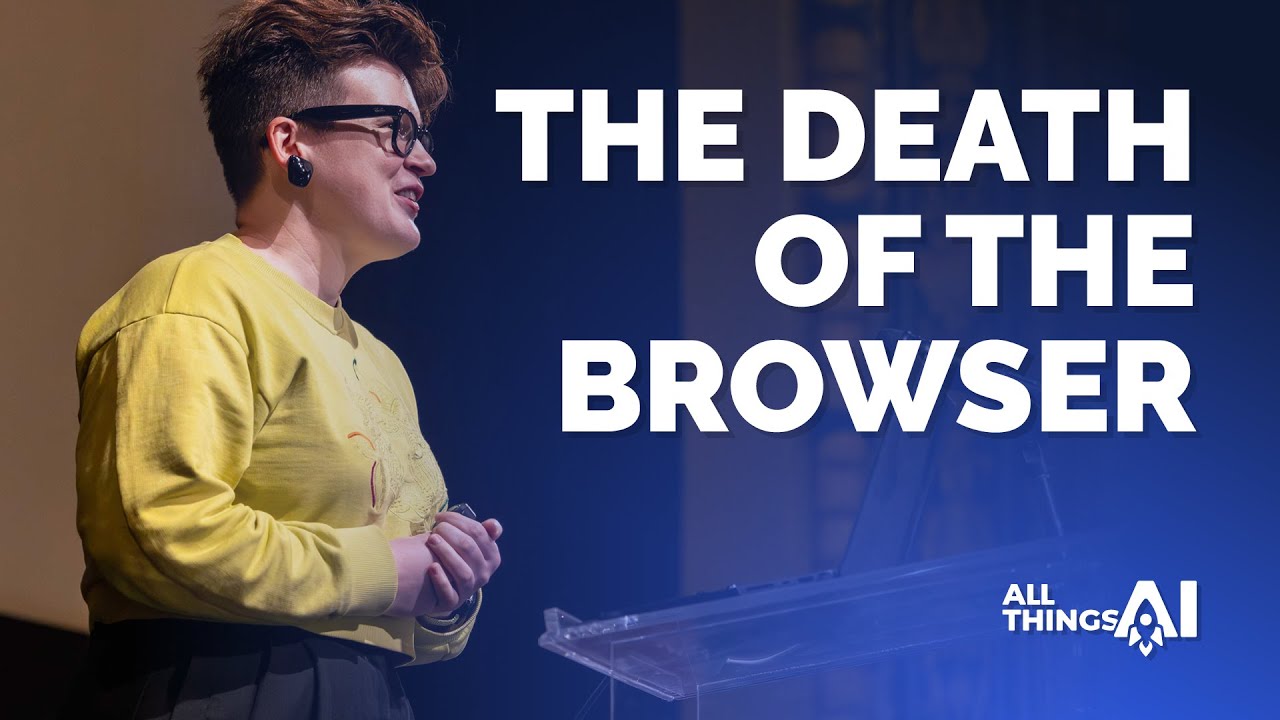
 Keynote: The Death of the Browser - Rachel-Lee Nabors, AgentQL - YouTube
https://www.youtube.com/watch?v=pznpsgZqlGQ
In ten years, Internet Browsers may be a nostalgic memory. As enterprises face mounting API costs and integration headaches, a new paradigm is emerging. The internet's evolution from an open highway into a maze of walled gardens and monetized APIs has created significant challenges for businesses—but it has also set the stage for accessing and organizing the world’s information.
This lightning talk traces our journey from the invention of the browser to the arms race of scraping for data and access to it to the dawn of AI agents, showing how the challenges of today opened the door to tomorrow. See how technologies refined by the web scraping community are combining with large language models to create practical alternatives to costly API integrations.
From the rise of platform monopolies to the emergence of AI agents, this timeline-based exploration will help you understand where we've been, where we are, and where we're heading. Join us for a glimpse of how AI agents are enabling a return to the era of free information with ""the web as the API.
 The Silicon Valley Stack Doesn’t Work Here: Why Africa Will Lead the Post-Bloat Web | by Paul Allies | Dec, 2025 | Medium
https://paulallies.medium.com/the-silicon-valley-stack-doesnt-work-here-why-africa-will-lead-the-post-bloat-web-e7c34b577c61
While the West builds for the 1%, Africa has the opportunity — and the necessity — to lead the world in building for the next billion users. We don’t need to catch up to their bloated standards; we need to leapfrog them. By embracing a “back-to-basics” approach — prioritising Server-Side Rendering (SSR), lightweight libraries, and “Offline-First” architectures — Africa can become the global hub for the sustainable, lean web.

 I sell onions on the Internet - Deep South Ventures
https://www.deepsouthventures.com/i-sell-onions-on-the-internet/
I’m Peter Askew, and I sell onions on the internet.
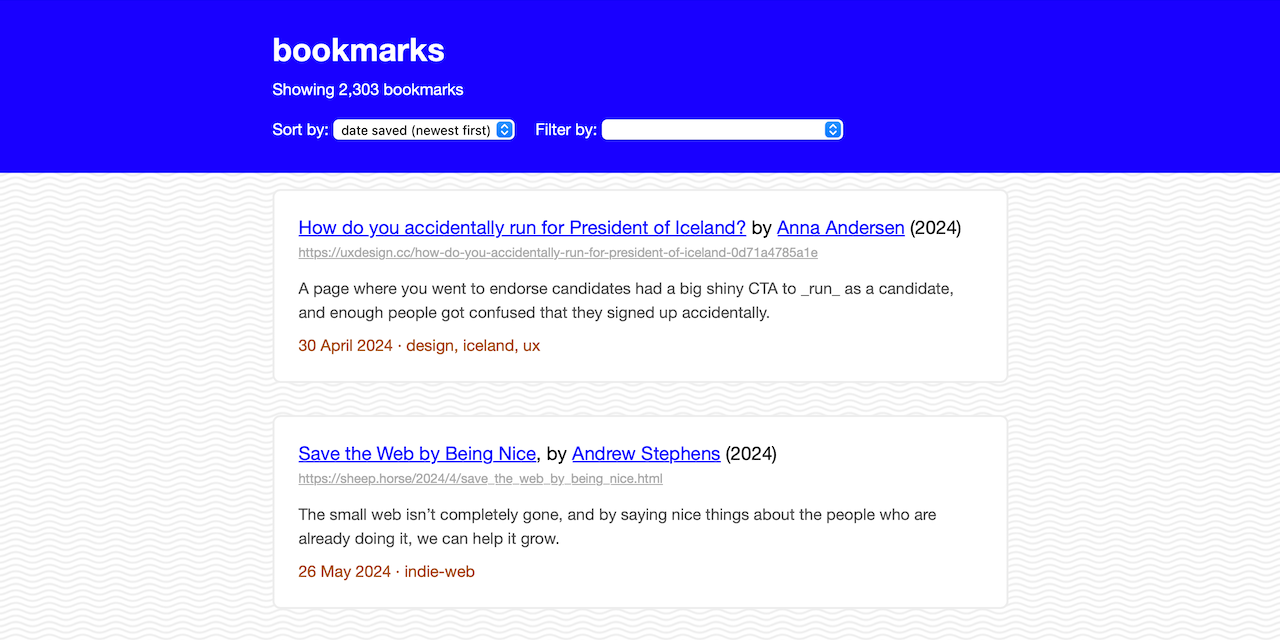
 Creating a static website for all my bookmarks – alexwlchan
https://alexwlchan.net/2025/bookmarks-static-site/
I’m storing more and more of my data as static websites, and about a year ago I switched to using a local, static site to manage my bookmarks. It’s replaced Pinboard as the way I track interesting links and cool web pages. I save articles I’ve read, talks I’ve watched, fanfiction I’ve enjoyed.
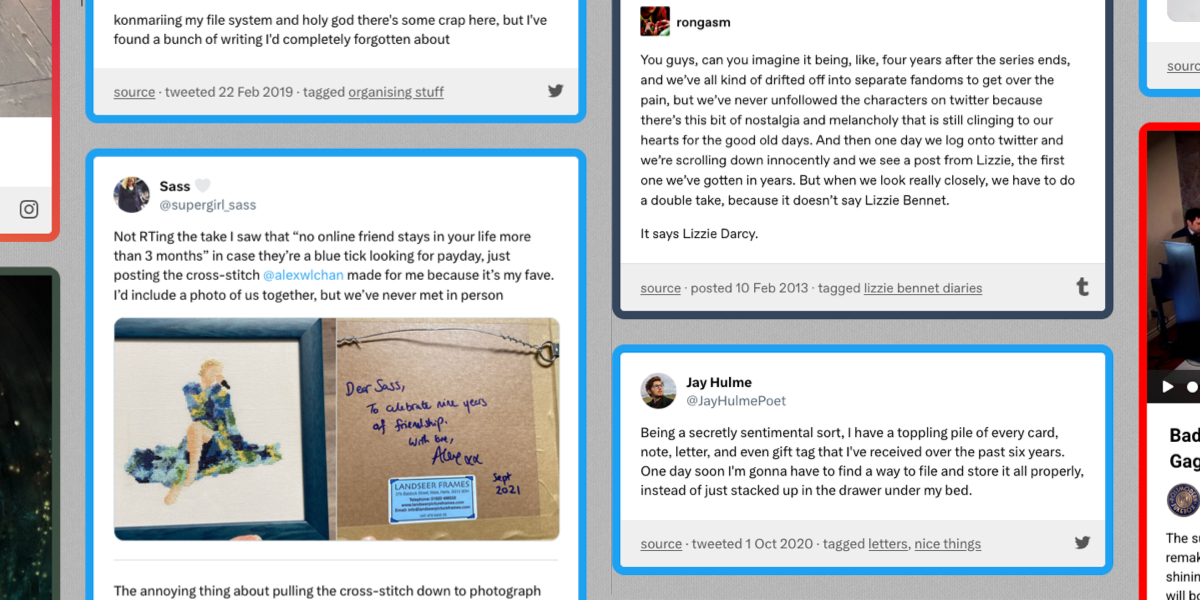
The Internet forgets, but I don’t want to – alexwlchan
https://alexwlchan.net/2025/social-media-scrapbook/
If there’s something online you care about and wouldn’t want to lose, save your own copy. The history of the Internet tells us that it will almost certainly disappear at some point.

 Being of the Web – CogDogBlog
https://cogdogblog.com/2011/08/being-of-the-web/
If you are “of” the web, you are doing things that make content available, leaving it there, making it findable. Twitter takes place “on” the web (and elsewhere) but the older rings of growth die off as the search is only able to return just the newest few weeks of stuff. Twitter thus creates debris rings of dead web content.
 The indie web is here to make the internet weird again | The Verge
https://www.theverge.com/column/829831/indie-web-geocities-neocities
Depending on how social media changes over the next few years, I wouldn’t be surprised to see more people leave and give the indie web a try. Much like vinyl, it will probably never return to its peak like in the pre-Yahoo GeoCities days, but I think there will continue to be a consistent group of people who flock to this side of the internet to escape the modern internet.
How to use the internet, 1995 - YouTube
https://www.youtube.com/watch?v=Y0EXga2hEIs
Computer consultant Cory Doctorow predicts video on demand while showing a CBC reporter some of the new medium's features. Aired on CBC's The National on June 19, 1995.
u/Quick_Butterfly_4571 passionately explains why geeky 80’s kids are confused with ChatGPT : r/bestof
https://www.reddit.com/r/bestof/comments/1ovxrk6/uquick_butterfly_4571_passionately_explains_why/
So, it is the vernacular of the first globally connected generation of kids, who — working in tandem and free from constraints, oversight, or rules — developed an epistolary style designed to facilitate belonging by wire to communities that were virtual and spread across the globe. To connect with other lonely oddballs who were thrilled to discuss geeky things.
It is the first ever, democratically developed, global, epistolary style and the first consistent style developed in the age of the internet for the internet.
We also drew boobs and said vulger things and developed new ways of slinging insults and enraging each other. Like, it wasn't a utopia.
Some context on why some 80's kids keep getting mistaken for GPT
https://www.reddit.com/r/diypedals/comments/1ovmx4l/comment/nokigif/
So, when you got online, you pulled or copied or saved all your messages, drafted up what was...essentially an essay of a response — trying to anticipate follow up questions or points of confusion. You planned it ahead of time. You studied your ass off to equip yourself with knowledge in the hopes of getting some replies off the same day you read them (it sounds stupid now, but that was fucking incredible — send and receive a letter same day!? Eesh. I am getting old).
Also, because communication was fast, but our time was limited, it was more like faster letters at first than it was like texts. It was a horror to waste round trips on misunderstandings — the person you were collaborating with might only get online Wednesday afternoons. If you were ambiguous, you might waste a whole week of progress just by not being clear! So, we were explicit.
The death of Glitch, the birth of Slack
https://www.johnnyrodgers.is/the-death-of-glitch-the-birth-of-slack/
Glitch was an unusual, clever, heartfelt game. Within the realm of Ur, dreamt by eleven magical Giants, players created playful new identities for themselves. They designed and clothed their avatars to their heart’s content, delighting in new hats and a rainbow of possible skin tones. They crafted working music boxes and decorated their architecturally-unlikely homes.
Needy Programs @ tonsky.me
https://tonsky.me/blog/needy-programs/
Programs that have their own agenda and that are trying to make it yours, too. Programs that want you to think about them. Programs that think they are entitled to a part of your attention. “Pick me” programs.
And you know what? Fuck these programs. Give me back my computer.
2002: Last.fm and Audioscrobbler Herald the Social Web | Cybercultural
https://cybercultural.com/p/lastfm-audioscrobbler-2002/
Following in Amazon's footsteps, two student projects independently use 'collaborative filtering' to bring recommendations and social networking to online music; soon they will join forces.
Rediscovering the Joy of Silly Activities Online
https://nathanwrigley.com/2025/10/29/we-need-more-silliness-on-the-web/
I think that we forgot, or perhaps grew up never knowing, that you can do silly things online too. Magnificent, pointless, silly things. Just because you want to, just because you can. You need no permission. Your silliness will brighten up your day, and perhaps the brightness will spread to other people as well; people who enjoy the same silly things that you do.
 Tiny Adds Up: Unshittification and The Pawshank Redemption | Patreon
https://www.patreon.com/posts/142111668
I think it's gotten easy to forget we used to do this all the time. Not necessarily the internet at large, and believe me, I'm well aware the pre-algorithm internet was anything but an endless vista of peaches and sunshine, but the geek community part of the internet. Which, believe it or not, hasn't been all of it more or less since Usenet. The bookish, SFF, community-minded people who identified as geeks, not to make money off a new demographic, but just because that's what we were. Who used social media to make genuine human connections, to craft things and be silly and make stuff, not because of some grindset, but because they wanted to. Before the incredible waterfall of human creativity the internet allowed to come into the light of day became just more content. Before the proto-oligarchs saw what little people were doing with their free time and saw the possibility of using it as bait to lead us all into the data-gobbling joy-disposal algorithm-driven online life keeps trying to become.
 Cybercultural: Internet History and Its Impact on Our Culture
https://cybercultural.com/
Cybercultural chronicles internet history and its cultural impact, from the pre-web era to the dot-com boom, Web 2.0, and beyond. Written by pioneering tech blogger Richard MacManus.

 Taste Is the New Intelligence - by stepfanie tyler
https://wildbarestepf.substack.com/p/taste-is-the-new-intelligence?ref=DenseDiscovery-345
We used to associate intelligence with accumulation. The smartest people were the ones who knew the most. But that model doesn’t hold anymore. AI knows more than anyone. Wikipedia is free. The internet has flattened information access so thoroughly that hoarding knowledge is no longer impressive. What matters now is what you do with it. How you filter it. How you recognize signal in the noise.
Curation is the new IQ test.
 Social Objects: What is a Social Object? - GapingVoid
https://web.archive.org/web/20210616041446/https://www.gapingvoid.com/blog/2007/12/31/social-objects-for-beginners/
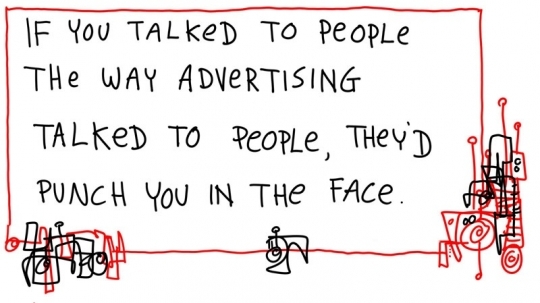
What is a social object? Learn about social objects from the Corporate Culture Consultants at Gapingvoid, a top Change Management Company!
 Digital Ghost Towns: When Big Companies Acquire, Shut Down, and Sit on Premium Domains
https://www.snagged.com/post/digital-ghost-towns-when-big-companies-acquire-shut-down-and-sit-on-premium-domains
The internet is littered with digital ghost towns—premium domains once associated with thriving businesses, now sitting dormant or parked, waiting for their next life. Some of the biggest companies in the world have made strategic acquisitions, only to shut down the businesses they bought, leaving behind valuable domain names that are either redirected, held indefinitely, or simply left in limbo. Let’s take a look at some high-profile cases where major corporations scooped up valuable domains, shut down the original companies, and left the URLs in the digital graveyard.
 The Website Manifesto
https://nora.zone/manifesto.html
I know. You already have a social media account. But you should also have a personal website. Here's why.
 modernity is stupid: a rant not about politics | The Roof is on Phire
https://phirephoenix.com/blog/2024-11-05/modernity
The only reason I even moved to Omnivore is because Mozilla has been systematically neglecting and underfunding Pocket for years and the app is increasingly dominated by things I did not save, the literal one job it had, and I had moved to Pocket after Instapaper first changed ownership in 2013 or whatever and I didn’t like the new owners, and I also can’t go back to Pinboard because while I used to love that dude’s writing he’s turned into a transphobic asshole crank so fuck him, but like, why do I even know that?? Why do I know what Maciej thinks?? Why do I know that DHH is a fucking creep and a weirdo which is why I will never pay for their email service which otherwise seems pretty cool, why do I know that Brave is the homophobic browser in bed with cryptocurrency bros, why do I know that the Kagi dude thinks adding suicide prevention hotlines to search results for “how to kill yourself” is censorship, why do I know about Matt Mullendweeb’s entire existence?? The modern world is unbelievably stupid, and if you don’t pay attention to the stupidity when something bad happens someone shows up in your notifications all like, well what did you expect. I expect you to fuck off!!
 "Never Build Your House On Someone Else's Land" - ErosBlog
https://www.erosblog.com/2022/02/07/someone-elses-land/
Never build your house on someone else’s land.
Bacchus's First Rule Of The Internet - ErosBlog
https://www.erosblog.com/2013/06/11/bacchus-first-rule-of-the-internet/
Bacchus’s First Rule Of The Internet: Anything worth doing on the internet is worth doing on your own server that you control.
 IMG_0001
https://walzr.com/IMG_0001
Between 2009 and 2012, iPhones had a built-in "Send to YouTube" button in the Photos app. Many of these uploads kept their default IMG_XXXX filenames, creating a time capsule of raw, unedited moments from random lives.
Inspired by Ben Wallace, I made a bot that crawled YouTube and found 5 million of these videos! Watch them below, ordered randomly.
ActivityPub is the next big thing in social networks - The Verge
https://www.theverge.com/2023/4/20/23689570/activitypub-protocol-standard-social-network
The tech industry is abuzz about a new standard for social networking that is more open, more user-centric, and potentially more powerful than Twitter and Facebook. But we’ve been here before.
 The Internet Origin Story You Know Is Wrong | WIRED
https://archive.ph/2022.05.19-021317/https://www.wired.com/story/internet-origin-story-bbs/#selection-471.0-471.132
The history of the internet is repeatedly reduced to the story of the singular Arpanet. But BBSs were just as important—if not more.
The Internet Origin Story You Know Is Wrong | WIRED
https://archive.ph/2022.05.19-021317/https://www.wired.com/story/internet-origin-story-bbs#selection-471.0-471.132
The history of the internet is repeatedly reduced to the story of the singular Arpanet. But BBSs were just as important—if not more.
 rinetd(8) — rinetd — Debian unstable — Debian Manpages
https://manpages.debian.org/unstable/rinetd/rinetd.8.en.html
rinetd redirects TCP or UDP connections from one IP address and port to another. rinetd is a single-process server which handles any number of connections to the address/port pairs specified in the file /etc/rinetd.conf.
 What would a EvE online Internet look like?
https://blog.benjojo.co.uk/post/eve-online-bgp-internet
what would happen if you took the idea of the map being a network literally? What would a EvE online internet of systems look like?
 In the Shadow of the CMS | The Nation
https://www.thenation.com/article/content-management-system-essay-wordpress-drupal-internet-feature/
What we need is a digital-media version of organic food or a local farmers’ market: ethically sourced, sustainably funded, and integrity-certified, all the way from CMS up.
In the Shadow of the CMS | The Nation
https://www.thenation.com/article/content-management-system-essay-wordpress-drupal-internet-feature
What we need is a digital-media version of organic food or a local farmers’ market: ethically sourced, sustainably funded, and integrity-certified, all the way from CMS up.
 Reaching people on the internet - The Oatmeal
http://theoatmeal.com/comics/reaching_people
DOOR LOCKS ENGAGED
 Nick Szabo -- The Mental Accounting Barrier to Micropayments
http://szabo.best.vwh.net/micropayments.html
A micropayments system assumes a solution to the mental accounting problem. If somebody could actually solve the this problem, rather than merely claiming to have solved it via some mysterious means ("intelligent agents", et. al.), the savings would be enormous even in existing business such as long distance and Internet service -- not to mention all the new possibilities possible by lower transaction costs.
 The Web Is Dying; Apps Are Killing It - WSJ
http://online.wsj.com/news/article_email/the-web-is-dying-apps-are-killing-it-1416169934-lMyQjAxMTI0NTEwNzAxMTcwWj
Everything about apps feels like a win for users—they are faster and easier to use than what came before. But underneath all that convenience is something sinister: the end of the very openness that allowed Internet companies to grow into some of the most powerful or important companies of the 21st century.
 Mozilla and the Future of the Open Internet | Re/code
http://recode.net/2014/11/10/mozilla-and-the-future-of-the-open-internet/
People often ask me: Why are you still involved so deeply with Mozilla? Firefox won. Why haven’t you gone on to do something else? Does Mozilla still have work to do?
Mozilla and the Future of the Open Internet | Re/code
http://recode.net/2014/11/10/mozilla-and-the-future-of-the-open-internet
People often ask me: Why are you still involved so deeply with Mozilla? Firefox won. Why haven’t you gone on to do something else? Does Mozilla still have work to do?
 Stop Doing Internet Wrong. - Scott Hanselman
http://www.hanselman.com/blog/StopDoingInternetWrong.aspx
Some days...some days it's frustrating to be on the web. We're compiling C++ into JavaScript and running Unreal in the browser but at the same time, here in 2013, we're still making the same mistakes. And by we, I mean, the set of web developers who aren't us, right Dear Reader? Because surely you're not doing any of these things. ;)
 VC&G | Revisiting Hotline, the 1990s Internet BBS Platform
http://www.vintagecomputing.com/index.php/archives/972
Hotline was neat. It was basically like DIY AOL for Mac, and most installations were completely infested by pirates and warez.
 The Web We Lost - Anil Dash
http://dashes.com/anil/2012/12/the-web-we-lost.html
The tech industry and its press have treated the rise of billion-scale social networks and ubiquitous smartphone apps as an unadulterated win for regular people, a triumph of usability and empowerment. They seldom talk about what we've lost along the way in this transition, and I find that younger folks may not even know how the web used to be.
 Why I love Twitter and barely tolerate Facebook — I.M.H.O. — Medium
https://medium.com/i-m-h-o/52a20d7a17de
There’s no memory at Twitter: everything is fleeting. ... Facebook is mired in the past.
 How Mozilla Was Born
http://www.davetitus.com/mozilla/
The story of the first mascot on the Internet
 Yes, Government Researchers Really Did Invent the Internet | Observations, Scientific American Blog Network
http://blogs.scientificamerican.com/observations/2012/07/23/yes-government-researchers-really-did-invent-the-internet/
In truth, no private company would have been capable of developing a project like the Internet, which required years of R&D efforts spread out over scores of far-flung agencies, and which began to take off only after decades of investment. Visionary infrastructure projects such as this are part of what has allowed our economy to grow so much in the past century. Today’s op-ed is just one sad indicator of how we seem to be losing our appetite for this kind of ambition.
Yes, Government Researchers Really Did Invent the Internet | Observations, Scientific American Blog Network
http://blogs.scientificamerican.com/observations/2012/07/23/yes-government-researchers-really-did-invent-the-internet
In truth, no private company would have been capable of developing a project like the Internet, which required years of R&D efforts spread out over scores of far-flung agencies, and which began to take off only after decades of investment. Visionary infrastructure projects such as this are part of what has allowed our economy to grow so much in the past century. Today’s op-ed is just one sad indicator of how we seem to be losing our appetite for this kind of ambition.
 The Pirate Bay - The galaxy's most resilient bittorrent site
http://thepiratebay.se/blog/210
With the development of GPS controlled drones, far-reaching cheap radio equipment and tiny new computers like the Raspberry Pi, we're going to experiment with sending out some small drones that will float some kilometers up in the air. This way our machines will have to be shut down with aeroplanes in order to shut down the system. A real act of war.
 Technology - Alexis Madrigal - The Next Time Someone Says the Internet Killed Reading Books, Show Them This Chart - The Atlantic
http://www.theatlantic.com/technology/archive/12/04/the-next-time-someone-says-the-internet-ruined-literature-show-them-this-chart/255572/
All this to say: our collective memory of past is astoundingly inaccurate. Not only has the number of people reading not declined precipitously, it's actually gone up since the perceived golden age of American letters.
Technology - Alexis Madrigal - The Next Time Someone Says the Internet Killed Reading Books, Show Them This Chart - The Atlantic
http://www.theatlantic.com/technology/archive/12/04/the-next-time-someone-says-the-internet-ruined-literature-show-them-this-chart/255572
All this to say: our collective memory of past is astoundingly inaccurate. Not only has the number of people reading not declined precipitously, it's actually gone up since the perceived golden age of American letters.
 Archiveteam
http://archiveteam.org/index.php?title=Main_Page
Archive Team is a loose collective of rogue archivists, programmers, writers and loudmouths dedicated to saving our digital heritage. Since 2009 this variant force of nature has caught wind of shutdowns, shutoffs, mergers, and plain old deletions - and done our best to save the history before it's lost forever. Along the way, we've gotten attention, resistance, press and discussion, but most importantly, we've gotten the message out: IT DOESN'T HAVE TO BE THIS WAY.
 IUMA (Internet Underground Music Archive) Collection : Free Audio : Download & Streaming : Internet Archive
http://archive.org/details/iuma-archive
The Internet Underground Music Archive was better known by the acronym IUMA. The IUMA was started in 1993 by three students at the University of California at Santa Cruz: Jeff Patterson, Jon Luini and Rob Lord. The three men worked together to create an online music archive that would help musicians and bands who weren't signed by a major label. The site allowed these unsigned artists to upload files and send them to fans. The site also enabled the artists the opportunity to talk with their fans. The IUMA was first part of the Usenet newsgroups.
 Dilbert: Internet collaboration tools
http://dilbert.com/strips/comic/2012-02-28/
Dilbert: Internet collaboration tools
http://dilbert.com/strips/comic/2012-02-28
 Congrats, US Government: You're Scaring Web Businesses Into Moving Out Of The US | Techdirt
http://www.techdirt.com/articles/20120216/17154217785/congrats-us-government-youre-scaring-web-businesses-into-moving-out-us.shtml
The federal government has been paying lip service to the idea that it wants to encourage new businesses and startups in the US. And this is truly important to the economy, as studies have shown that almost all of the net job growth in this country is coming from internet startups. Thankfully some politicians recognize this, but the federal government seems to be going in the other direction. With the JotForm situation unfolding, where the US government shut down an entire website with no notice or explanation, people are beginning to recognize that the US is not safe for internet startups.
US Returns JotForm.com Domain; Still Refuses To Say What Happened | Techdirt
http://www.techdirt.com/articles/20120216/17043717784/us-returns-jotformcom-domain-still-refuses-to-say-what-happened.shtml
There's been a lot of interest in the story of the Secret Service completely shutting down JotForm.com through a request to GoDaddy. It appears that the suspension is now ending, though it hasn't fully propagated. What's amazing is that no one in the US government (or at GoDaddy) seems to be willing to explain what happened. When GoDaddy completely shut down JotForm.com with no notice, the folks at JotForm had to inquire as to what the hell happened to their entire website. They were merely told to contact a Secret Service agent. That agent then told JotForm she was too busy to respond to them and would get back to them within a week.
Think about that for a second. The US government completely takes down a small business' website and then is too busy to explain why.
US Government 'Suspends' JotForm.com Over User Generated Forms; Censorship Regime Expands | Techdirt
http://www.techdirt.com/articles/20120215/18044017773/us-government-suspends-jotformcom-over-user-generated-forms-censorship-regime-expands.shtml
Activities like this will chill innovation and entrepreneurship in the US. Why locate here or even setup under a .com if the US government might kill your business with no explanation at any moment?
 How SOPA's 'circumvention' ban could put a target on Tor | Privacy Inc. - CNET News
http://news.cnet.com/8301-31921_3-57346592-281/how-sopas-circumvention-ban-could-put-a-target-on-tor
A broad interpretation of SOPA's anti-circumvention language would sweep even more broadly than Tor. Software such as VPNs, used by security-conscious businesses, can also "bypass" a SOPA-established blockade. So could DNS software. And even the humble "/etc/hosts" file, part of every major operating system including OS X, Linux, and Windows, can be pressed into service as a SOPA-bypasser as well.
 Dear Congress, It's No Longer OK To Not Know How The Internet Works | Motherboard
http://motherboard.vice.com/2011/12/16/dear-congress-it-s-no-longer-ok-to-not-know-how-the-internet-works
So it was as proponents of the Hollywood-funded bill curmudgeonly shot down all but two amendments proposed by its opponents, who fought to dramatically alter the document to preserve security and free speech on the net. But the chilling takeaway of this whole debacle was the irrefutable air of anti-intellectualism; that inescapable absurdity that we have members of Congress voting on a technical bill who do not posses any technical knowledge on the subject and do not find it imperative to recognize those who do.
 Zittrain in Technology Review: The personal computer is dead
http://www.law.harvard.edu/news/2011/11/30_zittrain-the-personal-computer-is-dead.html
Both software developers and users should demand more. Developers should look for ways to reach their users unimpeded, through still-open platforms, or through pressure on the terms imposed by the closed ones. And users should be ready to try "off-roading" with the platforms that still allow it—hewing to the original spirit of the PC, perhaps amplified by systems that let apps have a trial run on a device without being given the keys to the kingdom. If we allow ourselves to be lulled into satisfaction with walled gardens, we'll miss out on innovations to which the gardeners object, and we'll set ourselves up for censorship of code and content that was previously impossible. We need some angry nerds.
 A List Apart: Articles: Say No to SOPA
http://www.alistapart.com/articles/say-no-to-sopa
A List Apart strongly opposes United States H.R.3261 AKA the Stop Online Piracy Act (SOPA), an ill-conceived lobbyist-driven piece of legislation that is technically impossible to enforce, cripplingly burdensome to support, and would, without hyperbole, destroy the internet as we know it.
 US judge orders hundreds of sites "de-indexed" from Google, Facebook
http://arstechnica.com/tech-policy/news/2011/11/us-judge-orders-hundreds-of-sites-de-indexed-from-google-twitter-bing-facebook.ars
After a series of one-sided hearings, luxury goods maker Chanel has won recent court orders against hundreds of websites trafficking in counterfeit luxury goods. A federal judge in Nevada has agreed that Chanel can seize the domain names in question and transfer them all to US-based registrar GoDaddy. The judge also ordered "all Internet search engines" and "all social media websites"—explicitly naming Facebook, Twitter, Google+, Bing, Yahoo, and Google—to "de-index" the domain names and to remove them from any search results.
Ex-RIAA Boss Ignores All Criticisim Of SOPA/PIPA, Claims Any Complaints Are Trying To Justify Stealing | Techdirt
http://www.techdirt.com/articles/20111127/22391516905/ex-riaa-boss-ignores-all-criticisim-sopapipa-claims-any-complaints-are-trying-to-justify-stealing.shtml
But, even more to the point, it's getting ridiculous how many people defending SOPA/PIPA are doing so using this logic. They brush off all of the specific concerns, the highlights of problematic language, and they conclude "why are you justifying theft?" Of course, that's ridiculous. Beyond the fact that "theft" and "infringement" are very different (don't get me started), nothing in anyone's complaints about SOPA or PIPA have anything to do with "justifying" infringement. In fact, in the post that was being discussed, we clearly noted that infringement is a problem. We just disagree that PIPA and SOPA are reasonably, or even effective, solutions.
Why SOPA endangers America's Internet leadership
http://arstechnica.com/tech-policy/news/2011/11/why-sopa-endangers-americas-internet-leadership.ars
America's position of influence over the Internet economy is a valuable form of "soft power." If the US government uses this power judiciously, it can ensure that the Internet evolves in ways that serve US interests.
Instead, American policymakers are rapidly squandering this soft power by giving US law enforcement agencies—and, under SOPA, even private copyright holders—free rein to exercise this power with minimal judicial oversight. The US is home to many of the world's leading search engines, advertising networks, and credit card payment networks. These firms not only serve the US market, they are also widely used overseas. If the US begins to use them as pawns in its war against file-sharing, foreigners and their governments will become more reluctant to rely on them.
 Software Makers Shun SOPA Bill - Government - Policy & Regulation - Informationweek
http://informationweek.com/news/government/policy/232200069
A group that represents a number of major software developers, including Microsoft, Adobe, and CA, has withdrawn its support for the Stop Online Piracy Act (SOPA) bill, which would require Internet companies and other players in the tech ecosystem to deny services to suspected software pirates and copyright violators.
 Nintendo, EA, Sony sponsor Internet censorship bill [update] | Joystiq
http://www.joystiq.com/2011/11/18/nintendo-ea-sony-sponsor-internet-censorship-bill
A Guide to the Occupy Wall Street API, Or Why the Nerdiest Way to Think About OWS Is So Useful - Technology - The Atlantic
http://www.theatlantic.com/technology/print/2011/11/a-guide-to-the-occupy-wall-street-api-or-why-the-nerdiest-way-to-think-about-ows-is-so-useful/248562
This idea crystallized for me yesterday when Jonathan Glick, a long-time digital journalist, tweeted, "I think #OWS was working better as an API than a destination site anyway." If you get the idea, go ahead and skip ahead to the documentation below. If you don't get, let me explain why it might be the most useful way of thinking about #Occupy.
 Major Game Publishers Onboard with SOPA and Protect IP Act
http://www.gameranx.com/updates/id/3746/article/major-game-publishers-onboard-with-sopa-and-project-ip-act
Among the publishers include giants like Electronic Arts, Capcom USA, Microsoft, Nintendo, Sony, Sega, THQ, Square Enix, Take Two, and Ubisoft. Major developing studios have also declared where they stand with the proposed law that enables the government to blacklist websites and stifle freedom of speech. These studios include 38 Studios, Nival, and Gears of War developer Epic Games. A full list of ESA members can be found at the organization's website here.
 US State Department not for internet freedom - Opinion - Al Jazeera English
http://www.aljazeera.com/indepth/opinion/2011/11/20111116141248301243.html
San Francisco, California: The US State Department is once again undermining its own Internet Freedom Initiative - this time by giving the green light to a copyright bill that will adversely affect online free speech around the world.
Congress Weighs Fighting Internet Piracy Like the War on Drugs - Conor Friedersdorf - Politics - The Atlantic
http://www.theatlantic.com/politics/archive/2011/11/congress-weighs-fighting-internet-piracy-like-the-war-on-drugs/248690
Phone books list all sorts of businesses, a small percentage of which engage in illegal activity. Yet I could never call Pac Bell and demand, "Hey, my house got robbed a few weeks back, and when I went into this pawn shop, they had my television set. Remove them or you're liable!"
 Anti-piracy bill meets Web-freedom backlash - CNN.com
http://www.cnn.com/2011/11/18/tech/web/sopa-online-privacy-backlash/index.html
But a major online backlash has evolved, with everyone from lawmakers to Web-freedom advocates to some of technology's biggest players calling it a greedy and dangerous overreach that could have a chilling effect on free speech and innovation.
 European Parliament warns of global dangers of US domain revocation proposals | EDRI
http://www.edri.org/EU_parliament_SOPA
Responding to an intervention by EDRi (video, speech (PDF) at a hearing recently on attacks against computer systems, the European Parliament today adopted, by a large majority, a resolution on the upcoming EU/US summit stressing “the need to protect the integrity of the global internet and freedom of communication by refraining from unilateral measures to revoke IP addresses or domain names.”
 unfinished work - I Believe In The Internet - The Content Industry Doesn't
http://bradburnham.tumblr.com/post/12739727902/i-believe-in-the-internet-the-content-industry
At a dinner earlier this week, Joi Ito, the head of the Media Lab at MIT described the Internet as a “belief system” and I suddenly understood. The Internet is not just a series of pipes. It’s core architecture embeds an assumption about human nature. The Internet is designed to empower individuals not control them. It assumes that the if individuals are empowered, they will do the right thing the vast majority of the time. Services like eBay, Craigslist, Etsy and AirBnB are built on the assumption that most people are honest. Other services like Tumblr, Twitter, YouTube, Wordpress, and Soundcloud assume people will be generous with their ideas, insights and creations. Wikipedia has proven that people will share their knowledge. Companies like Kickstarter show that people will even be generous with their money. This does not mean that there are not bad people out there. All of these companies spend a lot of time and money to battle spam and fraud. The companies are simply betting that there are many more good people than bad. The architecture of the Internet shares this assumption. It could have been designed to prevent bad behavior. Instead its design empowers good behavior.
 Zoe Lofgren - Lofgren Opening Statement on SOPA
http://lofgren.house.gov/index.php?Itemid=125&id=661&option=com_content&task=view
Washington, D.C. – Today the House Judiciary Committee held a hearing on the Stop Online Piracy Act (SOPA). Since Rep. Zoe Lofgren was not permitted to deliver her opening statement at the hearing, it appears below in full.
 Lying on the Internet could soon be a federal crime
http://www.digitaltrends.com/social-media/lying-on-the-internet-could-soon-be-a-federal-crime
The US Department of Justice wants to make it a federal crime to violate the “terms of service” of any website, reports Declan McCullagh at CNet. According to this interpretation, breaching the terms of service of websites — which can be done by simply using a fake name on Facebook, lying about your weight on a dating site, or using Google if you’re under the age of 18 — could make you a criminal.
 Internet Community Shut Out of Stop Online Piracy Act Hearing - Again | Electronic Frontier Foundation
https://www.eff.org/deeplinks/2011/11/public-shut-out-stop-online-piracy-act-hearings-again
This morning, EFF’s staff and concerned netizens across the country tuned into the live webcast of the House Judiciary Committee’s hearing on the Stop Online Piracy Act (H.R. 3261). At least we tried to. Unfortunately, we were confronted with an incredibly poor webcast stream for much of the hearing. We find it ironic and deeply concerning that Congress is unable to successfully stream video of an event this important to all Internet users, even as they are debating a dangerous plan to change the Internet in fundamental ways and deputize Internet intermediaries to act like content police.
At Web censorship hearing, Congress guns for "pro-pirate" Google
http://arstechnica.com/tech-policy/news/2011/11/at-web-censorship-hearing-congress-guns-for-pro-pirate-google.ars
The House Judiciary Committee today held an important hearing on the Stop Online Piracy Act with a hugely stacked deck of witnesses—Google's lawyer was the only one of the six to object to the bill in a meaningful way. And it wasn't hard to see why. This wasn't a hearing designed to elicit complex thoughts about complex issues of free speech, censorship, and online piracy; despite the objections of the ACLU, dozens of foreign civil rights groups, tech giants like Google and eBay, the Consumer Electronics Association, China scholar Rebecca MacKinnon, hundreds of law professors and lawyers, the hearing was designed to shove the legislation forward and to brand companies who object as siding with "the pirates."
SOPA Gives Me Powers That I Don't Want | Techdirt
http://www.techdirt.com/articles/20111115/01142516772/sopa-gives-me-powers-that-i-dont-want.shtml
In reality though, most of the large tech companies that exist today were once very small and very fragile. If SOPA was in place, those companies would have never grown up, since the two guys in a garage would have required four lawyers to survive. Dropbox is a perfect example. Created by some college students, the company provides shared online storage space for a fee. Under SOPA, the company would have been cut off from its revenues as soon as a single accusation was made that it was hosting copyrighted material. As a small company this could have been crippling. Today though, I know that Dropbox is one of the most popular tools in the movie industry, since it allows easy sharing of new daily shots, music cues, draft movie posters and more. The innovative tech companies of the future will be extinguished before they have a chance to even get out the door.
 Google Friends Facebook to Fight Piracy Act - Bloomberg
http://www.bloomberg.com/news/2011-11-15/google-friends-facebook-to-fight-hollywood-on-u-s-online-piracy-measure.html
Dodd, a Connecticut Democrat who served three decades in the Senate, is looking for a win in his new role as head of the MPAA, which grew powerful in Washington under the 38-year leadership of Jack Valenti, a onetime aide to Lyndon Johnson. The group’s members include Walt Disney Co. (DIS), Viacom Inc. (VIA/B)’s Paramount Pictures, Sony Corp. (6758), News Corp. (NWSA), Comcast Corp. (CMCSA)’s NBC Universal and Time Warner Inc. (TWX)’s Warner Bros.
American Censorship Day is this Wednesday — And You Can Join In! | Electronic Frontier Foundation
https://www.eff.org/deeplinks/2011/11/american-censorship-day-wednesday-and-you-can-join
This Wednesday, November 16, the disastrous "Stop Online Piracy Act" (SOPA) heads to the House Judiciary committee. In case you need a refresher, SOPA could allow the U.S. government and private corporations to create a blacklist of censored websites, and cut many more off from their ad networks and payment providers. This bill is bad news, and its supporters are trying to push it through before ordinary citizens realize just how much damage it can cause.
 Updated: Hollywood and Congress Target Mozilla - ReadWriteCloud
http://www.readwriteweb.com/cloud/2011/11/hollywood-and-congress-target.php
The bill is, by nearly any sane measure, overreaching and the Electronic Frontier Foundation (EFF) says that the bill targets Mozilla specifically for refusing to comply with Homeland Security's ICE unit.
Hollywood's New War on Software Freedom and Internet Innovation | Electronic Frontier Foundation
https://www.eff.org/deeplinks/2011/11/hollywood-new-war-on-software-freedom-and-internet-innovation
In this new bill, Hollywood has expanded its censorship ambitions. No longer content to just blacklist entries in the Domain Name System, this version targets software developers and distributors as well. It allows the Attorney General (doing Hollywood or trademark holders' bidding) to go after more or less anyone who provides or offers a product or service that could be used to get around DNS blacklisting orders. This language is clearly aimed at Mozilla, which took a principled stand in refusing to assist the Department of Homeland Security's efforts to censor the domain name system, but we are also concerned that it could affect the open source community, internet innovation, and software freedom more broadly:
 Anti-Hacking Law Criminalizes Most Computer Users, Former Prosecutor Says | Threat Level | Wired.com
http://www.wired.com/threatlevel/2011/11/anti-hacking-law-too-broad
 Fight For The Future
http://fightforthefuture.org
Why have we all been sitting idly while the movie and music lobbyists have been systematically advancing legislation that strips freedoms, blocks innovation, and exclusively advances Hollywood's financial agenda?
 STOP SOPA, SAVE THE INTERNET - Boing Boing
http://boingboing.net/2011/11/11/stop-sopa-save-the-internet.html
These bills represent a major blow to openness and freedom on the Internet, free speech rights, and the fabric of the Internet itself. If SOPA is allowed to pass, the Internet and free speech will never be the same again.
 5 Things I Learned by Quitting the Internet | Cracked.com
http://www.cracked.com/blog/5-things-i-learned-by-quitting-internet
from Cracked: All Posts http://www.cracked.com
Proposed Copyright Bill Threatens Whistleblowing and Human Rights | Electronic Frontier Foundation
https://www.eff.org/deeplinks/2011/11/proposed-copyright-bill-threatens-whistleblowing-and-human-rights
"It’s unclear whether SOPA’s authors intended it to cover these websites that are vital to whistleblowing and human rights. If they didn’t, they need to press re-set; and next time, consult with the numerous Internet communities the bill could affect, rather than exclusively Hollywood lobbyists. But the immediate need is clear: the bill must be killed. If you care about free speech and a free Internet, act now!"
 Locus Online Perspectives » Cory Doctorow: It’s Time to Stop Talking About Copyright
http://www.locusmag.com/Perspectives/2011/11/cory-doctorow-its-time-to-stop-talking-about-copyright
I’m all for sorting out the rules that govern the entertainment’s supply chain, but let’s keep some perspective here: when we ‘‘solve’’ copyright problems at the expense of the Internet, we solve them at the expense of 21st-century society as a whole.
 House takes Senate's bad Internet censorship bill, tries making it worse
http://feeds.arstechnica.com/~r/arstechnica/index/~3/JFq-V8-meL8/house-takes-senates-bad-internet-censorship-bill-makes-it-worse.ars
 Sprint to nix 'unlimited' from mobile broadband and hotspot plans in November
http://www.engadget.com/2011/10/21/sprint-to-nix-unlimited-from-mobile-broadband-and-hotspot-plan
 Just Let Kids Use the Damn Internet At School [Censorship]
http://feeds.gawker.com/~r/gawker/full/~3/4ZArZ6_g8xo/just-let-kids-use-the-damn-internet-at-school
 LOLDWELL.com - A Very Angry Infographic
http://loldwell.com/?p=1592
So you're MAD about something on the Internet...
 Clifford Stoll: Why Web Won't Be Nirvana - Newsweek.com
http://www.newsweek.com/id/106554
This sounds so much more funny when read with a REALLY sarcastic voice. "Baloney. Do our computer pundits lack all common sense? The truth in no online database will replace your daily newspaper, no CD-ROM can take the place of a competent teacher and no computer network will change the way government works."
 Remarks on Internet Freedom
http://www.state.gov/secretary/rm/2010/01/135519.htm
"The final freedom, one that was probably inherent in what both President and Mrs. Roosevelt thought about and wrote about all those years ago, is one that flows from the four I’ve already mentioned: the freedom to connect – the idea that governments should not prevent people from connecting to the internet, to websites, or to each other. The freedom to connect is like the freedom of assembly, only in cyberspace. It allows individuals to get online, come together, and hopefully cooperate. Once you’re on the internet, you don’t need to be a tycoon or a rock star to have a huge impact on society."
 Lost in the Filth Simulacrum | h+ Magazine
http://hplusmagazine.com/articles/art-entertainment/lost-filth-simulacrum
"Yet what the media has failed to grasp is what 4chan can tell us about where we're headed. The Chans aren't the freak sideshow of the Internet. They are the heart and soul of the Internet. And they are the ones furthest ahead of the pack, leading us. At this point there should be little doubt that the Internet is mutating the human species into something completely different. Therefore it's instructive to look at the most extreme, freebased forms of the Internet to see where we're going -- and 4chan is that freebased version of mankind's new drug of choice."
 Is the Internet Warping Our Brains? | LiveScience
http://www.livescience.com/culture/090224-internet-brain.html
Did sharp rocks warp our brains? Did cooking warp our brains? Did speech warp our brains? Did writing warp our brains? The net is the sharpest, hottest, chattiest, wordiest thing to hit since all the above.
 It’s The Internet Stupid › A Comment on Notice of Inquiry, FCC GN Docket No. 09-51
http://itstheinternetstupid.com
"There’s risk in confusing broadband and Internet. If the National Broadband Plan starts from the premise that the U.S. needs the innovation, increased productivity, new ideas and freedoms of expression that the Internet affords, then the Plan will be shaped around the Internet. If, instead, the Plan is premised on a need for broadband, it fails to address the ARRA’s mandated objectives directly. More importantly, the premise that broadband is the primary goal entertains the remaking of the Internet in ways that could put its benefits at risk. The primary goal of the Plan should be broadband connections to the Internet."
 Sony Pictures CEO: The Internet Is Still Bad | Techdirt
http://techdirt.com/articles/20090526/1159125014.shtml
"A week and a half ago, Sony Pictures CEO Michael Lynton made some news for saying that nothing good had come from the internet, period. Plenty of online sites (including ours) took him to task for that, wondering how one gets to be the CEO of a major content company without understanding the internet. Today, Lynton hit back at critics -- not by saying he was quoted out of context or misunderstood, but by standing behind the statement and adding some gems to it as well. Let's take a look..."
 Mozilla in one sentence « commonspace
http://commonspace.wordpress.com/2009/05/25/mozilla-in-one-sentence
"The Internet is the greatest development of our lifetimes. Mozilla exists to foster the Internet such that all people are able to realize its full benefit. We are a people-driven movement to protect choice and freedom on the Web. Join us!"
 DreamHost Blog » They’re Internet History
http://blog.dreamhost.com/2009/04/24/theyre-internet-history
"Back in 1998, who would have thought WebRing would outlast GeoCities?"
 Remote Revolution: Why Digital Natives Will Usher in the Remote Revolution
http://www.remoterevolution.com/2009/04/why-digital-natives-will-usher-in.html
"As it has been mentioned before on this blog and will continue to be addressed, the single greatest hindrance for the remote revolution is simply tradition. With an influx of highly skilled information-ready workers who can present a compelling case for telecommuting, resistance will become increasingly difficult."
 ASCII by Jason Scott / What Is BBS?
http://ascii.textfiles.com/archives/1789
"In its most fundamental form, the BBS was simply a computer connected via a modem to a phone line. On the computer was software that, when it detected that someone was calling the modem, would pick up, connect, and then provide the calling person with a menu. From this menu you could post and read messages from other users, send or receive files, or play games. What happened to BBSes, especially as it looked like they’d be around in some form forever, was multi-threaded connection to the Internet, especially Trumpet Winsock, a program that allowed PPP (Point to Point Protocol) on Windows systems."
 CradlePoint Technology
http://www.cradlepoint.com/phs300/phs300.php
"The PHS300 creates a fully portable WiFi Hotspot from broadband-enabled cellular phones and modems. Take WiFi to a new level by 'bringing it with you'."
 Meraki Releases World’s First Solar-Powered WiFi Device : CleanTechnica
http://cleantechnica.com/2008/12/05/meraki-releases-worlds-first-solar-powered-wifi-device
"Yesterday, wireless networking provider Meraki started shipping the world’s first solar-powered WiFi mesh device. Meraki’s groundbreaking energy-independent device is powered by a single solar panel and solar-charged battery. Since the unit requires no grid-derived energy, it can be set up in areas lacking power suppliesWith a price range of $848 to $1,497, Meraki’s set-up isn’t exactly cheap. It is, however, cheaper than most other outdoor wireless network installations. The most expensive item in outdoor wireless networks is often the electrical cabling installation— a step that isn’t necessary for the Meraki unit since it uses a solar-powered battery."
 SitePoint » The Single Sign-On War Will Ruin OpenID
http://www.sitepoint.com/blogs/2008/10/30/the-single-sign-on-war-will-ruin-openid
"Google and Yahoo! (and likely Microsoft to follow) are ultimately competing with one another to become the branded single sign-on solution for the web. The good news for users is that by using the same underlying technology, most relying parties will able to turn on support for any new OpenID provider fairly easily. The bad news for users is that since none of the major providers are also relying parties, using services at each of these site still requires multiple accounts. Further, a sign in box with 100 different logos for 100 different providers isn’t a great user experience."
 Schneier on Security: The Future of Ephemeral Conversation
http://www.schneier.com/blog/archives/2008/11/the_future_of_e.html
Secret Geek A-Team Hacks Back, Defends Worldwide Web
http://www.wired.com/techbiz/people/magazine/16-12/ff_kaminsky?currentPage=all
"Or, for the sheer geeky joy of it, he could reroute all of .com into his laptop, the digital equivalent of channeling the Mississippi into a bathtub. It was a moment hackers around the world dream of—a tool that could give them unimaginable power. But maybe it was best simply to close his laptop and forget it. He could pretend he hadn't just stumbled over a skeleton key to the Net. Life would certainly be less complicated. If he stole money, he'd risk prison. If he told the world, he'd be the messenger of doom, potentially triggering a collapse of Web-based commerce."
 Why Obama Should Keep His BlackBerry - BusinessWeek
http://www.businessweek.com/the_thread/techbeat/archives/2008/11/why_obama_shoul.html?chan=top+news_top+news+index+-+temp_news+++analysis
"Obama comes into office as the first President both knowledgeable about and comfortable with the technology that runs today's world. This is actually an important and promising development and the worst thing we can do is try to force him into a technology-free cocoon in the name of security or whatever. Mr President-elect, if you want to keep that BlackBerry, please do so. Besides, we don't want a new President going through his difficult first weeks in office suffering from BlackBerry withdrawal."
 Obama Election Ushering In First Internet Presidency -- Barack Obama Internet -- InformationWeek
http://www.informationweek.com/news/showArticle.jhtml?articleID=212000815
 PART 1: Why Do Most Free Wireless Efforts Fail? || Wireless Ypsi || We Are Connecting Ypsilanti
http://wireless.ypsi.com/blog?p=52
 Road Warrior: I'm writing this post from 30,000 feet, and you're not
http://valleywag.com/5051986/im-writing-this-post-from-30000-feet-and-youre-not
"I like to think I'm resistant to neophilia, the fetishistic embrace of new technology endemic to Silicon Valley. And yet I felt a rush when I logged on to Gogo's inflight Wi-Fi service on the American Airlines flight I'm currently taking from San Francisco to New York. "
 Do McC's war injuries prevent him from using a computer? (Scripting News)
http://www.scripting.com/stories/2008/09/13/doMccsWarInjuriesPreventHi.html
"PS: Try searching for quadriplegic and computers. It's a hint. Amazing progress has been made in making computers accessible to people with disabilities. Seriously."
 cnewmark: The Permanent Town Hall: Why a President needs to know the Internet
http://www.cnewmark.com/2008/08/the-permanent-t.html
"It's a permanent Town Hall, everyone's invited, and in this year, and in this election, it's becoming real. If you want to be President, you need to be in touch with people, and that's one of the best things you can use the Internet for."
 The Nation - McCain, the Analog Candidate - NYTimes.com
http://www.nytimes.com/2008/08/03/weekinreview/03leibovich.html?_r=1&oref=slogin
"“You don’t actually have to use a computer to understand how it shapes the country,” said Mark Soohoo, a McCain aide for online matters, at a conference on politics and technology. “You actually do,” interrupted Tracy Russo, a former blogger for John Edwards."
 Penny Arcade! - The Tender Human Trachea
http://www.penny-arcade.com/comic/2008/8/1/tender-human-trachea
"It's simple. First, I squeeze this lifelike silicone neck. My choke is then transmitted - in real time - to a set of powerful titanium hands that close around my opponent's throat."
 The Internet dies a little bit | MetaFilter
http://www.metafilter.com/72485/The-Internet-dies-a-little-bit
"NO ONE ON THE INTERNET CAN EVER USE THAT NIEMÖLLER BIT EVER AGAIN. IT'S PLAYED. IT'S THROUGH. FUCKING STOP IT, OR I'LL MOTHERFUCKING COME FOR YOU."
 Daily Kos: Tech illiterate
http://www.dailykos.com/story/2008/6/11/134456/659/888/534064
"How can a candidate who admits he is stuck in the 20th century lead a country in the 21st, when he lacks even the most basic understanding of how this brave new century operates? He doesn't know how people interact and communicate. He doesn't know have t
3 Internet Providers Agree to Block Access to Child Pornography - NYTimes.com
http://www.nytimes.com/2008/06/10/nyregion/10internet.html?_r=2&emc=rss&oref=slogin&oref=slogin&pagewanted=all&partner=rssuserland
"This literally threatens our children, and there can be no higher priority than keeping our children safe." Just Usenet? Why not just shut off the whole net?
 Warren Ellis » Everything Is Happening
http://www.warrenellis.com/?p=6008
"This is one reason why there wasn’t any bass in British pop music for years and years. It didn’t broadcast all that well. ... Mp3 preserves the top and the bottom, but the centre loses nuance in the compression. And now I’m hearing people record fo
 The Future Without IPv6 - Vox
http://jhw.vox.com/library/post/the-future-without-ipv6.html
"It's time to start talking about what the Internet will be like in a future where we abandon all our efforts toward the IPv6 transition. Because the transition isn't happening."
 Waxy.org: Internet Power, Volume 1: Flashback to the VHS-Era Web
http://waxy.org/archive/2008/03/17/internet.shtml
"Lately, I've started collecting old VHS tapes about the Internet from the early- to mid-1990s."
 Joho the Blog: My addiction
http://www.hyperorg.com/blogger/mtarchive/my_addiction.html
"I myself have been showing disturbing signs of being compulsively human."
CRACKED.com - Internet Safety Tips
http://www.cracked.com/index.php?name=News&sid=1720
"Someone has made porn of all your childhood memories. And other people enjoy it."