HTMLcat — Compact notes on HTML, CSS, and JavaScript
https://htmlcat.net/
small, native web tricks worth remembering
 argyleink/prop-for-that: what JS knows, now CSS knows
https://github.com/argyleink/prop-for-that
Sliders, pointer position, element visibility, viewport size, battery, network, sensors — JavaScript can read all of it; CSS can't. prop-for-that writes that runtime state into --live-* and --const-* custom properties — batched and diffed down to one setProperty per frame — so your CSS can compose and react to it with plain calc() and var().

 The handleEvent() method is the absolute best way to handle events in Web Components | Go Make Things
https://gomakethings.com/the-handleevent-method-is-the-absolute-best-way-to-handle-events-in-web-components/
A bunch of people shared their own approaches, but the one that absolutely blew my mind was the handleEvent() method, a platform-native method for managing all of the events on your Web Component.
 Please Just Fucking Try HTMX
https://pleasejusttryhtmx.com/
Look. I'm not going to call you a fucking moron every other sentence. That's been done. It's a whole genre now. And honestly? HTMX doesn't need me to scream at you to make its point.

 The Web Platform is a Triumph of Object-Oriented Programming | That HTML Blog
https://thathtml.blog/2025/12/the-dom-is-a-triumph-of-object-oriented-programming/
It’s not just that web APIs often take advantage of OOP. They would not exist without OOP! Virtually every web API you have ever used is designed specifically within the OOP paradigm. And every entity in the lifecycle of a web page is based on objects. These objects are instances of classes and in a great many cases these classes are subclasses of other classes. This means that key functionality is spread across a class hierarchy. That isn’t a bug, it’s a feature! And this means that it’s absurd to think that to write a web app you need to reach for a “framework”. The Web Platform is a framework.

 Why use React? | Clearleft
https://clearleft.com/thinking/why-use-react
This isn’t a rhetorical question. I genuinely want to know why developers choose to build websites using React.
Lea Verou, PhD: "The #JS utility you never knew…" - Front-End Social
https://front-end.social/@leaverou/115455940452841916
// util.js
export const createSymbols = new Proxy({}, {
get (target, prop) {
return Symbol(prop);
},
});
// Use like:
const {a, b, c} = createSymbols;
console.log(a, b, c)
// Symbol("a"), Symbol("b"), Symbol("c")
Your URL Is Your State
https://alfy.blog/2025/10/31/your-url-is-your-state.html
This got me thinking: how often do we, as frontend engineers, overlook the URL as a state management tool? We reach for all sorts of abstractions to manage state such as global stores, contexts, and caches while ignoring one of the web’s most elegant and oldest features: the humble URL.
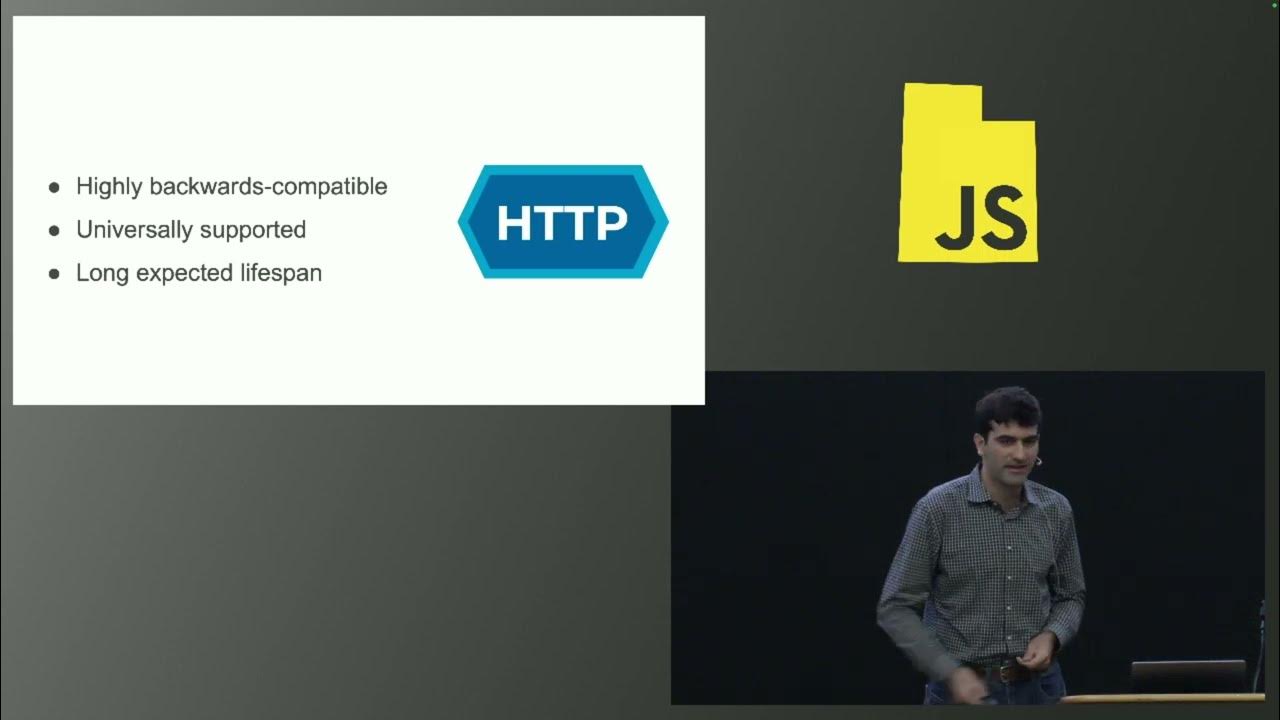
 Building the Hundred-Year Web Service with htmx - Alexander Petros - YouTube
https://www.youtube.com/watch?v=lASLZ9TgXyc
In the fast-moving JS ecosystem, keeping your software current can be a huge drain on resources. But what if there was way to write software that had minimal maintenance burden today and didn't inspire dread in the junior developers of tomorrow? Built into the web platform are all the capabilities necessary to create useful, networked services that last for decades—we just have to build in ways that takes advantage of them.
 React Won by Default – And It's Killing Frontend Innovation | Loren Stewart
https://www.lorenstew.art/blog/react-won-by-default/
It’s time to choose frameworks based on constraints and merit rather than momentum. Your next project deserves better than React-by-default. The ecosystem deserves the innovation only diversity can provide.

 Split Flap
https://fx.hot.page/split-flap?ref=sidebar
As an ode to the train stations of my childhood, I bring you a skeuomorph split-flap web component
 Plain Vanilla
https://plainvanillaweb.com/index.html
An explainer for doing web development using only vanilla techniques. No tools, no frameworks — just HTML, CSS, and JavaScript.
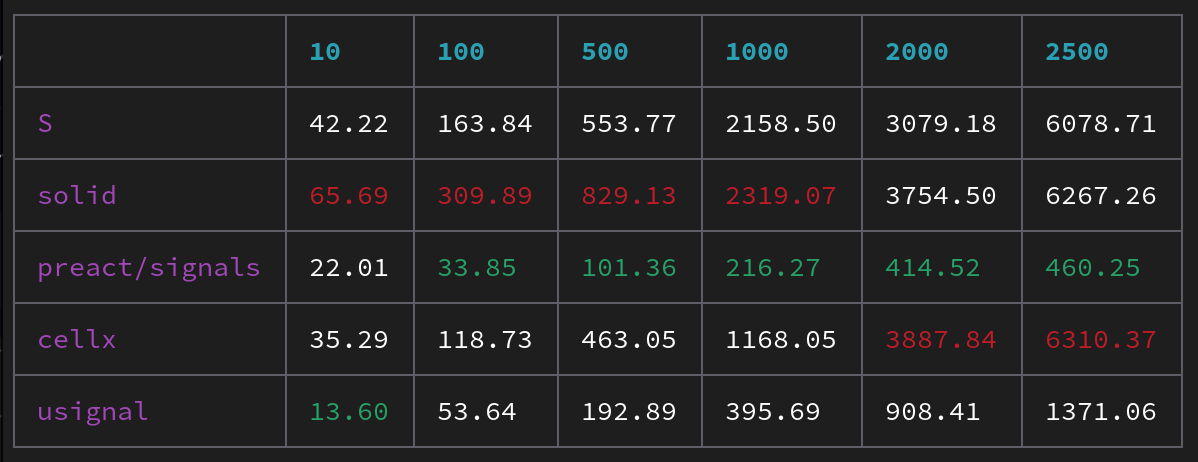
 Web Performance Calendar » Signals: the nitty-gritty
https://calendar.perfplanet.com/2022/signals-the-nitty-gritty/
Mostly revealed to the Web by Solid.js, shortly after embraced by Preact, but also blended into usignal, or implemented by many others, this pattern convinced tons of developers that hooks might not be the best solution to reactivity out there, but while the concept might look and feel super simple and natural to deal with, the complexity behind spans from 30LOC to pretty convoluted code bases.

 1KB Frontend Library - DEV Community
https://dev.to/fedia/1kb-frontend-library-5ef1?
Our compact signals implementation is inspired by Andrea Giammarchi’s excellent article on signals. If you’re curious about the nitty-gritty, I highly recommend giving it a read.

Single HTML Element Star Rating Component - DEV Community
https://dev.to/alvaromontoro/single-html-element-star-rating-component-205l?
In this article, we'll explore how to build a star rating system using a single HTML and just one JavaScript command.

Durable websites | Go Make Things
https://gomakethings.com/durable-websites/
Serve mostly static HTML. Use flat JSON storage. Go buildless! Use service workers. Go HTML-first.
 Retro futuristic radio buttons with GSAP
https://codepen.io/jdillon/pen/qEWOGxm
 The Pixel Canvas Shimmer Effect
https://ryanmulligan.dev/blog/pixel-canvas/
I recently stumbled on a super cool, well-executed hover effect from the clerk.com website where a bloom of tiny pixels light up, their glow staggering from the center to the edges of its container. With some available free time over this Thanksgiving break, I hacked together my own version of a pixel canvas background shimmer. It quickly evolved into a pixel-canvas Web Component that can be enjoyed in the demo below. The component script and demo code have also been pushed up to a GitHub repo.
 </> htmx ~ You Can't Build Interactive Web Apps Except as Single Page Applications... And Other Myths
https://htmx.org/essays/you-cant/
The browser has come a long way. Give it a chance!
 The Different (and Modern) Ways To Toggle Content | CSS-Tricks
https://css-tricks.com/the-different-and-modern-ways-to-toggle-content/
let’s spend some time looking at disclosures (<details> and <summary>), the Dialog API, the Popover API, and more. We’ll look at the right time to use each one depending on your needs. Modal or non-modal? JavaScript or pure HTML/CSS? Not sure? Don’t worry, we’ll go into all that.
 Where web components shine - daverupert.com
https://daverupert.com/2024/10/super-web-components-sunshine/
In this job we need to think a lot about the tools we choose and why, so I cataloged all the places where web components (for me) feel like “the right tool for the job”. Your list may be different and I’d love to read it. And because I don’t want this to be 100% propaganda, I’ll also cover some of the not-so-great parts of web components as well.
infinitered/nsfwjs: NSFW detection on the client-side via TensorFlow.js
https://github.com/infinitered/nsfwjs
A simple JavaScript library to help you quickly identify unseemly images; all in the client's browser. NSFWJS isn't perfect, but it's pretty accurate (~90% with small and ~93% with midsized model)... and it's getting more accurate all the time.
 Invoker Commands (Explainer) | Open UI
https://open-ui.org/components/invokers.explainer/
Adding commandfor and command attributes to <button> and elements would allow authors to assign behaviour to buttons in a more accessible and declarative way, while reducing bugs and simplifying the amount of JavaScript pages are required to ship for interactivity. Buttons with command will - when clicked, touched, or enacted via keypress - dispatch a CommandEvent on the element referenced by commandfor, with some default behaviours.
 Popover API - Web APIs | MDN
https://developer.mozilla.org/en-US/docs/Web/API/Popover_API
The Popover API provides developers with a standard, consistent, flexible mechanism for displaying popover content on top of other page content. Popover content can be controlled either declaratively using HTML attributes, or via JavaScript.
Tab panel using <details> with vertical tabs and web components
https://codepen.io/lmorchard/pen/eYqWmvV
Tab panel using <details> with selectable tab orientation (no JS)
https://codepen.io/lmorchard/pen/mdNmyvP
 Creating a 2D physics engine from scratch in Javascript – AILEF
https://ailef.tech/2022/11/12/creating-a-2d-physics-engine-from-scratch-in-javascript/
In this article, we will implement a toy 2d physics engine that supports basic forces, collisions and constraints (joints) for circle-shaped objects.
Creating a 2D physics engine from scratch in Javascript – AILEF
https://ailef.tech/2022/11/12/creating-a-2d-physics-engine-from-scratch-in-javascript
In this article, we will implement a toy 2d physics engine that supports basic forces, collisions and constraints (joints) for circle-shaped objects.
 Tangle: a JavaScript library for reactive documents
http://worrydream.com/Tangle/
Tangle is a JavaScript library for creating reactive documents. Your readers can interactively explore possibilities, play with parameters, and see the document update immediately. Tangle is super-simple and easy to learn.
Tangle: a JavaScript library for reactive documents
http://worrydream.com/Tangle
Tangle is a JavaScript library for creating reactive documents. Your readers can interactively explore possibilities, play with parameters, and see the document update immediately. Tangle is super-simple and easy to learn.
 Underrun – Making Of - PhobosLab
https://phoboslab.org/log/2018/09/underrun-making-of
I participated in this year's js13kGames, a JavaScript game development competition with a file size limit of 13kb, including code, assets and everything else. My entry was Underrun, a twin stick shooter using WebGL.
 Writing fast and safe native Node.js modules with Rust | @RisingStack
https://blog.risingstack.com/node-js-native-modules-with-rust/
That’s when I picked up Rust instead of C++ to implement a native module. I figured out that it is a great choice thanks to the safety and ease of use it provides.
Writing fast and safe native Node.js modules with Rust | @RisingStack
https://blog.risingstack.com/node-js-native-modules-with-rust
That’s when I picked up Rust instead of C++ to implement a native module. I figured out that it is a great choice thanks to the safety and ease of use it provides.
 Loving It: How to change the playback speed of a YouTube video
http://lovinitinaz.blogspot.com/2013/02/how-to-change-playback-speed-of-youtube.html
document.getElementsByTagName("video")[0].playbackRate = 1.4
 www.calormen.com/l33t/jselite.js
http://www.calormen.com/l33t/jselite.js
Textual version of Elite trading
 Paul O’Shannessy - Do We Need Node?
http://zpao.com/posts/do-we-need-node/
So what do I want? I want a world where the core JS engine is swappable. Maybe I’m deploying on an architecture not supported by V8 (Node on SPARC came up while working on SpiderNode). Maybe my employer only wants to use the JVM. Or maybe Microsoft can get some performance wins by using Chakra for Windows Azure. Back to modules, I don’t want to get rid of npm. Or maybe I do and I want something that only supports ES6+ modules.
Paul O’Shannessy - Do We Need Node?
http://zpao.com/posts/do-we-need-node
So what do I want? I want a world where the core JS engine is swappable. Maybe I’m deploying on an architecture not supported by V8 (Node on SPARC came up while working on SpiderNode). Maybe my employer only wants to use the JVM. Or maybe Microsoft can get some performance wins by using Chakra for Windows Azure. Back to modules, I don’t want to get rid of npm. Or maybe I do and I want something that only supports ES6+ modules.
 Case Study: Auto-Resizing HTML5 Games - HTML5 Rocks
http://www.html5rocks.com/en/tutorials/casestudies/gopherwoord-studios-resizing-html5-games/
In the summer of 2010, we created Sand Trap, a game that we entered in a competition on HTML5 games for mobile phones. But most mobile phones either displayed only part of the game or made the game too small—making it completely unplayable. So we took it upon ourselves to make the game fluidly adjust to match any resolution. After a bit of re-programming and using ideas outlined in this article, we had a game that scaled across any modern browser, whether it ran in a desktop or a mobile device.
Case Study: Auto-Resizing HTML5 Games - HTML5 Rocks
http://www.html5rocks.com/en/tutorials/casestudies/gopherwoord-studios-resizing-html5-games
In the summer of 2010, we created Sand Trap, a game that we entered in a competition on HTML5 games for mobile phones. But most mobile phones either displayed only part of the game or made the game too small—making it completely unplayable. So we took it upon ourselves to make the game fluidly adjust to match any resolution. After a bit of re-programming and using ideas outlined in this article, we had a game that scaled across any modern browser, whether it ran in a desktop or a mobile device.
 Referencing DOM from JS: there must be a DRYer, safer way
http://blog.pamelafox.org/2013/06/referencing-dom-from-js-there-must-be.html
It bothers me when I realize that I'm relying on CSS class names in my JS
 You can’t create a button | NCZOnline
http://www.nczonline.net/blog/2013/01/29/you-cant-create-a-button/
Unfortunately, sometimes web developers try to get a bit too clever in creating their interfaces. What if I want something to look like a link but act like a button?
You can’t create a button | NCZOnline
http://www.nczonline.net/blog/2013/01/29/you-cant-create-a-button
Unfortunately, sometimes web developers try to get a bit too clever in creating their interfaces. What if I want something to look like a link but act like a button?
 Coquette
http://coquette.maryrosecook.com/
A micro framework for JavaScript games.
Handles collision detection, the game update loop, keyboard input and canvas rendering.
Coquette
http://coquette.maryrosecook.com
A micro framework for JavaScript games.
Handles collision detection, the game update loop, keyboard input and canvas rendering.
 Working Node.js on Raspberry Pi
https://gist.github.com/stolsma/3301813
These instructions work for the Raspberry Pi running Raspbian (hard float) and create a hardware optimized version of NodeJS for the Raspberry PI, (and include a working install and NPM!!!)
 Client-side Messaging Essentials
http://freshbrewedcode.com/jimcowart/2013/02/07/client-side-messaging-essentials/
"Most people throw around the term “pub/sub” to describe any kind of eventing/messaging – but I think this term fails to adequately communicate the abstraction. Yes, ultimately, something is subscribing to what something else is publishing. But the level at which publishers and subscribers are encapsulated has the power to make a good pattern turn to the dark side. So, what’s the difference?"
Client-side Messaging Essentials
http://freshbrewedcode.com/jimcowart/2013/02/07/client-side-messaging-essentials
"Most people throw around the term “pub/sub” to describe any kind of eventing/messaging – but I think this term fails to adequately communicate the abstraction. Yes, ultimately, something is subscribing to what something else is publishing. But the level at which publishers and subscribers are encapsulated has the power to make a good pattern turn to the dark side. So, what’s the difference?"
 Building JavaScript projects with Grunt
http://ruudud.github.com/2012/12/22/grunt/
Building JavaScript projects with Grunt
http://ruudud.github.com/2012/12/22/grunt
baudehlo/Haraka · GitHub
https://github.com/baudehlo/Haraka
Haraka is an SMTP server which uses a plugin architecture to implement most of its functionality. It uses a highly scalable event model to be able to cope with thousands of concurrent connections. Plugins are written in Javascript using Node.js, and as such perform extremely quickly. The core Haraka framework is capable of processing thousands of messages per second on the right hardware.
 Mechanics of Flite - Underappreciated NPM Commands Developers Should Know About
http://mechanics.flite.com/blog/2012/12/11/underappreciated-npm-commands/
npm, the package manager that comes bundled with node.js, is generally described as “awesome”. While it was originally a separate project, npm has been bundled with node.js for the past few releases and the number of npm packages available in the npm registry has exploded.
Mechanics of Flite - Underappreciated NPM Commands Developers Should Know About
http://mechanics.flite.com/blog/2012/12/11/underappreciated-npm-commands
npm, the package manager that comes bundled with node.js, is generally described as “awesome”. While it was originally a separate project, npm has been bundled with node.js for the past few releases and the number of npm packages available in the npm registry has exploded.
marijnh/Presence
https://github.com/marijnh/Presence
Presence is an IRC logger and client that is optimized for my specific use of IRC — scan logs for a few specific channels, respond to direct messages and mentions, and only occasionally participate in discussion. It probably won't work for you if you're a heavy IRC user.
mikedeboer/jsDAV
https://github.com/mikedeboer/jsDAV
 Node.js: Style and structure
http://caolanmcmahon.com/posts/nodejs_style_and_structure/
Node.js: Style and structure
http://caolanmcmahon.com/posts/nodejs_style_and_structure
 gritsgame - GRITS is a cross-functional effort to create a boilerplate codebase to provide to HTML5 game developers that are looking to get started using Google's technology stack - Google Project Hosting
http://code.google.com/p/gritsgame/
The intent is to create a very small, multiplayer game to launch and provide all the source code up to the masses for boilerplate.
gritsgame - GRITS is a cross-functional effort to create a boilerplate codebase to provide to HTML5 game developers that are looking to get started using Google's technology stack - Google Project Hosting
http://code.google.com/p/gritsgame
The intent is to create a very small, multiplayer game to launch and provide all the source code up to the masses for boilerplate.
 Javascript Hero: Change Computer History Forever « ASCII by Jason Scott
http://ascii.textfiles.com/archives/3375
I want to help port the MESS and MAME emulators to Javascript.
 QR Code Generator for JavaScript
http://d-project.googlecode.com/svn/trunk/misc/qrcode/js/qrcode.js
euangoddard/qrcode-generator
https://github.com/euangoddard/qrcode-generator
 modules - Node.js Manual & Documentation
http://nodejs.org/docs/v0.4.8/api/modules.html#accessing_the_main_module
When a file is run directly from Node, require.main is set to its module. That means that you can determine whether a file has been run directly by testing require.main === module
Benvie/Node.js-Ultra-REPL - GitHub
https://github.com/Benvie/Node.js-Ultra-REPL
Starting with Node's built in REPL, add in a completely redone inspect formatter, actual functioning separate V8 contexts, keybindings to create, switch, and delete between them, combine it with a bunch of color. ULTRA REPL
 Arctext.js - Curving Text with CSS3 and jQuery | Codrops
http://tympanus.net/codrops/2012/01/24/arctext-js-curving-text-with-css3-and-jquery
While CSS3 allows us to rotate letters, it is quite complicated to arrange each letter along a curved path. Arctext.js is a jQuery plugin that let's you do exactly that. Based on Lettering.js, it calculates the right rotation of each letter and distributes the letters equally across the imaginary arc of the given radius.
 2011: A Badass JavaScript Year In Review - Badass JavaScript
http://badassjs.com/post/15082876071/2011-a-badass-javascript-year-in-review?72f783a8=
2011 has been a great year for JavaScript. Web browsers have given us great new tools to use and we have taken web applications to new heights, competing with native applications and bringing sexy back to the web with countless impressive demos. A week or so ago, we put out a survey to all of you asking what you thought the most badass JavaScript demo of 2011 was. Of course, this would be a boring post if we just said what the outcome was, so we’re going to list the top JavaScript accomplishments of 2011 here, from demos to libraries and applications themselves. And to all of you in the JS community, Happy New Year and keep up the good work in 2012!
mherkender/lua.js - GitHub
https://github.com/mherkender/lua.js
An ECMAscript framework to compile and run Lua code, allowing Lua to run in a browser or in Flash
 the node.js aesthetic :: The Universe of Discord
http://substack.net/posts/b96642
I would like to document an emerging set of programming conventions, philosophies, and values that I see evolving in the node.js community. I call this the node aesthetic.
The beginnings of a declarative model syntax for CoffeeScript. — Gist
https://gist.github.com/1396231
SEE: http://almostobsolete.net/declarative-models-in-coffeescript.html
 Bookmarkleter
http://chris.zarate.org/bookmarkleter
You have JavaScript. You need a bookmarklet. This does that.
 List.js - Add search, sort and flexibility to plain HTML lists with cross-browser native JavaScript by @javve
http://listjs.com
Do you want a 7 KB cross-browser native JavaScript that makes your plain HTML lists super flexible, searchable, sortable and filterable? Yeah!
Do you also want the possibility to add, edit and remove items by dead simple templating? Hell yeah!
 Generating XML With node.js - WezM.net
http://www.wezm.net/technical/2011/01/generating-xml-with-node-js
For a node.js project I’m working on I wanted to generate a Sphinx xmlpipe2 data stream. The options for generating XML with node.js seemed a bit limited. The main contender appeared to be libmljs but it segfaulted whenever I tried to use it. So with previous experience using Tim Bray’s Genx C library I decided to write bindings for node. The result is node-genx, which is available via npm.
 bloggo.org - trek.js - JavaScript Super Star Trek
http://nerici.org/bloggo/p/trek
This is my Javascript port of the classic 1970s Super Star Trek game, one of a number of (mostly) related trek-themed games from that era. Step into the flared trousers of James T Kirk and command the Enterprise to repel an invasion of evil Klingon battlecruisers.
 Dragdealer JS
http://code.ovidiu.ch/dragdealer
"Dragdealer is a drag-based JavaScript component that embraces endless front-end solutions. Elegantly crafted for JavaScript-aware coders.
2D drag and tap, mouse and touch (mobile tested), 12kB unminified. No dependency."
 HTML5 のセクションアウトラインを生成してみよう! - IT戦記
http://d.hatena.ne.jp/amachang/20090915/1252999677
It's the HTML 5 outline algorithm in JavaScript. "javascript:(function(s){ s.src = 'http://amachang.sakura.ne.jp/misc/outline/check.js'; document.body.appendChild(s) })(document.createElement('script')) "
 JavaScript syntax - Better JavaScrirpt syntax support : vim online
http://www.vim.org/scripts/script.php?script_id=1491
"If you want to use VIM to edit/view the JavaScript files, you should have this one"
OOP javascript indentation - This indentation script for OOP javascript (especially for EXTJS) : vim online
http://www.vim.org/scripts/script.php?script_id=1936
"This indentation script for javascript "
 Weekend coding: Add a character counter as the background of a textarea with JavaScript | CodeUtopia
http://codeutopia.net/blog/2009/08/01/weekend-coding-add-a-character-counter-as-the-background-of-a-textarea-with-javascript
"Have you ever filled a textarea on a page, which had a limit to how many characters you could type into it? ... How to effectively communicate how many characters you can type into a box, and have it look good. ... Add the number counter as the background of the textarea!"
 Survey Results: JavaScript Frameworks | Kyle Hayes | Proficiency by Derivation
http://www.kylehayes.info/2009/03/29/survey-results-javascript-frameworks:
 Using JavaScript in PHP with PECL and SpiderMonkey
http://devzone.zend.com/article/4704-Using-JavaScript-in-PHP-with-PECL-and-SpiderMonkey
"SpiderMonkey support in PHP comes through PECL's ext/spidermonkey extension, which is maintained by Christophe Robin, and provides an object-oriented API for accessing the SpiderMonkey library. Although this extension is currently in beta, it still allows you to do some fairly interesting things, including registering and using variables, functions and classes from PHP in JavaScript."
 Cornify easter egg with jQuery — Paul Irish - Javascript, front-end web development, and hackery
http://paulirish.com/2009/cornify-easter-egg-with-jquery
 Crowbar - SIMILE
http://simile.mit.edu/wiki/Crowbar
 Ajaxian » jsCron: Schedule code to run via simple JavaScript
http://ajaxian.com/archives/jscron
"Andrés Nieto has created a fun little JavaScript utility jsCron that lets you schedule JavaScript functions to run at certain times."

 Eric's Archived Thoughts: JavaScript Will Save Us All
http://meyerweb.com/eric/thoughts/2008/10/22/javascript-will-save-us-all
"we’re all vendors now, baby!"
 Adblock Plus and (a little) more: Generating JavaScript documentation
http://adblockplus.org/blog/generating-javascript-documentation
"After years of neglecting code documentation I finally came around and added JSDoc comments to much of the Adblock Plus core. The next problem now — what tool should I use to extract these comments and generate documentation? Problem is, none of the off-the-shelf tools know JavaScript 1.8."
 MochiKit Documentation Index
http://mochikit.com/doc/html/MochiKit/index.html#version-history
"2008-10-21 v1.4 ... 2006-04-29 v1.3.1" Holy crap - that's quite a percolation time between versions of my first favorite JS library!
 Blackbird - Open Source JavaScript Logging Utility
http://www.gscottolson.com/blackbirdjs
"Blackbird offers a dead-simple way to log messages in JavaScript and an attractive console to view and filter them. You might never use alert() again."
 YUI: Bacon Utility
http://blog.davglass.com/files/yui/bacon
"The Bacon Utility allows you to cook bacon on any HTML element."
 Yahoo! 360° - Douglas Crockford's The Department of Style - The Miller Device
http://blog.360.yahoo.com/blog-TBPekxc1dLNy5DOloPfzVvFIVOWMB0li?p=916
 Amazon.com: Concise Guide to Dojo: Leslie M. Orchard: Books
http://www.amazon.com/Concise-Guide-Dojo-Leslie-Orchard/dp/0470452021/ref=sr_1_1?ie=UTF8&qid=1222352476&s=books&sr=8-1
"Packed with useful information and lots' of insightful examples The Concise Guide to Dojo, taken from the forthcoming Professional JavaScript Frameworks book, provides experienced web developers a quick path to understanding and utilizing Dojo: a JavaScript based meta-framework for creating highly dynamic, visually appealing web sites. Logically organized, this guide quickly introduces the reader to Dojo and then quickly moves on to cover topics ranging from Manipulating DOM object, Event Handling, Utilizing AJAX, and working with additional Dojo add-on such as Dijit and DojoX."
 A List Apart: Articles: Test-Driven Progressive Enhancement
http://www.alistapart.com/articles/testdriven
"By testing a device’s capabilities up front, we can make informed decisions about the level of experience to deliver to that device. "
 Foo Hack » YUI’s “Module Pattern” vs. Prototype’s Class Function
http://foohack.com/2007/08/yui-crockford-module-pattern-vs-prototypes-class-function
Interesting perspective, with which I agree somewhat. Though, there's certainly something to be said for building a domain-specific language of convenience for DOM manipulation. "The more time someone spends building applications with a library like Prototype, the further they get from Javascript, and the more dependent they become on the library. By contrast, time spent using YUI tends to breed developers who are experts in Javascript, and that skill is far more useful than being an expert in a particular library."
 Nihilogic: Sandbag text wrapping with Canvas
http://blog.nihilogic.dk/2008/09/sandbag-text-wrapping-with-canvas.html
"With CSS you can make text wrap around an image using the float property and for most purposes this is quite adequate. However, it doesn't take into account the actual image and treats it as one big block, even if you'd prefer the text to wrap around the actual content in the picture, magazine style.Since we now have pixel access (in cool browsers, anyway) via the Canvas element, this technique can now be implemented dynamically with a bit of JavaScript."
 rephrase § E4X
http://rephrase.net/days/07/06/e4x
"E4X, short for “ECMASCript for XML”, is an extension to ECMAScript (i.e. JavaScript, JScript, ActionScript…) with new syntax and built-in objects for more convenient handling of XML fragments. It seems to be used most frequently with ActionScript 3 (Flash), but is also available in recent Mozilla/Firefox releases."
 webdev.stephband.info
http://webdev.stephband.info/parallax.html
"Parallax turns a selected element into a 'window', or viewport, and all its children into absolutely positioned layers that can be seen through the viewport. These layers move in response to the mouse, and, depending on their dimensions (and options for layer initialisation), they move by different amounts, in a parallaxy kind of way."
 JackDanger's jack at master — GitHub
http://github.com/JackDanger/jack/tree/master
 jQuery PHP library
http://jquery.hohli.com
"jQuery-PHP is a PHP library that allows to tie jQerry with PHP most natural way. You don't need to think in terms of transmission, parsing and other boring staff. Now you have a bridge that brings DOM right onto your server :) and you can ealisy manipulate it in jQuerry-style way." This seems like one of the worst ideas - maybe it's just me, but "shortcuts" and other encapsulations of client-side JS within server-side code-generation in PHP / Ruby / Python / Perl / etc seems like one of the worst forms of magical obfuscation there is in webdev. Of course, I also feel the same way about most psuedo-ORM SQL / database abstractions.
 Raphaël—JavaScript Library
http://dmitry.baranovskiy.com/raphael
"Raphaël is a small JavaScript library that should simplify your work with vector graphics on the web. In case you want to create your own specific chart or image crop-n-rotate widget, you can simply achieve it with this library. "
 PURE Unobtrusive Rendering Engine for HTML
http://beebole.com/pure
 John Resig - JavaScript Micro-Templating
http://ejohn.org/blog/javascript-micro-templating
"It's a super-simple templating function that is fast, caches quickly, and is easy to use. I have a couple tricks that I use to make it real fun to mess with."
 0xDECAFBAD » Firefox 3 Download Day Mega Widget
http://decafbad.com/blog/2008/06/16/firefox-3-download-day-mega-widget
"Oh, and rumor has it that this widget will switch to reporting on downloads, rather than pledges, once the main event has begun."
 Royal Pingdom » Javascript framework usage among top websites
http://royal.pingdom.com/?p=305
"To answer that question, we here at Pingdom have examined a set of almost 200 popular websites to see if they use a Javascript framework, and in that case which framework they have chosen."
 Pipes - Badge Documentation
http://pipes.yahoo.com/pipes/badgedocs
"A Yahoo! Pipes badge allows you to have Pipes generated content on your blog, website or social network."
 Parchment
http://parchment.toolness.com
"Below is a list of z-code based interactive fiction titles made available by The Interactive Fiction Archive. You can click on an entry to start playing it."
 Vi in JS
http://gpl.internetconnection.net/vi
 Dojo 1.1 Release Notes | The Dojo Toolkit
http://dojotoolkit.org/book/dojo-1-1-release-notes
"These are the release notes for the Dojo 1.1 release (dojo core, dijit, and dojox)."
Ajaxian » Dojo 1.1 Released
http://ajaxian.com/archives/dojo-11-released
"The Dojo team has released version 1.1 which includes from over 800 improvements"
 The Pragmatic Bookshelf | Prototype and script.aculo.us
http://www.pragprog.com/titles/cppsu
"The Prototype and script.aculo.us libraries are veritable treasure troves, smoothing over all the usual nitty-gritty differences between browsers, and making most common features a breeze to implement."
The Pragmatic Bookshelf | Mastering Dojo
http://www.pragprog.com/titles/rgdojo
"In Mastering Dojo, you’ll get the whole story, from basic usage to advanced idioms. Mastering Dojo starts out with a fast moving tutorial that will give you techniques that you can start using right away."
John Resig - JavaScript Pretty Date
http://ejohn.org/blog/javascript-pretty-date
"One method that I've been wanting for quite a while now was a simple way to format old JavaScript dates in a "pretty" way."
 Trivial iPhone / iPod Touch delicious front end - jerakeen.org
http://jerakeen.org/blog/2008/01/trivial-iphone-delicious-front-end
"I wanted a way of getting at things that I and my friends have saved in del.icio.us, and the native web interface isn’t very usable on the iPod touch."
 Automatic conversion from simple, accessible data tables to YUI Charts » Yahoo! User Interface Blog
http://yuiblog.com/blog/2008/01/17/tables-and-charts
"That’s all you need to do to progressively enhance an accessible data table to turn them into a pie chart using the YUI Charts Control."
 Glibness — Automate firing of onload events
http://paul.irish.aurgasm.us/2008/automate-firing-of-onload-events
"I’ve often had to set up onload events that execute for only a single page. ... The below solution keeps things unobtrusive."
Introducing JSONLib
http://www.nczonline.net/archive/2008/1/537
Skeptical, not yet a fan - "A word of warning: this takes a little getting used to. It is slightly more verbose than the current methods for using JSON in JavaScript"
 JSONPath - XPath for JSON
http://goessner.net/articles/JsonPath
"It's time to wonder, if there is a need for something like XPath4JSON and what are the problems it can solve."
John Resig - I Learned Some Things About jQuery Today
http://ejohn.org/blog/i-learned-some-things-about-jquery-today
"Maybe you should take some time to sit down and actually try to use and work with other libraries, because while you were out bashing and slandering us we were writing rock solid code, sharing, collaborating, and discussing the future of the web."
 MooTools An open apology to the authors of jQuery, Prototype and others
http://blog.mootools.net/2007/12/13/an-open-apology-to-the-authors-of-jquery-prototype-and-others
"Olmo is no longer a part of the Mootools development team."
 24 ways: Unobtrusively Mapping Microformats with jQuery
http://24ways.org/2007/unobtrusively-mapping-microformats-with-jquery
"Fitting with the principles of unobtrusive JavaScript, we’ll start with a semantically marked up list of restaurants, then use JavaScript to add the map, look up the restaurant locations and plot them as markers."
 Datejs - A JavaScript Date Library » About…
http://www.datejs.com
"Comprehensive, yet simple, stealthy and fast. Datejs has passed all trials and is ready to strike."
 Drosera - WebKit - Trac
http://trac.webkit.org/projects/webkit/wiki/Drosera
"Drosera is a JavaScript debugger for WebKit that can be used with any application that uses WebKit. Like the Web Inspector, over 90% of it is written in HTML, CSS and JavaScript."
 WoW Insider: Now with Wowhead tooltips - WOW Insider
http://www.wowinsider.com/2007/11/23/wow-insider-now-with-wowhead-tooltips
"The more observant among you may have noticed something neat happen to the site over the past few days: all item links that point to Wowhead now have tooltips!"
 Wait till I come! » Blog Archive » Planning JavaScript and Ajax for larger teams, equine invigorating imagery, one voice for libraries and a lot of good speakers - this was @mediaAjax 2007
http://www.wait-till-i.com/2007/11/21/planning-javascript-and-ajax-for-larger-teams-equine-invigorating-imagery-one-voice-for-libraries-and-a-lot-of-good-speakers-this-was-mediaajax-2007
"I didn’t cover many technical issues but instead tried to convince some people to recognize that the way you use JavaScript in your team is the most important part of development."