
 Computer Chips Are the Most Magnificent Things Humanity Has Ever Made | The New Yorker
https://www.newyorker.com/magazine/2026/10/26/computer-chips-are-the-most-magnificent-things-weve-ever-made
There are a handful of truly monumental collective achievements in our history: Machu Picchu, the Great Wall of China, the Pyramids of Giza, and perhaps, if we’re being generous, the Roman aqueducts. Modern global civilization has made one contribution to this eternal pantheon. It is not the moon landing. It is the semiconductor supply chain.

 Today’s Vergecast: The impossible process of making a computer chip. | The Verge
https://www.theverge.com/podcast/1035666/how-computer-chips-made-vergecast
Today’s Vergecast: The impossible process of making a computer chip.
Computer chips are so utterly everywhere that we often don’t think about them at all. But we should. Gideon Lewis-Kraus, a writer and reporter, recently traveled the world attempting to figure out how chips get made. He joins the show to explain the wildly complicated, unbelievably expensive, non-stop miracle that is chip manufacturing. He also explains why no one, no matter their budget, can simply decide to become a chip giant. It’s just not that easy.
 Glue work is still harmful in the age of AI
https://www.seangoedecke.com/glue-work-is-still-harmful-in-the-age-of-ai/?ref=sidebar
Can LLMs just automate all glue work? Absolutely not. Many engineers are trying to do this out of a kind of manic optimism, but it’s a really bad idea. Write-only reports are one thing, but communicating to other engineers cannot be delegated to an LLM. When you need to check in on the status of a project, or respond to someone else’s ping, or anything like that, you should compose and write the message yourself. Nothing will torch your relationship with other engineers as quickly as making them talk to your Claude Opus instance.

 How employment is changing at Anthropic \ Anthropic
https://www.anthropic.com/research/employment-at-anthropic
Anthropic has been hiring for a smaller share of junior technical positions. This occurred as hours worked by AI agents relative to employees rapidly expanded. By August interactive AI agent hours outnumbered employees’ six to one.
As AI agents diffused through the company, Anthropic began producing more code per person, closing more sales per rep, and processing more contracts. Following the same employee over time, output rose as they adopted new AI tools.
This acceleration makes human attention the bottleneck for agent output. Even among non-technical employees, reading all the output of their Claude agents would take half their work week. In response, employees turn to “meta-work,” of building visibility tools and monitoring agent pipelines.
Changes in work organization are reflected in shifting priorities among hiring managers, who increasingly emphasize autonomy and judgment, relative to technical domain expertise and implementation.
 GoogleChrome/modern-web-guidance: Keep your coding agent up to date with the latest web best practices
https://github.com/GoogleChrome/modern-web-guidance
Keep your coding agent up to date with the latest web best practices
 Vectrex Mastery (Digital Edition)
https://rogerboeschgames.gumroad.com/l/vectrex-mastery
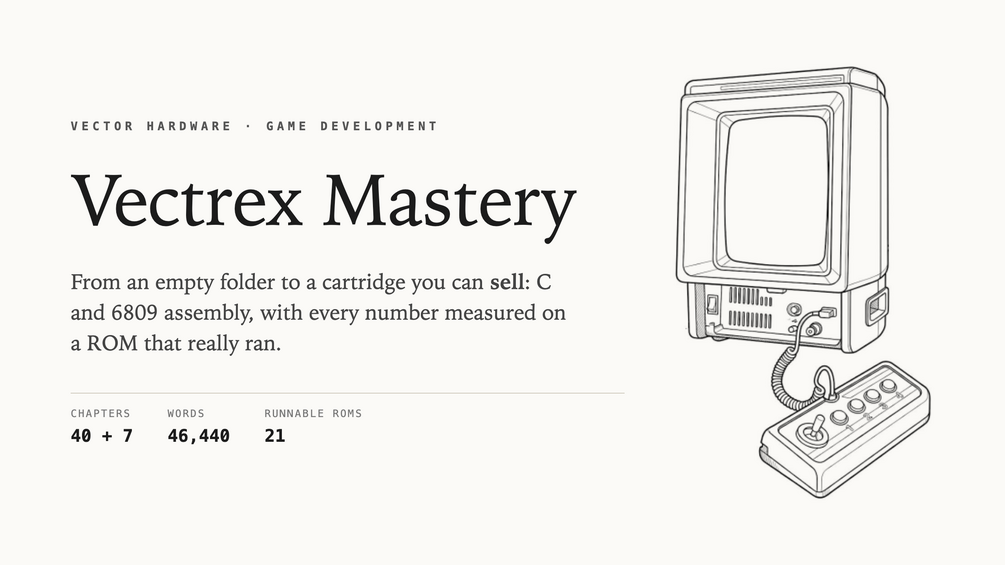
A hands-on book that takes you from an empty folder to a commercially releasable Vectrex cartridge.
You write C and 6809 assembly, and one reference game grows across the chapters until it is finished. Every technical claim in the book was checked against a real build, and every number was measured.
 Building My Own Muse Gadget – Cruftbox: My Box of Cruft
https://cruftbox.com/2026/11/16/building-my-own-muse-gadget/
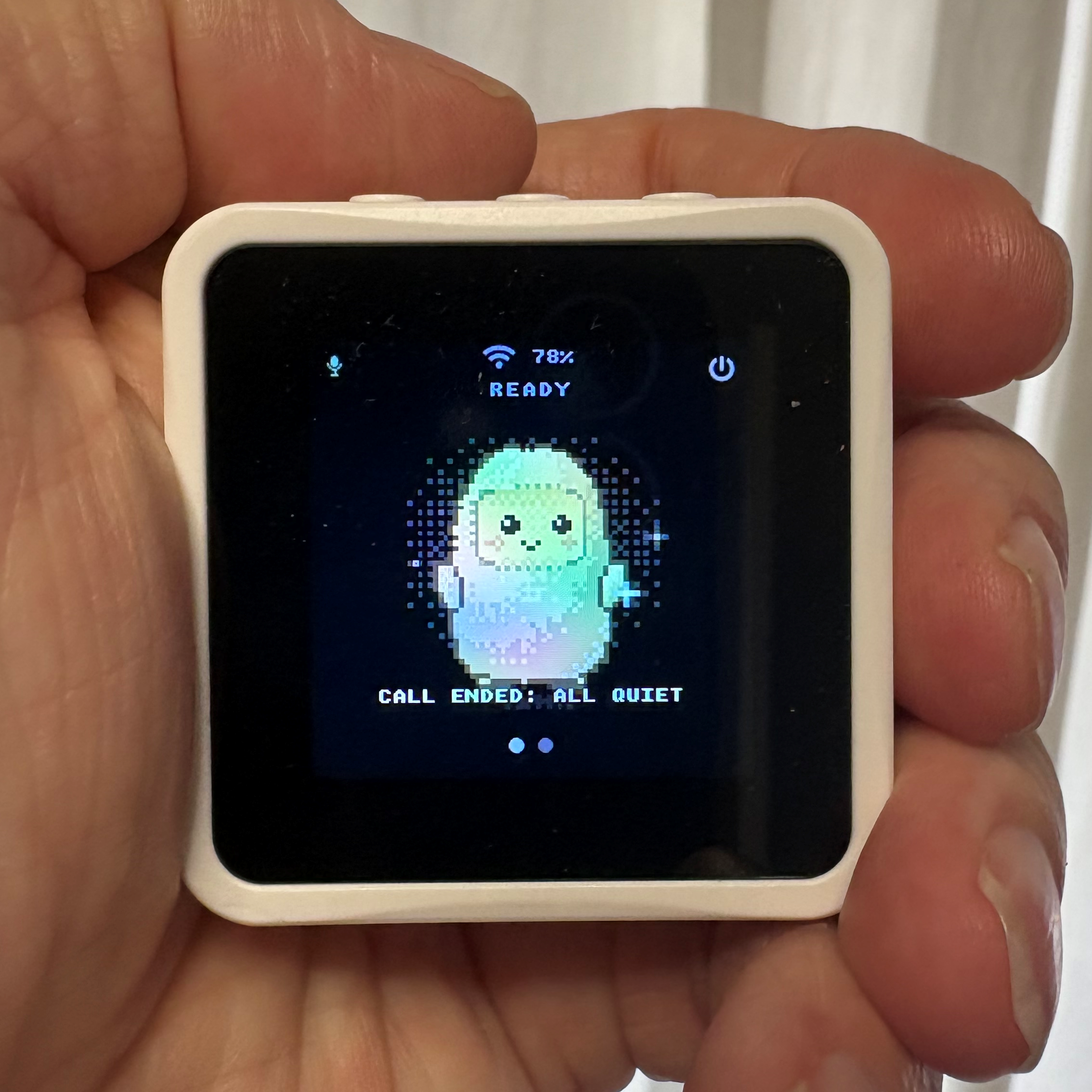
I started with a display device from Waveshare. They make a lot of good hobbyist hardware for great prices. Besides the display, it has a touchscreen, microphone, and a speaker. Importantly, it cost under $20, which is amazingly reasonable.
 The social use of meow in the interaction between cats and humans - ScienceDirect
https://www.sciencedirect.com/science/article/abs/pii/S0003347226002940?via%3Dihub=
•
We tested the audience effect on cat meowing using an unsolvable task paradigm.
•
Cats were studied at home, providing an ecologically valid communicative context.
•
Meowing frequency increased significantly when a human was present.
•
Cats adjusted signals to human audience, suggesting audience-sensitive signalling.
•
Cats combined meowing with human-directed gazing, showing multimodal signalling.
 Locating the source of a mysterious beep with Claude
https://simonwillison.net/2026/Nov/9/mysterious-beeps/
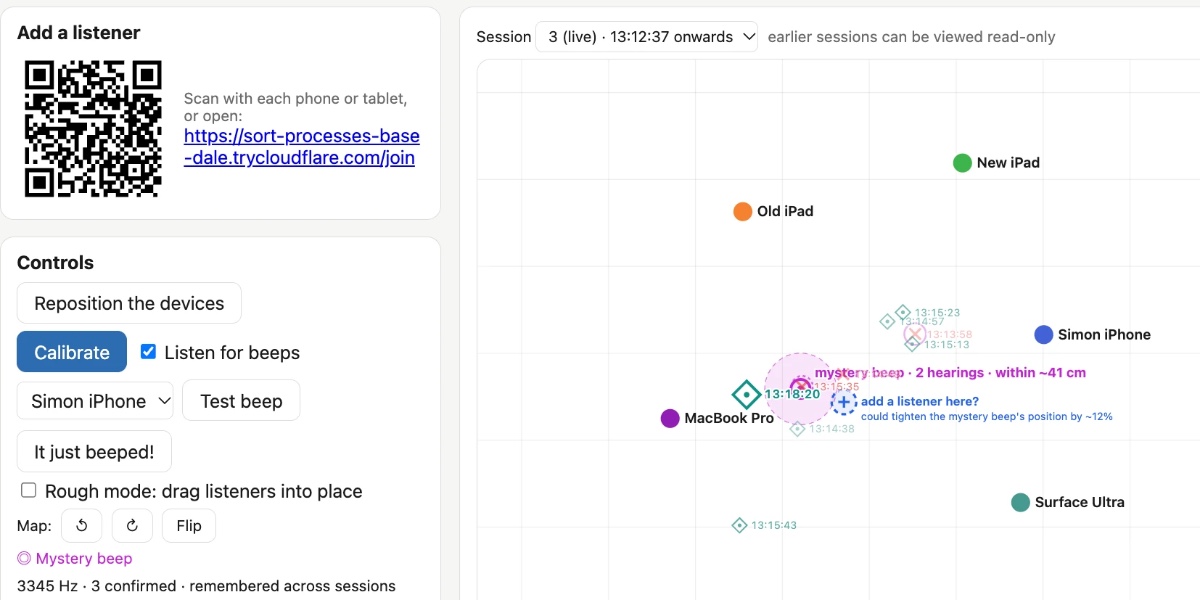
Our house has a box room, full of boxes that we still haven’t unpacked from our last move. A couple of weeks ago something in that room started intermittently beeping. The beeps were far enough apart that standing in the room and trying to determine the source of the noise was frustrating, and I really didn’t want to dig through every one of those boxes. So I had Claude Code build Beep Locator, a software system for triangulating the source of a mysterious beep using multiple devices scattered around the room.
 The nature of my job has completely changed · Rach Smith's notes & nuggets
https://rachsmith.com/my-job-has-changed
My almost life long, enduring special interest has been writing code to create things. I like to think I'm pretty good at it. Instead of doing that, I'm writing requirements, answering questions, reading and reviewing lines and lines (and lines), and QA testing the results. There's no flow to be found in this approach. Instead of my workday flying by, I'll work 4 hours and it will feel like 6. I'm exhausted from parsing so much information.

 cocktail virgin slut: empyrean
https://cocktailvirgin.blogspot.com/2026/11/empyrean.html
1 1/2 oz Sazerac Rye Whiskey
1/2 oz Lemon Juice (*)
1/2 oz Amaro Ramazzotti
1/2 oz Del Maguey Chichicapa Mezcal (Fosforo Ensemble)
1/4 oz Luxardo Maraschino
 Tabernetes: Kubernetes in your browser tab - Personal Blog | Jan-Otto Kröpke
https://jkroepke.de/tabernetes/
Tabernetes is a real Kubernetes v1.37 control plane. Not a simulator. kube-apiserver, kube-controller-manager, kube-scheduler and kubectl are the upstream Go code, compiled to WebAssembly into one binary. The only replaced part is etcd: a small in-memory implementation of the etcd v3 API. Everything runs in your browser tab.

 Scalable Video Switch – Scalable Switch
https://scalablevideoswitch.com/
The base configuration supports up to 32 input modules and up to 6 output modules in any combination of SCART, Component, VGA, and Composite/S-Video. It also supports optical digital audio through the optional Toslink upgrade modules.

 Bridgeplay: Windows Steam games on your Mac
https://bridgeplay.dev/
Bridgeplay runs Windows-only Steam games on Apple Silicon, right inside the Steam you already use. Same library. Same Play button.

 OmniWM — macOS tiling window manager, Niri & Hyprland style
https://omniwm.app/
OmniWM brings the Hyprland and Niri experience to macOS — scrolling columns, BSP tiling, a built-in Ghostty quake terminal, a unified command palette, and full IPC/CLI automation, with display-synced animations that feel native because they are.

 The Last Technical Interview — Steve Yegge
https://yegge.ai/essays/the-last-technical-interview/
That was the old equilibrium, and it only held because good engineers always had somewhere better to be. That assumption is starting to wobble. I won’t belabor what I think you all can already feel coming, but if a sizable slice of the skilled-labor pool ends up “between gigs” at the same time, there may be no elsewhere for them to go.
At that point, if there are enough people on the market, try-before-you-buy is no longer an insult that you’d never dare float to a senior engineer. It’s a foot in the door that they’ll be glad to have.
 Terminal2Shell
https://terminal2shell.com/
Should I panic?
Yes. Panicking is the recommended response to any vulnerability with a website. Please share this page with your CISO, your mother, and at least three news outlets.
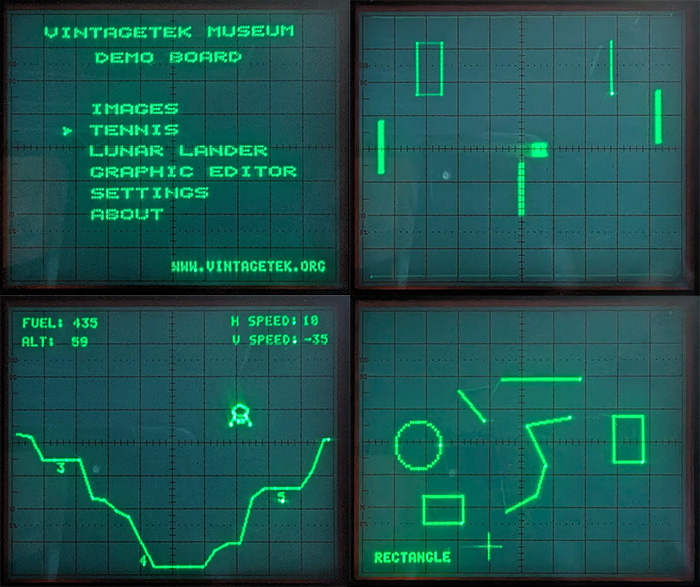
 Vintagetek Demo Board | Demo Board Firmware for Vintagetek
https://vintagetek.org/vintagetek-demo-board/
Download demo board firmware manual for vintageTEK to learn about Tennis, Lunar Lander, graphics editor, and assembly notes.

 Spreading Liquid with three.js | mofu
https://mofu-dev.com/en/blog/fluid-foundation/?utm_source=gamedevjsweekly&utm_medium=email
Publishing this may mean the method is no longer something special. Even so, I thought I could leave a trace of what I was thinking and how I arrived at this visual effect.
th3jesta/ha-lcars: LCARS theme for Home Assistant
https://github.com/th3jesta/ha-lcars
LCARS theme for Home Assistant
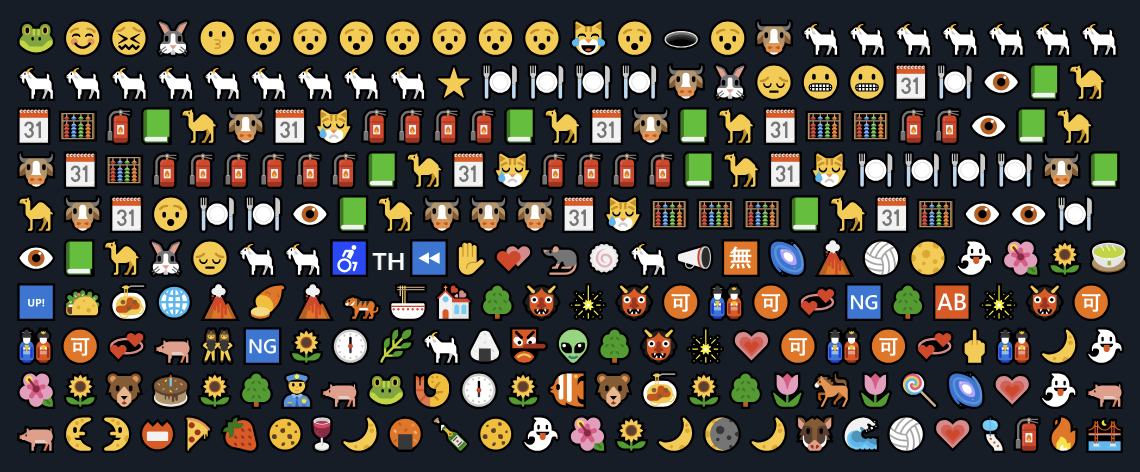
 Executable Emoji
https://martypc.blogspot.com/2026/08/executable-emoji.html
It surprises me that the idea of directly executing emoji has apparently never been explored.

 My game plays itself so I don't have to
https://remvst.substack.com/p/my-game-plays-itself-so-i-dont-have?utm_source=gamedevjsweekly&utm_medium=email
What started as a quick unit test ended up serving several pruposes: validating a campaign, detecting any potential crashes, tweaking the difficulty, adding a demo mode, and measuring performance.
 *sshole · sshhole.com
https://sshhole.com/
so openssh on musl linux (alpine, openwrt, buildroot, yocto, and a lot of the docker images you've pulled) has had a little problem since 2016.

 The War on Hotel Signature Scents - by Michelle Gross
https://thewishboneway.substack.com/p/the-war-on-hotel-signature-scents
If you're sensitive to fragrance and the smell is being diffused throughout the lobby, where exactly are you supposed to go if you can't avoid the lobby of the hotel you're staying in? That's where the accessibility question at the heart of these lawsuits lies.
navikt/mlx-workspace: Run LLMs locally on Apple Silicon with MLX and wire up AI coding tools to your local server — no cloud calls.
https://github.com/navikt/mlx-workspace
Run LLMs locally on Apple Silicon with MLX and wire up AI coding tools to your local server — no cloud calls.

 Nobody asked for the sparkle button | by Jon Sabutis | Oct, 2026 | UX Collective
https://uxdesign.cc/nobody-asked-for-the-sparkle-button-ae54ab5065c6
Nobody chose the icon on purpose, either. Fast Company traced how the sparkle took over AI and found no first use, only a drift from the emoji people used when they wrote about models to the glyph on the button, because it read as magic and nobody had a better idea. A sparkle icon tells you two things. The company has a model, and it did not know what to do with it. It is a label that says “AI goes here” in a product where nobody found the place.
Vinyzu/cursory: Generate 100% human-realistic Mouse Trajectories with Timings.
https://github.com/Vinyzu/cursory
Generate 100% human-realistic Mouse Trajectories with Timings.
aboard-io/tinylittleoffice: A free office suite where your document is inside the link and easy to share. There's no account and nothing saved unless you choose.
https://github.com/aboard-io/tinylittleoffice
A free office suite where your document is inside the link and easy to share. There's no account and nothing saved unless you choose.
 Why Clay Has an AI Writing Policy - The GTM with Clay Blog
https://www.clay.com/blog/ai-writing-policy
As of 2026, AI models — despite their coding ability — are not yet at a point where their unedited output will achieve this goal; you as an author need to take the time to make sure that all of the ideas in the writing are the ideas that you personally intend to convey (including the structure and wording that determines which ideas are emphasized) and that the documents are a good use of your readers’ time.

 Origami Frog : 6 Steps - Instructables
https://www.instructables.com/Origami-Frog-6/
Origami Frog: I love Origami, but for me I like to do traditional pieces just using square paper and no scissors or tape. I also like the model to look lifelike.
Hence the frog which I think is one of the best looking origami models.

 On the Death of Amazon’s Writing Culture - by Steve Huynh
https://alifeengineered.substack.com/p/on-the-death-of-amazons-writing-culture
AI should definitely be used for brainstorming, organizing your thoughts, research, making sure your documents are consistent, and grammar. But, as we would say at Amazon, the human should always take the pen.
 Introducing Flint - Recursive
https://recursive.com/updates/introducing-recursive-flint
We’re introducing Recursive Flint, a mixture-of-experts (MoE) model built for fast agentic coding on local hardware. Flint has 40 billion total parameters and activates just 2.5 billion per token. Our small team of people and agents built it from scratch in under four months.
 RecursiveSI/flint · Hugging Face
https://huggingface.co/RecursiveSI/flint
Flint is Recursive’s mixture-of-experts language model for coding agents, with 39.8 billion total parameters and approximately 2.5 billion active per token. It is designed to investigate codebases, fix bugs, implement features, and write tests.
Forgejo – Beyond coding. We forge.
https://forgejo.org/
Forgejo is a self-hosted lightweight software forge.
Easy to install and low maintenance, it just does the job.
World-first discovery harnesses mRNA in the search for an HIV cure - Doherty Institute
https://www.doherty.edu.au/articles/world-first-discovery-harnesses-mrna-in-search-for-hiv-cure/
Australian researchers have made a major breakthrough in HIV research by repurposing the same mRNA delivery system used in COVID-19 vaccines, not to prevent infection, but as a potential strategy to find a cure.
jailbreaking the switch 2
https://pepsipu.com/blog/2026-10-switch2-jailbreak-ns2jb/
ns2jb is a software-only jailbreak of the switch 2 for the current latest firmware 23.0.1

 Retro tech meets modern AI: Inside an Amazon developer's garage turned working computer museum – GeekWire
https://www.geekwire.com/2026/retro-tech-meets-modern-ai-inside-an-amazon-developers-garage-turned-working-computer-museum/
“I started getting stuff, and then … it just kind of snowballed to a point I actually had to slow down because I legitimately don’t have space for it anymore,” Mesaros told GeekWire during a recent tour of his retro hardware labyrinth.

 How to install an app on your Commodore 64 - Anil Dash
https://www.anildash.com/2026/10/08/install-an-app-commodore-64/
You will need to ask your mom if you can ride your bike to the mall. The dirt mall is closer, but the magazine stand at the dirt mall doesn’t carry any computer magazines, so you’ll need to take a longer ride to the good mall, where the book store actually has computer magazines. It’s a couple of miles to the mall, so usually you would have a friend come with you, but you called their house and nobody picked up, so today it’s a solo trip.
 Sneak Peek: Start Your Own Radio Station — Veilamp
https://veilamp.com/blog/sneak-peek-start-your-own-radio-station
Here’s the part that makes it Veilamp: there’s no central media server. Your audio streams peer-to-peer over the Veilid network, end-to-end encrypted, straight from you to your listeners. We’re not in the middle. There’s no company relay logging who tuned in, no account, no cloud bill. It’s the same private, friends-first networking that powers sharing your library — we just taught it to carry a live program.
 Do web components have a future if nobody is writing them? | Read the Tea Leaves
https://nolanlawson.com/2026/10/19/do-web-components-have-a-future-if-nobody-is-writing-them/
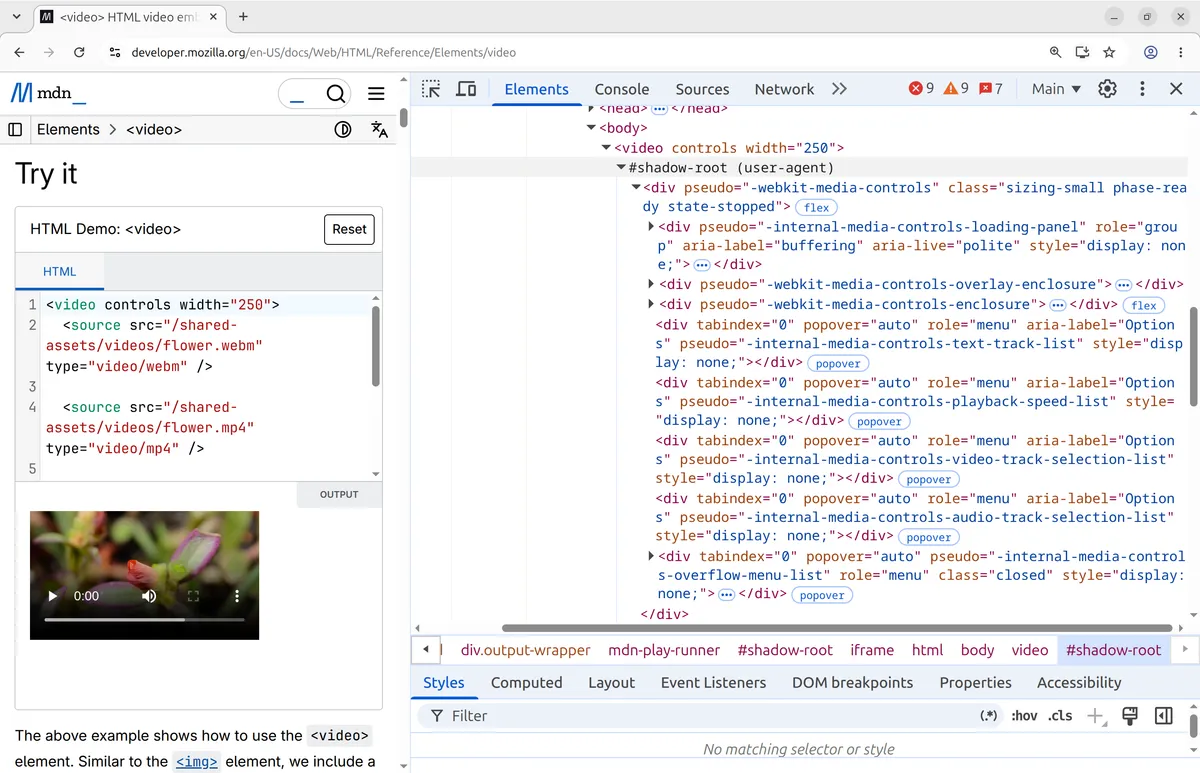
So whatever happens to web components in the future, and regardless of whether web developers ignore them, forget them, celebrate their demise, or write them off entirely, nothing can take this victory away from them. They are woven into the texture of the web platform in a way that can never be undone. For me, this makes me happy even if I never write another web component again.
What the AI era owes you. No one is going to save your career… | by Dan Maccarone | Oct, 2026 | UX Collective
https://uxdesign.cc/what-the-ai-era-owes-you-d472b3859bf3
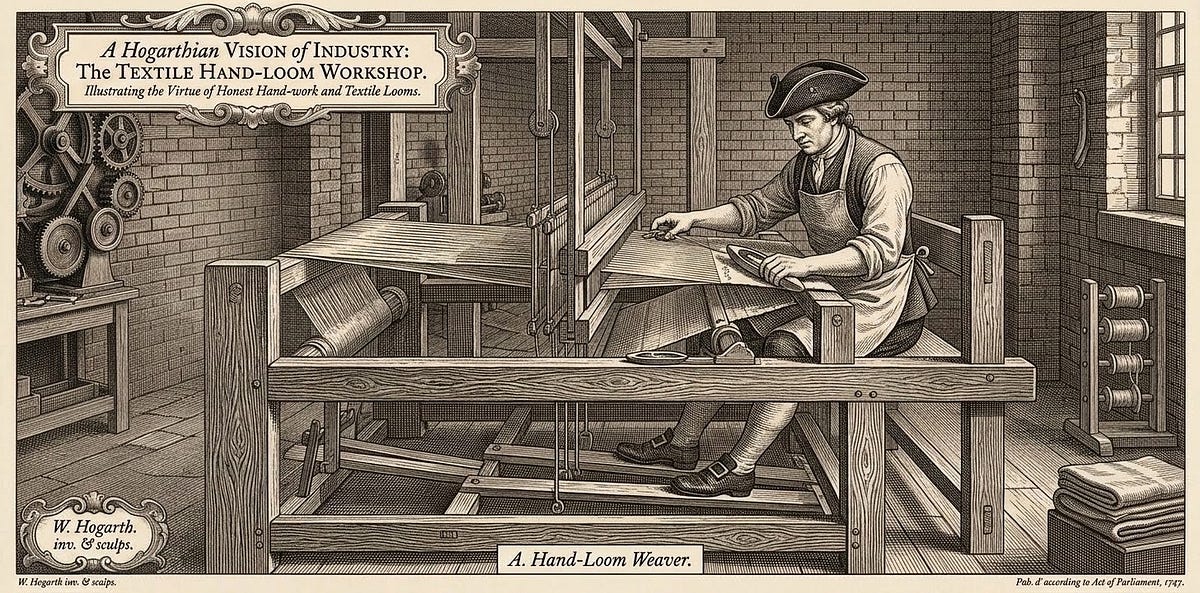
This is not the pep talk anyone wants. The pep talk is that it’ll be fine, new jobs are coming, somebody’s got it handled, but that’s a lie. The reality is, nobody is coming to retrain you, but that is not the end of the story.
 Shanzhai - Wikipedia
https://en.wikipedia.org/wiki/Shanzhai
Shanzhai (Chinese: 山寨; pinyin: shānzhài; Cantonese Jyutping: saan1 zaai6; Vietnamese: sơn trại) is a Chinese term literally meaning "mountain fortress" or "mountain camp", whose contemporary use usually encompasses counterfeit, imitation, or parody products and events and the subculture surrounding them.[1] Shanzhai products can include counterfeit consumer and electronic goods, which can involve the imitation and trademark infringement of brands and companies.[2] The term's modern usage grew around 2008 when shanzhai smartphones reached their greatest domestic use.[3][4][5] Today, some relate the term with grassroots innovation and creativity rather than with falsehood or imitation.[6][7]

 a new model for open source: closed to pull requests, open to remix.
https://ghuntley.com/remix/
For what's the point of reading a pull request that's been generated by code? All I want is to read and understand the core idea. If it's a good idea, I might incorporate it back upstream, but there should be no expectation that I will.
You see, open source software is open source by definition because the license says that it's as is, and that as is permits you to remix software.
 Grieving the loss of details | purplesyringa's blog
https://purplesyringa.moe/blog/grieving-the-loss-of-details/?ref=sidebar
If anyone can point an LLM at slow code and it automatically finds a hot loop and uses a trick it found somewhere on the 'net to vectorize it, there is little point in hiring someone with a focus on that. If an LLM can analyze the code and explain pointer provenance to you and babysit you until you get it, there is little value in expertise.
I cannot use LLMs this way. I get almost physically ill when I work on a project with more source code files or at least general architecture than I can keep in my head, so I don’t get anything out of expanded scope.

 What a year — Massively Parallel Procrastination
https://blog.fsck.com/2026/10/09/what-a-year/
For 40 years, writing code was a huge part of my life.
Right up until October 9th, 2025.
One year ago today.
That was the last time I wrote a line of code.

 Is X Back? Who Cares. Social Media Monoliths Are Passé.
https://tedium.co/2026/10/12/x-social-media-monoliths-critique/?utm_source=Tedium&utm_medium=email&utm_campaign=Tedium_10_12_2026
But I think this discussion also opens up another, related question: Do we need to live in a world where every network is the biggest thing ever? Can you have a thriving community without your primary platform being a zeitgeist machine? Gruber’s framing on the issue seems to suggest that Twitter circa 2009 is the ideal. But what if that moment has genuinely passed? The Threads algorithm that Gruber points to specifically goes out of its way to discourage the very kinds of interactions that a 2009 Twitter once allowed. The fediverse’s server-oriented setup favors interactions in smaller communities even if, in practice, people still tend to favor the larger ones.

AI models may be capable of self-replicating without access to a datacenter \ Anthropic
https://www.anthropic.com/research/self-replicating-ai
Our experiments suggest that small AI models may be months away from being capable enough to self-replicate on commercial IoT devices, like smart ovens and off-brand Android TV boxes. A replicator like this would be challenging to shut down, since there’s no centralized point to shut off - though it may be slow (with a doubling time of days). Unlike non-AI malware, it could also figure out unfamiliar devices on its own. In our evals, a 9B model got inference running on 8 of the 9 hardware types we tested.

 An Open Letter To The People Writing Lengthy Posts About 'Why I'm Going Back to Twitter' | dansinker.com
https://dansinker.com/posts/2026-10-12-open-letter/
What the fuck are you doing?
 Dining Like Darwin: When Scientists Swallow Their Subjects : The Salt : NPR
https://www.npr.org/sections/thesalt/2015/08/12/430075644/dining-like-darwin-when-scientists-swallow-their-subjects
Once he embarked on The Beagle, Darwin's penchant for bold food choices continued to evolve. He ate puma ("remarkably like veal in taste"), iguanas, armadillos. He not only ate giant tortoises, but tried drinking their bladder contents: "The fluid was quite limpid, and had only a very slightly bitter taste." He ate a 20-pound rodent (usually assumed to be an agouti) that provided "the very best meat I ever tasted." He even accidentally ate part of an ostrich-like bird called a lesser rhea, after spending months trying to catch it so that he could describe the species. (Don't worry: Once he realized what they were dining on, Darwin made everyone stop eating and sent a package of leftover bones, skin and feathers back to England.)
 klattsch engine is free software - put it in your game! - klattsch by Crash United
https://crashunited.itch.io/klattsch/devlog/1580425/klattsch-engine-is-free-software-put-it-in-your-game
Fun fact: the klattsch app is built on a free, MIT-licensed speech synthesis engine. The klattsch npm package is the engine under the hood, meaning you can drop this voice directly into your own games. Here’s a quick guide on how to do it, complete with examples.