
 Margaret Hamilton, computing pioneer who led software development for the Apollo program, dies at 90 | MIT News | Massachusetts Institute of Technology
https://news.mit.edu/2026/margaret-hamilton-computing-pioneer-dies-1007
Over two decades at MIT, Hamilton forged new paths in computer science and engineering. Her groundbreaking work included leading the team that programmed the first computers that took humans to the moon.
 Byte - a visual archive
https://byte.tsundoku.io/#about
This zoomable map shows every page of every issue of BYTE starting from the front cover of the first issue (top left) to the last page of the final edition (bottom right). The search bar runs RE2 regex over the full text of all 100k pages. The archive itself is not new, scans of BYTE have long existed on the Internet Archive and elsewhere on the net – but I hope seeing everything in single, searchable place offers a unique perspective.
 The Test Card Gallery
http://www.meldrum.co.uk/mhp/testcard/index.html
The BBC and ITV have over the years used a number of tuning signals, test cards and captions either for engineering purposes, or just to fill time in the days before breakfast and daytime TV. This page shows some of them, and some of the captions used in days past.

 Antiquated HTML Snippets and Artefacts | Vale.Rocks
https://vale.rocks/posts/html-relics
This article doesn’t cover once-specced but now obsolete bits of HTML but instead looks at all the snippets that have wormed their way into websites as result of, or in combat against, third-party integrations, browser competition, vendor extensions, and platform-specific hacks. The bits of HTML that were included for reasons, and which have been forgotten for present irrelevance. The snippets that live on only in the markup of sites from bygone eras and in the minds of those who fought during the browser wars.

 Memories Can’t Wait—or, How I Learned to Keep Worrying About the Web - Jeffrey Zeldman Presents
https://zeldman.com/2026/07/06/memories-cant-wait-or-how-i-learned-to-keep-worrying-about-the-web/
The web is still the best hope we have for a durable, shared memory. But it requires us to be gardeners, not just tenants. To plant things in soil we control, and to tend them. Because if we don’t, the only record that we were here will be someone else’s ad inventory, and when the ads move on, we’ll move with them—into the quiet, unmarked graveyard of the deleted.
 The Descent — What Happened to the Frontend While You Weren't Watching
https://davidpoblador.com/deep-dives/the-descent/
Two decades, forty-four meters of build tools, and one very confused <button> later, here's the whole story. Spare twenty minutes; I'll get you up to speed.
 The Web We Know Is Going to Disappear - Minid.net
https://www.minid.net/2026/6/15/the-web-is-going-to-dissapear?ref=sidebar
Every generation of computing believes the interface it loves will last forever. It never does. I saw information move from floppy disks to BBSs, from BBSs to the Web, from the Web to Flash, from Flash back to open standards, from websites to mobile apps, and now from search engines to AI chat interfaces. The Web will not vanish overnight, but the Web as we know it, the open place where people search, click, read, browse, publish, and discover, is already being replaced by something more convenient, more centralized, and much harder to escape.
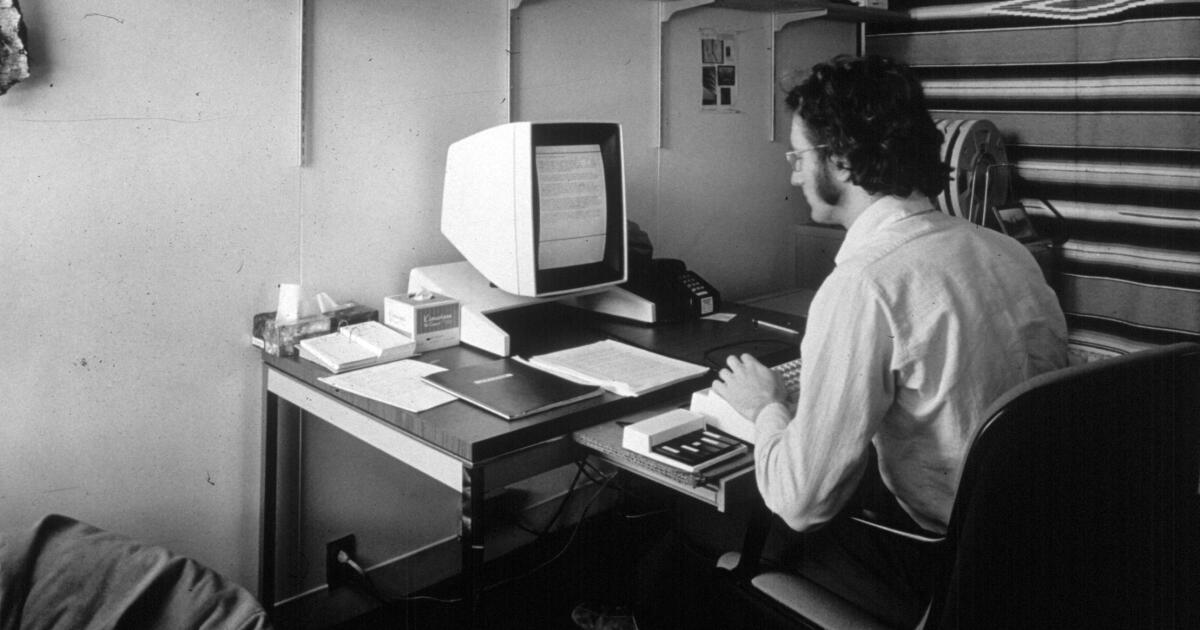
 Hiltzik: When Steve Jobs got a show-and-tell at Xerox - Los Angeles Times
https://www.latimes.com/business/story/2026-03-24/inside-the-1979-silicon-valley-demo-that-made-apple-what-it-is-today?utm_source=flipboard&utm_content=topic%2Fapple
Gates responded, “Steve, I think it’s more like we both had this rich neighbor named Xerox and I broke into his house to steal the TV set and found out that you had already stolen it.”

 joshuanwalker/Raiders2600: Reverse Engineering Raiders of the Lost Ark for the Atari 2600
https://github.com/joshuanwalker/Raiders2600
Reverse Engineering Raiders of the Lost Ark for the Atari 2600
 Defeating a 40-year-old copy protection dongle – Dmitry Brant
https://dmitrybrant.com/2026/02/01/defeating-a-40-year-old-copy-protection-dongle
That’s right — this little device is what stood between me and the ability to run an even older piece of software that I recently unearthed during an expedition of software archaeology.
For a bit more background, I was recently involved in helping a friend’s accounting firm to move away from using an extremely legacy software package that they had locked themselves into using for the last four decades.
 Computer History Museum Launches Digital Portal to Its Vast Collection - CHM
https://computerhistory.org/press-releases/computer-history-museum-launches-digital-portal-to-its-vast-collection/
MOUNTAIN VIEW, Calif. – January 21, 2026 – The Computer History Museum (CHM), a leader in decoding technology—its computing past, digital present, and future impact on humanity—announced the launch of OpenCHM, a new digital portal providing global access to its unparalleled collection.
 Adventure 751 (1980) | Renga in Blue
https://bluerenga.blog/2026/01/01/adventure-751-1980/
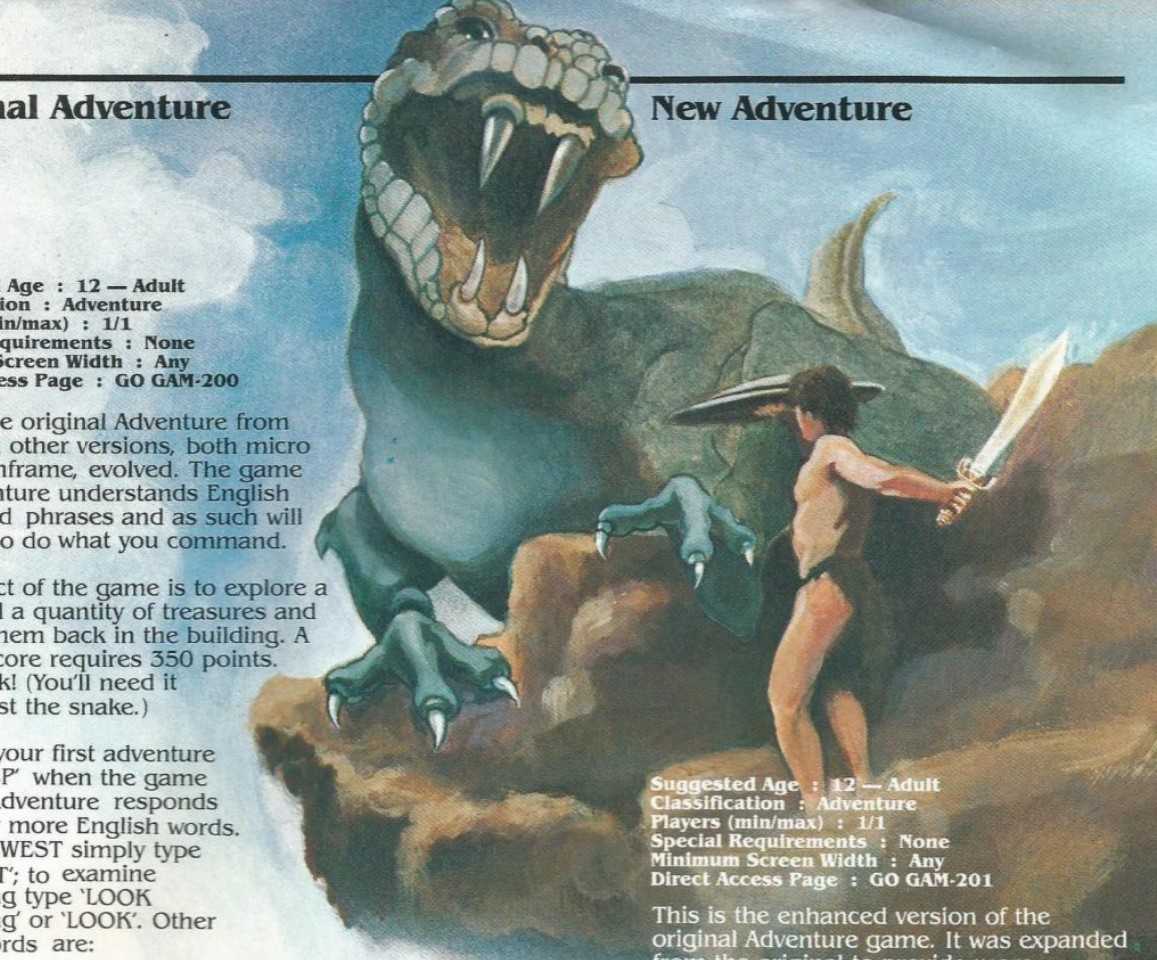
Adventure 751 has been, by my reckoning, the most sought-after variation of Crowther/Woods Adventure. It was generally available on the online portal CompuServe from nearly the beginning of the service and it disappeared when they shut down their games in the 90s. Arthur O’Dwyer started a web page in 2012 (with semi-regular updates!) dedicated to hunting down a copy.
To finish off a wild 2025 in game preservation, Arthur O’Dwyer announced the game has been found (by LanHawk, a regular amongst the comments here) and is playable.

 The Long, Knotty, World-Spanning Story of String | Hakai Magazine
https://hakaimagazine.com/features/the-long-knotty-world-spanning-story-of-string/?utm_source=FuckOff&utm_medium=FuckOff&utm_campaign=FuckOff
On its own, a stray thread cannot accomplish much. But when several fibers are twisted into yarn, and yarn into strands, and strands into string or rope, a once feeble thing becomes both strong and flexible—a hybrid material of limitless possibility. A string can cut, choke, and trip; it can also link, bandage, and reel. String makes it possible to sew, to shoot an arrow, to strum a chord. It’s difficult to think of an aspect of human culture that is not laced through with some form of string or rope; it has helped us develop shelter, clothing, agriculture, weaponry, art, mathematics, and oral hygiene. Without string, our ancestors could not have domesticated horses and cattle or efficiently plowed the earth to grow crops. If not for rope, the great stone monuments of the world—Stonehenge, the Pyramids at Giza, the moai of Easter Island—would still be recumbent. In a fiberless world, the age of naval exploration would never have happened; early light bulbs would have lacked suitable filaments; the pendulum would never have inspired advances in physics and timekeeping; and there would be no Golden Gate Bridge, no tennis shoes, no Beethoven’s fifth symphony.
 Toaster vs Washing Machine - YouTube
https://www.youtube.com/shorts/QDqrzo_6z6A
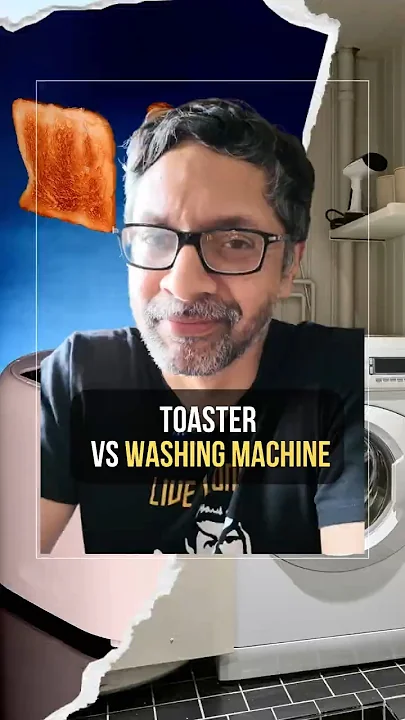
When you buy appliances, always ask yourself this question - toaster or washing machine? tl;dw: Toaster is an invitation to use more tech for its own sake when other solutions already exist. Washing machine is tech that transforms life.
How to use the internet, 1995 - YouTube
https://www.youtube.com/watch?v=Y0EXga2hEIs
Computer consultant Cory Doctorow predicts video on demand while showing a CBC reporter some of the new medium's features. Aired on CBC's The National on June 19, 1995.
QWK Packets and the Muffled Spark : Jason Scott : Free Download, Borrow, and Streaming : Internet Archive
https://archive.org/details/muffled-spark/page/n13/mode/2up
A deep dive into the QWK packet - a revolutionary addition to the Bulletin Board Experience of the 1980s - and the ramifications of what it represents in a very changed world.
historicalsource/zork1: Zork I (Microcomputer Version) by Infocom
https://github.com/historicalsource/zork1
This repository is a directory of source code for the Infocom game "Zork I", including a variety of files both used and discarded in the production of the game. It is written in ZIL (Zork Implementation Language), a refactoring of MDL (Muddle), itself a dialect of LISP created by MIT students and staff.
Preserving code that shaped generations: Zork I, II, and III go Open Source
https://opensource.microsoft.com/blog/2025/11/20/preserving-code-that-shaped-generations-zork-i-ii-and-iii-go-open-source
Today, we’re preserving a cornerstone of gaming history that is near and dear to our hearts. Together, Microsoft’s Open Source Programs Office (OSPO), Team Xbox, and Activision are making Zork I, Zork II, and Zork III available under the MIT License. Our goal is simple: to place historically important code in the hands of students, teachers, and developers so they can study it, learn from it, and, perhaps most importantly, play it.
DOOMed to Fail: A Horror Story With Rebecca Heineman (Burger Becky) - CoRecursive Podcast
https://corecursive.com/doomed-to-fail-with-burger-becky/
Today Rebecca Burger Becky Heineman shares the tale of porting Doom to the 3DO console under extreme conditions. There is an engine to tweak, deadlines to hit, hardware acceleration to get working, and dramatic rock anthems to record.
We also learn about how game piracy led her to game development and what it was like to do game development in the mania of the mid-nineties. Finally, we close with Becky’s advice on learning bare metal development skills.
Victorian diary-writers kicked off our age of self-optimisation | Aeon Essays
https://aeon.co/essays/victorian-diary-writers-kicked-off-our-age-of-self-optimisation
Nineteenth-century diaries show a growing middle class engaged in a constant quest for self-mastery and productivity. With the invention of printed commercial diaries came a new way of looking at life and new organisational possibilities. The future could be mapped out, goal-oriented, solution-focused. The Victorians were great innovators, but progress was Janus-faced. For every leap forward, a renewed pressure to go further, and faster, to do better, be better. The age of progress was also an age of anxiety.
u/Quick_Butterfly_4571 passionately explains why geeky 80’s kids are confused with ChatGPT : r/bestof
https://www.reddit.com/r/bestof/comments/1ovxrk6/uquick_butterfly_4571_passionately_explains_why/
So, it is the vernacular of the first globally connected generation of kids, who — working in tandem and free from constraints, oversight, or rules — developed an epistolary style designed to facilitate belonging by wire to communities that were virtual and spread across the globe. To connect with other lonely oddballs who were thrilled to discuss geeky things.
It is the first ever, democratically developed, global, epistolary style and the first consistent style developed in the age of the internet for the internet.
We also drew boobs and said vulger things and developed new ways of slinging insults and enraging each other. Like, it wasn't a utopia.
Some context on why some 80's kids keep getting mistaken for GPT
https://www.reddit.com/r/diypedals/comments/1ovmx4l/comment/nokigif/
So, when you got online, you pulled or copied or saved all your messages, drafted up what was...essentially an essay of a response — trying to anticipate follow up questions or points of confusion. You planned it ahead of time. You studied your ass off to equip yourself with knowledge in the hopes of getting some replies off the same day you read them (it sounds stupid now, but that was fucking incredible — send and receive a letter same day!? Eesh. I am getting old).
Also, because communication was fast, but our time was limited, it was more like faster letters at first than it was like texts. It was a horror to waste round trips on misunderstandings — the person you were collaborating with might only get online Wednesday afternoons. If you were ambiguous, you might waste a whole week of progress just by not being clear! So, we were explicit.
The death of Glitch, the birth of Slack
https://www.johnnyrodgers.is/the-death-of-glitch-the-birth-of-slack/
Glitch was an unusual, clever, heartfelt game. Within the realm of Ur, dreamt by eleven magical Giants, players created playful new identities for themselves. They designed and clothed their avatars to their heart’s content, delighting in new hats and a rainbow of possible skin tones. They crafted working music boxes and decorated their architecturally-unlikely homes.
2002: Last.fm and Audioscrobbler Herald the Social Web | Cybercultural
https://cybercultural.com/p/lastfm-audioscrobbler-2002/
Following in Amazon's footsteps, two student projects independently use 'collaborative filtering' to bring recommendations and social networking to online music; soon they will join forces.

 Joe Decuir Engineering Notebook 1978 : Joe Decuir : Free Download, Borrow, and Streaming : Internet Archive
https://archive.org/details/JoeDecuirEngineeringNotebook1978/
Joe Decuir's 1978 engineering notebook from when he worked at Atari, including design concepts (lots on the Atari 400/800, especially the ANTIC chip) feasibility studies, meeting notes, teardown of competing products (such as Magnavox Odyssey 2)

 Everyone's wondering if, and when, the AI bubble will pop. Here's what went down 25 years ago that ultimately burst the dot-com boom | Fortune
https://fortune.com/2025/09/28/ai-dot-com-bubble-parallels-history-explained-companies-revenue-infrastructure/
The question facing investors today isn’t whether AI will transform the economy—most experts agree it will. The question is whether current valuations and infrastructure investments can be justified by near-term returns, or whether, like the fiber-optic cables of the 1990s, much of today’s AI infrastructure will sit unused while the market awaits demand to catch up with supply. As history shows, even transformative technologies can’t escape the gravitational pull of economics—so while the internet did change the world, it didn’t happen as quickly as some of its early champions promised, and several of those people who got ahead of themselves were humbled in the process.
 The Blank Page Revolution - by Steven Johnson
https://adjacentpossible.substack.com/p/the-blank-page-revolution
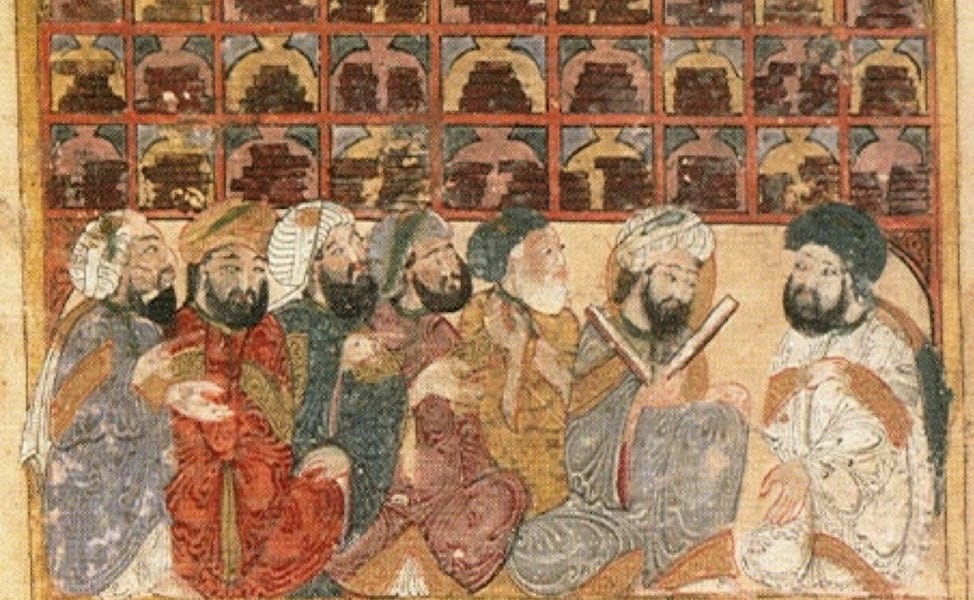
The most surprising insight, I think, revolves around the significance of the fundamental substrate of all modern notebooks until the digital age: paper. Before reading Allen's book, I had mostly thought about paper in terms of Gutenberg and the printing press democratizing knowledge and information by making it much easier to publish and read printed information in the form of books. But somehow I hadn't fully thought through the more intimate revolution that it enabled—a revolution of self-knowledge and private record-keeping, executed not with a printing press but with a pen.
 Michael Tsai - Blog - Our Changing Relationship With Apple
https://mjtsai.com/blog/2025/02/27/our-changing-relationship-with-apple/?__readwiseLocation=
 Phrase origin: Why do we "call" functions? – Arthur O'Dwyer – Stuff mostly about C++
https://quuxplusone.github.io/blog/2025/04/04/etymology-of-call/
On StackExchange, someone asks why programmers talk about “calling” a function. Several possible allusions spring to mind:
Calling a function is like calling on a friend — we go, we stay a while, we come back.
Calling a function is like calling for a servant — a summoning to perform a task.
Calling a function is like making a phone call — we ask a question and get an answer from outside ourselves.
The true answer seems to be the middle one — “calling” as in “calling up, summoning” — but indirectly, originating in the notion of “calling for” a subroutine out of a library of subroutines in the same way that we’d “call for” a book out of a closed-stack library of books.

 Serving 200 million requests per day with a cgi-bin | Jake Gold
https://jacob.gold/posts/serving-200-million-requests-with-cgi-bin/
Using CGI on modest hardware, it’s possible to serve 2400+ requests per second or 200M+ requests per day.
It’s almost never going to be the best choice these days, but it’s definitely viable.
 Serving 200 million requests per day with a cgi-bin
https://simonwillison.net/2025/Jul/5/cgi-bin-performance/#atom-everything
Maybe we should start coding web applications like it's 1998, albeit with Go and Rust!
To clarify, I don't think most people should do this. I just think it's interesting that it's not as bad an idea as it was ~25 years ago.

 Kevin Webb: "One of the best examples of LLM developer tooling I've heard is from a team that supports software from the 80s-90s...."
https://bsky.app/profile/triangulator.org/post/3lqqgkkst2k2r
One of the best examples of LLM developer tooling I've heard is from a team that supports software from the 80s-90s. Their only source of documentation is *video interviews* with retired employees. So they feed them into transcription software and get summarized searchable notes out the other end.

 Iconography of the X Window System: The Boot Stipple | matttproud.com (blog)
https://matttproud.com/blog/posts/x-window-system-boot-stipple.html
For the uninitiated, what are we looking at? Could it be the Moiré Error from Doom? Well, no. You are looking at (part of) the boot up screen for the X Window System, specifically the pattern it uses as the background of the root window. This pattern is technically called a stipple.
 Something Pretty Right: A History of Visual Basic | Retool
https://retool.com/visual-basic
How Visual Basic became the world's most dominant programming environment, its sudden fall from grace, and why its influence is still shaping the future of software development.

 Why is there a "small house" in IBM's Code page 437? - GlyphDrawing.Club -blog
https://blog.glyphdrawing.club/why-is-there-a-small-house-in-ibm-s-code-page-437/
There's a small house ( ⌂ ) in the middle of IBM's infamous character set Code Page 437. "Small house"—that's the official IBM name given to the glyph at code position 0x7F, where a control character for "Delete" (DEL) should logically exist. It's cute, but a little strange. I wonder, how did it get there? Why did IBM represent DEL as a house, of all things?
 Digital Ghost Towns: When Big Companies Acquire, Shut Down, and Sit on Premium Domains
https://www.snagged.com/post/digital-ghost-towns-when-big-companies-acquire-shut-down-and-sit-on-premium-domains
The internet is littered with digital ghost towns—premium domains once associated with thriving businesses, now sitting dormant or parked, waiting for their next life. Some of the biggest companies in the world have made strategic acquisitions, only to shut down the businesses they bought, leaving behind valuable domain names that are either redirected, held indefinitely, or simply left in limbo. Let’s take a look at some high-profile cases where major corporations scooped up valuable domains, shut down the original companies, and left the URLs in the digital graveyard.
 The story of Rogue - Spillhistorie.no
https://spillhistorie.no/the-story-of-rogue/
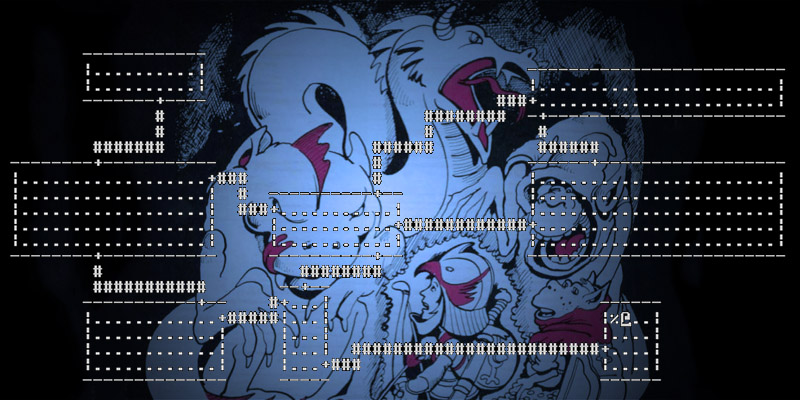
Rogue is one of the most influential games of all time. Even if you haven’t played it, you’ve definitely played several games that have Rogue’s DNA in them. It became so popular when it was released for UNIX-based systems in 1980 that it created its own genre, which we still know as ‘roguelike games’. Even in the decades when these games were niche experiences, the genre was important. The action role-playing game Diablo built directly on the roguelike genre, which means that all the games that followed in Diablo’s footsteps also have their roots here.
 International Center for the History of Electronic Games
http://www.icheg.org
The International Center for the History of Electronic Games® (ICHEG) at The Strong collects, studies, and interprets video games, other electronic games, and related materials and the ways in which electronic games are changing how people play, learn, and connect with each other, including across boundaries of culture and geography.
 Libi Rose Keeps Old Tech Running at the Media Archaeology Lab - IEEE Spectrum
https://spectrum.ieee.org/vintage-tech
Libi Rose keeps obsolete technologies running at the Media Archaeology Lab
 A.N. Lucas's 88x31 button Collection
https://anlucas.neocities.org/88x31Buttons
Here is a collection of more than 700 88x31 web buttons from the 1990's and 2000's, including the famous "Netscape NOW" and "Internet Explorer" buttons as well as various other buttons for websites of past and present. All were rescued from a now defunct http://harrypagerubbish.webs.com/buttons just before it disappeared without warning. These buttons are an historic example of advertising in the earlier days of the World Wide Web. Enjoy these buttons and use them to your liking.
 Retro Gadgets: The 1974 Breadboard Project | Hackaday
https://hackaday.com/2023/08/29/retro-gadgets-the-1974-breadboard-project/
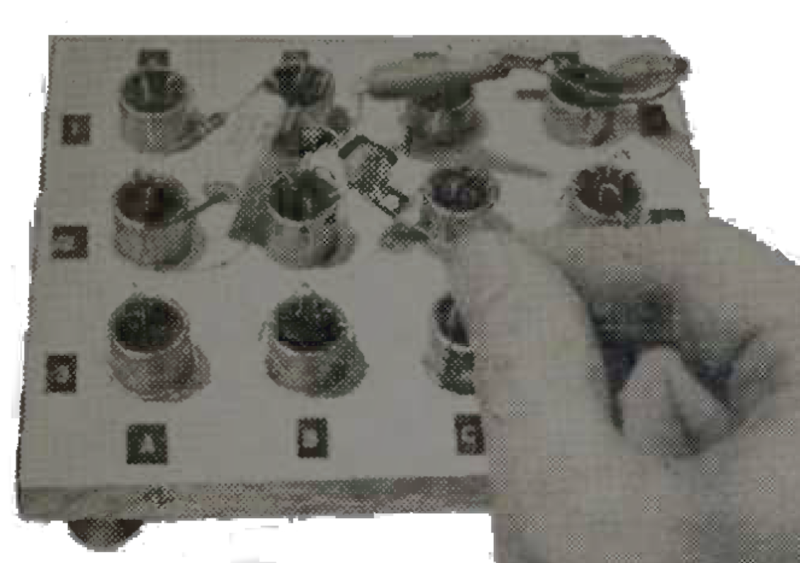
It is hard to imagine experimenting with electronics without the ubiquitous solderless breadboard. We are sure you have a few within arm’s reach. The little plastic wonders make it easy to throw together a circuit, try it, and then tear it down again. But, surprisingly, breadboards of that type haven’t always been around, and — for a while — they were also an expensive item. Maybe that’s what motivated [R. G. Cooper] to build Slip-n-Clip — his system for quickly building circuits that he published in a 1974 edition of the magazine Elementary Electronics.
Retro Gadgets: The 1974 Breadboard Project | Hackaday
https://hackaday.com/2023/08/29/retro-gadgets-the-1974-breadboard-project
It is hard to imagine experimenting with electronics without the ubiquitous solderless breadboard. We are sure you have a few within arm’s reach. The little plastic wonders make it easy to throw together a circuit, try it, and then tear it down again. But, surprisingly, breadboards of that type haven’t always been around, and — for a while — they were also an expensive item. Maybe that’s what motivated [R. G. Cooper] to build Slip-n-Clip — his system for quickly building circuits that he published in a 1974 edition of the magazine Elementary Electronics.
 Early Computer Art in the 50’s & 60’s — Amy Goodchild
https://www.amygoodchild.com/blog/computer-art-50s-and-60s
My original vision for this article was to cover the development of computer art from the 50’s to the 90’s, but it turns out there’s an abundance of things without even getting half way through that era. So in this article we’ll look at how Lovelace’s ideas for creativity with a computer first came to life in the 50’s and 60’s, and I’ll cover later decades in future articles.
 ActivityPub is the new FidoNet
https://l33t.codes/2023/02/04/ActivityPub-is-the-new-FidoNet/
It occurred to me today that ActivityPub is the new, modern FidoNet(-style) networking. Sure you have W3C publishing official specifications, but what you mostly have is every day “hackers” putting the protocol to work building decentralized communications. Anyway, the specifications are quote vague at best, which in this case, I’m going to consider a feature. In other words, a lot like FidoNet.
ActivityPub is the new FidoNet
https://l33t.codes/2023/02/04/ActivityPub-is-the-new-FidoNet
It occurred to me today that ActivityPub is the new, modern FidoNet(-style) networking. Sure you have W3C publishing official specifications, but what you mostly have is every day “hackers” putting the protocol to work building decentralized communications. Anyway, the specifications are quote vague at best, which in this case, I’m going to consider a feature. In other words, a lot like FidoNet.
 New Hampshire installs first historical marker to honor computer programming - The Verge
https://www.theverge.com/platform/amp/2019/6/16/18680941/new-hampshire-basic-first-historical-marker-beginners-all-purpose-symbolic-instruction-code
New Hampshire has installed what appears to be the first historical highway marker honoring computer programming, according to the Concord Monitor. The new sign honors BASIC, Beginner’s All-purpose Symbolic Instruction Code, a programming language that was invented at Dartmouth College in 1964.
 Fifty Years of BASIC, the Language That Made Computers Personal | Time
http://time.com/69316/basic/
BASIC wasn’t designed to change the world. “We were thinking only of Dartmouth,” says Kurtz, its surviving co-creator. (Kemeny died in 1992.) “We needed a language that could be ‘taught’ to virtually all students (and faculty) without their having to take a course.”
Fifty Years of BASIC, the Language That Made Computers Personal | Time
http://time.com/69316/basic
BASIC wasn’t designed to change the world. “We were thinking only of Dartmouth,” says Kurtz, its surviving co-creator. (Kemeny died in 1992.) “We needed a language that could be ‘taught’ to virtually all students (and faculty) without their having to take a course.”
 The underground story of Cobra, the 1980s’ illicit handmade computer | Ars Technica
https://arstechnica.com/gadgets/2017/11/the-underground-story-of-cobra-the-1980s-illicit-handmade-computer/
Among the clones manufactured by the Communists was the Cobra or CoBra. The name stands for COmputere BRAsov, with Brasov being the town in central Romania where these machines were assembled to be used by enterprises. Of course, ordinary people couldn’t buy them—which is what first led several students at the Politehnica University of Bucharest deciding to build them themselves.
The underground story of Cobra, the 1980s’ illicit handmade computer | Ars Technica
https://arstechnica.com/gadgets/2017/11/the-underground-story-of-cobra-the-1980s-illicit-handmade-computer
Among the clones manufactured by the Communists was the Cobra or CoBra. The name stands for COmputere BRAsov, with Brasov being the town in central Romania where these machines were assembled to be used by enterprises. Of course, ordinary people couldn’t buy them—which is what first led several students at the Politehnica University of Bucharest deciding to build them themselves.
 Oldest software rivalry: Emacs and Vi, two text editors used by programmers.
http://www.slate.com/articles/technology/bitwise/2014/05/oldest_software_rivalry_emacs_and_vi_two_text_editors_used_by_programmers.html?wpsrc=sh_all_dt_fb_ru
Forget Apple vs. Google. Emacs and Vi have been battling for text-editor supremacy among programmers for 40 years.
 Museum of Endangered Sounds
http://savethesounds.info/
I launched the site in January of 2012 as a way to preserve the sounds made famous by my favorite old technologies and electronics equipment.
Museum of Endangered Sounds
http://savethesounds.info
I launched the site in January of 2012 as a way to preserve the sounds made famous by my favorite old technologies and electronics equipment.
 Moving Files from one Git Repository to Another, Preserving History | Greg Bayer
http://gbayer.com/development/moving-files-from-one-git-repository-to-another-preserving-history/
Moving Files from one Git Repository to Another, Preserving History | Greg Bayer
http://gbayer.com/development/moving-files-from-one-git-repository-to-another-preserving-history
 Firefox 1.0 Launch Day | Mitchell's Blog
http://blog.lizardwrangler.com/?p=22
Launch day here was quite a day, and I thought I would describe my view of it.
 Farewell to Tinderbox, the world’s 1st? 2nd? Continuous Integration server
http://oduinn.com/blog/2014/06/04/farewell-to-tinderbox/
In April 1997, Netscape ReleaseEngineers wrote, and started running, the world’s first? second? continuous integration server. Now, just over 17 years later, in May 2014, the tinderbox server was finally turned off. Permanently.
Farewell to Tinderbox, the world’s 1st? 2nd? Continuous Integration server
http://oduinn.com/blog/2014/06/04/farewell-to-tinderbox
In April 1997, Netscape ReleaseEngineers wrote, and started running, the world’s first? second? continuous integration server. Now, just over 17 years later, in May 2014, the tinderbox server was finally turned off. Permanently.
 App Store Year Zero: How unsweetened web apps and unsigned code drove the iPhone to an SDK | iMore
http://www.imore.com/history-app-store-year-zero
Apple introduced the App Store on July 10, 2008. Over the course of the next week we're going to take a look back at the origins and development of App Store, and forward towards its potential future. To do that properly, however, we have to start at the beginning, with the original iPhone in 2007. And with the original iPhone, there was no App Store, and no third party apps. At least not at first...
 Getting Started, circa 1983
http://simonallardice.com/general/2014/03/17/first-computer.html
Let me say that again: the next day you could find out if your code compiled or not.
 Citation Needed – blarg?
http://exple.tive.org/blarg/2013/10/22/citation-needed/
"Nobody wanted to learn how to play, much less build, Engelbart’s Violin, and instead everyone gets a box of broken kazoos."
Citation Needed – blarg?
http://exple.tive.org/blarg/2013/10/22/citation-needed
"Nobody wanted to learn how to play, much less build, Engelbart’s Violin, and instead everyone gets a box of broken kazoos."
 The Third Core's Revenge | Restricted Data
http://blog.nuclearsecrecy.com/2013/08/16/the-third-cores-revenge/
By the end of August 1945, there had been a total of three plutonium cores created in the entire world. Everyone knows about the first two. The first was put into the Gadget and detonated at Trinity in July 1945. The second was put into the Fat Man and detonated over Nagasaki in August 1945. The third, however, has been largely overlooked. The third core was the one that was destined to be the Third Shot dropped on Japan, had there been a Third Shot. Instead, it has a different story — but it was still not a peaceful one.
The Third Core's Revenge | Restricted Data
http://blog.nuclearsecrecy.com/2013/08/16/the-third-cores-revenge
By the end of August 1945, there had been a total of three plutonium cores created in the entire world. Everyone knows about the first two. The first was put into the Gadget and detonated at Trinity in July 1945. The second was put into the Fat Man and detonated over Nagasaki in August 1945. The third, however, has been largely overlooked. The third core was the one that was destined to be the Third Shot dropped on Japan, had there been a Third Shot. Instead, it has a different story — but it was still not a peaceful one.
 Baer’s Odyssey: Meet the serial inventor who built the world’s first game c
http://arstechnica.com/gaming/2013/07/in-the-beginning-ralph-h-baer-and-the-birth-of-the-game-console
The Weird Stuff Warehouse is where old tech goes to retire | Ars Technica
http://arstechnica.com/gadgets/2013/05/the-weird-stuff-warehouse-is-where-old-tech-goes-to-retire/
Tucked neatly between Yahoo! headquarters and Lockheed Martin is a row of unmarked warehouses. To the common passerby, it's nothing more than an office park surrounded by perfectly manicured lawns. But to those who are in on the secret, there's a place full of technology treasures waiting to be unearthed. It's called the Weird Stuff Warehouse, and for more than 27 years it's been providing the Bay Area with a surplus of old and new technology. It's not just a Goodwill for antiquated hardware, though—it's also a step back through time. Inside this warehouse, it's an era when RAID controllers were the size of a modern-day sound card and Windows 95 reigned supreme.
The Weird Stuff Warehouse is where old tech goes to retire | Ars Technica
http://arstechnica.com/gadgets/2013/05/the-weird-stuff-warehouse-is-where-old-tech-goes-to-retire
Tucked neatly between Yahoo! headquarters and Lockheed Martin is a row of unmarked warehouses. To the common passerby, it's nothing more than an office park surrounded by perfectly manicured lawns. But to those who are in on the secret, there's a place full of technology treasures waiting to be unearthed. It's called the Weird Stuff Warehouse, and for more than 27 years it's been providing the Bay Area with a surplus of old and new technology. It's not just a Goodwill for antiquated hardware, though—it's also a step back through time. Inside this warehouse, it's an era when RAID controllers were the size of a modern-day sound card and Windows 95 reigned supreme.
 A Profanity-Laced Video Game Password That Breaks Everything | minimaxir | Max Woolf's Blog
http://minimaxir.com/2013/05/its-a-livin/
ENGAGE RIDLEY M0THER FUCKER
A Profanity-Laced Video Game Password That Breaks Everything | minimaxir | Max Woolf's Blog
http://minimaxir.com/2013/05/its-a-livin
ENGAGE RIDLEY M0THER FUCKER
 ClippyJS - Add Clippy or his friends to any website for instant nostalgia
https://www.smore.com/clippy-js
Add Clippy or his friends to any website for instant nostalgia. Our research shows that people love two things: failed Microsoft technologies and obscure Javascript libraries. Naturally, we decided to combine the two.
 Yahoo Kills Upcoming, Archive Team Saves the Day | Webmonkey | Wired.com
http://www.webmonkey.com/2013/04/yahoo-shutters-upcoming-archive-team-saves-the-day/
Of course there’s a well known group of people that have made something of an art out of saving disappearing internet data — the Archive Team, headed by computer historian Jason Scott.
Yahoo Kills Upcoming, Archive Team Saves the Day | Webmonkey | Wired.com
http://www.webmonkey.com/2013/04/yahoo-shutters-upcoming-archive-team-saves-the-day
Of course there’s a well known group of people that have made something of an art out of saving disappearing internet data — the Archive Team, headed by computer historian Jason Scott.
 Change Computer History Forever: Well, Here We Are « ASCII by Jason Scott
http://ascii.textfiles.com/archives/3947
This is it, folks. This is the ideal world I’ve heard whispered about, referenced, and planned for a very long time. It’s here. I know you might have expected it to land with an earth-shattering boom but it was a slow and steady flowering on the Internet Archive’s servers. The Archive of Historical Computer Software is here, and it is very, very large.
Blow me away.
 Yahoo! Has Probably Destroyed the Most History, Ever – And Historians Need to Wake Up | Ian Milligan
http://ianmilligan.ca/2013/04/03/yahoo-sucks-historians-wake-up/
This stuff matters. If we want to be the profession that leads the way in understanding and interpreting the past, we should be part of this conversation, or at the very least learn and see how we can help out. I should note here, quickly, that I know there are historians who care. I follow them on Twitter and they’re awesome. But they’re a small minority of the profession, and that needs to change. This doesn’t just affect digital historians, it affects historians. Our very profession.
Yahoo! Has Probably Destroyed the Most History, Ever – And Historians Need to Wake Up | Ian Milligan
http://ianmilligan.ca/2013/04/03/yahoo-sucks-historians-wake-up
This stuff matters. If we want to be the profession that leads the way in understanding and interpreting the past, we should be part of this conversation, or at the very least learn and see how we can help out. I should note here, quickly, that I know there are historians who care. I follow them on Twitter and they’re awesome. But they’re a small minority of the profession, and that needs to change. This doesn’t just affect digital historians, it affects historians. Our very profession.
 The rise and fall of webOS is an epic tale; webOS != Web OS on Dion Almaer's Blog
http://almaer.com/blog/the-rise-and-fall-of-webos-is-an-epic-tale-webos-web-os
in my heart I long for someone to come along with a true Web runtime that lets developers write to a standards-based multi-vendor platform that no one company owns. Democracy is messy, but the Open Web is worth it. Don’t read one article and think that it can’t be done.
 The Web We Lost - Anil Dash
http://dashes.com/anil/2012/12/the-web-we-lost.html
The tech industry and its press have treated the rise of billion-scale social networks and ubiquitous smartphone apps as an unadulterated win for regular people, a triumph of usability and empowerment. They seldom talk about what we've lost along the way in this transition, and I find that younger folks may not even know how the web used to be.
 VC&G | Wikipedia is Deleting BBS Game History
http://www.vintagecomputing.com/index.php/archives/922
As we speak, certain vigilante Wikipedia users are hard at work erasing whatever scraps of little-known BBS door game history that resides in Wikipedia's databases. The first casualty in this war was the entry for Space Empire Elite, which was deleted early this morning.
What a Wonder is a Terrible Monitor « ASCII by Jason Scott
http://ascii.textfiles.com/archives/3786
The vector lines, which are created by aiming a beam DIRECTLY AT YOUR EYES only to be stopped by a coated piece of glass, have a completely different feel. The phosphor glows, the shots look like small stars floating across the glass, and a raster line is not to be seen. It’s an entirely different experience, and the teenagers at MAGfest had never seen it before, and unfortunately, it is well on its way out.
 How Mozilla Was Born
http://www.davetitus.com/mozilla/
The story of the first mascot on the Internet
 Origin of the @reply – Digging through twitter’s history | Anarchogeek
http://anarchogeek.com/2012/07/09/origin-of-the-reply-digging-through-twitters-history/
Twitter’s been around for over 6 years now, and it’s most of it’s early history has been forgotten. The amazing thing about twitter as a platform and community is that it’s evolution has come through it’s use. Through use, people together evolve new ways of communicating. The #hashtag, the retweet, the @reply, follow friday, trending topics, real time twitter search, explaining twitter trends, cc-ing users, etc… These were all creations of the user base, people tried out ideas and build them. Twitter the company later adopted the conventions of it’s community and formalized the tools.
This letting the community of users create, and then adopting the practices is critical to how Twitter’s grown to be such an amazing platform. It’s also why new efforts to deliver a ‘consistent experience‘ are a terrible idea and if they succeed will kill twitter’s future innovation.
Origin of the @reply – Digging through twitter’s history | Anarchogeek
http://anarchogeek.com/2012/07/09/origin-of-the-reply-digging-through-twitters-history
Twitter’s been around for over 6 years now, and it’s most of it’s early history has been forgotten. The amazing thing about twitter as a platform and community is that it’s evolution has come through it’s use. Through use, people together evolve new ways of communicating. The #hashtag, the retweet, the @reply, follow friday, trending topics, real time twitter search, explaining twitter trends, cc-ing users, etc… These were all creations of the user base, people tried out ideas and build them. Twitter the company later adopted the conventions of it’s community and formalized the tools.
This letting the community of users create, and then adopting the practices is critical to how Twitter’s grown to be such an amazing platform. It’s also why new efforts to deliver a ‘consistent experience‘ are a terrible idea and if they succeed will kill twitter’s future innovation.
 Dennis Ritchie - Wikipedia, the free encyclopedia
http://en.wikipedia.org/wiki/Dennis_Ritchie
Ritchie and Thompson received the Turing Award from the ACM in 1983, the Hamming Medal from the IEEE in 1990 and the National Medal of Technology from President Clinton in 1999.
 Archiveteam
http://archiveteam.org/index.php?title=Main_Page
Archive Team is a loose collective of rogue archivists, programmers, writers and loudmouths dedicated to saving our digital heritage. Since 2009 this variant force of nature has caught wind of shutdowns, shutoffs, mergers, and plain old deletions - and done our best to save the history before it's lost forever. Along the way, we've gotten attention, resistance, press and discussion, but most importantly, we've gotten the message out: IT DOESN'T HAVE TO BE THIS WAY.
 IUMA (Internet Underground Music Archive) Collection : Free Audio : Download & Streaming : Internet Archive
http://archive.org/details/iuma-archive
The Internet Underground Music Archive was better known by the acronym IUMA. The IUMA was started in 1993 by three students at the University of California at Santa Cruz: Jeff Patterson, Jon Luini and Rob Lord. The three men worked together to create an online music archive that would help musicians and bands who weren't signed by a major label. The site allowed these unsigned artists to upload files and send them to fans. The site also enabled the artists the opportunity to talk with their fans. The IUMA was first part of the Usenet newsgroups.
 My 10 years of blogging: Reflections, Lessons & Some Stats Too — Tech News and Analysis
http://gigaom.com/2011/11/26/10-years-gigaom
What does the future hold?
It is a good question. I have actually been thinking a lot about that lately and wondering how to reinvent the art form that I embraced over a decade ago. I don’t really have an answer, except that it is somewhere in the past and in the reasons why I fell in love with blogging.
 Stupid Raymond talent: Screaming carrier - The Old New Thing - Site Home - MSDN Blogs
http://blogs.msdn.com/b/oldnewthing/archive/2011/11/11/10235970.aspx
Similar to Mike, I was able to scream (not whistle: scream) a 300 baud carrier tone. This skill proved useful when I was in college and the mainframe system was down. Instead of sitting around waiting for the system to come back, I just went about my regular business around campus. Every so often, I would go to a nearby campus phone (like a free public phone but it can only make calls to other locations on campus), dial the 300 baud dial-up number, and scream the carrier tone. If I got a response, that meant that the mainframe was back online and I should wrap up what I was doing and head back to the lab.
 Al Franken Fact Checks Chuck Grassley: Marriage Has Evolved Over Time | ThinkProgress
http://thinkprogress.org/lgbt/2011/11/10/366309/al-franken-fact-checks-chuck-grassley-marriage-has-evolved-over-time
FRANKEN: I just believe you misstated the history of marriage. Marriage has not existed as a union between one man and one woman for thousands of years in every culture. In many cultures, men have been able to marry many women and young girls. For centuries, women have been treated as chattel in marriage. Further, if the religious purpose for marriage is procreation, why would we sanction marriage between an 89 year-old widower and an 80 year-old widow? I just think we need to be accurate when we talk about the history of marriage, the history of man and woman, the history of our institutions.
Two decades of productivity: Vim's 20th anniversary
http://arstechnica.com/open-source/news/2011/11/two-decades-of-productivity-vims-20th-anniversary.ars
The Vim text editor was first released to the public on November 2, 1991—exactly 20 years ago today. Although it was originally designed as a vi clone for the Amiga, it was soon ported to other platforms and eventually grew to become the most popular vi-compatible text editor. It is still actively developed and widely used across several operating systems.
 Steven Pinker: Humans are less violent than ever
http://www.kurzweilai.net/steven-pinker-humans-are-less-violent-than-ever
Skeuomorph - Wikipedia, the free encyclopedia
http://en.wikipedia.org/wiki/Skeuomorph
A skeuomorph, pronounced /ˈskjuːəmɔrf/ SKEW-ə-morf, or skeuomorphism (Greek: skeuos—vessel or tool, morphe—shape)[1] is a derivative object that retains ornamental design cues to a structure that was necessary in the original.
Halt and Catch Fire - Wikipedia, the free encyclopedia
http://en.wikipedia.org/wiki/Halt_and_Catch_Fire
"Halt and Catch Fire, known by the mnemonic HCF, refers to several computer machine code instructions that cause the CPU to cease meaningful operation. The expression "catch fire" is usually intended as a joke; in most cases the CPU does not actually catch fire."
 The Complete History of Lemmings - The DMA History Site
http://www.dmadesign.org/Lem_1.htm
"Lemmings started life as a simple animation back in August 1989 when DMA Design had just moved into their first office (which only consited of 2 small rooms), and were begining a new game called Walker (based on the walker that was used in Blood Money)."
 Emoticons and Smileys on PLATO in the 1970s
http://platopeople.com/emoticons.html
"How were these things done? Well, on PLATO, you could press SHIFT-space to move your cursor back one space -- and then if you typed another character, it would appear on top of the existing character. And if you wanted to get real fancy, you could use the MICRO and SUB and SUPER keys on a PLATO keyboard to move up and down one pixel or more -- in effect providing a HUGE array of possible emoticon characters. So if you typed "W" then SHIFT-space then "O" then SHIFT-space then "B", "T", "A", "X", all with SHIFT-spaces in between, all those characters would plot on top of each other, and the result would be the smiley as shown above in the "WOBTAX" example. "
 Clifford Stoll: Why Web Won't Be Nirvana - Newsweek.com
http://www.newsweek.com/id/106554
This sounds so much more funny when read with a REALLY sarcastic voice. "Baloney. Do our computer pundits lack all common sense? The truth in no online database will replace your daily newspaper, no CD-ROM can take the place of a competent teacher and no computer network will change the way government works."
Turkey: Archeological Dig Reshaping Human History - Newsweek.com
http://www.newsweek.com/id/233844
"Standing on the hill at dawn, overseeing a team of 40 Kurdish diggers, the German-born archeologist waves a hand over his discovery here, a revolution in the story of human origins. Schmidt has uncovered a vast and beautiful temple complex, a structure so ancient that it may be the very first thing human beings ever built. The site isn't just old, it redefines old: the temple was built 11,500 years ago—a staggering 7,000 years before the Great Pyramid, and more than 6,000 years before Stonehenge first took shape. The ruins are so early that they predate villages, pottery, domesticated animals, and even agriculture—the first embers of civilization. In fact, Schmidt thinks the temple itself, built after the end of the last Ice Age by hunter-gatherers, became that ember—the spark that launched mankind toward farming, urban life, and all that followed."
 Op-Ed Columnist - America Is Not Yet Lost - NYTimes.com
http://www.nytimes.com/2010/02/08/opinion/08krugman.html
"The truth is that given the state of American politics, the way the Senate works is no longer consistent with a functioning government. Senators themselves should recognize this fact and push through changes in those rules, including eliminating or at least limiting the filibuster. This is something they could and should do, by majority vote, on the first day of the next Senate session.
Don’t hold your breath. As it is, Democrats don’t even seem able to score political points by highlighting their opponents’ obstructionism.
Well, America is not yet lost. But the Senate is working on it. "
 Atari 1200XL vs. Dell Inspiron 1525
http://www.newbreedsoftware.com/bill/photos/atari1200xl_vs_dellinspiron1525
"I decided: why not ignore the fact that my first computer and my latest computer are 27 years apart? Why not stack them on top of each other, take some silly photos, and put up a chart comparing how many kilo-whatsits of X the Atari had to how many giga-whosits the Dell had.
So you have it... a brief comparison of the classic and short-lived Atari 1200XL to the modern and also short-lived Dell Inspiron 1525."
 National Center for the History of Electronic Games
http://www.ncheg.org
"Situated at Strong National Museum of Play, the National Center for the History of Electronic Games™ collects, studies, and interprets electronic games and related material and the ways in which electronic games are changing how people play, learn, and connect with each other."
 BBC NEWS | UK | Magazine | Giving up my iPod for a Walkman
http://news.bbc.co.uk/2/hi/uk_news/magazine/8117619.stm
"It took me three days to figure out that there was another side to the tape. That was not the only naive mistake that I made; I mistook the metal/normal switch on the Walkman for a genre-specific equaliser, but later I discovered that it was in fact used to switch between two different types of cassette."
 100 Things Your Kids May Never Know About | GeekDad | Wired.com
http://www.wired.com/geekdad/2009/07/100-things-your-kids-may-never-know-about
"There are some things in this world that will never be forgotten, this week’s 40th anniversary of the moon landing for one. But Moore’s Law and our ever-increasing quest for simpler, smaller, faster and better widgets and thingamabobs will always ensure that some of the technology we grew up with will not be passed down the line to the next generation of geeks."
 Internet Archive: Free Download: Apple II Forever
http://www.archive.org/details/CC605_apple_ii_forever
"Today they're called "mac heads", but way back in the 1980's, Apple users were in love with the Apple II. Despite the introduction of the Mac in 1984, the Apple II continued to have its devoted fans. This program looks at the Apple II culture during the early Mac era. Included are the Apple IIc+, the Apple II-GS, and a rare Apple I. Guests include John Sculley and Gary Kildall. Software demonstrations are of Math Blaster, Paintworks Gold, and Microsoft Bookshelf. Also a look at the newest Macintosh at the time, the Mac IIx. Originally broadcast in 1988."
 Why the Arduino Matters - Ideas For Dozens
http://www.urbanhonking.com/ideasfordozens/2009/05/why_the_arduino_matters.html
 DreamHost Blog » They’re Internet History
http://blog.dreamhost.com/2009/04/24/theyre-internet-history
"Back in 1998, who would have thought WebRing would outlast GeoCities?"
 LET IT DIE: Rushkoff on the economy | ARTHUR MAGAZINE - WE FOUND THE OTHERS
http://www.arthurmag.com/2009/03/16/let-it-die-rushkoff-on-the-economy
"The current financial crisis is the best opportunity we have had in a very long time for a bloodless revolution against the faceless fascism under which we have been living, unaware, for much too long. Let us seize the day."
 Engelbart Mural
http://programforthefuture.org/about-us/Engelbart-Mural.jpg/image
I want this as a poster!
 The History of Mozilla - Evangelism Wiki
http://library.mozilla.org/The_History_of_Mozilla
 Atari: The Golden Years -- A History, 1978-1981
http://www.gamasutra.com/view/feature/3766/atari_the_golden_years__a_.php?print=1
"This four-year period -- from 1977 to 1981 -- contains some of the most exciting developments the company ever saw in its history: the rise of the 2600, the development of some of the company's most enduringly popular games (Centipede, Asteroids) and the development and release of its first home computing platforms."
Victory garden - Wikipedia, the free encyclopedia
http://en.wikipedia.org/wiki/Victory_garden
"Victory gardens, also called war gardens or food gardens for defense, were vegetable, fruit and herb gardens planted at private residences in the United States, Canada, and United Kingdom during World War I and World War II to reduce the pressure on the public food supply brought on by the war effort."
 PCWorld - The 10 Worst PC Keyboards of All Time
http://www.pcworld.com/article/id,139100-page,1-c,keyboards/article.html
"Considering that the keyboard is the primary input device for most of the PCs ever made, it's amazing how many times manufacturers have gotten it completely, laughably wrong"
 It is the death of history - Independent Online Edition Robert Fisk
http://news.independent.co.uk/fisk/article2970762.ece
"Humankind is losing its history for the pleasure of private collectors living safely in their luxurious houses and ordering specific objects for their collection."
 The DigiBarn Computer Museum
http://www.digibarn.com
"The DigiBarn Computer Museum seeks to capture personal stories and track technological evolution through a large collection of vintage computer systems, manuals, videos, interviews, and other fossil relics of the "Cambrian explosion" of personal computin
James Lick - Wikipedia, the free encyclopedia
http://en.wikipedia.org/wiki/James_Lick
"James Lick (August 25, 1796 – October 1, 1876) was an American carpenter, piano builder, land baron, and patron of the sciences."
Blood-vomiting game - Wikipedia, the free encyclopedia
http://en.wikipedia.org/wiki/Blood-vomiting_game
"It is noted for ... the premature death of the go prodigy Intetsu Akaboshi who died soon after coughing up blood onto the board after the game."
 The persistent blogosphere « Jon Udell
http://blog.jonudell.net/2007/01/29/the-persistent-blogosphere
"Just because most blog entries aren’t written for posterity doesn’t mean that many can’t be or shouldn’t be. My view is that blogs are becoming our resumes, our digital portfolios, our public identities."
 Do Not Power Down This Machine
http://www.flickr.com/photos/sbisson/298158460
"The first web server"
 CNN - President wants Senate to hurry with new laws - July 30, 1996
http://www.cnn.com/US/9607/30/clinton.terrorism
"But while the president pushed for quick legislation, Republican lawmakers hardened their stance against some of the proposed anti-terrorism measures."
 The Carpetbagger Report - Blog Archive - Condi takes historical analogies to an absurd level
http://www.thecarpetbaggerreport.com/archives/8376.html
"Condoleezza Rice has upped the ante a bit, suggesting that opponents of the war are the moral equivalent of those who would tolerate slavery in 19th century America."
 Kung Fu Monkey: "Wait, Aren't You Scared?"
http://kfmonkey.blogspot.com/2006/08/wait-arent-you-scared.html
"Quick, do whatever we tell you, and believe whatever we tell you, or YOU WILL BE KILLED BY BROWN PEOPLE!! PUT DOWN THAT SIPPY CUP!!"

 History of the Button
http://www.historyofthebutton.com
"Tracing the history of interaction design, software/web design and the future of environmental design through the humble button."
 Benjamin Franklin
http://www.flamebright.com/PTPages/Benjamin.asp
'His "Plan" was made up of 13 virtues, each with short descriptions'
 New Scientist Breaking News - Did early humans socialise to avoid getting eaten?
http://www.newscientist.com/article.ns?feedId=online-news_rss20&id=dn8752
"New computer simulations lend further support the notion that cooperation helped early humans escape becoming prey for other animals, researchers report."
 In John They Trust
http://www.smithsonianmagazine.com/issues/2006/february/john.php
"John promised he'll bring planeloads and shiploads of cargo to us from America if we pray to him"