brvier/Gjallar: Gjallar is a modern monitoring and observability platform inspired by Gjallarhorn, the legendary horn of Heimdall in Norse mythology. Built for reliability and speed, Gjallar continuously watches your infrastructure, services, and applications, detecting anomalies and sounding the alarm before issues become incidents. Observe. Detect. Alert.
https://github.com/brvier/Gjallar
Gjallar is a modern monitoring and observability platform inspired by Gjallarhorn, the legendary horn of Heimdall in Norse mythology. Built for reliability and speed, Gjallar continuously watches your infrastructure, services, and applications, detecting anomalies and sounding the alarm before issues become incidents. Observe. Detect. Alert.
leodeim/vpsmon: Lightweight system monitor for Linux VPS
https://github.com/leodeim/vpsmon
Lightweight system monitor for Linux VPS

 Ghostbox — Disposable little dev machines
https://www.ghost.charity/
There are strange little pockets of temporary compute all over the internet. Ghostbox makes them feel like one small machine.
 fosrl/pangolin: Identity-aware VPN and proxy for remote access to anything, anywhere.
https://github.com/fosrl/pangolin
Identity-aware VPN and proxy for remote access to anything, anywhere.
Brandawg93/PeaNUT: A tiny dashboard for Network UPS Tools
https://github.com/Brandawg93/PeaNUT
A tiny dashboard for Network UPS Tools
gluetun-wiki/setup/port-mapping.md at main · qdm12/gluetun-wiki
https://github.com/qdm12/gluetun-wiki/blob/main/setup/port-mapping.md
You can access ports of containers connected to gluetun by port mapping ports on the gluetun container.
For example, to access port 9000 of container xyz connected to Gluetun, publish port 9000:9000 for the Gluetun container and access it at localhost:9000.
 Synology as a NUT client | Synology Community
https://community.synology.com/enu/forum/1/post/149169
I see a NUT configuration in /usr/syno/etc/ups. The DSM configuration UI only lets you set the IP of the NUT server; the UPS name is hardcoded to "ups", the username is hardcoded to "monuser" and password to "secret".
I renamed my UPS on my NUT server and added the monuser user, and now the Diskstation logs into upsd as a slave OK.

 Datacenters in space are a terrible, horrible, no good idea.
https://taranis.ie/datacenters-in-space-are-a-terrible-horrible-no-good-idea/
The short version: this is an absolutely terrible idea, and really makes zero sense whatsoever. There are multiple reasons for this, but they all amount to saying that the kind of electronics needed to make a datacenter work, particularly a datacenter deploying AI capacity in the form of GPUs and TPUs, is exactly the opposite of what works in space. If you've not worked specifically in this area before, I'll caution against making gut assumptions, because the reality of making space hardware actually function in space is not necessarily intuitively obvious.
sozu-proxy/sozu: Sōzu HTTP reverse proxy, configurable at runtime, fast and safe, built in Rust. It is awesome!
https://github.com/sozu-proxy/sozu
Sōzu is a lightweight, fast, always-up reverse proxy server.
Wrangling Kubernetes contexts | natkr's ramblings
https://natkr.com/2025-11-14-kubernetes-contexts/
If you use Kubernetes on a regular basis, you've probably came across the dreaded context.
The ultimate Raspberry Pi gitops cluster
https://blog.haschek.at/2025/ultimate-raspberry-pi-gitops-cluster.html
Booting and auto provisioning a Docker Swarm cluster with PXE and enjoying zero-downtime deployments from a single git repository
Using your self-hosted Authentik as an Identity Provider for Tailscale
https://blog.antsu.net/custom-tailscale-oidc-provider-with-authentik/
Another cool thing about Tailscale is that they try to keep as little information about their users as possible, and so do not have their own login mechanism, instead leaving this task to common authentication providers like Google and Microsoft, or allowing the use of any identity provider compatible with OpenID Connect, which is the case for Authentik, and the topic of this post.
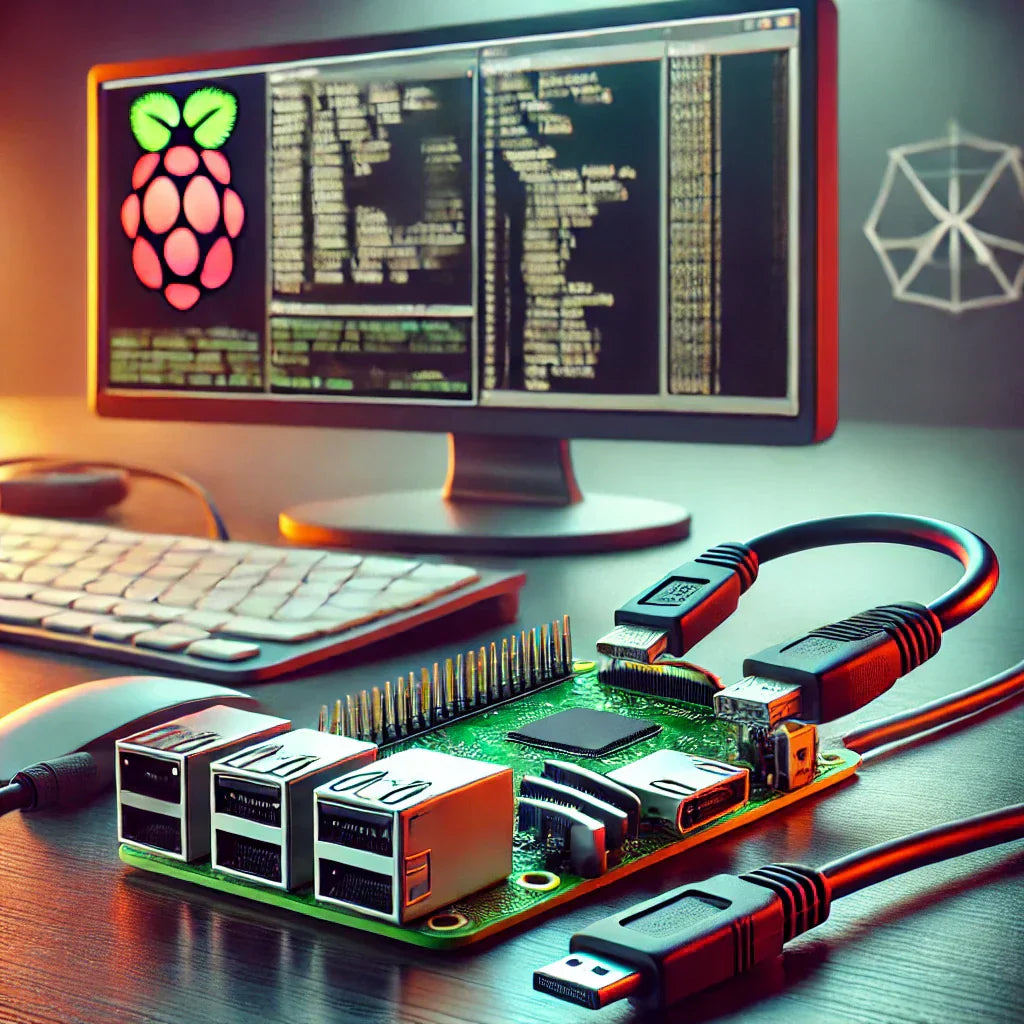
 Installing K3s on the Raspberry Pi 5: A Step-by-Step Guide– PicoCluster LLC
https://www.picocluster.com/blogs/picocluster-software-engineering/installing-k3s-on-the-raspberry-pi-5-a-step-by-step-guide
In this guide, we’ll walk you through the process of installing K3s on a Raspberry Pi 5 running Raspberry Pi OS.
 Simple automated deployments using git push
https://garrido.io/notes/simple-automated-deployments-git-push/
Using git push remains one of my favorite ways of deploying software. It’s simple, effective, and you can stretch it significantly until you need more complex workflows.
I’m not referring to using git push to trigger a Github action which builds and deploys software. I’m talking about using git push web main to deploy your main branch to a server that you’ve named web.
 prom2grafana - Prometheus to Grafana Dashboard Generator
https://prom2grafana.mrkaran.dev/
Convert metrics to dashboards & alerts
 Who Wants One More Package Manager | MeaTLoTioN's Place
https://meatlotion.com/blog/who-wants-one-more-package-manager/
Creating a package manager for BBSes - BSR or BBS Sysop Repository is a tool that will enable you to install BBS doors in the same way you can install packages on your *nix operating system
containrrr/watchtower: A process for automating Docker container base image updates.
https://github.com/containrrr/watchtower
AlchemillaHQ/Sylve: Lightweight GUI for managing Bhyve, Jails, ZFS, networking, and more on FreeBSD
https://github.com/AlchemillaHQ/Sylve
Sylve aims to be a lightweight, open-source virtualization platform for FreeBSD, leveraging Bhyve for VMs and Jails for containerization, with deep ZFS integration. It seeks to provide a streamlined, Proxmox-like experience tailored for FreeBSD environments. It's backend is written in Go and the frontend is written in Svelte (with Kit).
louislam/uptime-kuma: A fancy self-hosted monitoring tool
https://github.com/louislam/uptime-kuma
Uptime Kuma is an easy-to-use self-hosted monitoring tool.
 AWS Tips I Wish I'd Known Before I Started - W(e)blinks
https://wblinks.com/notes/aws-tips-i-wish-id-known-before-i-started/
A collection of random tips for Amazon Web Services (AWS) that I wish I'd been told a few years ago, based on what I've learned by building and deploying various applications on AWS.
AWS Tips I Wish I'd Known Before I Started - W(e)blinks
https://wblinks.com/notes/aws-tips-i-wish-id-known-before-i-started
A collection of random tips for Amazon Web Services (AWS) that I wish I'd been told a few years ago, based on what I've learned by building and deploying various applications on AWS.
progrium / gitreceive
https://github.com/progrium/gitreceive
Creates an ssh+git user that creates repositories on the fly and lets you run scripts or hit HTTP endpoints when you push code.
Build your own Heroku. Push code anywhere.
It's just not a post-receive hook. It's a powerful wrapper around pre-receive giving you easy access to the code that was pushed while still being able to send output back to the git user.
progrium / buildstep
https://github.com/progrium/buildstep
Buildstep is the glue that turns Docker and gitreceive into a mini-Heroku
 Docker - the Linux container engine
http://www.docker.io/
Docker is an open-source engine which automates the deployment of applications as highly portable, self-sufficient containers which are independent of hardware, language, framework, packaging system and hosting provider.
Docker - the Linux container engine
http://www.docker.io
Docker is an open-source engine which automates the deployment of applications as highly portable, self-sufficient containers which are independent of hardware, language, framework, packaging system and hosting provider.
 Aaron Toponce : Appropriate Use Of “kill -9 <pid>“
http://pthree.org/2012/08/14/appropriate-use-of-kill-9-pid/
There are times when “kill -9″ is the only time you can kill a PID that is behaving badly. However, it’s usually not needed if you know your signals. When I encounter a badly behaving program, here is the procedure I usually take.
Aaron Toponce : Appropriate Use Of “kill -9 “
http://pthree.org/2012/08/14/appropriate-use-of-kill-9-pid
There are times when “kill -9″ is the only time you can kill a PID that is behaving badly. However, it’s usually not needed if you know your signals. When I encounter a badly behaving program, here is the procedure I usually take.
 Taco Bell Programming
http://teddziuba.com/2010/10/taco-bell-programming.html
Taco Bell programming is one of the steps on the path to Unix Zen. This is a path that I am personally just beginning, but it's already starting to pay dividends. To really get into it, you need to throw away a lot of your ideas about how systems are designed: I made most of a SOAP server using static files and Apache's mod_rewrite. I could have done the whole thing Taco Bell style if I had only manned up and broken out sed, but I pussied out and wrote some Python.
 Jarek Gawor's excellent LDAP Browser/Editor v2.8.2 | Novell User Communities
http://www.novell.com/communities/node/8652/gawors-excellent-ldap-browsereditor-v282
"Jarek Gawor's excellent LDAP Browser/Editor v2.8.2 - though last updated in 2001, still one of the best! Works perfectly with current java version 5 and 6."
 Padraig O'Sullivan - Building a Small Cassandra Cluster for Testing and Development
http://posulliv.com/2009/09/07/building-a-small-cassandra-cluster-for-testing-and-development.html
"For college, I was playing with cassandra and thought I would document my experience in setting up a small cassandra cluster for playing around with. For this article, I actually used virtual machines (3 of them). I am assuming that we have a fresh ubuntu installation on each node. I'm also assuming static IP addresses so the /etc/hosts file on each node will have the following entries ("
 Automate EC2 Instance Setup with user-data Scripts - Alestic.com
http://alestic.com/2009/06/ec2-user-data-scripts
"The Ubuntu and Debian EC2 images published on http://alestic.com allow you to send in a startup script using the EC2 user-data parameter when you run a new instance. This functionality is useful for automating the installation and configuration of software on EC2 instances."
 find and xargs
http://www.kalamazoolinux.org/tech/find.html
"Part of the reason why the Linux command line is so POWERFUL!"
 Django snippets: minimal nginx conf to split get/post requests
http://www.djangosnippets.org/snippets/1141
"After a point the sql server becomes the bottleneck in lots of web application, and to scale, master-slave replication with single master, multiple slave is recommended. This setup with nginx can be used to accomplish traffic distribution between master and slave based on request method. "
 Netcat Tar Pipe
http://compsoc.dur.ac.uk/~djw/tarpipe.html
"So you have gigs of data to transfer between two machines over ethernet. A nice quick and dirty method is to use netcat and tar. This is by no means secure, but if you haven't got the time or desire to setup NFS, FTPd, Samba. Or wait hours for scp to do its job then this can save you a lot of time. "
 Why San Francisco's network admin went rogue | InfoWorld | News | July 18, 2008 | By Paul Venezia
http://www.infoworld.com/archives/emailPrint.jsp?A=/article/08/07/18/30FE-sf-network-lockout_2.html&R=printThis
"An inside source reveals details of missteps and misunderstandings in the curious case of Terry Childs, network kidnapper"
 Create RSS feeds from system log files | Mac Geekery
http://www.macgeekery.com/tips/create_rss_feeds_from_system_log_files
"With the advent of RSS readers that can use so-called “local feeds” for various reasons, it was inevitable that some code monkey would convert his 250K system.log file to RSS."
 UDS1100 - Device Server Technology from Lantronix for M2M Networking, Serial To Ethernet
http://www.lantronix.com/device-networking/external-device-servers/uds1100.html
"The UDS family of device servers enables users to connect, manage and control just about any piece of equipment with a serial port from virtually anywhere over Ethernet or the Internet."
 Roll your own servers with Netcat - Lifehacker
http://www.lifehacker.com/software/command-line/roll-your-own-servers-with-netcat-202271.php
"Unix command-line utility netcat gets called the "network swiss army knife" with good reason."
 Wonders of 'dd' and 'netcat': Cloning OS harddrives
http://www.rajeevnet.com/hacks_hints/os_clone/os_cloning.html
"In this document we will try to exploit the power of low level data transfer command popularly known as 'dd' and netcat."
 Linux 2.4 NAT HOWTO: Destination NAT Onto the Same Network
http://www.netfilter.org/documentation/HOWTO/NAT-HOWTO-10.html
"If you are doing port forwarding back onto the same network, you need to make sure that both future packets and reply packets pass through the NAT box (so they can be altered). "
 howto-qmail-procmail.txt
http://www.johncon.com/john/receivedIP/howto-qmail-procmail.txt
Checking out how to get procmail working with qmail, in anticipation of setting up a moblog-by-email script.
 Life in Text Mode :: Phil! Gregory
http://aperiodic.net/phil/archives/Geekery/text-mode-guerrilla.html
"I primarily use Unix-based computers, mostly Linux. On those computers, I live in text mode."
 Swimming Pools and Hard Disks (by Jeremy Zawodny)
http://jeremy.zawodny.com/blog/archives/005820.html
"It took many hours to fill a swimming pool with the garden hose doing the work, but we really didn't worry about it that much."
 Wi-Fi Networking News: The L in Linksys WRT54GL Stands for Linux
http://wifinetnews.com/archives/006101.html
"Linksys confirmed what some analysis firms have been saying: to their knowledge, the WRT54G is the single bestselling model of Wi-Fi gateway in the world." It's too bad that they've switched to VxWorks-- the Linux-based firmware was the single reason I
 Splunk Welcome
http://www.splunk.com
It's a search engine for your log files. "It’s search software that indexes all your fast moving IT data as it happens."
 Out S.M.A.R.T (SMART) Your Hard Drive
http://daemons.net/~matty/articles/diskdrives.smart.html
"I use smartmontools on my servers and laptop to notify me when disk drives are about to fail."
 phpLDAPadmin: LDAP browser to manager your LDAP server
http://phpldapadmin.sourceforge.net
"Web-based LDAP browser to manage your LDAP server"
 Turn your world LDAP-tastic
http://usefulinc.com/edd/blog/contents/2005/09/25-ldap/read
"LDAP's not the kind of thing you can sneak up on. You have to stare it right in the eyes and face it down."
 Julien Danjou - Run your entire network on a single server: Xen
http://julien.danjou.info/xen.html
"I decided to stop that, and to run my all network into a single machine, using virtual machine."
 :: cleverdevil ::: Python, FastCGI, WSGI, and lighttpd
http://www.cleverdevil.org/computing/24/python-fastcgi-wsgi-and-lighttpd
"I decided that it was about time that I was able to take advantage of this great web server from Python."
 Linux.com | Bare-metal server restore using tar
http://servers.linux.com/article.pl?from=rss&sid=05/02/16/1922228
I've done this before, but good thing to remember.
 vowe dot net :: The tough life of sysadmins or practical application of prayers in IT
http://vowe.net/archives/005512.html
Very funny
 Life With Binc IMAP - Main.DoItYourselfCertificateAuthority
http://lifewithbincimap.org/index.php/Main/DoItYourselfCertificateAuthority
Need to make myself a security certificate for IMAPS
 Life with qmail
http://www.lifewithqmail.org/lwq.html#installation-issues
Easy step-by-step build and installation for qmail.
Life With Binc IMAP - Main.LifeWithBincIMAP
http://lifewithbincimap.org/index.php/Main/LifeWithBincIMAP
"The following assumes you have setup qmail and qmail-pop3d by following LifeWithQMail." Go through this after having installed qmail via Life with qmail
 Welcome to Binc IMAP
http://www.bincimap.org
"Binc IMAP is a well designed, modular IMAP server for Maildir." Appears to integrate well with qmail
 Converting Mbox mailboxes to Maildir format
http://batleth.sapienti-sat.org/projects/mb2md#Download
 btail - a bayesian log filter
http://www.vanheusden.com/btail
