 Controlling your home with tiny, cheap touchscreens
https://a.wholelottanothing.org/controlling-your-home-with-tiny-cheap-touchscreens/?ref=a-whole-lotta-nothing-newsletter
This turned out really well and was a cheap solution to my problems (it cost me about$16 but it currently shows me $21 for a screen). In the weeks since I set it up, it's been so useful for everyone else in the house that I'm considering buying one for the kitchen to control all the living room lights without anyone having to take their phones out, and another one in my barn to turn all the lights on whenever I walk in (currently I always fire up the Apple Home app and run a shortcut to turn on the 6 different light switches).
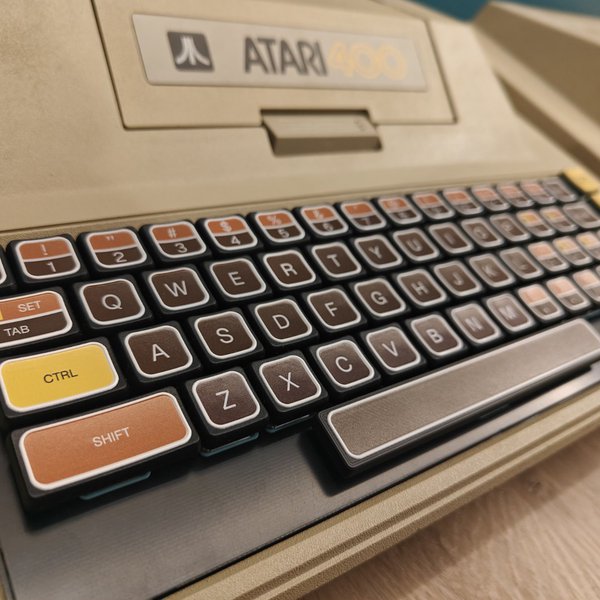
 Decent400 | Hackaday.io
https://hackaday.io/project/206854-decent400?mc_cid=9785804ef8
A drop-in replacement mechanical keyboard for the Atari 400's membrane, that respects the unique design of the computer
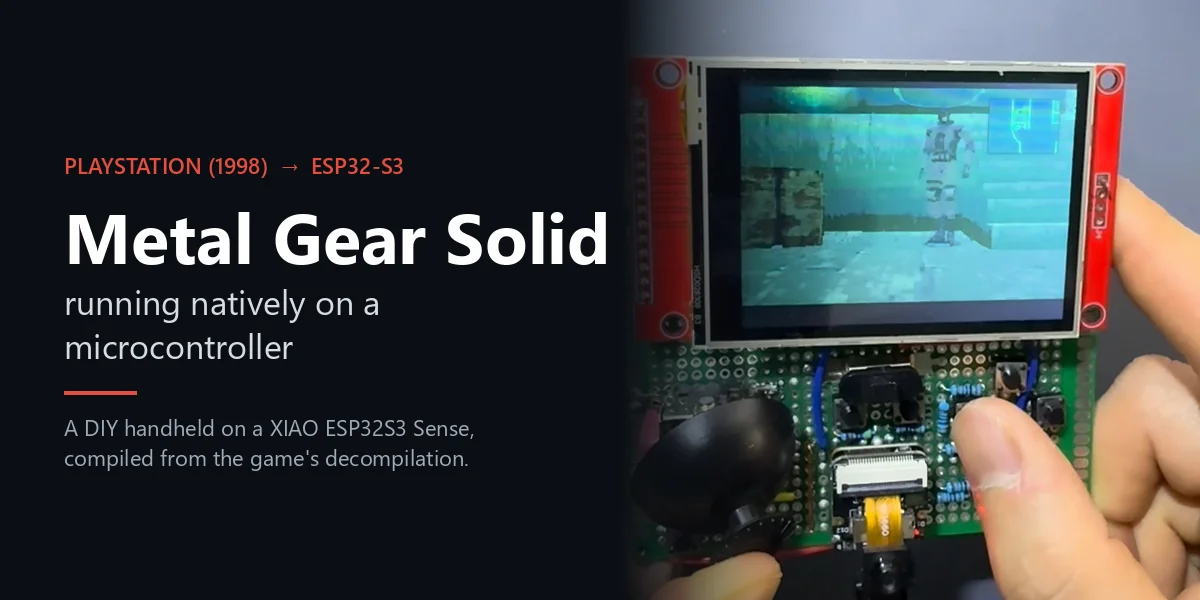
 Metal Gear Solid running natively on the ESP32-S3 | Velxio Blog
https://velxio.dev/blog/posts/metal-gear-solid-on-esp32-s3/
I have loved Metal Gear Solid since I was a kid. When I got a tiny ESP32-S3 board, one question stuck with me: could a PlayStation game run on something this small?
 Building Personal Software: Crafting Your Own Tools for Success
https://allen.hutchison.org/2025/11/28/the-era-of-personal-software/?ref=sidebar
We are entering the era of Personal Software. This is software written for an audience of one. It’s an application or a script built to solve a specific problem for a specific person, with no immediate intention of scaling, monetizing, or even sharing.
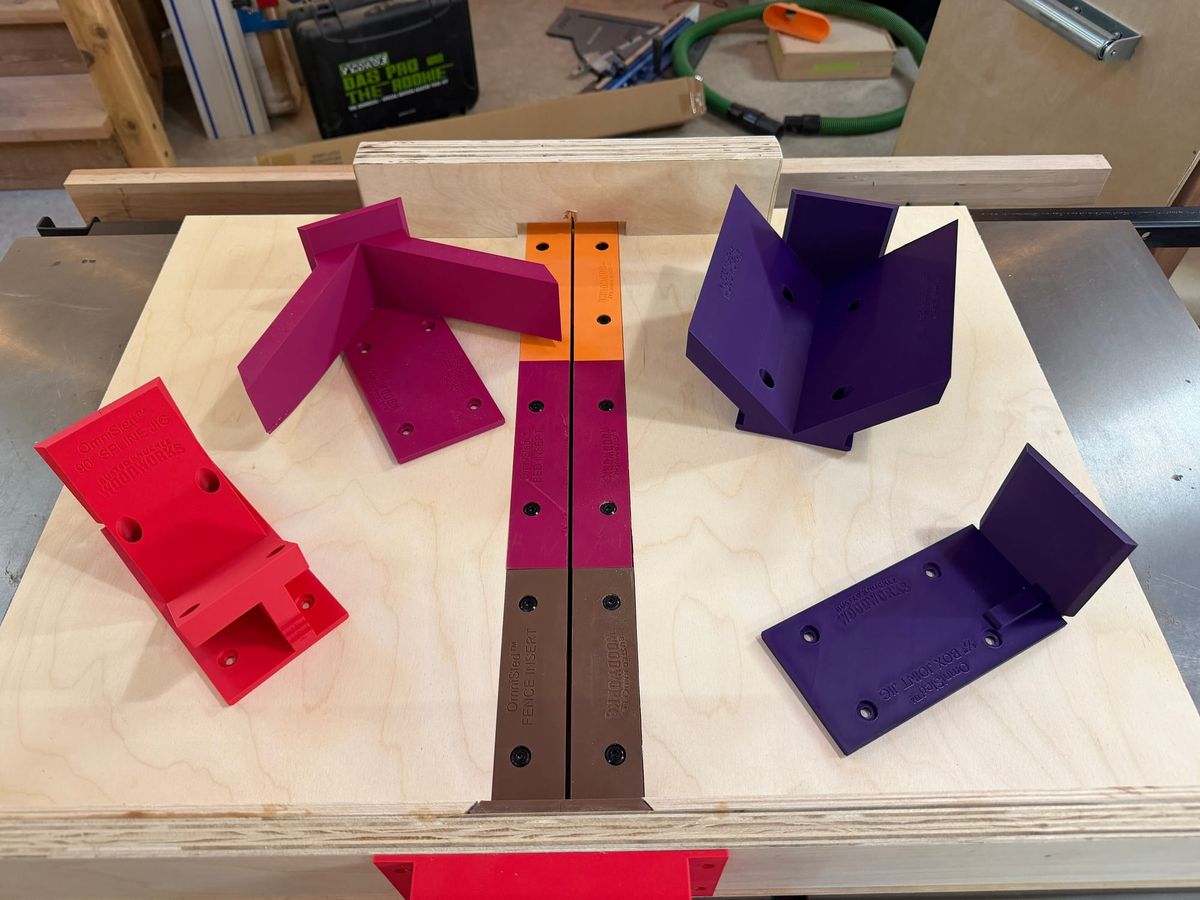
A perfect mix of 3D printing and woodworking
https://a.wholelottanothing.org/a-perfect-mix-of-3d-printing-and-woodworking/?ref=a-whole-lotta-nothing-newsletter
I love that this might be the last crosscut sled I may ever need to build, because I can replace all the parts that get chewed up over time by saw blades. And I love that this guy from YouTube or other woodworkers might dream up any number of entirely new jigs that I could also plop into the sled someday.
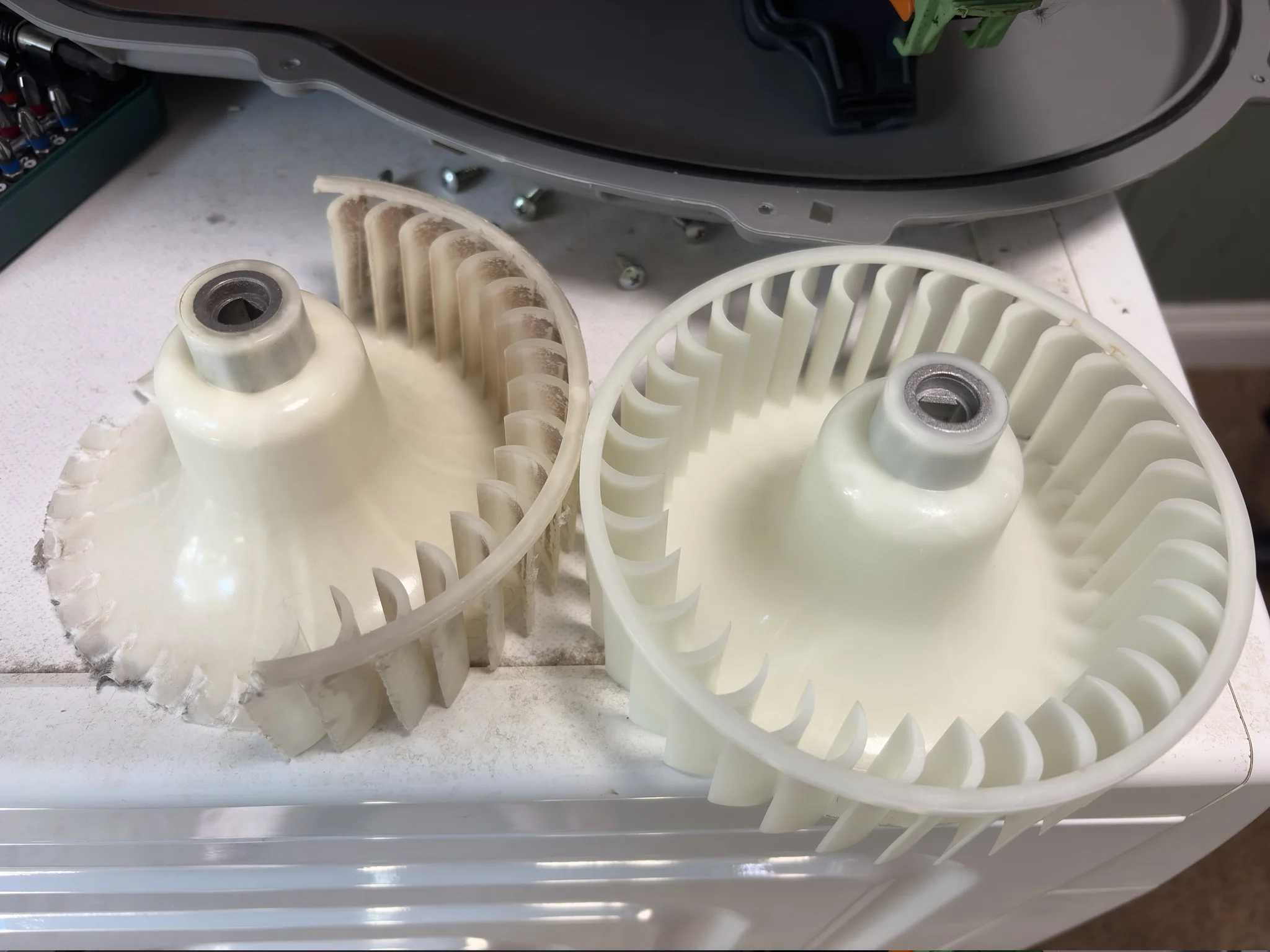
 Dungeons and Dryers · thega.me.uk
https://thega.me.uk/2026/07/dungeons-and-dryers/
But last weekend, while I was running my monthly ‘Storm King’s Thunder’ D&D campaign, I asked one of the group to help me get the dryer down from the shelf. Immediately the group set to work removing the back panel and trying to figure out what was wrong with it, while still playing D&D.
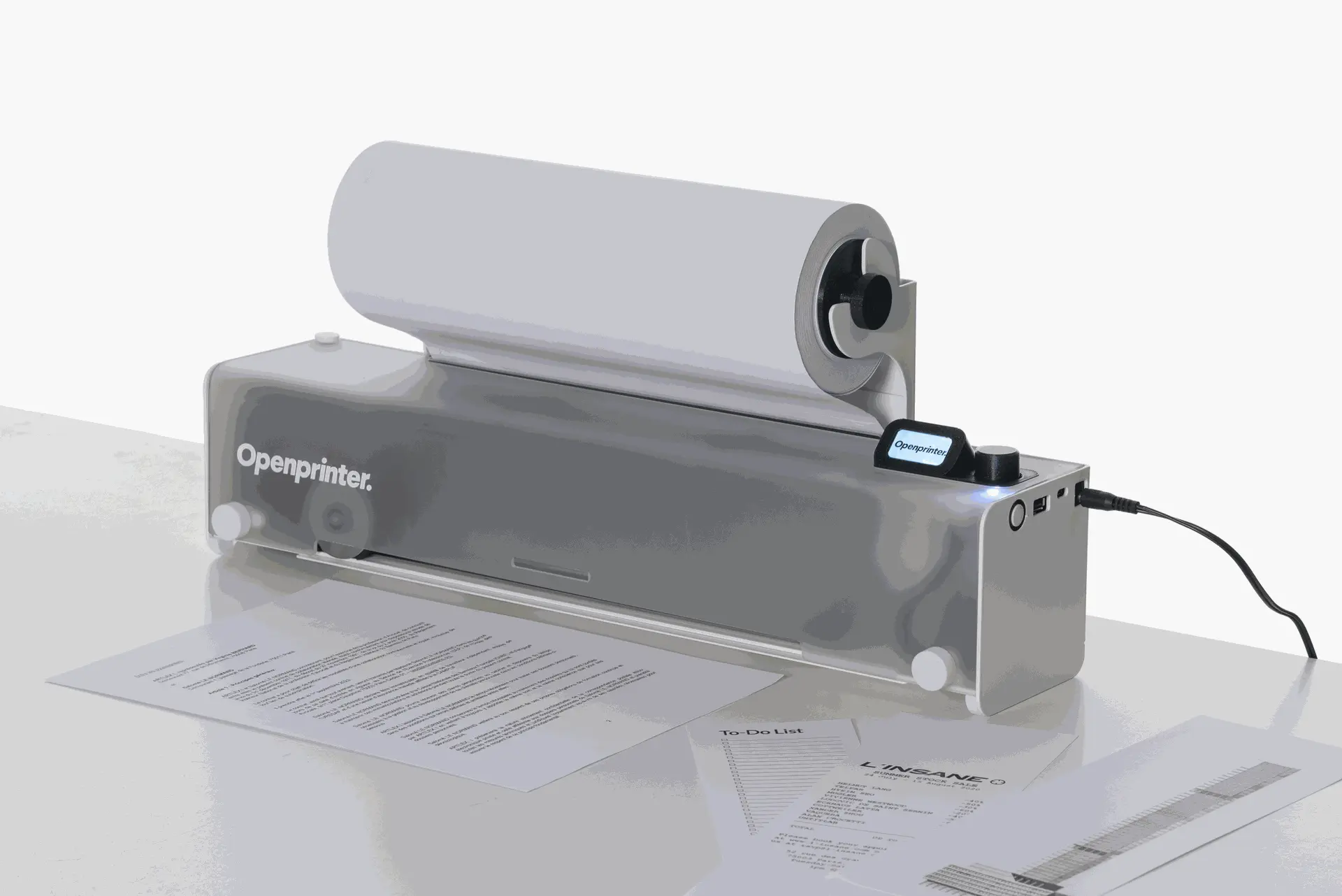
 OpenTools / OpenPrinter
https://www.opentools.studio/
a repairable, compact, and robust printer designed to last.
Fully repairable and equipped with a refillable ink system, it adapts to your needs while reducing your printing costs.
Easy to maintain, it offers a sustainable, economical, and eco-friendly alternative to traditional printers.
 rzeldent/esp32cam-rtsp: Simple RTSP (streaming image) server for the ESP32CAM. Easy configuration and monitoring through the web interface.
https://github.com/rzeldent/esp32cam-rtsp
Simple RTSP (streaming image) server for the ESP32CAM. Easy configuration and monitoring through the web interface.
 Banned Book Library | Rick's Blog
https://www.richardosgood.com/posts/banned-book-library/
A long while back I had an idea to hack a WiFi smart light bulb to do something more useful to me. Actually, I had a few different ideas of things to do with them. One of these ideas was to modify the device to have an open WiFi access point and a web server hosting banned books. The idea was that if you lived somewhere that banned books you thought were important, you could theoretically stick a digital copy of the book on one of these light bulbs. Then you could go install it somewhere in your community. As long as the light bulb is switched on, then anyone in the vicinity can still access the banned material assuming they have an electronic device with WiFi. Since the device is a light bulb, it would be difficult to detect and likely to go unnoticed. A cyberpunk digital dead drop. These devices are also fairly inexpensive, so leaving them around town as is hopefully not very cost prohibitive.
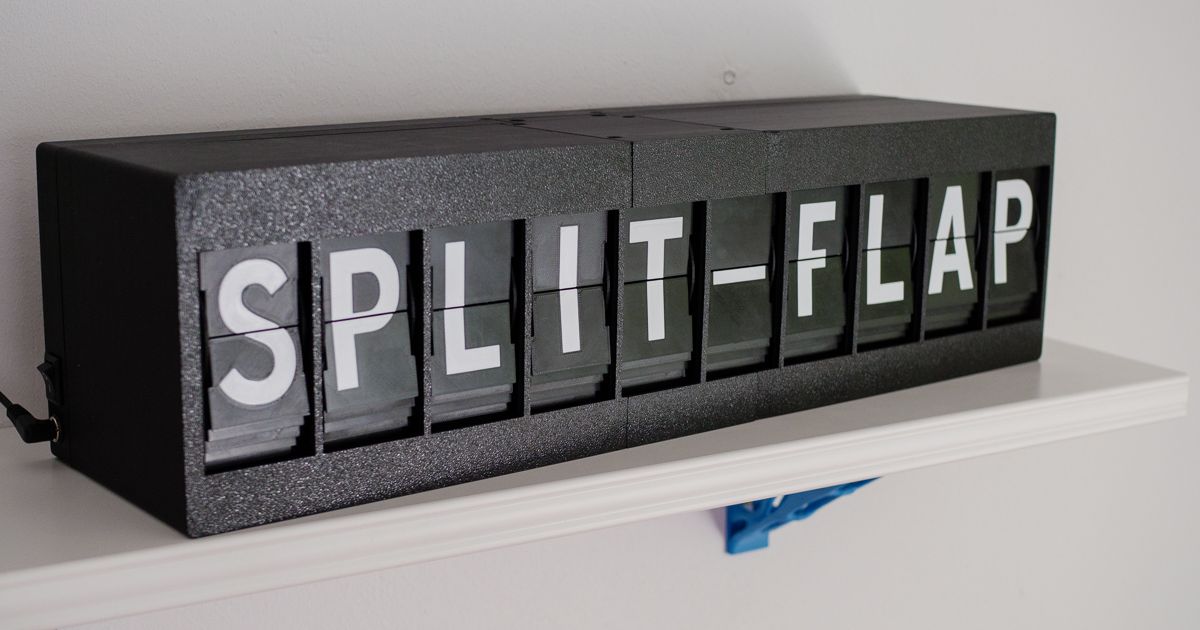
 Split-Flap Display by David Kingsman | Download free STL model | Printables.com
https://www.printables.com/model/69464-split-flap-display
10-unit split-flap display. 3D-printed flaps. Modular. | Download free 3D printable STL models
geo-tp/ESP32-Bit-Pirate at 20c88aba2e102b3e1d87a1b3f6779a2ac7f7a085
https://github.com/geo-tp/ESP32-Bit-Pirate/tree/20c88aba2e102b3e1d87a1b3f6779a2ac7f7a085
A Hardware Hacking Tool with Web-Based CLI That Speaks Every Protocol
 ESP32 Life
https://benbrown.com/txt/read/2026-05-11
As I continue to try to unbundle my hobbies from the iphone, these ESP32 devices have played a really big role. An open product like this promises a tinkerer like me much more than a useful gadget - it can become MY gadget, something modified and tuned to my specific needs and aesthetic quirks. There is no corpo telemetry tracker sneaking onto my gadget, only the stupid shit I put there!! And when I get tired of that thing, I can always flash it with something else. I can't say that about my phone.
 The Bean is here! – The Ploopy Blog
https://blog.ploopy.co/the-bean-is-here-435
Today, we’re releasing a brand new, open-source mouse design: the Bean, which is a pointing stick mouse (also called a nub mouse).
Nub mice are commonly found in laptops in the center of the keyboard. The Bean takes that concept and pushes it farther than anybody’s ever pushed it.
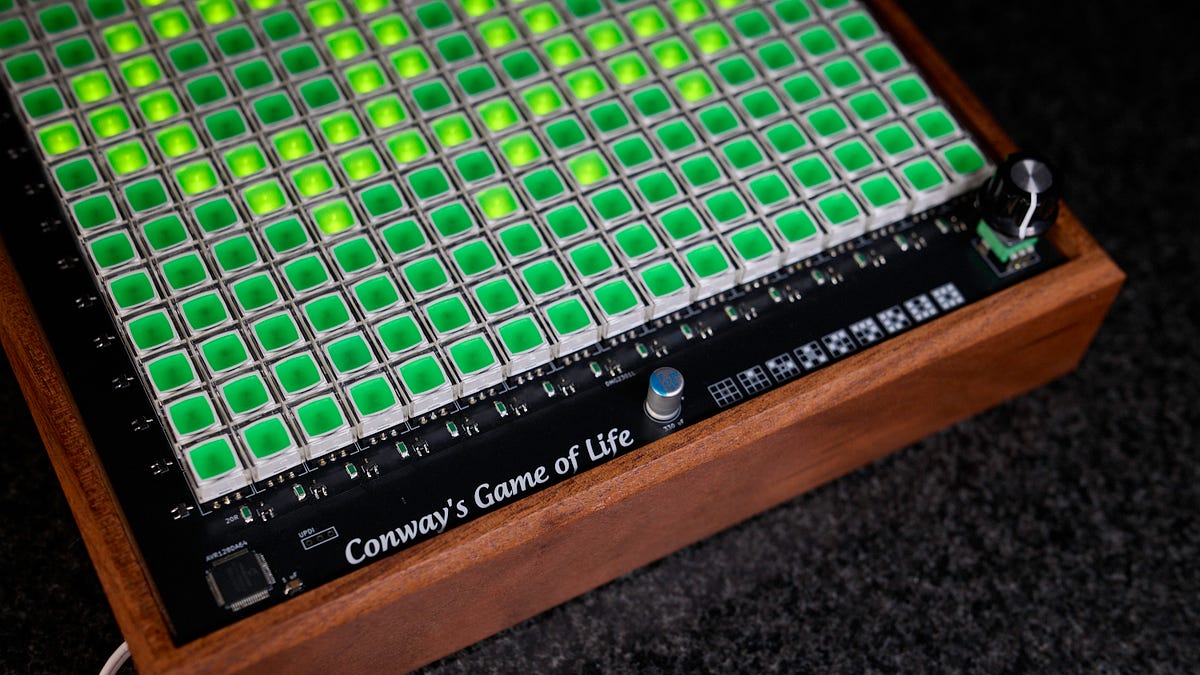
 Conway's Game of Life, in real life - lcamtuf’s thing
https://lcamtuf.substack.com/p/conways-game-of-life-in-real-life?utm_source=clivethompson&utm_medium=email&utm_campaign=linkfest-44-microchimerism-sonic-boom-duct-tape
When life gives you switches... (Conway's game of life on a big grid of illuminated momentary switches)
piersfinlayson/one-rom: The most flexible ROM replacement for retro systems - using a sub-$2 Raspberry Pi RP2350 or STM32 microcontroller.
https://github.com/piersfinlayson/one-rom
The most flexible ROM replacement for retro systems - using a sub-$2 Raspberry Pi RP2350 or STM32 microcontroller.
 How to turn anything into a router
https://nbailey.ca/post/router/
Fortunately, you can make a router out of basically anything resembling a computer.
I’ve used a linux powered mini-pc as my own router for many years, and have posted a few times before about how to make linux routers and firewalls in that time. It’s been rock solid stable, and the only issue I’ve had over the years was wearing out a $20 mSATA drive. While I use Debian typically, Alpine linux probably works just as well, perhaps better if you’re familiar with it. As long as the device runs Linux well and has a couple USB ports, you’re good to go. Mini-PCs, desktop PCs, SBCs, rackmount servers, old laptops, or purpose built devices will all work.

harbaum/galagino: A Galaga, Pac-Man and Donkey Kong arcade emulator for the ESP32
https://github.com/harbaum/galagino
Play Galaga, Pac-Man, Donkey Kong, Frogger, Digdug and 1942 on the ESP32
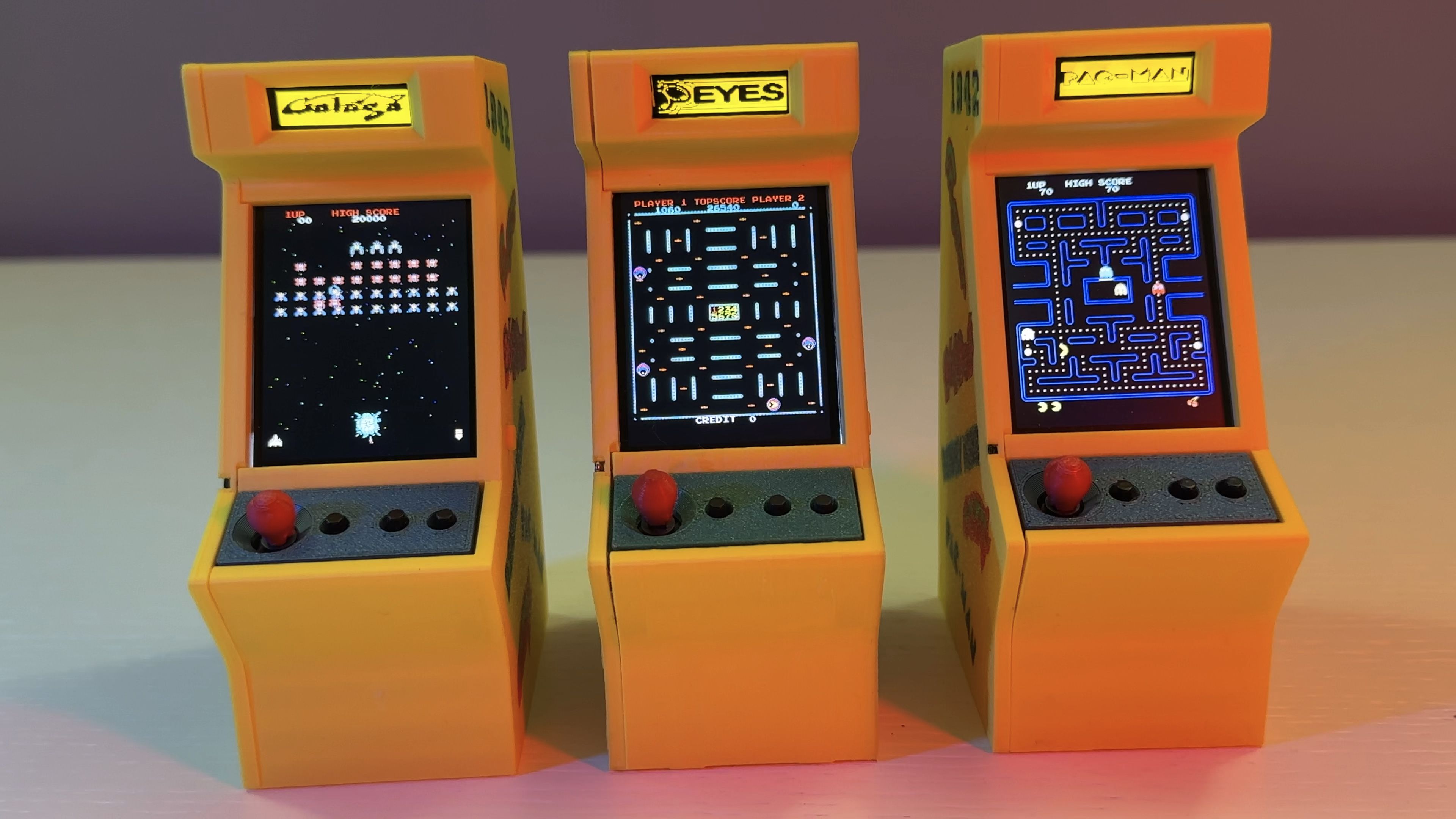
 Mini Multi-Arcade Game Cabinets With An ESP32 And Galagino | Hackaday
https://hackaday.com/2026/03/11/mini-multi-arcade-game-cabinets-with-an-esp32-and-galagino/
Microcontrollers like the ESP32 with its dual 240 MHz cores can run circles around the CPU grunt of 1980s arcade hardware. Cue [Till Harbaum]’s Galagino ESP32-based arcade emulator project, that recently saw some community versions and cabinet takes.
Robotistan/PicoBricks: Pico Bricks is a fantastic project development kit for STEM educators and makers of all levels
https://github.com/Robotistan/PicoBricks
Pico Bricks is a fantastic project development kit for STEM educators and makers of all levels

 Making The Zelda G&W Into A MODERN Emulation Powerhouse Because Nintendon’t | Zelda 40th Anniversary - YouTube
https://www.youtube.com/watch?v=8YIHjUM8Qms&t=849s
Zelda turns 40 years old, so for its big anniversary we turned the tiny Zelda Game & Watch into a pocket-sized emulation powerhouse. In this video, I upgrade the Zelda Game & Watch with expanded memory, custom firmware, and a microSD card slot for unlimited storage, unlocking support for tons of classic retro consoles, save states, and a fully customizable UI. All on real Nintendo hardware! It’s open-source, community-driven and absolutely insane.
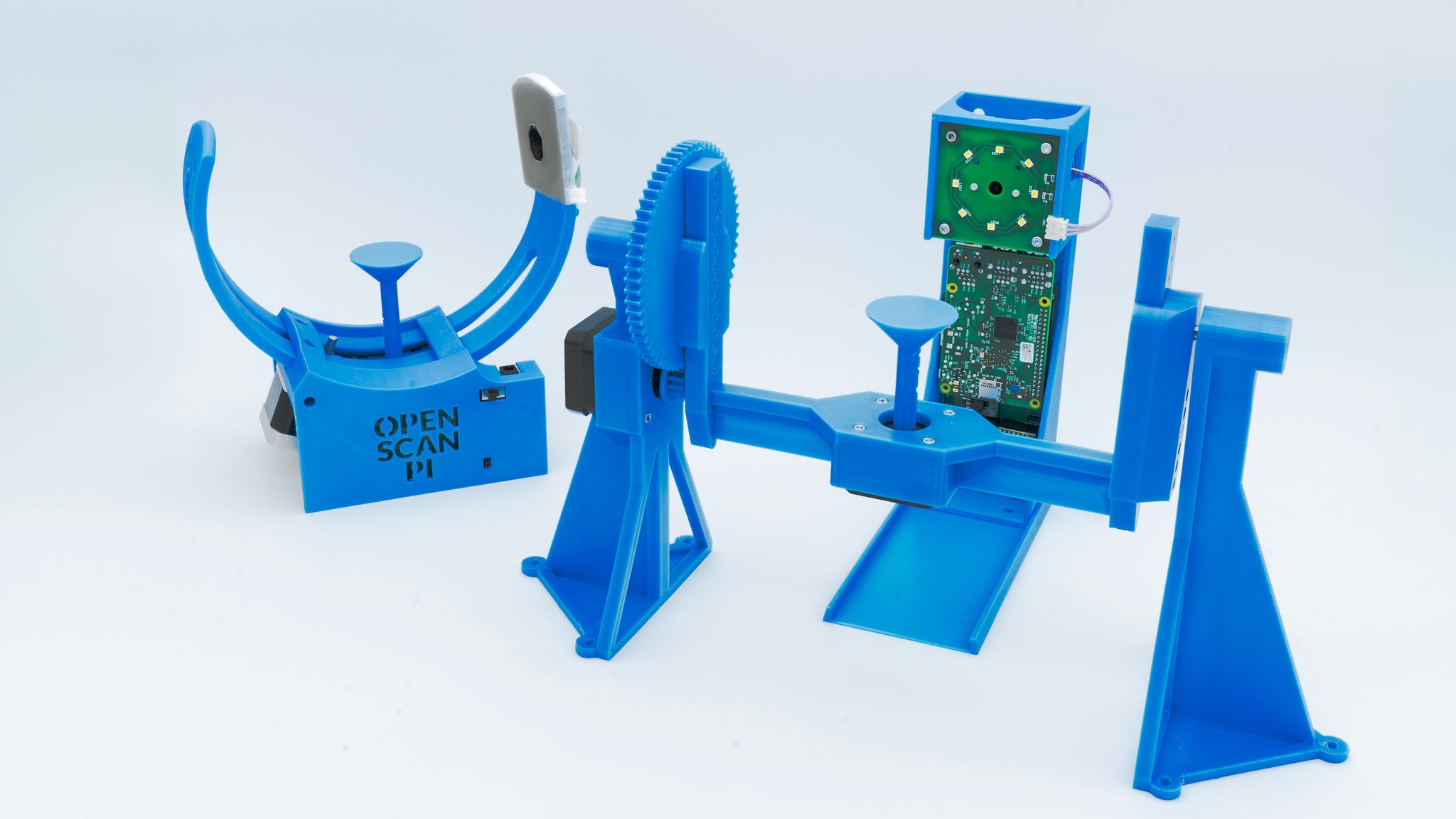
 OpenScan - 3D Scanning for the Masses
https://openscan.eu/
A low-cost, high-quality 3D scanner that you can build yourself - completely open source and modular. 3D scanning opens up completely new possibilities in many areas, such as 3D printing, modelling, reverse engineering, product presentations, photography and more.

 マリウス . Hold on to Your Hardware
https://xn--gckvb8fzb.com/hold-on-to-your-hardware/
There is a darker, conspiratorial interpretation of today’s hardware trends that reads less like market economics and more like a rehearsal for a managed future. Businesses, having discovered that ownership is inefficient and obedience is profitable, are quietly steering society toward a world where no one owns compute at all, where hardware exists only as an abstraction rented back to the public through virtual servers, SaaS subscriptions, and metered experiences, and where digital sovereignty, that anyone with a PC tower under their desk once had, becomes an outdated, eccentric, and even suspicious concept.
TechPaula/PC6502: My 6502 project in a PC104 like formfactor
https://github.com/TechPaula/PC6502/
My 6502 project in a PC104 like formfactor

TechPaula/LT6502: A 6502 based laptop design
https://github.com/TechPaula/LT6502
A 6502 based laptop design
 A friend has commissioned me to make a wood Commodore 64 case. Here is a progress shot of a test fit. : r/c64
https://www.reddit.com/r/c64/comments/1r0igy4/a_friend_has_commissioned_me_to_make_a_wood/
jim11662418/ESP8266_WiFi_Analog_Clock: Uses an ESP8266 module and an Arduino sketch to display the local time on a inexpensive analog quartz clock.
https://github.com/jim11662418/ESP8266_WiFi_Analog_Clock
Uses an ESP8266 module and an Arduino sketch to display the local time on a inexpensive analog quartz clock.

valdanylchuk/breezybox: mini shell for esp32
https://github.com/valdanylchuk/breezybox
mini shell for esp32
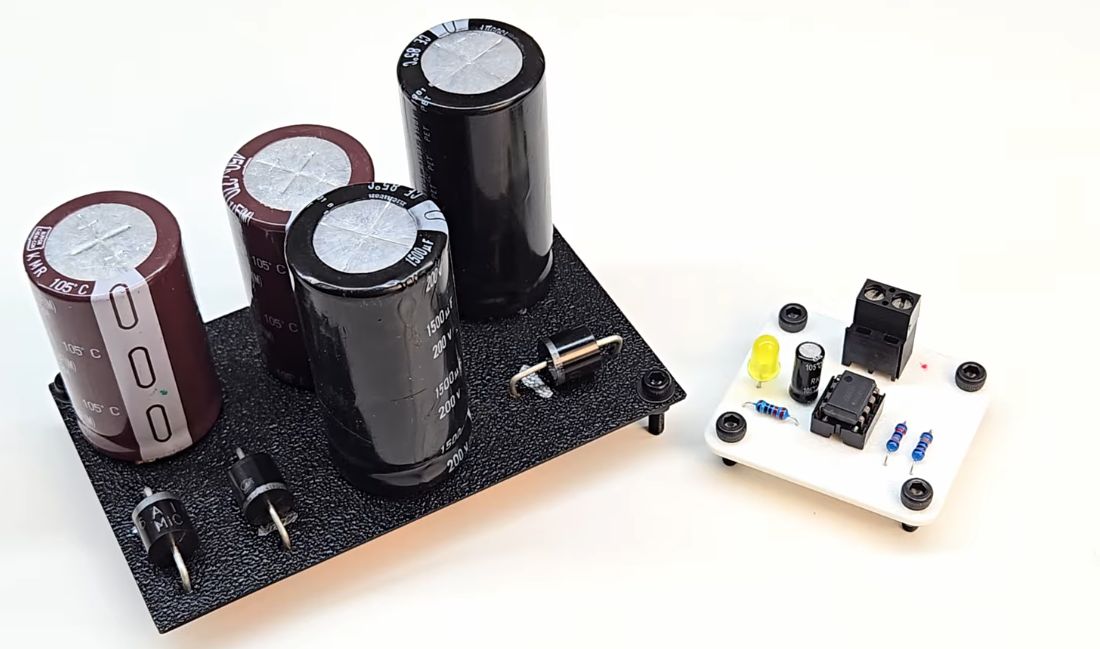
Using 3D Printing And Copper Tape To Make PCBs | Hackaday
https://hackaday.com/2026/01/28/using-3d-printing-and-copper-tape-to-make-pcbs/
In a recent video [QWZ Labs] demonstrates an interesting technique to use 3D printing to make creating custom PCBs rather straightforward even if all you have is a 3D printer and a roll of copper tape.
 DOOMBUDS
https://doombuds.com/
You know the 1993 classic DOOM? I made it run on an earbud, then I connected it to the internet and made it possible for visitors like you to sit in a queue for hours play the game remotely!.
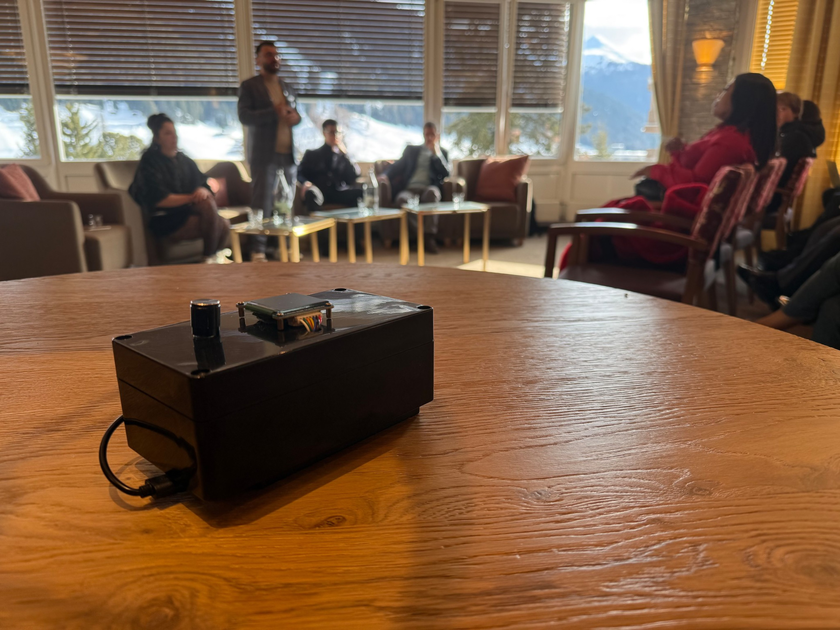
 ‘I’m very stupid’: SF tech founder jailed in Davos for bomb-lookalike device
https://sfstandard.com/2026/01/22/tech-dude-davos-bomb-lookalike-device/
Sebastian Heyneman, a Rincon Hill resident, has worked at Asana, Notion, and 11x in data and product roles. He traveled to Davos on Thursday, hoping to pitch an anti-fraud hardware device to the global elite attending the forum. After leaving the prototype unattended in the lobby of the Grandhotel Belvédère, Heyneman found himself detained by Swiss authorities for 13 hours, having his fingerprints checked against a database of international spies.
I absolutely LOVE woodworking
https://a.wholelottanothing.org/i-absolutely-love-woodworking/
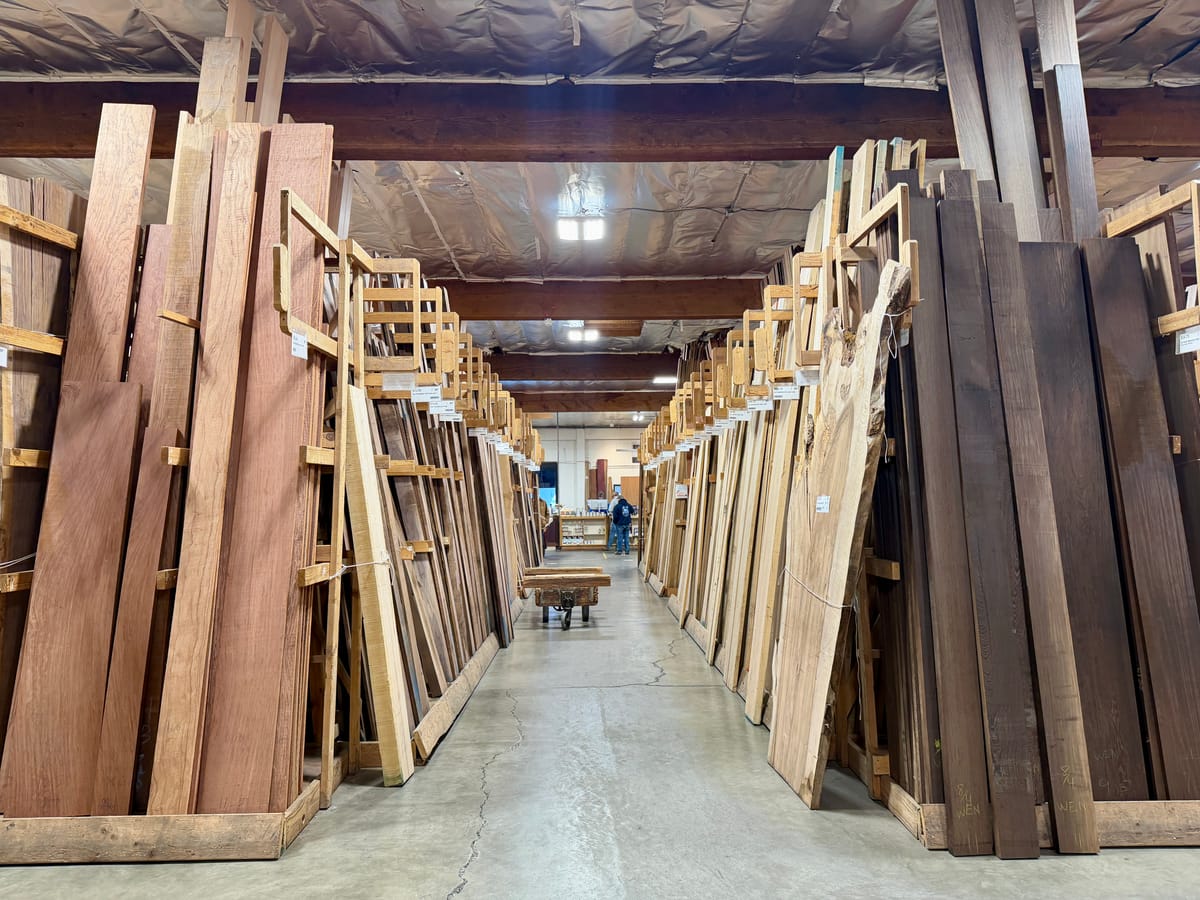
I've been a homeowner for about 20 years, and in that time I picked up a handful of DIY skills, but my work was always sloppy due to my limited experience. I was envious of uncles or neighbors with garages who could build or fix virtually anything as it seemed like having a superpower, like the kid in school who could solve any Rubik's cube.
 Frigate NVR
https://frigate.video/
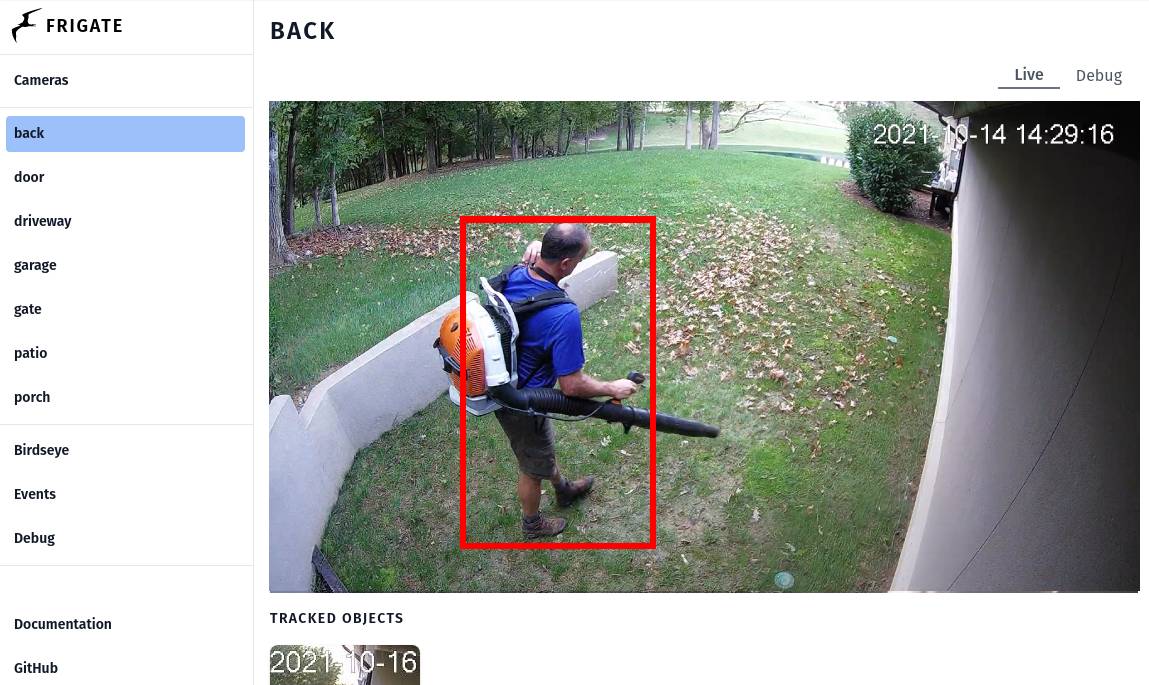
Frigate is an open source NVR built around real-time AI object detection. All processing is performed locally on your own hardware, and your camera feeds never leave your home.
 I built a DIY security camera with Frigate, and it's easier than you think
https://www.xda-developers.com/i-built-a-diy-security-camera-with-frigate/
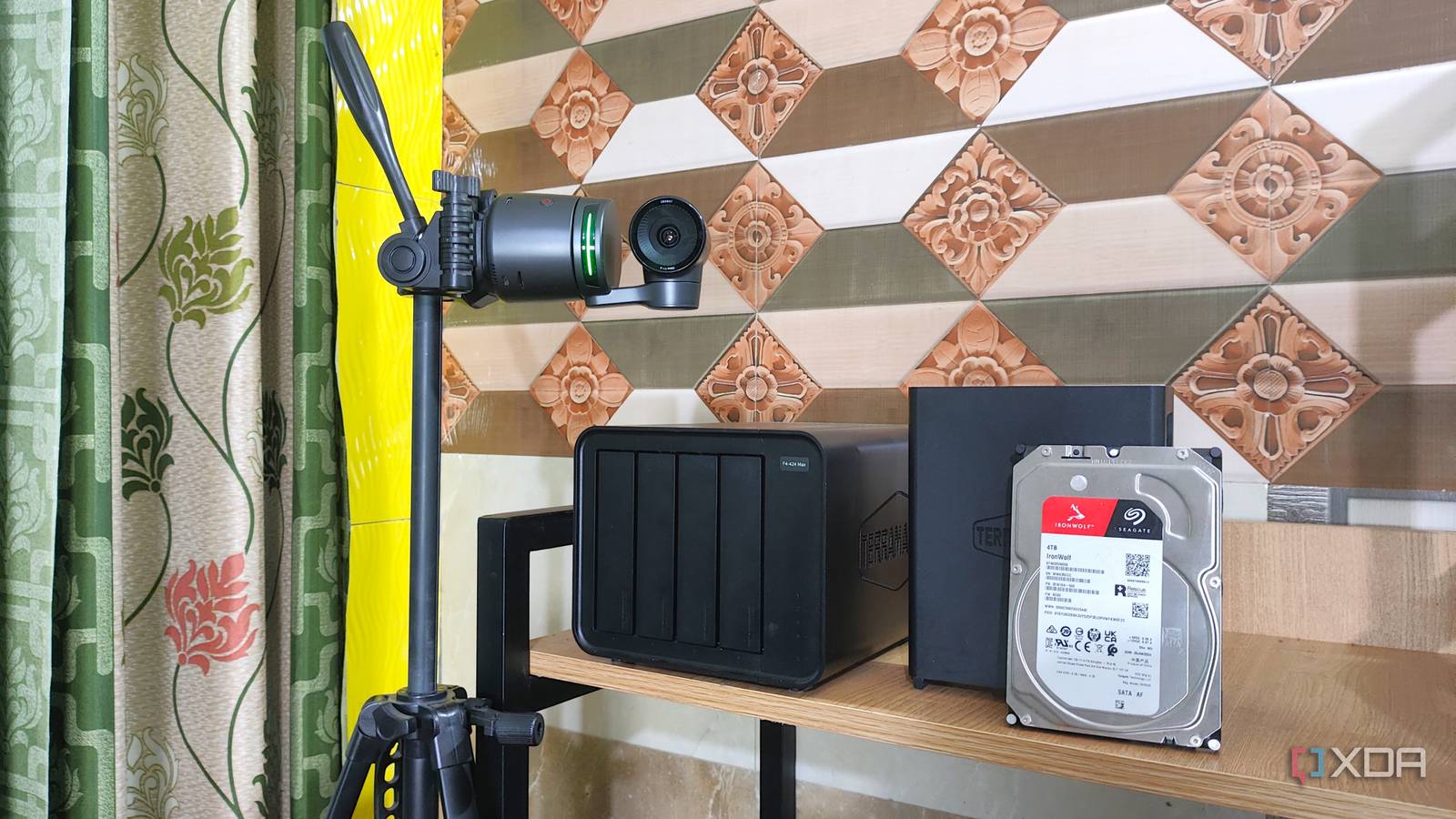
With their remote monitoring, motion detection, PTZ control, and data storing provisions, Network Video Recorders are a great way to turn a bunch of IP cameras into a full-fledged surveillance system. Better yet, the self-hosting landscape is chock-full of cool NVR solutions that not only let you manage your security footage, but also preserve your privacy and money while doing so.
I’ve tinkered with a handful of these tools over the last couple of months, and while some may specialize in certain aspects, Frigate is ideal for building a DIY security camera system.

 Thin Desires Are Eating Your Life
https://www.joanwestenberg.com/thin-desires-are-eating-your-life/?ref=westenberg-newsletter
You'll spend an afternoon doing something that cannot be made faster, producing something that you could have bought for four dollars, and in the process you'll recover some capacity for patience that the attention economy has been methodically stripping away.
 ZINEDROP - A community directory for independent zines. Submit your publications, discover new work.
https://zinedrop.com/
Love zines? You’re in the right place!
 DREAM RECORDER — DREAM OUT LOUD
https://dreamrecorder.ai/
Dream Recorder is a portal to your subconscious. The magical bedside device catches your nightly visions and plays them back as vivid, cinematic reels.
GitHub - modem-works/dream-recorder: Dream Recorder is an open-source venture by Modem. Developed in close collaboration with Mark Hinch (software & hardware), Ben Levinas and Joe Tsao (industrial design), and Alexis Jamet (illustrations).
https://github.com/modem-works/dream-recorder
Dream Recorder is an open-source venture by Modem. Developed in close collaboration with Mark Hinch (software & hardware), Ben Levinas and Joe Tsao (industrial design), and Alexis Jamet (illustrations).
wavephoenix/hardware/mini-receiver at main · loopj/wavephoenix
https://github.com/loopj/wavephoenix/tree/main/hardware/mini-receiver
The WavePhoenix Mini Receiver is a small, low-cost WaveBird receiver replacement. It has been designed to be as cheap as possible (~$4 in parts) and simple to build.
The receiver uses a cheap, off-the-shelf wireless module (the RF-BM-BG22C3), which can either be hand-wired, or assembled onto a custom PCB.
 SS4H-LumiHex ESP32 Smart Panels – Open-Source RGB Hexagon System for Next-Level Ambient Lighting – Smart Solutions for Home
https://smartsolutions4home.com/lumihex/
In this article, I’ll show you how I built my own version of modular RGB lights. Not only do they look great, but they also have Wi-Fi, so you can hook them up to any open “smart” system – Home Assistant in my case.

The Unexpected Joys Of Hacking An Old Kindle | Hackaday
https://hackaday.com/2025/11/24/the-unexpected-joys-of-hacking-an-old-kindle/
Make no mistake, I’m greatly appreciative of the fact that we now have mature single-board computers like the Raspberry Pi available for a reasonable cost. But taking what’s essentially consumer e-waste and turning it into a useful platform for learning and experimentation is the true hacker way. So whether you’ve got a Kindle collecting dust somewhere at home, or end up grabbing a few off of eBay for a song, I invite you to bust out the USB-serial adapter and start exploring.
Self-Hosting for Everyone: A Beginner-Friendly Guide to Hosting Your Own Services
https://blog.laurahargreaves.com/self-hosting-for-everyone/
A growing number of people are discovering that hosting their own services - from a personal cloud to a blog or social platform - is empowering, surprisingly affordable, and a brilliant way to learn how the internet actually works.
BuildList.org
https://buildlist.org/#overview
A directory of on-demand manufacturers for your creative projects.
Each site listed has instant quotes / online ordering so you can upload your project files and immediately see how much it will cost and how long i
Gun piano should be illegal - YouTube
https://www.youtube.com/watch?v=yFIxf2gTg_k
Pain is very effective to get sound out of people, so now we just need to tune them
DEC Mini, a lovely 3D-printable retro computer
https://decmini.tin.cat/
A 3D-printable, fully working, customizable computer inspired by one of the loveliest retro computers of the 80s
The DEC Mini: MiSTer Edition - YouTube
https://www.youtube.com/watch?v=KLdEn2B49mk
The DEC Mini builds in a single board computer, to make it a fully functional PC. I’ve modified Lorenzo’s design to accommodate Retro Remake’s MiSTer Pi. In this video, I’ll take you through the end-to-end build of my remix on the DEC Mini.
iFlash.xyz – Welcome to the home of the iFlash Adapter
https://www.iflash.xyz/
We have adapters which will fit the following models – iPod Videos, iPod Classics, and iPod Photos.
Running Minecraft on a lightbulb
https://hackaday.com/2025/11/13/running-a-minecraft-server-on-a-wifi-light-bulb/
WiFi-enabled ‘smart’ light bulbs are everywhere these days, and each one of them has a microcontroller inside that’s capable enough to run all sorts of interesting software. For example, [vimpo] decided to get one running a minimal Minecraft server
 The Wrew: Core Dump
https://wrewtopia.com/read/2025-10-04
The thing is… it is made to run on an ESP12, which is very capable and very power efficient, but tends not to allow for external antennas and doesn’t have great WiFi range. I wanted more range. I want an external antenna. And I have a few spare ESP32’s sitting around that allow for external antennas and have better WiFi performance. So, I decided to try to port the firmware from the ESP12 to the ESP32.
TheSlugNoodle/ProjectBookmark
https://github.com/TheSlugNoodle/ProjectBookmark
A portable file-sharing system built on NodeMCU ESP8266 that creates a wireless access point and serves a web interface for accessing digital documents and hosting discussions.
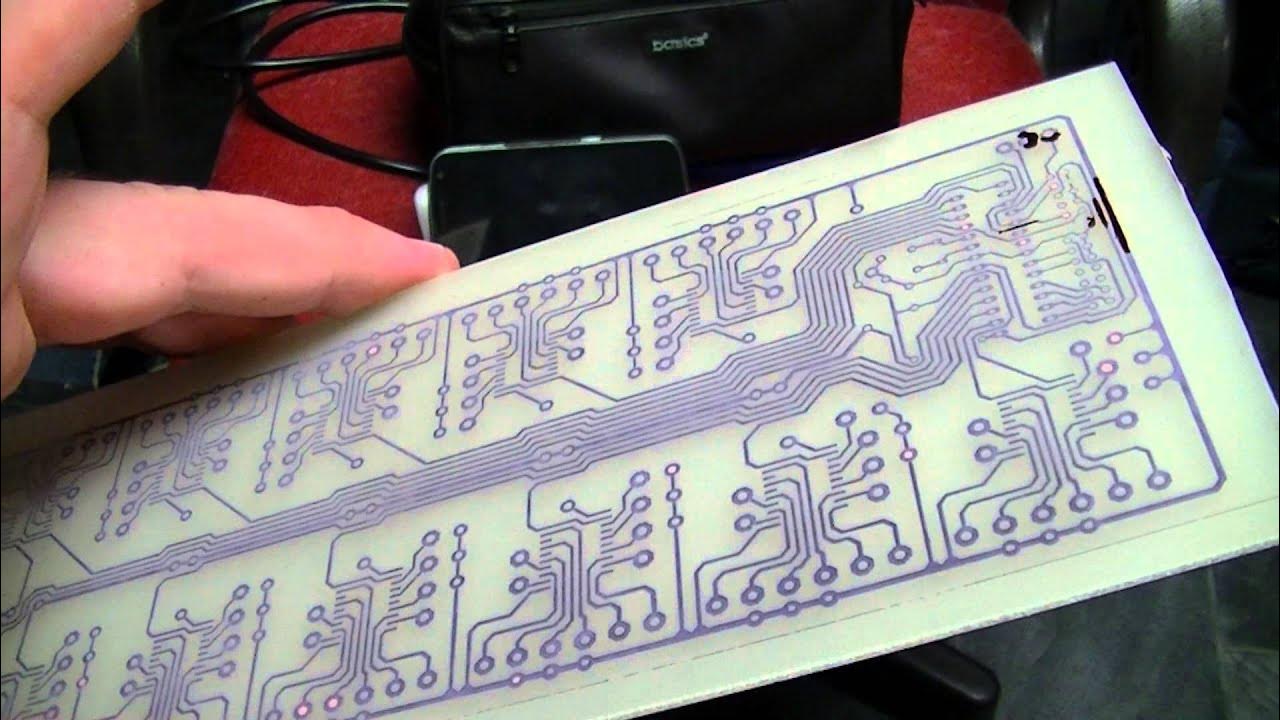
[retro swim] - Episode 18 - RGB SCART AV Switch - YouTube
https://www.youtube.com/watch?v=AH5M4Xj5-RY
A look at the construction and operation of my RGB AV switcher. (expand to see all the links!)

michaelobed/rgb-switcher: An open-source switcher for analogue RGBS video, so you don't have to.
https://github.com/michaelobed/rgb-switcher
An open-source switcher for analogue RGBS video, so you don't have to.
 8-input Video Switch
https://www.vwlowen.co.uk/radio/videoswitch2/index.htm
Instead of switching just four inputs, the new unit can switch 8 AV (composite) cameras and uses readily available transistors to do the switching in place of the potentially unreliable electro-mechanical relays. As a bonus, it is, of course, totally silent in use.
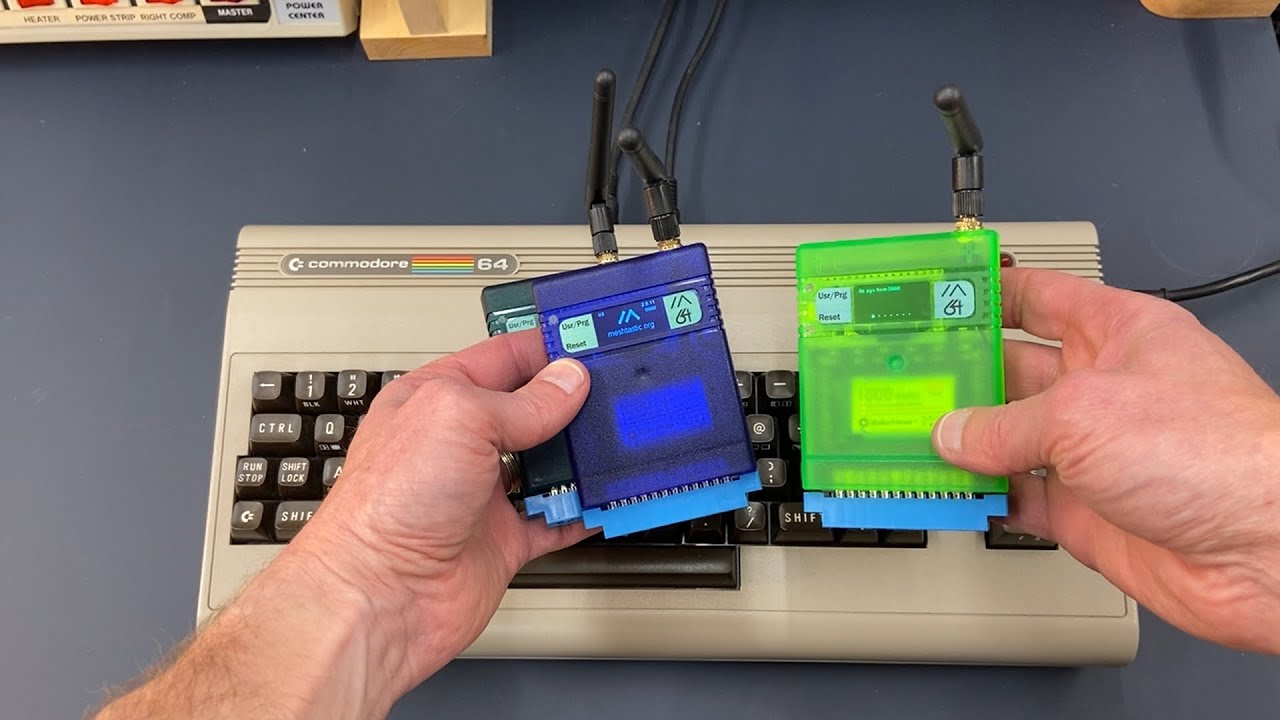
 Meshtastic 64 Radio Demo on Commodore 64 - The Oasis BBS
https://theoasisbbs.com/meshtastic-64-radio-demo-on-commodore-64/?feed_id=5678&_unique_id=68dfcf2d76f81
The Meshtastic 64 Radio connects through the user port and sits inside a cartridge shell with a built-in battery. Once installed, the device powers up and runs with a custom BASIC program loaded from floppy disk. This software lets the Commodore 64 send and receive text messages across the Meshtastic network, linking retro hardware with modern mesh communication.
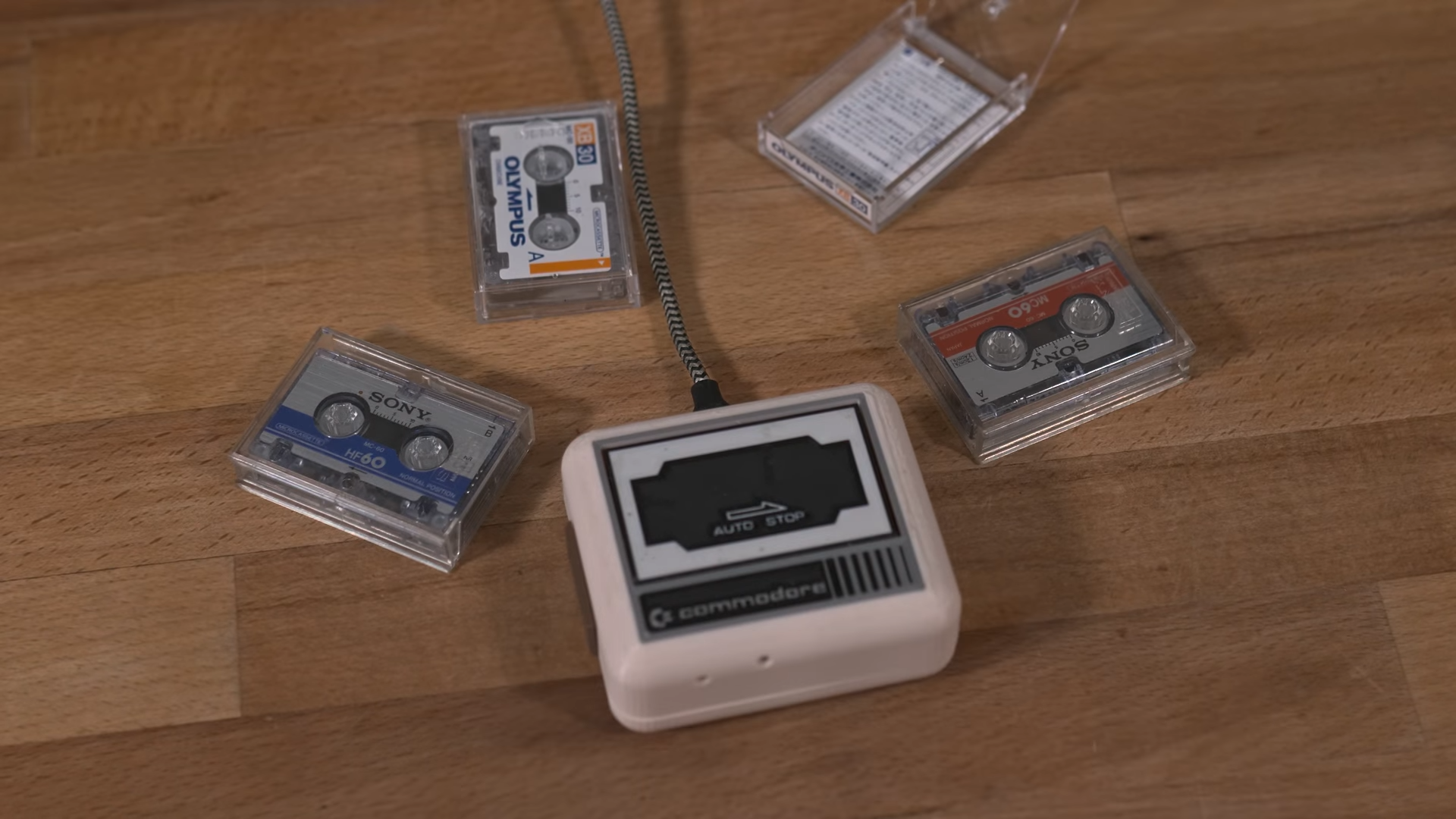
Tiny Datasette Uses USB For The Modern Day | Hackaday
https://hackaday.com/2025/09/01/tiny-datasette-uses-usb-for-the-modern-day/

charmbracelet/soft-serve: The mighty, self-hostable Git server for the command line🍦
https://github.com/charmbracelet/soft-serve
The mighty, self-hostable Git server for the command line🍦

 slash pages
https://slashpages.net/
Slash pages are common pages you can add to your website, usually with a standard, root-level slug like /now, /about, or /uses. They tend to describe the individual behind the site and are distinguishing characteristics of the IndieWeb.

 The Future is NOT Self-Hosted
https://www.drewlyton.com/story/the-future-is-not-self-hosted/
My wife and I now have a computer in our house that runs open-source equivalents to Google Drive, Google Photos, Audible, Kindle, and Netflix. It syncs to all of our devices. It's secured behind our own VPN. And it's wholly, truly owned by us.
And this week, I want to share with you how I did it, what I learned, and why I think self-hosting is NOT the future we should be fighting for.

 Curate your own newspaper with RSS
https://www.citationneeded.news/curate-with-rss/
Escape newsletter inbox chaos and algorithmic surveillance by building your own enshittification-proof newspaper from the writers you already read
 Cidco MailStation as a Z80 Development Platform - joshua stein
https://jcs.org/2019/05/03/mailstation
The Cidco MailStation is a series of dedicated e-mail terminals sold in the 2000s as simple, standalone devices for people to use to send and receive e-mail over dialup modem. While their POP3 e-mail functionality is of little use today, the hardware is a neat Z80 development platform that integrates a 320x128 LCD, full QWERTY keyboard, and an internal modem.
After purchasing one (ok, four) on eBay some months ago, I've learned enough about the platform to write my own software that allows it to be a terminal for accessing BBSes via its modem or as a terminal for a Unix machine connected over parallel cable.
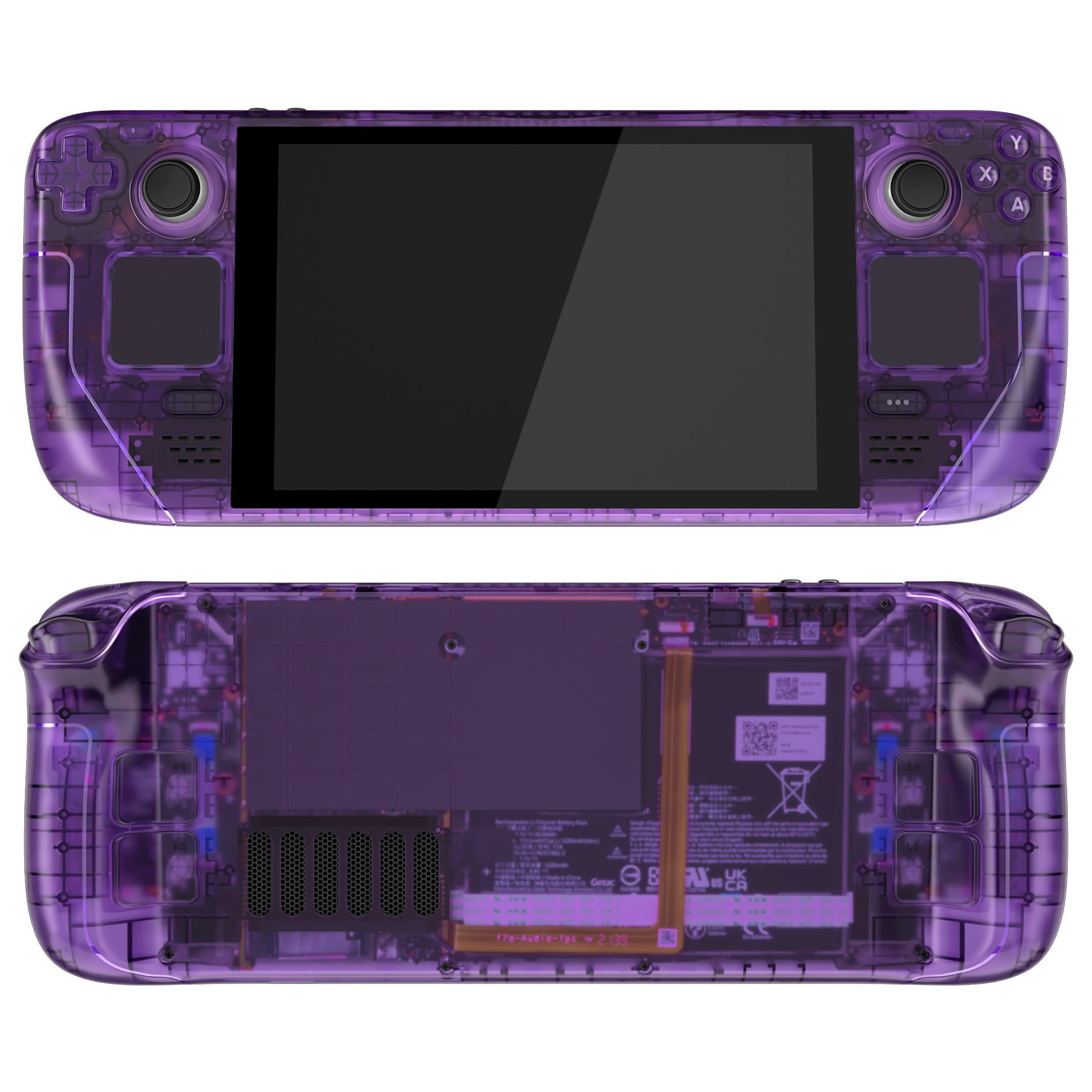
 eXtremeRate Custom Faceplate Back Plate for Steam Deck, Handheld Console Replacement Housing Case, DIY Full Set Shell with Buttons for Steam Deck Console - Console NOT Included – eXtremeRate Retail
https://extremerate.com/products/clear-atomic-purple-custom-full-set-shell-with-buttons-for-steam-deck-console-qesdm003
 RC2040 - Retro emulated Z80 CP/M computer kit - Extreme Kits
https://extkits.co.uk/product/rc2040/
The RC2040 is a PI PICO emulated RC2014 kit, with CP/M-80. It is capable of running the stock ROM images currently supported by the RC2014 (except RomWBW) which gives you a number of monitors and ROM based BASIC.
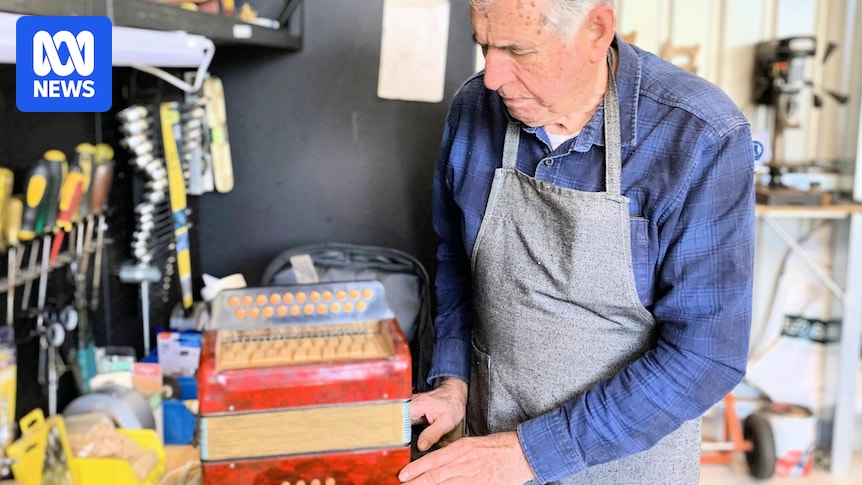
 As a place to fix, mend, and connect, repair cafes battle loneliness as well as waste - ABC News
https://www.abc.net.au/news/2025-02-13/fixing-more-than-broken-stuff-the-growing-impact-of-repair-cafes/104727868
In a world of growing social isolation where just over one in six Australians experienced loneliness in 2022, repair cafes are proving popular as a meeting spot and the network is growing.
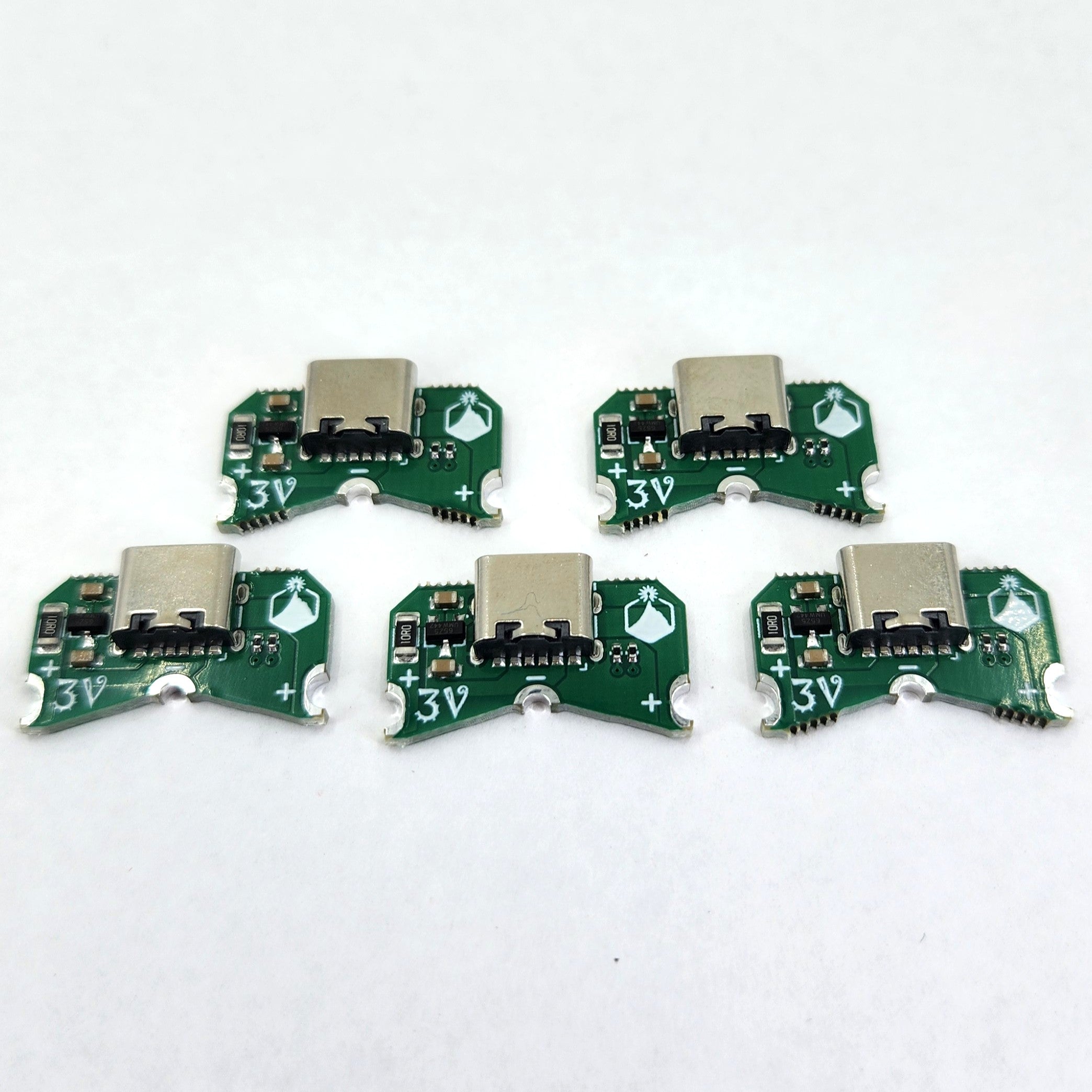
 Coin Cell Be Gone
https://www.alpenglowindustries.com/products/coin-cell-be-gone-5-pack
Got soldering kits that take side-insert CR2032 holders? Want to get rid of that coin cell holder and convert it to USB? The Coin Cell Be Gone does exactly this! Solder it directly to either a through-hole or surface mount side-insert footprint at the 3 castellations
The SwitchTrick
https://www.alpenglowindustries.com/products/the-switchtrick
A super handy switching power supply (buck/drop-down) for solderless breadboards, with jumper-configurable output voltage.
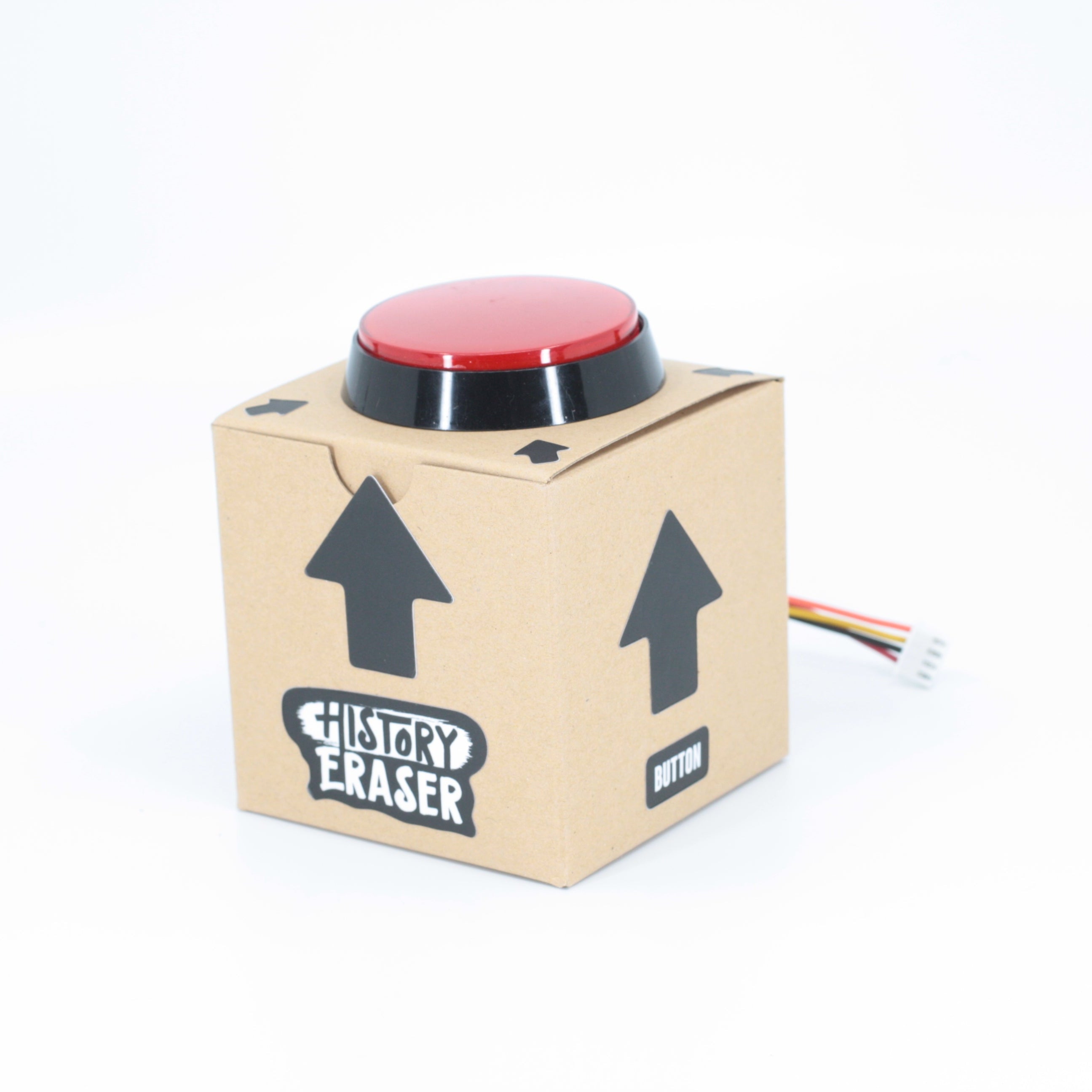
Big Red Arcade Button Kit
https://www.alpenglowindustries.com/products/big-red-arcade-button-kit
Add a Big Red Button to any project with this handy kit! Includes 60mm arcade button with LED, box, cable, and stickers.
It Goes Both Ways! Lithium Battery Charge-Boost Kit
https://www.alpenglowindustries.com/products/it-goes-both-ways-lipo-charge-boost-kit
Make your own power bank out of any (1000 mAh or over) lithium battery!
Are you a fan of bi-directional USB-C? Hey, so are we! This awesome little board goes both ways - the USB-C connector is both an input to charge a lithium battery at 1.0-1.2A and an output that provides a boosted 5V from the battery at 1.2A!
wrightwriter/Bonzomatic-Compute: Live shader coding tool and Shader Showdown workhorse
https://github.com/wrightwriter/Bonzomatic-Compute
This is a live-coding tool, where you can write a 2D fragment/pixel shader while it is running in the background. It's a fork of Bonzomatic that add network communication (WebSocket Server). The goal is to send a shader as text across a network and receive it somewhere else for display. The shader is send when you ask for compilation (ctrl+r) and also at regular updates (interval can be set in config.json) Bonzomatic can be launched as "sender" or as "grabber" if you want to send your shader or visualize a distant shader.
 The Sorbus Computer
https://xayax.net/sorbus/
The Sorbus Computer started with the idea on building a very simple and cheap 65C02 based computer. It was intended to show the operation of the CPU for a talk about historic computers during a talk and workshop (slides blow).
SvOlli/sorbus: The Sorbus Computer is a very simple 65c02 computer for tinkering and learning
https://github.com/SvOlli/sorbus/
The attempt to build a very simple 65C02 based computer by utilizing a Raspberry Pi Pico clone for the rest of the functionality.
 Michael Kohn - modern 6502
https://www.mikekohn.net/micro/modern_6502.php
while doing my daily hackaday.com reading, I discovered the W65C265SXB board, a modern microcontroller with a 6502 (actually 65C816) at its core. I did a really good job resisting buying one for a while, but eventually gave in. To put this board to use I decided to put up this page with 3 small projects (added a 4th more recently) to show off some things that can be done with this newer 6502 chip
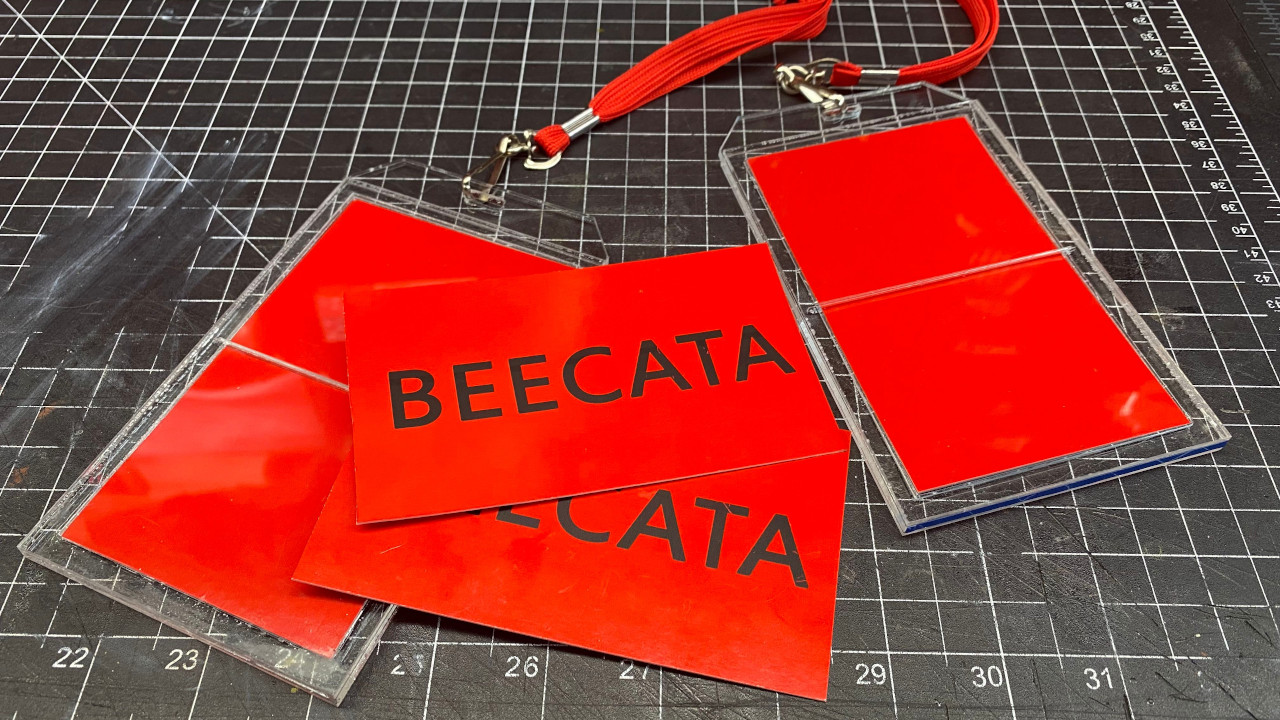
Laser Cut Acrylic Provides Movie-Style Authentication | Hackaday
https://hackaday.com/2025/02/12/laser-cut-acrylic-provides-movie-style-authentication/
If you’ve seen Crimson Tide, or the first few minutes of WarGames, you might already know what this post is about. Both films prominently make use of a one-time authentication device which the user snaps in half to reveal a card that has some secret code printed on it — and as it turns out, there are at least two different projects that aim to replicate the props used in the movies.
 Dancing In The Datacenter
https://youtubesequencer.com/about
Have you ever hit the number keys while watching Youtube? That simple action jumps the video to different timestamps - and creative musicians have discovered you can use this like a primitive sampler. This observation sparked an idea.
As someone who loves experimenting with drum machines like the Arturia Drumbrute, I wanted to take this Youtube "feature" and transform it into something musical. I built Youtube Sequencer using TypeScript and Redux to create a robust, reliable music-making tool that doesn't miss a beat. The result is a sequencer that turns any Youtube video into an instrument.
Traditional sampling can be time-consuming, requiring you to download, trim, and import audio files. Youtube Sequencer removes these barriers - just paste a URL and start creating.
GitHub - exo-explore/exo: Run your own AI cluster at home with everyday devices 📱💻 🖥️⌚
https://github.com/exo-explore/exo
Run your own AI cluster at home with everyday devices
 Programmatics Paper Hex Calculator - Programmatics_Paper_Hex_Calculator.pdf
http://www.brutman.com/Programmatics_Paper_Hex_Calculator.pdf
I made a magnetic case for my Boox Tab Ultra - see photo captions for details : r/Onyx_Boox
https://www.reddit.com/r/Onyx_Boox/comments/1315gua/i_made_a_magnetic_case_for_my_boox_tab_ultra_see/#lightbox
 ewintr.nl - building a personal, private ai computer on a budget
https://ewintr.nl/posts/2025/building-a-personal-private-ai-computer-on-a-budget/?ref=sidebar
my attempt to build such a capable AI computer without spending too much. I ended up with a workstation with 48GB of VRAM that cost me around 1700 euros
 Giant USB Button – RasterWeb!
https://rasterweb.net/raster/2025/01/29/giant-usb-button/
Look, I’m just going to come out and say it… this Giant USB Button is probably too big! It’s 228.6mm x 228.6mm x 120mm (which is 9″x9″ x 4.725″). The thing is, when someone asks me to build something for them, and it seems interesting, I can’t really say no. And I did say “no” this time, but mainly due to the tight deadline. I said I would need about twice as much time as requested and luckily the client came back with “We can do that!” So I got to work…
 Building a Frankenstein 64 - Celso Martinho
https://celso.io/posts/2022/12/28/c64-from-scratch/
Last year, I decided that I was going to build a Commodore 64 from scratch. This is the blog documenting the project.
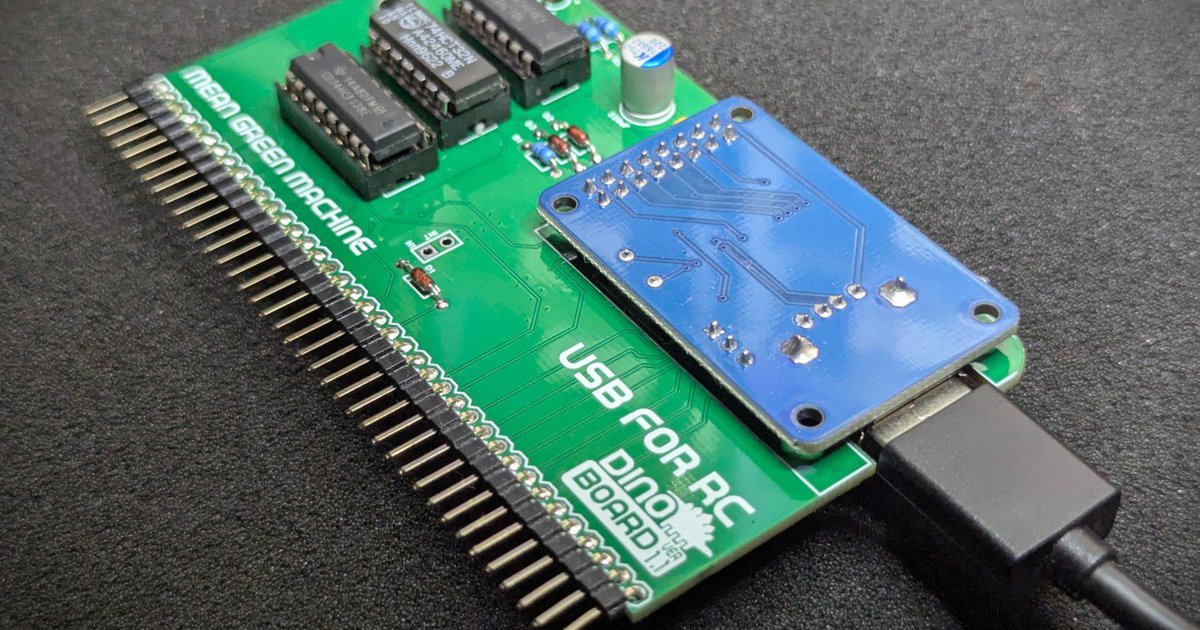
 USB for RC from Dino Boards on Tindie
https://www.tindie.com/products/dinotron/usb-for-rc/
Bring your RCBus/RC2014 build into the 90's with true native support for Universal Serial Bus.
vlachoudis/bCNC: GRBL CNC command sender, autoleveler and g-code editor
https://github.com/vlachoudis/bCNC
GrblHAL (formerly GRBL) CNC command sender, autoleveler, g-code editor, digitizer, CAM and swiss army knife for all your CNC needs.
 How to Make a 555 Synthesizer Circuit (The Atari Punk Console) | PCB | Maker Pro
https://maker.pro/pcb/projects/diy-555-synthesizer-circuit-aka-atari-punk-console
Create a funky synth that is based on a popular circuit called a stepped oscillator (aka an Atari Punk Console).
 Project MINI RACK | Miniature rack builds, for portable or compact Homelabs.
https://mini-rack.jeffgeerling.com/
Project MINI RACK is a guide for miniature rack builds, for compact Homelabs, RF battlestations, and portable network racks. Watch the video announcing this project by clicking the image below:
No Frills PCB Brings USB-C Power To The Breadboard | Hackaday
https://hackaday.com/2025/01/06/no-frills-pcb-brings-usb-c-power-to-the-breadboard/
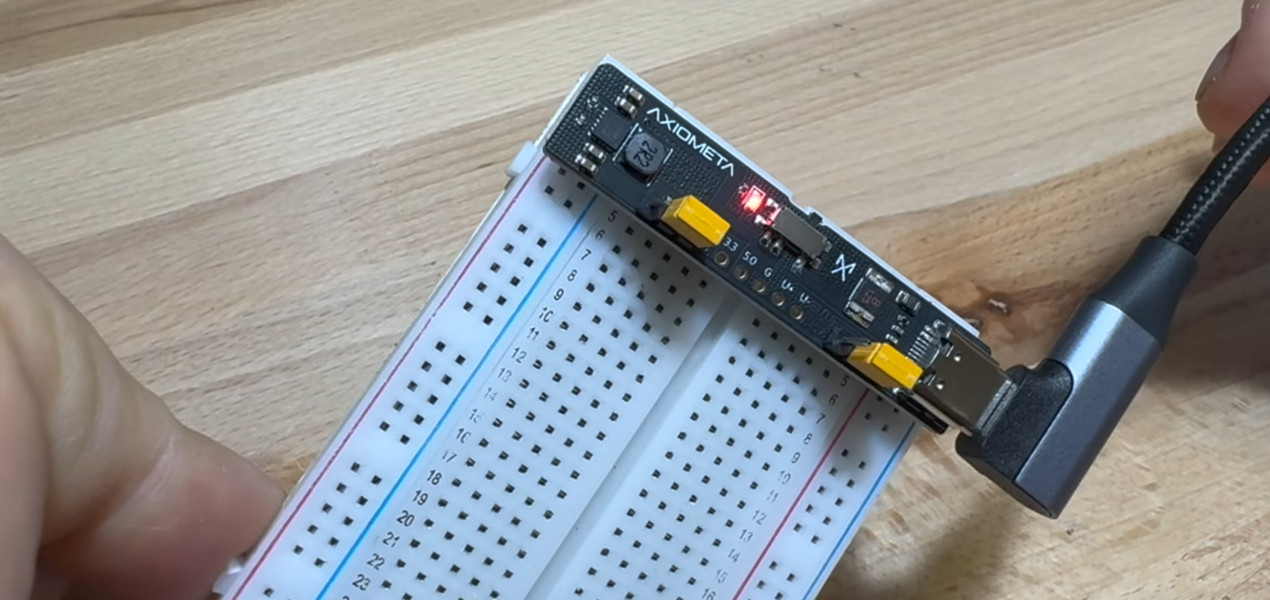
[Axiometa] has recently unveiled a simple PCB that will plug into a standard solderless breadboard to provide 3.3 and 5 VDC when connected to a USB-C power supply. The device is going to start a crowdfunding campaign soon if you want to buy a completed one — but with the design files and Bill of Materials already up on GitHub, nothing stops you from spinning up your own version today.
 Firefly Zero blog
https://blog.fireflyzero.com/
 Firefly Zero: modern handheld game console with multiplayer
https://fireflyzero.com/
A modern handheld game console with effortless multiplayer. It's fun to play, alone or with friends, and easy to program.
 My favourite computer ergonomics hack
https://blog.jacobvosmaer.nl/0036-beeper/
The Beeper consitst of three parts: the hardware, the firmware runnning on the hardware, and software running on my work computer. If my computer screen is unlocked for too long, the Beeper starts beeping and because it is situated away from my desk I must get up to silence it. Mission accomplished: I stopped sitting still.
 Don’t build your castle in other people’s kingdoms – How To Market A Game
https://howtomarketagame.com/2021/11/01/dont-build-your-castle-in-other-peoples-kingdoms/
The kingdom gets absorbed by another neighboring King that has no idea why people where there in the first place and starts changing the laws and everyone leaves. Example: Tumblr
There are countless tales of this happening. EVERY SINGLE EXTERNAL KINGDOM will do this to you. No matter how “cool” or “hip” they are right now. They will let you down.
 LunaSea – Self-Hosted Controller
https://www.lunasea.app/?ref=a.wholelottanothing.org
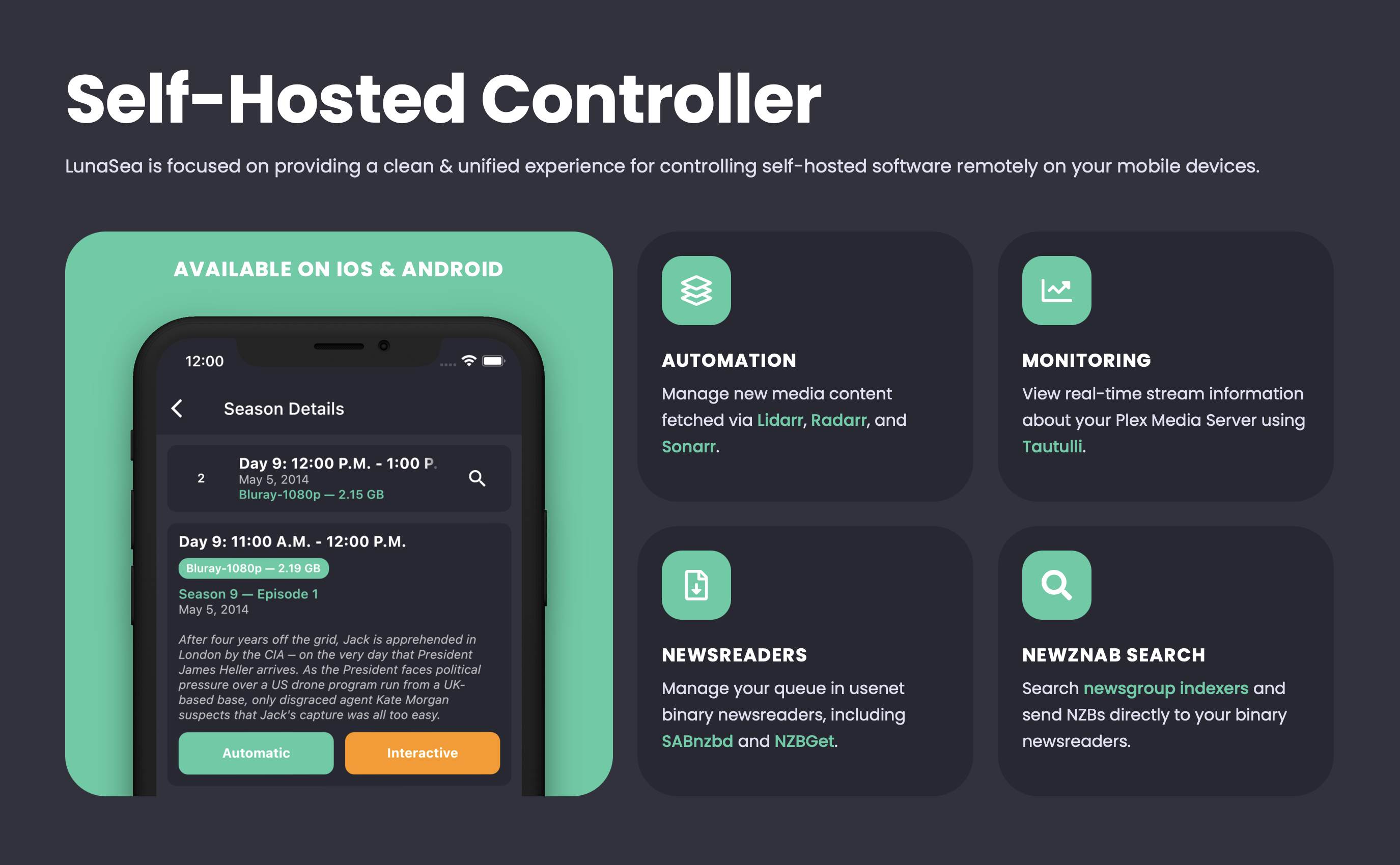
LunaSea is a fully featured, open source self-hosted controller focused on giving you a seamless experience between all of your self-hosted media software remotely on your devices.
 Install Docker natively on Android Phone and use it as a Home Server | CrackOverflow
https://crackoverflow.com/docs/system_administration/containerization/install-docker-natively-on-android-phone-and-use-it-as-a-home-server/
In this tutorial, we will guide you through the process of installing Docker on your Android phone, specifically using a OnePlus 6T with postmarketOS. I also wrote another blog post explaining how you can run this phone without a battery, allowing it to run forever as long as it remains connected to a power source. If you’re interested, feel free to check it out! This guide can be adapted only for phones on the postmarketOS device list. Please note that this process will erase all data on your phone, so it’s important to use a device you don’t need.
Getting Started In Laser Cutting | Hackaday
https://hackaday.com/2024/11/27/getting-started-in-laser-cutting/
If you were to walk into most of the world’s hackerspaces, it’s likely that the most frequent big-ticket tool you’ll find after a 3D printer is a laser cutter. A few years ago that would inevitably been one of the ubiquitous blue Chinese-made K40 machines, but here in 2024 it’s become common to see something far more sophisticated. For all that, many of us are still laser cutter noobs, and for us [Dominic Morrow] gave a talk at last summer’s EMF Camp in the UK entitled “Getting Started In Laser Cutting“. [Dominic] is a long-term laser cutting specialist who now works for Lightburn, so he’s ideally placed to deliver this subject.
 in which social media can be put in your own hands - Technomancy
https://technomancy.us/201
So what's it like to set up your own GotoSocial server? Well, I can walk you thru what I used for my setup. Yours might be different; that's OK! I made these up-front choices to simplify the operational overhead because I didn't want this to be a hassle and I don't need the extra engineering that comes from trying for nine nines of uptime:
 "Never Build Your House On Someone Else's Land" - ErosBlog
https://www.erosblog.com/2022/02/07/someone-elses-land/
Never build your house on someone else’s land.
Bacchus's First Rule Of The Internet - ErosBlog
https://www.erosblog.com/2013/06/11/bacchus-first-rule-of-the-internet/
Bacchus’s First Rule Of The Internet: Anything worth doing on the internet is worth doing on your own server that you control.
E-Ink Screen Combined With Analog Dial Is Epic Win | Hackaday
https://hackaday.com/2024/11/25/e-ink-screen-combined-with-analog-dial-is-epic-win/
The concept is simple—get an e-ink display, and draw a dial on it using whatever graphics and scale you choose. Then, put it behind a traditional coil-driven analog dial in place of the more traditional paper scale. Now, you have an analog dial that can display any quantity you desire. Just update the screen to display a different scale as needed. Meanwhile, if you don’t need to change the display, the e-ink display will draw zero power and still display the same thing.
 JawnCon0x1: The Modem Badge
https://jawncon.org/0x1-modem.html
Having decided the retro late-80s early-90s theme for JawnCon 0x1, the inspiration for the badge seemed almost immediately obvious: the iconic, venerable Hayes SmartModem oozes industrial design of the era and is instantly recognizable to any of us who grew up when computers had the decency to shriek like digital banshees to let us know when they were plotting against us.
 How to register just enough domains – Evan Prodromou's Blog
https://evanp.me/2024/11/16/how-to-register-just-enough-domains/
Have a personal domain, put a CMS behind it, use that for publishing static pages, use subdomains of it for standalone services, and register new domains only when you need to. I think this kind of strategy is inherent in the idea of having “your own domain”, and a lot of people follow it to a greater or lesser degree, but I wanted to spell it out fully to make it clear to myself how I would deal with different circumstances.
 Make it Yourself
https://makeityourself.org/
Make it Yourself is a digital book that showcases this incredible talent, bringing together over 1000 useful DIY projects to demonstrate just what is possible when you make things yourself.
frntc/SIDKick: SIDKick -- the first complete SID 6581/8580-drop-in-replacement that you can build yourself
https://github.com/frntc/SIDKick
SIDKick is a versatile sound device for C64s and C128s: it serves as a drop-in replacement for the SID 6581/8580 sound chips, and at the same time provides Sound Expander-emulation (Yamaha OPL-based FM sound), a MIDI interface and can control LED stripes. It is based on a Teensy 4.1 and makes no compromises with regard to quality: the emulation is based on reSID and fmOPL. It also comes with a few extras.
Hacking a tiny Bluetooth Smart Ring - YouTube
https://www.youtube.com/watch?v=w90RVspTkt8
In this video we will take a deeper look into the Colmi Bluetooth Smart Ring R02 and its SoC
 Gadgetbridge
https://gadgetbridge.org/?utm_source=FuckOff&utm_campaign=FuckOff&utm_medium=FuckOff
Gadgetbridge is a free and open source Android application that allows you to pair and manage various gadgets such as smart watches, bands, headphones, and more without the need for the vendor application. So in short, you can use Gadgetbridge instead of relying on your gadget's own proprietary app.
 UGS
https://winder.github.io/ugs_website/
A free and full featured gcode platform used for interfacing with advanced CNC controllers like GRBL , FluidNC, TinyG, g2core and Smoothieware. Universal Gcode Sender is a self-contained Java application which includes all external dependencies and can be used on most computers running Windows, MacOSX or Linux.
 USB Insight Hub | Crowd Supply
https://www.crowdsupply.com/aerio-solutions/usb-insight-hub
USB Insight Hub plugs into your computer through a USB Type-C connector and exposes three USB 3.0 downstream ports, each with a 1.3-inch screen that displays relevant information about the attached device. That information includes operating system enumeration name (COMx, TTYx, or drive letter), voltage, and current. USB Insight Hub also allows you to control the individual activation and deactivation of the D+/D- USB 2 data lines to force enumeration and control the power of each downstream device. A small application running on the host computer extracts USB information from the operating system and sends it to the Hub over USB.
Forget About Raspberry Pi! Use Your Old Phone Instead. (Really???) - YouTube
https://www.youtube.com/watch?v=iobvVl8jZ5o&t=309s
You don't need a Raspberry Pi any more! Re-use an obsolete mobile phone in electronics projects and program it like an Arduino.
 RC2024 – Part 15 – Building A Music Player That Uses The Rotary Encoder Module - Robert Price
https://www.robertprice.co.uk/robblog/rc2024-part-15-building-a-music-player-that-uses-the-rotary-encoder-module/
I wanted to put together all my learning and build a music player for the RC2014. This will run using my RC2014 Classic 2 computer. It uses the LCD Driver Module, and the YM2149 Sound Card Module from Z80Kits. In addition, it also uses my ROM board, and of course the Rotary Encoder Module.
ploopyco/trackpad: A high-performance, open-source trackpad, powered by QMK.
https://github.com/ploopyco/trackpad
A high-performance, open-source trackpad, powered by QMK.
 Resources for keeping the web free, open, and poetic | Stefan Bohacek
https://stefanbohacek.com/blog/resources-for-keeping-the-web-free-open-and-poetic/
I’ve been running my own personal website for over 15 years now. It has been a fun learning experience, and an opportunity to share my work and get to know a ton of amazing people.
And I’d like to help others to do the same without needing to learn how to manage servers or be a rock star programmer.
 STEAM Centers at PCC
https://www.pcc.edu/maker/
At PCC, we pride ourselves on exploring out-of-the-box ways to ignite a collaborative culture of innovation. At each of our campuses, we provide spaces outside the classroom for students and…
The Sylvania MakerLab | STEAM Centers at PCC
https://www.pcc.edu/maker/makerlab/
Location: AM 101 (basement of the auto shop) at Sylvania Campus Coordinator: Sean Rooney Contact: sean.rooney@pcc.edu The MakerLab at the Sylvania campus is an interdisciplinary space committed to developing, creating,…
Cascade Create Space | STEAM Centers at PCC
https://www.pcc.edu/maker/cascade-create-space/
The Cascade Create Space is a STEAM Center focused on creating community and encouraging learning and creativity in a flexible, welcoming environment that offers a variety of experiences from formal co-curricular support of academic coursework to skills-focused workshops and informal opportunities for STEAM exploration and self-expression.
cnlohr/channel3: ESP8266 Analog Broadcast Television Interface
https://github.com/cnlohr/channel3
Hook an antenna up to GPIO3/RX, tune your analog TV to Channel 3. Power the ESP on!
 Educational LCD Oscilloscope Kit EDU08 Velleman | Jameco
https://www.jameco.com/z/WSEDU08-Velleman-Velleman-Educational-LCD-Oscilloscope-Kit-by-Whadda_2261959.html?trk_msg=4P14JF8AODRKB0OJBNA6UIJB1G&trk_contact=0BK3H3I8ID11QJT0HBNJJVJBV0&trk_sid=91VNO9GBV7OR98IEVRIR9Q0KV0&trk_link=S6SL6TGC5GU4PA79DEKMDI4A64&utm_source=FuckOff&utm_medium=FuckOff&utm_term=FuckOff&utm_campaign=FuckOff&utm_content=FuckOff
Build your own oscilloscope and learn how to visualize signals. See the signals you learn about in real life! Despite the low cost, this oscilloscope has many features only found on expensive units like signal markers, frequency, dB, true RMS readouts, etc. This powerful auto-setup function will get you going in a snap!
 Runtipi - Homeserver management made easy
https://runtipi.io/
Highlight:Free and open-source, runtipi lets you install all your favorite self-hosted apps without the hassle of configuring and managing each service. One-click installs and updates for more than 200 popular apps.
Free and open-source, Runtipi lets you install all your favorite self-hosted apps without the hassle of configuring and managing each service. One-click installs and updates for more than 80 popular apps.
 Lowering Expectations, One Project at a Time – Netninja.com
https://netninja.com/2024/08/29/lowering-expectations-one-project-at-a-time/
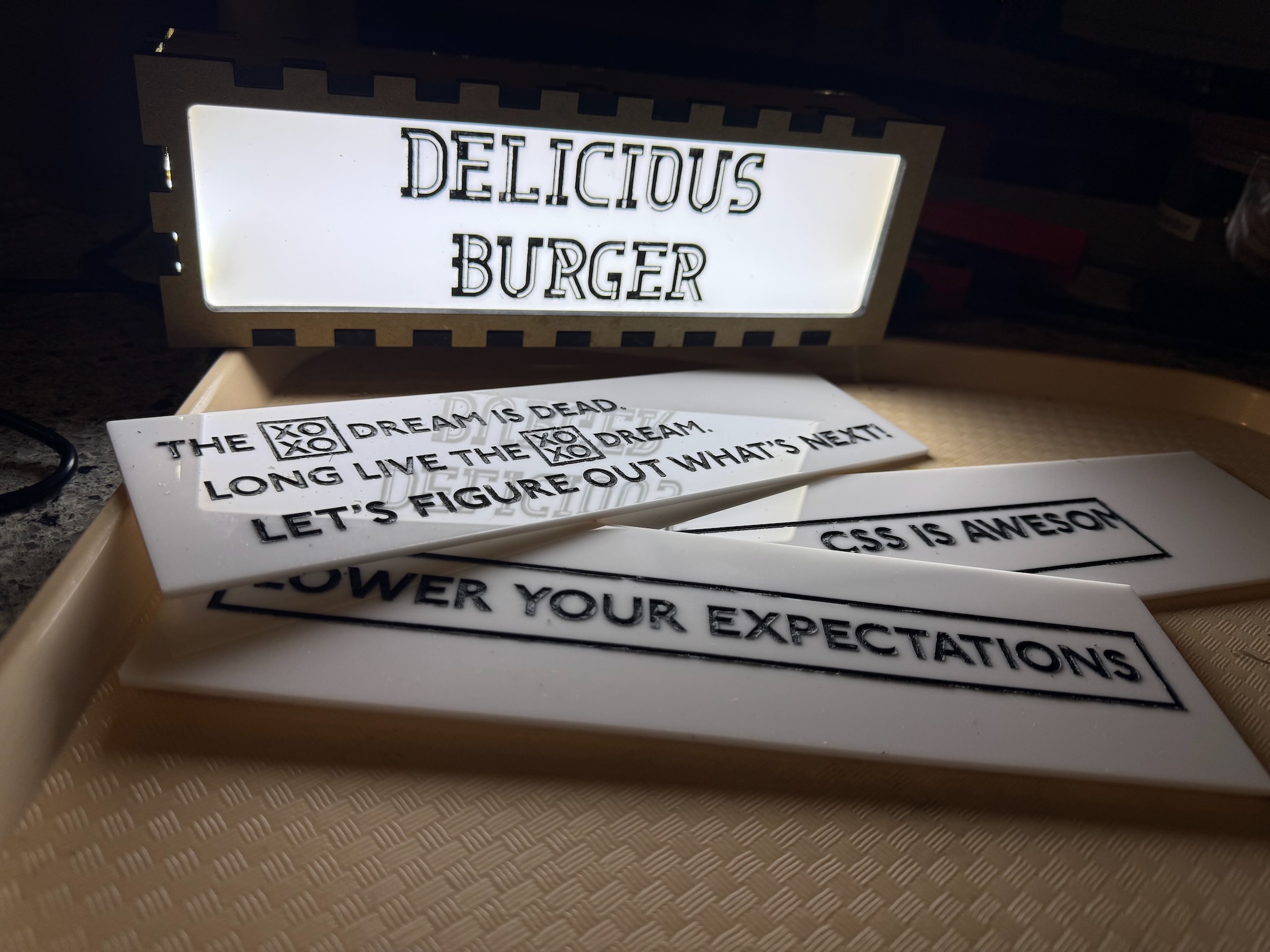
Highlight:At the entrance to the park was a sign that caught my eye. I’m fairly certain I have seen it in previous years, but this year it caught my attention enough to park itself in my brain.
Lower Your Expectations
I thought about that sign all weekend, joked on Slack about how to “win” it after the festival shuts down, and sketched some iterations of a desktop version while waiting for speakers to start. I wanted to be able to slide out the display board, so the toughest part was coming up with a retention mechanism. I did things like this in the past by sandwiching layers, but found tabbed guides to be a better way to achieve that in this form factor.
 Papercraft Models — Rocky Bergen
http://rockybergen.com/papercraft
Construct the computer from your childhood or build an entire computer museum at home with these paper models, free to download and share.
 2BitToy
https://2bittoy.carrd.co/
A Gameboy Camera custom shell designed for the retro Nintendo fan who wants to dabble a little more with their Gameboy photography.
2BitToy
https://2bittoy.carrd.co
A Gameboy Camera custom shell designed for the retro Nintendo fan who wants to dabble a little more with their Gameboy photography.
 ESP32 Web Server (WebSocket) with Multiple Sliders PWM | Random Nerd Tutorials
https://randomnerdtutorials.com/esp32-web-server-websocket-sliders/
This tutorial shows how to build an ESP32 web server that displays a web page with multiple sliders. The sliders control the duty cycle of different PWM channels to control the brightness of multiple LEDs.
ESP32 Web Server (WebSocket) with Multiple Sliders PWM | Random Nerd Tutorials
https://randomnerdtutorials.com/esp32-web-server-websocket-sliders
This tutorial shows how to build an ESP32 web server that displays a web page with multiple sliders. The sliders control the duty cycle of different PWM channels to control the brightness of multiple LEDs.
 Atari 65XE as USB keyboard
https://camper-assistant.com/atrkb.html
Making retro Atari 65XE as USB-keyboard for a modern computer. And it will leave the opportunity to use this Atari in the native mode. Arduino Leonardo is used for connect the Atari's keyboard to an USB. With an UNIX this keyboard will works without any restrictions.
ESP32 WiFi Robot | Hackaday.io
https://hackaday.io/project/163542-esp32-wifi-robot
The ESP32 requires no app, it can be controlled from any PC or mobile device that has a web browser.
 Untitled
https://cbm-pi1541.firebaseapp.com/
Pi1541 is a real-time, cycle exact, Commodore 1541 disk drive emulator that can run on a Raspberry Pi 3B, 3B+ or 3A+.
Cbm pi1541
https://cbm-pi1541.firebaseapp.com
Pi1541 is a real-time, cycle exact, Commodore 1541 disk drive emulator that can run on a Raspberry Pi 3B, 3B+ or 3A+.
 My Rust Powered linux.conf.au e-Paper Badge - WezM.net by Wesley Moore
http://www.wezm.net/technical/2019/01/linux-conf-au-rust-epaper-badge/
I built a digital conference badge to take to the conference. It used a tri-colour e-Paper display and was powered by a Rust program I built running on Raspbian Linux.
My Rust Powered linux.conf.au e-Paper Badge - WezM.net by Wesley Moore
http://www.wezm.net/technical/2019/01/linux-conf-au-rust-epaper-badge
I built a digital conference badge to take to the conference. It used a tri-colour e-Paper display and was powered by a Rust program I built running on Raspbian Linux.