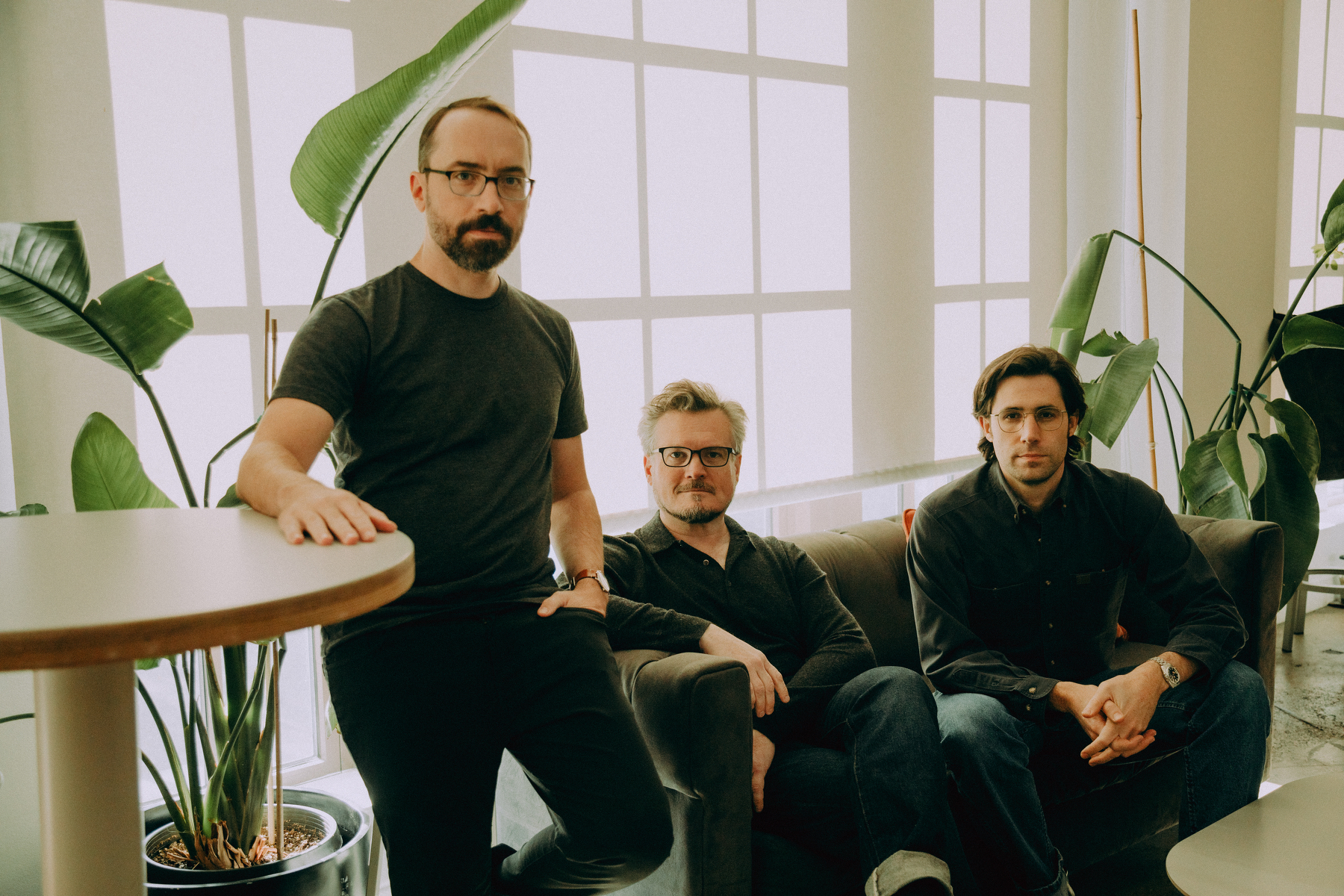
 Telepath: building a new kind of computer - unique hazards may exist
https://uniquehazards.com/2025/12/04/telepath-building-a-new-kind.html
That’s the mission of my new startup, Telepath. We’re building that metaphorical EV: the software stack for a new kind of computing experience, freed from decades of accrued assumptions, powered at its core by machine intelligence but employed in the service of individuals. We aren’t really an “AI company”, and we aren’t chasing AGI. We see AI as normal technology, but one that carries an unusual level of both promise and peril. Used wisely and responsibly, this technology has the potential to elevate our computers and unlock a revolution even greater and more exciting than the move from CLI to GUI forty years ago.
 Michael Tsai - Blog - Our Changing Relationship With Apple
https://mjtsai.com/blog/2025/02/27/our-changing-relationship-with-apple/?__readwiseLocation=
 More retrocomputing, less nostalgia | datagubbe.se
https://datagubbe.se/retnost/
Music, art and games are timeless human pursuits. Why should those pursuits be about nostalgia or reminiscing just because they happen to take place on an old computer? When creating, a home computer - just like any other tool - provides certain intrinsic qualities that affect both the process and the outcome. This happens to appeal to some people, while others would rather choose an aerosol, a violin or a brand new PC: the guitarist doesn't want to switch to a keytar, the chess player wouldn't trade chess for Quake, and the painter doesn't think of her brushes as artifacts of her childhood.
 operators, not users and programmers
https://jyn.dev/operators-not-users-and-programmers/
spreadsheets are hugely successful. Felienne Hermans, who has spent her career studying spreadsheets, attributes this success to "their immediate feedback system and their continuous deployment model": the spreadsheet shows you its result as soon as you open it, and it requires no steps to run other than to install Excel and double-click the file.
 Kevin Webb: "One of the best examples of LLM developer tooling I've heard is from a team that supports software from the 80s-90s...."
https://bsky.app/profile/triangulator.org/post/3lqqgkkst2k2r
One of the best examples of LLM developer tooling I've heard is from a team that supports software from the 80s-90s. Their only source of documentation is *video interviews* with retired employees. So they feed them into transcription software and get summarized searchable notes out the other end.
 The Embroidered Computer | Irene PoschIrene Posch
http://www.ireneposch.net/the-embroidered-computer/
The Embroidered Computer is an exploration into using historic gold embroidery materials and knowledge to craft a programmable 8 bit computer.
Solely built from a variety of metal threads, magnetic, glas and metal beads, and being inspired by traditional crafting routines and patterns, the piece questions the appearance of current digital and electronic technologies surrounding us, as well as our interaction with them.
The Embroidered Computer | Irene PoschIrene Posch
http://www.ireneposch.net/the-embroidered-computer
The Embroidered Computer is an exploration into using historic gold embroidery materials and knowledge to craft a programmable 8 bit computer.
Solely built from a variety of metal threads, magnetic, glas and metal beads, and being inspired by traditional crafting routines and patterns, the piece questions the appearance of current digital and electronic technologies surrounding us, as well as our interaction with them.
 Getting Started, circa 1983
http://simonallardice.com/general/2014/03/17/first-computer.html
Let me say that again: the next day you could find out if your code compiled or not.
 Citation Needed – blarg?
http://exple.tive.org/blarg/2013/10/22/citation-needed/
"Nobody wanted to learn how to play, much less build, Engelbart’s Violin, and instead everyone gets a box of broken kazoos."
Citation Needed – blarg?
http://exple.tive.org/blarg/2013/10/22/citation-needed
"Nobody wanted to learn how to play, much less build, Engelbart’s Violin, and instead everyone gets a box of broken kazoos."
 Miguel Nicolelis Says the Brain is Not Computable, Bashes Kurzweil’s Singularity | MIT Technology Review
http://www.technologyreview.com/view/511421/the-brain-is-not-computable/
The brain is not computable and no engineering can reproduce it
Miguel Nicolelis Says the Brain is Not Computable, Bashes Kurzweil’s Singularity | MIT Technology Review
http://www.technologyreview.com/view/511421/the-brain-is-not-computable
The brain is not computable and no engineering can reproduce it
 Dennis Ritchie - Wikipedia, the free encyclopedia
http://en.wikipedia.org/wiki/Dennis_Ritchie
Ritchie and Thompson received the Turing Award from the ACM in 1983, the Hamming Medal from the IEEE in 1990 and the National Medal of Technology from President Clinton in 1999.
 The Great Principles of Computing » American Scientist
http://www.americanscientist.org/issues/id.10402,y.2010,no.5,content.true,page.1,css.print/issue.aspx
"The great-principles framework reveals a rich set of rules on which all computation is based. These principles interact with the domains of the physical, life and social sciences, as well as with computing technology itself."
 Internet Archive: Free Download: Apple II Forever
http://www.archive.org/details/CC605_apple_ii_forever
"Today they're called "mac heads", but way back in the 1980's, Apple users were in love with the Apple II. Despite the introduction of the Mac in 1984, the Apple II continued to have its devoted fans. This program looks at the Apple II culture during the early Mac era. Included are the Apple IIc+, the Apple II-GS, and a rare Apple I. Guests include John Sculley and Gary Kildall. Software demonstrations are of Math Blaster, Paintworks Gold, and Microsoft Bookshelf. Also a look at the newest Macintosh at the time, the Mac IIx. Originally broadcast in 1988."
 Classic Computer Magazine Archive
http://www.atarimagazines.com
"preserving information from early personal computer magazines"
 TED: MIT Students Turn Internet Into a Sixth Human Sense -- Video | Epicenter from Wired.com
http://blog.wired.com/business/2009/02/ted-digital-six.html
"Students at the MIT Media Lab have developed a wearable computing system that turns any surface into an interactive display screen. The wearer can summon virtual gadgets and internet data at will, then dispel them like smoke when they're done."
 Cloud computing is a trap, warns GNU founder | Technology | guardian.co.uk
http://www.guardian.co.uk/technology/2008/sep/29/cloud.computing.richard.stallman
"It's just as bad as using a proprietary program. Do your own computing on your own computer with your copy of a freedom-respecting program. If you use a proprietary program or somebody else's web server, you're defenceless. You're putty in the hands of whoever developed that software."
 jkOnTheRun: I'm taking the web-only challenge. Are you in?
http://www.jkontherun.com/2008/06/im-taking-the-w.html
"A paradigm shift. A glimpse into what I expect we'll see in the future. Namely: a centralized heavy-duty box for the home, but lighter, portable web devices for the home's inhabitants."
 Tinselman: The Mother of All Demos
http://tinselman.typepad.com/tinselman/2008/06/the-mother-of-a.html
"Douglas Engelbart's whirling vision of the future; it was the first public use of a mouse, as well as examples of cutting, copying, pasting, teleconferencing, video conferencing, email, and... hypertext. It's just too damn much for 1968!"
 Feld Thoughts: The Treadputer
http://www.feld.com/blog/archives/2006/03/the_treadputer.html
"A few months ago, I told Ross that I wanted to integrate a computer workstation into a treadmill so that I would work while I ran."
 10 Incredible Old Computer Ads
http://www.2spare.com/item_92760.aspx
"What the heck is electronic mail?!"
Jupiter Brain - Wikipedia, the free encyclopedia
http://en.wikipedia.org/wiki/Jupiter_Brain
"A Jupiter Brain is a theoretical computing megastructure the size of a planet. Unlike a Matrioshka brain, a Jupiter Brain is optimized for minimum signal propagation delay, and so has a compact structure."
 Mark Bernstein: NeoVictorian 1: Civilization and its Discontents
http://markbernstein.org/Sep0701/NeoVictorian.html
"The short version: The Arts & Crafts movement failed in consumer goods, but it could succeed in software."
Internet Archive: Computer Chronicles
http://www.archive.org/details/computerchronicles
"Hosted by Stewart Cheifet, Computer Chronicles was the world's most popular television program on personal technology during the height of the personal computer revolution."
 Alan Kay: The PC Must Be Revamped--Now
http://www.cioinsight.com/print_article2/0,1217,a=200162,00.asp
"in the last few years I've been asking computer scientists and programmers whether they've ever typed E-N-G-E-L-B-A-R-T into Google-and none of them have."
 The Firefox computer ? Toni’s Garage
http://toni.schneidersf.com/2007/02/09/the-firefox-computer
"I want a Firefox computer. A nice, sleek, solid state notebook with a big screen that you open up and it just runs Firefox"
 VintageComputing.com | Vintage Computing and Gaming - Blog Archive R&D Automation Taking Pre-orders for v2 Apple II Compact Flash / IDE Interface Card
http://www.vintagecomputing.com/index.php/archives/119
"an impressive Apple II hardware add-on card he designed called the "CFFA" that enables any Apple II system to use a compact flash card, IBM MicroDrive, or IDE hard drive for storage."
VintageComputing.com | Vintage Computing and Gaming - Blog Archive Anatomy of a Young Collector's Room
http://www.vintagecomputing.com/index.php/archives/101
"It's a Polaroid photograph of one corner of my then "computer room" taken by myself somewhere around late 1994 or early 1995"
 jwz - GLTerminal
http://jwz.livejournal.com/595865.html
"It's pretty sweet, though not as faithful a simulation of a CRT as Trevor Blackwell's fantastic Apple ][ screen saver (in xscreensaver)."
 Chaucery Blog: Doctor Who's very special effects
http://blog.chaucery.com/archives/2006/01/doctor_whos_very_special_effec.html
"Did the BBC use a cheap home computer from 1981 to simulate the advanced computing power of hundreds, even thousands of years into the future?"
 Harry Porter's Relay Computer
http://www.cs.pdx.edu/~harry/Relay/index.html
It's a computer made from mechanical relays!
 ypsi~dixit: Remember Punch Cards?
http://www.ypsidixit.com/blog/archives/2005/08/remember_punch.html
How many cards would it take to make an average-sized MP3? "The 21 boxes of cards needed would by 5 feet 9 inches tall."