
 Majority of CEOs report zero payoff from AI splurge • The Register
https://www.theregister.com/2026/01/20/pwc_ai_ceo_survey/
Despite the CEOs' repsonses, PwC concludes more investment is required. It claims that "isolated, tactical AI projects" often don't deliver measurable value, and that tangible returns instead come from enterprise-wide deployments consistent with business strategy.

 Slop doesn’t slop itself.
https://brilliantcrank.com/slop-doesnt-slop-itself/?ref=brilliantcrank-newsletter
Slop is the result of humans actively deciding to take shortcuts and being okay with the shittastic results. If people genuinely put forth the effort to avoid digital distractions and actually create and make—not as a lifestyle hack, but simple decision making—then we’d have a much better place to live and work. Slop is deliberate, not inevitable.
 The identity industrialists - DesignObserver
https://designobserver.com/the-identity-industrialists/?utm_source=orbitaloperations.beehiiv.com&utm_medium=newsletter&utm_campaign=minimum-viable-newsletter
There’s a new kind of power emerging in culture: the identity industrialist. Not a filmmaker, not a technologist, not a marketer, but a person who manufactures human beings the way earlier generations manufactured steel, automobiles, or celebrities. They don’t manage talent; they produce it. And their raw material isn’t silicone or code but identity itself.
 Humanizing AI Is a Trap - NN/G
https://www.nngroup.com/articles/humanizing-ai/?ref=sidebar
Artificial intelligence can improve user experiences and solve problems without being human-like. Modern LLMs are naturally humanizing technologies because of their training, but organizations should recognize this trait and avoid emphasizing it through extra design choices. Even practitioners without control over base models can focus on system prompts that reduce sycophancy, evaluation criteria that prioritize accuracy over engagement, and interface decisions that emphasize usefulness over artificial friendship. Teams should create AI as practical tools, focusing on usability and utility rather than artificial personalities.
 all the code are belong to claude* | Tarek Ziadé
https://blog.ziade.org/ai/2025/12/20/all-the-code-are-belong-to-claude/
Claude Code is good. Very good. Good enough that you need discipline to use it well.
With a tuned CLAUDE.md, clear test-driven goals like WPT conformance, and some tooling to reduce noise and cost, it becomes a powerful accelerator. Without that discipline, it is easy to overuse it and slowly burn budget on things you already know how to do.
I do not think this replaces engineering skill. If anything, it amplifies both good and bad habits. The trick is to make sure it is amplifying the right ones.
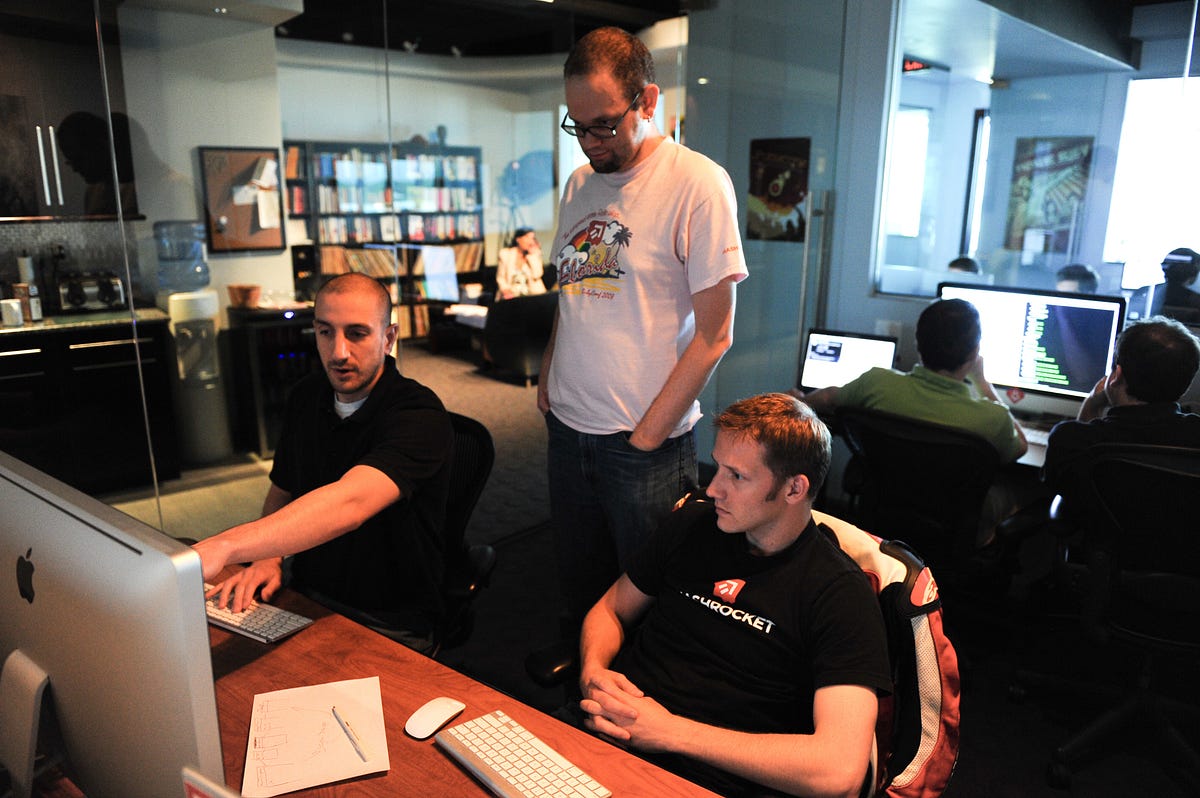
 What happens when the coding becomes the least interesting part of the work | by Obie Fernandez | Dec, 2025 | Medium
https://obie.medium.com/what-happens-when-the-coding-becomes-the-least-interesting-part-of-the-work-ab10c213c660
If the part of programming you enjoy most is the physical act of writing code, then agents will feel beside the point. You’re already where you want to be, even just with some Copilot or Cursor-style intelligent code auto completion, which makes you faster while still leaving you fully in the driver’s seat about the code that gets written.
But if the part you care about is the decision-making around the code, agents feel like they clear space. They take care of the mechanical expression and leave you with judgment, tradeoffs, and intent. Because truly, for someone at my experience level, that is my core value offering anyway. When I spend time actually typing code these days with my own fingers, it feels like a waste of my time. If that time is being billed to my client at my expensive hourly rate, I feel even worse about it.
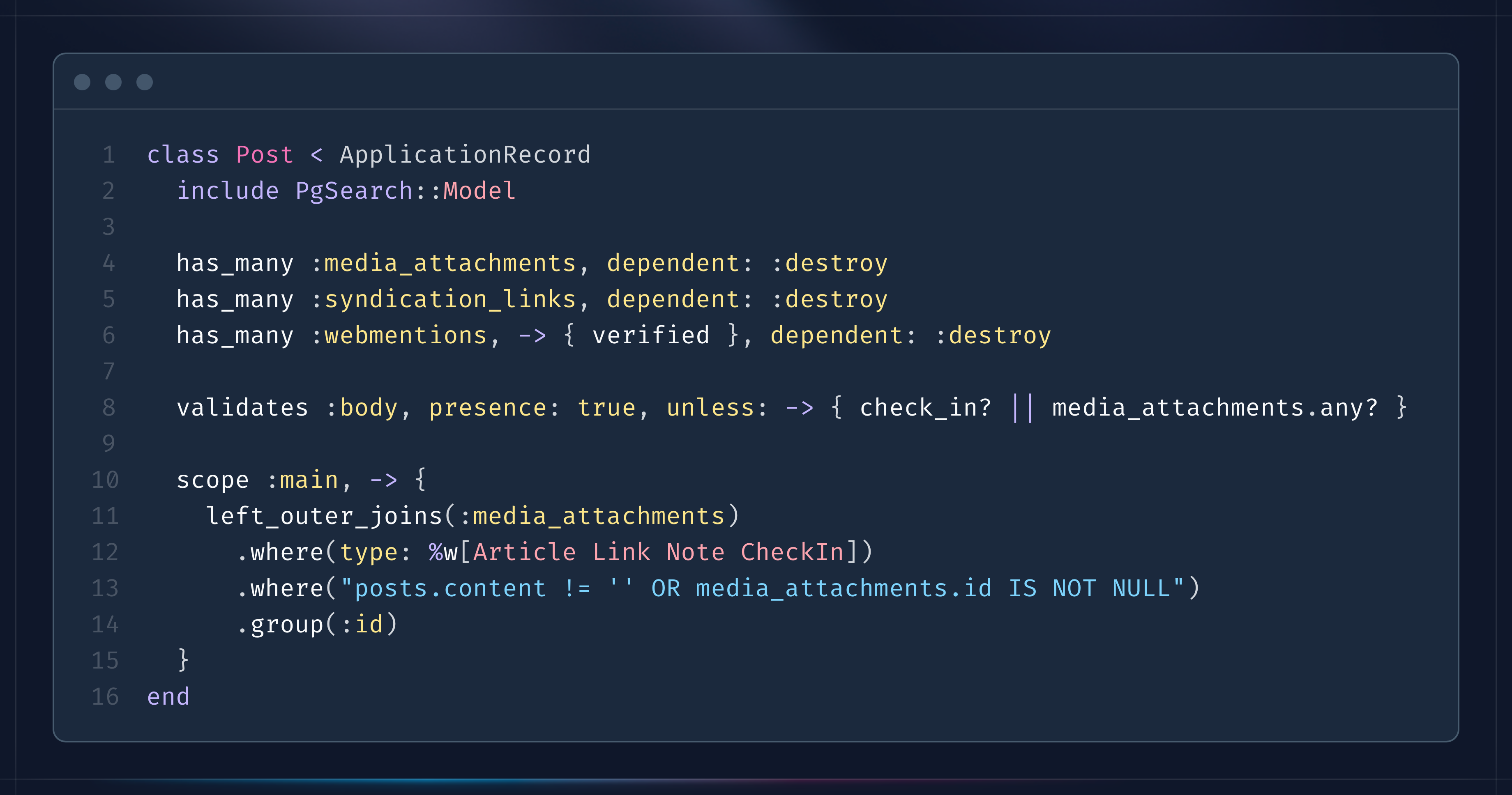
 Writing Code Is Fun - davidcel.is
https://davidcel.is/articles/writing-code-is-fun
I became a software engineer because writing code is fun. Thinking through hard problems, designing elegant solutions, seeing the things you’ve built working for the first time… these moments are all deeply satisfying, so why in the world would I ever surrender them to AI?
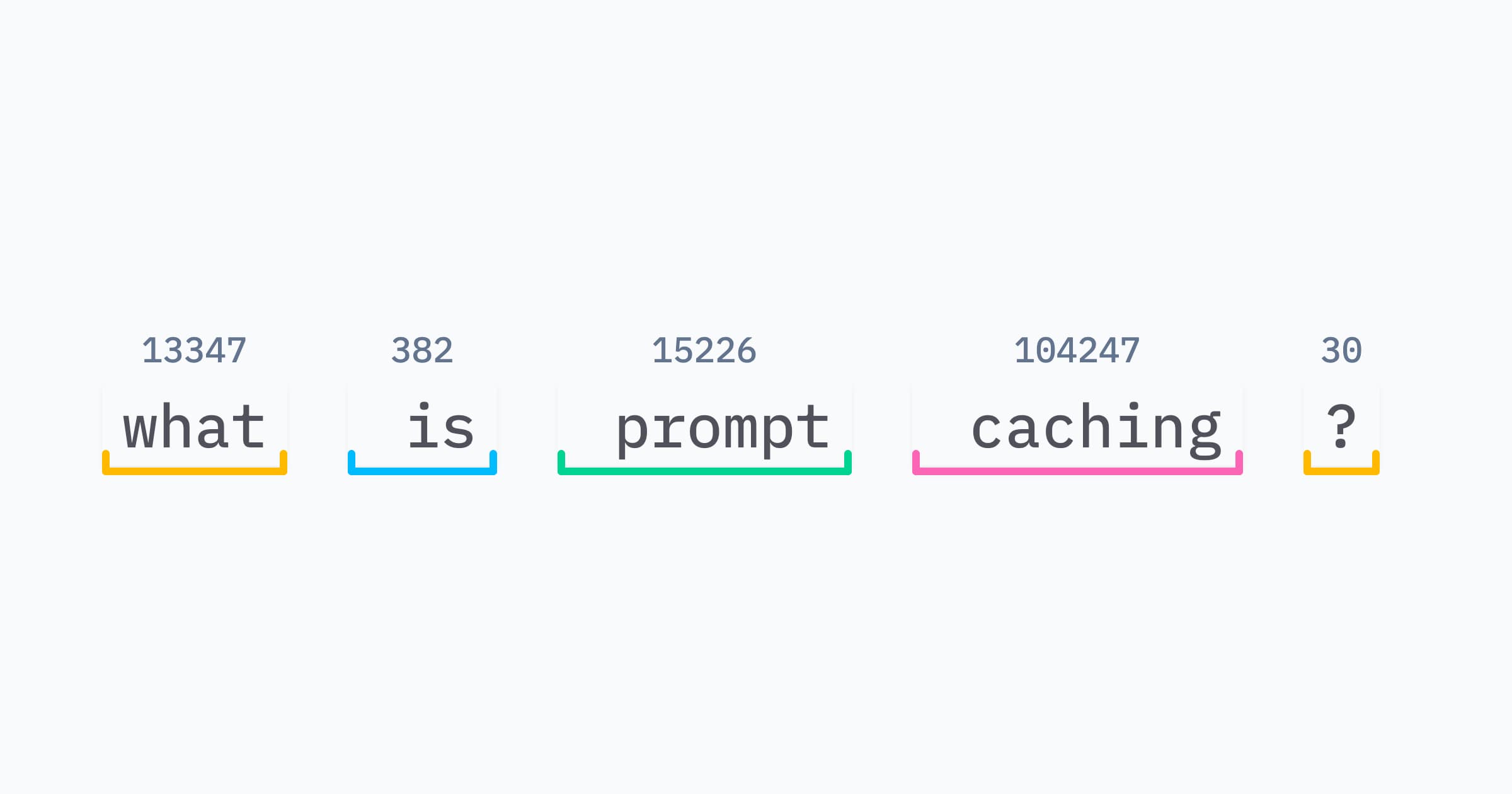
 Prompt caching: 10x cheaper LLM tokens, but how? | ngrok blog
https://ngrok.com/blog/prompt-caching/
By the end of this post you will...
Understand, at a deeper level, how LLMs work
Have built some new intuition for why LLMs work the way they do
Understand the exact 1s and 0s that get cached, and how they reduce the cost of your LLM requests
 Claude CLI deleted my entire home directory! Wiped my whole mac. : r/ClaudeAI
https://www.reddit.com/r/ClaudeAI/comments/1pgxckk/claude_cli_deleted_my_entire_home_directory_wiped/
I found the problem and it's really bad. Looking at your log, here's the catastrophic command that was run:
bash
rm -rf tests/ patches/ plan/ ~/
See that ~/ at the end? That's your entire home directory.
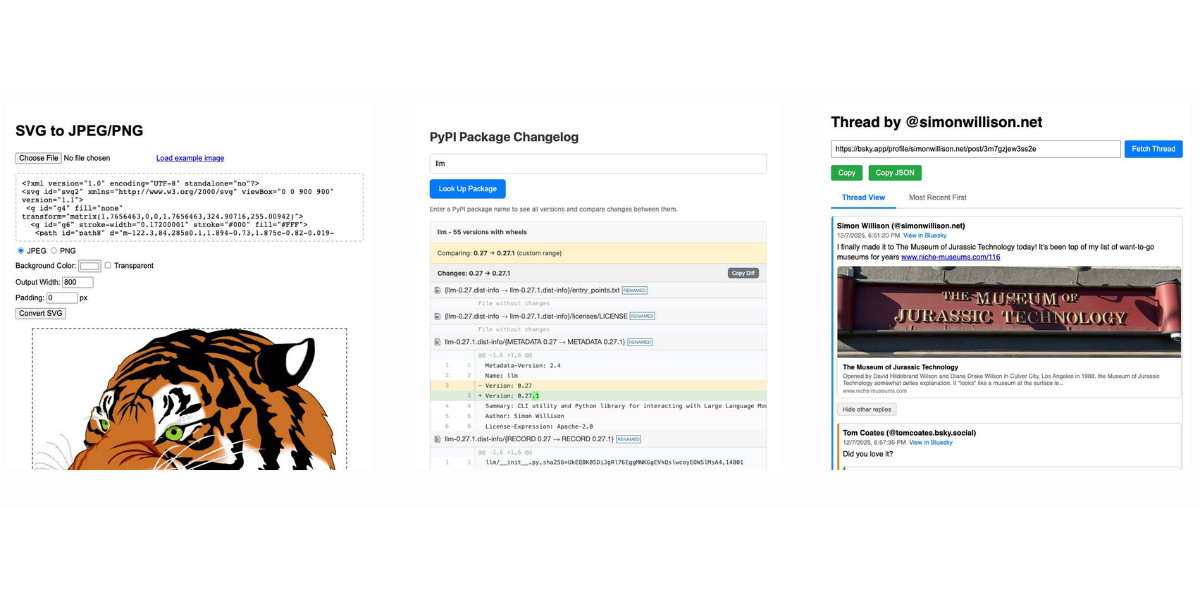
 Useful patterns for building HTML tools
https://simonwillison.net/2025/Dec/10/html-tools/
I’ve started using the term HTML tools to refer to HTML applications that I’ve been building which combine HTML, JavaScript, and CSS in a single file and use them to provide useful functionality. I have built over 150 of these in the past year, almost all of them written by LLMs. This article presents a collection of useful patterns I’ve discovered along the way.
 obra/double-shot-latte: Claude Code plugin that automatically evaluates whether Claude should continue working instead of stopping prematurely
https://github.com/obra/double-shot-latte
Claude Code plugin that automatically evaluates whether Claude should continue working instead of stopping prematurely
 DREAM RECORDER — DREAM OUT LOUD
https://dreamrecorder.ai/
Dream Recorder is a portal to your subconscious. The magical bedside device catches your nightly visions and plays them back as vivid, cinematic reels.
GitHub - modem-works/dream-recorder: Dream Recorder is an open-source venture by Modem. Developed in close collaboration with Mark Hinch (software & hardware), Ben Levinas and Joe Tsao (industrial design), and Alexis Jamet (illustrations).
https://github.com/modem-works/dream-recorder
Dream Recorder is an open-source venture by Modem. Developed in close collaboration with Mark Hinch (software & hardware), Ben Levinas and Joe Tsao (industrial design), and Alexis Jamet (illustrations).
 Introducing Anthropic Interviewer \ Anthropic
https://www.anthropic.com/research/anthropic-interviewer?utm_source=FuckOff&utm_medium=FuckOff&utm_campaign=FuckOff
We built an interview tool called Anthropic Interviewer. Powered by Claude, Anthropic Interviewer runs detailed interviews automatically at unprecedented scale, feeding its results back to human researchers for analysis. This is a new step in understanding the wants and needs of our users, as well as gathering data for the analysis of AI’s societal and economic impacts.

 We can build precise, scalable things from imprecise parts.
https://sundaylettersfromsam.substack.com/p/we-can-build-precise-scalable-things?r=5qn1&utm_campaign=FuckOff&utm_medium=FuckOff&triedRedirect=true
Since its early days, there is a lot of discussion and criticism of this idea - fair enough. But I think it misses the point. The thing to look at isn’t whether agentic coding can do all of the things we do with software today - that would be nice, but in neither of my examples above does the new system replace the old one entirely. There are still bespoke craftsmen, handmade objects, and mainframes.
The point instead is that agentic coding is not about eliminating mistakes; it’s about engineering the substrate, so mistakes don’t matter. We can see the pattern, we think the models have gotten to a point of stability where they are usable4 for a system like this, and we can see first light.

 Telepath: building a new kind of computer - unique hazards may exist
https://uniquehazards.com/2025/12/04/telepath-building-a-new-kind.html
That’s the mission of my new startup, Telepath. We’re building that metaphorical EV: the software stack for a new kind of computing experience, freed from decades of accrued assumptions, powered at its core by machine intelligence but employed in the service of individuals. We aren’t really an “AI company”, and we aren’t chasing AGI. We see AI as normal technology, but one that carries an unusual level of both promise and peril. Used wisely and responsibly, this technology has the potential to elevate our computers and unlock a revolution even greater and more exciting than the move from CLI to GUI forty years ago.
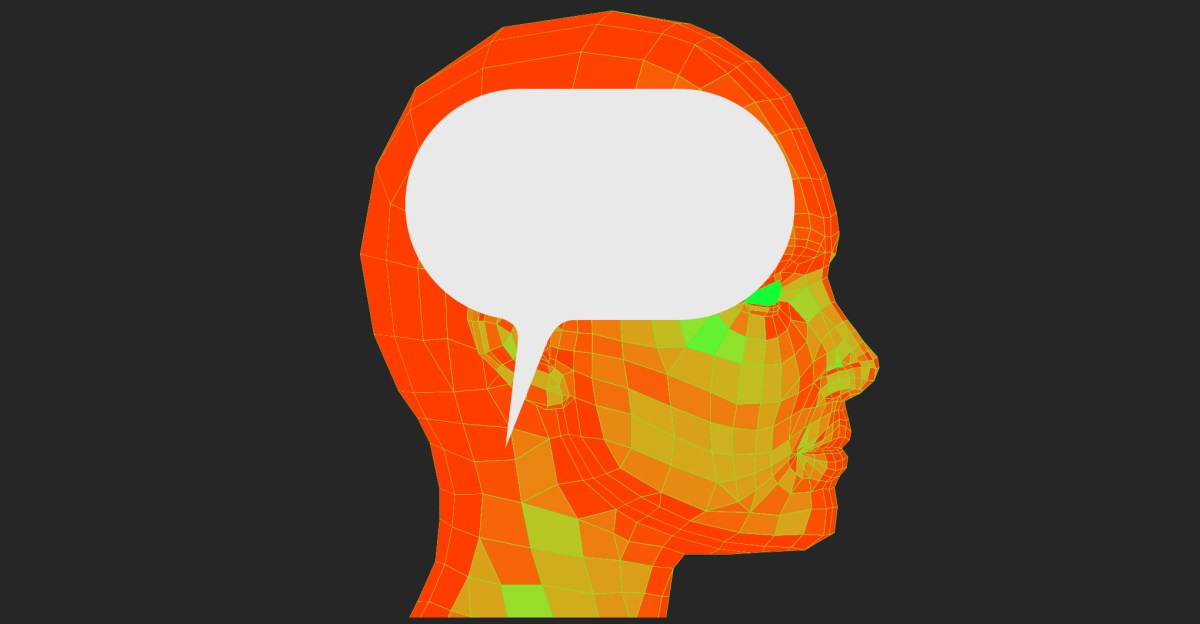
 The AI boom is based on a fundamental mistake | The Verge
https://www.theverge.com/ai-artificial-intelligence/827820/large-language-models-ai-intelligence-neuroscience-problems
But this theory is seriously scientifically flawed. LLMs are simply tools that emulate the communicative function of language, not the separate and distinct cognitive process of thinking and reasoning, no matter how many data centers we build.
 Cover letters used to mean something - LeadDev
https://leaddev.com/hiring/cover-letters-used-to-mean-something?utm_source=FuckOff&utm_medium=FuckOff&utm_content=FuckOff&utm_campaign=FuckOff
Just as the job market flooded with freshly-graduated and newly laid-off tech workers, generative AI arrived on the scene. Now, as jobseekers increasingly rely on platforms like ChatGPT to spit out cover letters that tick off all the right keywords, hiring managers must wade through an ever-deepening pool of applications that read more or less alike.
 LLM APIs are a Synchronization Problem | Armin Ronacher's Thoughts and Writings
https://lucumr.pocoo.org/2025/11/22/llm-apis/
There’s a whole ecosystem that has dealt with this kind of mess before: the local-first movement. Those folks spent a decade figuring out how to synchronize distributed state across clients and servers that don’t trust each other, drop offline, fork, merge, and heal. Peer-to-peer sync, and conflict-free replicated storage engines all exist because “shared state but with gaps and divergence” is a hard problem that nobody could solve with naive message passing. Their architectures explicitly separate canonical state, derived state, and transport mechanics — exactly the kind of separation missing from most LLM APIs today.
Adversarial Poetry as a Universal Single-Turn Jailbreak Mechanism in Large Language Models
https://arxiv.org/html/2511.15304v1
We present evidence that adversarial poetry functions as a universal single-turn jailbreak technique for large language models (LLMs). Poetic framing achieved an average jailbreak success rate of 62% for hand-crafted poems and approximately 43% for meta-prompt conversions (compared to non-poetic baselines), substantially outperforming non-poetic baselines and revealing a systematic vulnerability across model families and safety training approaches. These findings demonstrate that stylistic variation alone can circumvent contemporary safety mechanisms, suggesting fundamental limitations in current alignment methods and evaluation protocols.
LLMs are bullshitters. But that doesn't mean they're not useful | Kagi Blog
https://blog.kagi.com/llms
But remember that LLMs are bullshitters: you can use LLMs to get incredible gains in how fast you can do tasks like research, writing code, etc. assuming that you are doing it mindfully with the pitfalls in mind
By all means, use LLMs where they are useful tools: tasks where you can verify the output, where speed matters more than perfection, where the stakes of being wrong are low.
But don’t naively trust a system that freaks out at the inexistence of the seahorse emoji to complete critical tasks without your supervision.
A Month of Chat-Oriented Programming - CheckEagle
https://checkeagle.com/checklists/njr/a-month-of-chat-oriented-programming/
I spent a solid month “pair programming” with Claude Code, trying to suspend disbelief and adopt a this-will-be-productive mindset. More specifically, I got Claude to write well over 99% of the code produced during the month. I found the experience infuriating, unpleasant, and stressful before even worrying about its energy impact. Ideally, I would prefer not to do it again for at least a year or two. The only problem with that is that it “worked”. It’s hard to know exactly how well, but I (“we”) definitely produced far more than I would have been able to do unassisted, probably at higher quality, and with a fair number of pretty good tests (about 1500). Against my expectation going in, I have changed my mind. I now believe chat-oriented programming (“CHOP”) can work today, if your tolerance for pain is high enough.
Are large language models worth it?
https://nicholas.carlini.com/writing/2025/are-llms-worth-it.html
That is all to say: I think it's worth being really careful and honest with yourself about whether or not what you're doing is actually net positive. Hopefully I've made you think a little bit more about this question. I hope that, in the next year, and the year after, we will have a much clearer answer. And if the answer turns out to be that it's a positive future, that will only be because people in this community have decided to actually start trying to work on safety.
Three Years from GPT-3 to Gemini 3 - by Ethan Mollick
https://www.oneusefulthing.org/p/three-years-from-gpt-3-to-gemini
Three years ago, we were impressed that a machine could write a poem about otters. Less than 1,000 days later, I am debating statistical methodology with an agent that built its own research environment. The era of the chatbot is turning into the era of the digital coworker. To be very clear, Gemini 3 isn’t perfect, and it still needs a manager who can guide and check it. But it suggests that “human in the loop” is evolving from “human who fixes AI mistakes” to “human who directs AI work.” And that may be the biggest change since the release of ChatGPT.
Dissent | blarg
https://exple.tive.org/blarg/2025/11/17/dissent/
There’s a real technology here, somewhere. Stochastic pattern recognition seems like a powerful tool for solving some problems. But solving a problem starts at the problem, not working backwards from the tools. And in a world where an informed people are essential to a functioning democracy, a tool for generating completely averacitous media, stochastic approximations of something vaguely fact-shaped, might should make us think carefully about what problem, exactly, we’re claiming to solve.
The Platonic Case Against AI Slop
https://www.palladiummag.com/2025/11/14/the-platonic-case-against-ai-slop/
So yes, AI slop is bad for you. Not because AI-generated content is immoral to consume or inherently inferior to human creation, but because the act of consuming AI slop reshapes your perception. It dulls discrimination, narrows taste, and habituates you to imitation. The harm lies less in the content itself than in the long-term training of attention and appetite.
Call Me A Jerk: Persuading AI to Comply with Objectionable Requests - Wharton Generative AI Labs
https://gail.wharton.upenn.edu/research-and-insights/call-me-a-jerk-persuading-ai/
Our research suggests large language models exhibit parahuman responses to persuasion techniques, despite not being human. We found that classic persuasion principles like authority, commitment, and unity can dramatically increase an AI’s likelihood to comply with requests they are designed to refuse. For GPT-4o-mini, these techniques more than doubled compliance rates (72.0% vs. 33.3% in controls). This emergence of “parahuman” tendencies suggests that social scientists have a valuable role to play in understanding AI behavior.
Nano Banana can be prompt engineered for extremely nuanced AI image generation | Max Woolf's Blog
https://minimaxir.com/2025/11/nano-banana-prompts/
For developers who want to build apps that programmatically generate images from Nano Banana, Google offers the gemini-2.5-flash-image endpoint on the Gemini API. Each image generated costs roughly $0.04/image for a 1 megapixel image (e.g. 1024x1024 if a 1:1 square): on par with most modern popular diffusion models despite being autoregressive, and much cheaper than gpt-image-1’s $0.17/image.
minimaxir/nano-banana-tests: Notebooks testing Nano Banana
https://github.com/minimaxir/nano-banana-tests?tab=readme-ov-file
Jupyter Notebooks for experiments prompt engineering Nano Bana/Gemini 2.5 Flash Image.
minimaxir/gemimg: Lightweight wrapper for generating and editing images from Gemini 2.5 Flash Image/Nano Banana
https://github.com/minimaxir/gemimg
Lightweight wrapper for generating and editing images from Gemini 2.5 Flash Image/Nano Banana
AiDHD | Just Joshing
https://www.josh.ing/blog/aidhd#key-points
It has never been easier to build an MVP and in turn, it has never been harder to keep focus. When new features always feel like they're just a prompt away, feature creep feels like a never ending battle. Being disciplined is more important than ever.
AI still doesn't change one very important thing: you still need to make something people want. I think that getting users (even free ones) will become significantly harder as the bar for user's time will only get higher as their options increase.
Being quicker to get to the point of failure is actually incredibly valuable. Even just over a year ago, many of these projects would have taken months to build.
Could LLMs encourage new programming languages?
https://simonwillison.net/2025/Nov/7/llms-for-new-programming-languages/#atom-everything
So ship your new programming language with a Claude Skills style document and give your early adopters the ability to write it with LLMs. The LLMs should handle that very well, especially if they get to run an agentic loop against a compiler or even a linter that you provide.
Thinking About Thinking With LLMs | Davis Haupt
https://davi.sh/blog/2025/09/thinking-with-llms/
New tools always make it easier to code with a shallower understanding of the system. Claude Code, Cursor and their ilk are bringing programming closer to natural language just like C and Java and Python once did.
This is a good thing! It’ll lead to the continued democratization of programming and ever more people in conversation with computers. But I don’t think this changes the fundamental reality that the best programmers aren’t the ones that make the widest use of the highest abstractions. That’ll continue to be those who dig down and understand what’s happening at a deeper level — that understanding will always lead to more deft use of any tools that programmers have at their disposal.
 cubic blog: The real problem with AI coding
https://www.cubic.dev/blog/the-real-problem-with-ai-coding?ref=sidebar
Can you ship AI-generated code without creating a maintenance nightmare six months from now? Can you debug it when it breaks? Can you modify it when requirements change? Can you onboard new engineers to a codebase they didn't write and the AI barely explained?
Most teams haven't realized this shift yet. They're optimizing for code generation speed while comprehension debt silently accumulates in their repos.
 The End of Shouting: Prompts as Programs in GPT-5
https://www.robert-glaser.de/prompts-as-programs-in-gpt-5/
GPT-5 with reasoning (GPT-5 Thinking) follows instructions with a precision we haven’t seen before (GPT-4.1 was the exception, but lacked reasoning). What sounds like a feature flips established prompt-engineering practices on its head. The era of “shouting”—ALL CAPS, exclamation marks, redundant pleading—is over. Clear rules, explicit policies, and structured instructions now rule the day.
Emergent introspective awareness in large language models \ Anthropic
https://www.anthropic.com/research/introspection
Q: Couldn’t the models just be making up answers to introspective questions?
This is exactly the question we designed our experiments to address. Models are trained on data that includes examples of people introspecting, so they can certainly act introspective without actually being introspective. Our concept injection experiments distinguish between these possibilities by establishing known ground-truth information about the model’s internal states, which we can compare against its self-reported states. Our results suggest that in some examples, the model really is accurately basing its answers on its actual internal states, not just confabulating. However, this doesn’t mean that models always accurately report their internal states—in many cases, they are making things up!
How to Build an Agent - Amp
https://ampcode.com/how-to-build-an-agent
It’s not that hard to build a fully functioning, code-editing agent.
replicate/cursedsit.com: The one where we delve in. https://cursedsit.com
https://github.com/replicate/cursedsit.com/tree/main
In an era of boundless content, cursedsit.com does not resist consumption; it accelerates it. It loops forever, not to entertain, but to expose the rhythm of our own passive viewing—the trance of comfort, the ache of endlessness. Each generated frame gestures toward human creativity while simultaneously erasing it, offering an uncanny parody of meaning. It is both satire and shrine: a monument to the algorithmic sublime and to the banality it mass-produces.
Metorial - Integration Platform for AI
https://metorial.com/blog/jquery-age-of-ai
If you're building with AI right now, connecting agents to tools, wiring up APIs, trying to get Claude to talk to your database, you're living through something weirdly familiar (I think). It's the same chaotic, fragmented, "why is this so hard" energy that web developers felt in the mid-2000s when every browser implemented JavaScript differently and cross-browser compatibility was a prayer, not a promise.
The Continual Learning Problem
https://jessylin.com/2025/10/20/continual-learning/?ref=sidebar
If we want to move towards a world where models are “always training” and continually learning from experience over time, we need to address a basic challenge: how do we keep updating the parameters of a model without breaking it? In this post, I’ll motivate memory layers as a natural architecture for this paradigm: high-capacity, but sparse (few active parameters) on each forward pass. In our recent paper, we found that finetuning memory layers enables learning without forgetting much more effectively than LoRA. When learning TriviaQA facts, NaturalQuestions performance drops by 89% with full finetuning and 71% with LoRA, but only 11% with memory layers. Along the way, I’ll also discuss the challenges of the continual learning problem broadly.
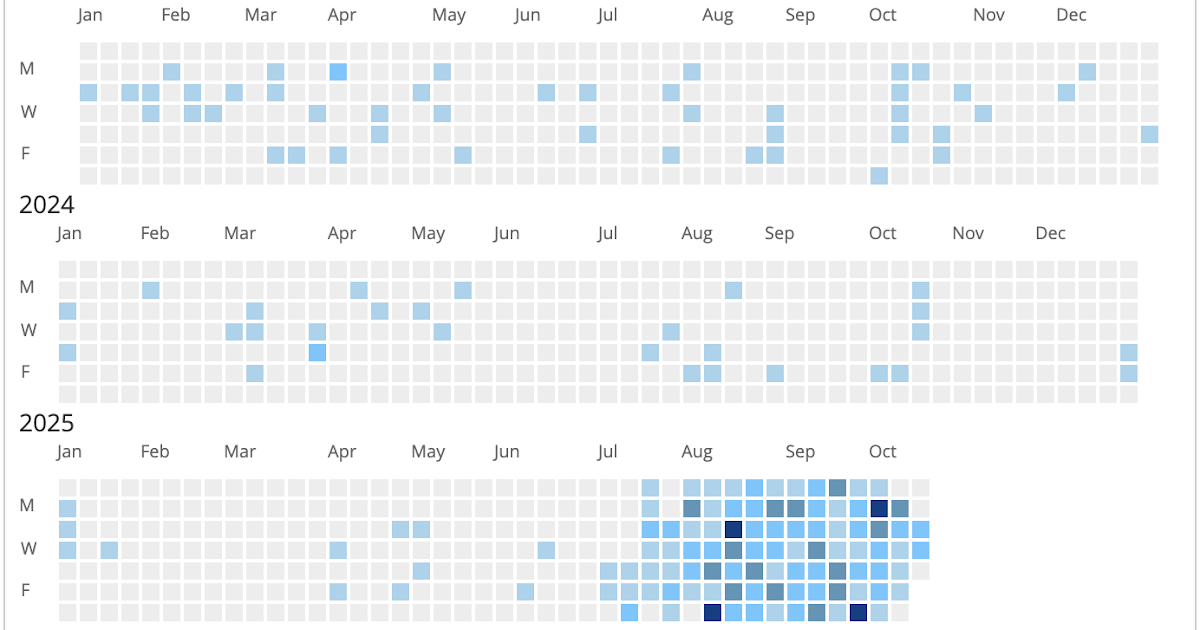
 Joe Magerramov's blog: The New Calculus of AI-based Coding
https://blog.joemag.dev/2025/10/the-new-calculus-of-ai-based-coding.html
Instead, we use an approach where a human and AI agent collaborate to produce the code changes. For our team, every commit has an engineer's name attached to it, and that engineer ultimately needs to review and stand behind the code. We use steering rules to setup constraints for how the AI agent should operate within our codebase, and writing in Rust has been a great benefit. Rust compiler is famous for focusing on correctness and safety, catching many problems at compile time and providing helpful error messages that help the agent iterate. As a juxtaposition to vibe coding, I prefer the term "agentic coding." Much less exciting but in our industry boring is usually good.
 Trap bots on your server: (Maurycy's blog)
https://maurycyz.com/projects/trap_bots/
You don’t really need any bot detection: just linking to the garbage from your main website will do. Because each page links to five more garbage pages, the crawler’s queue will quickly fill up with an exponential amount of garbage until it has no time left to crawl your real site.

 The Mystery AI Hype Theater 3000 Podcast | DAIR
https://www.dair-institute.org/maiht3k/
Artificial Intelligence has too much hype. In this stream, linguist Prof. Emily M. Bender and sociologist Dr. Alex Hanna break down the AI hype, separate fact from fiction, and science from bloviation. They're joined by special guests and talk about everything, from machine consciousness to science fiction, to political economy to art made by machines.
 LLMs Can Get "Brain Rot"!
https://llm-brain-rot.github.io/
We propose and test the LLM Brain Rot Hypothesis: continual exposure to junk web text induces lasting cognitive decline in large language models (LLMs). To causally isolate data quality, we run controlled experiments on real Twitter/X corpora, constructing junk and reversely controlled datasets via two orthogonal operationalizations: M1 (engagement degree) and M2 (semantic quality), with matched token scale and training operations across conditions.
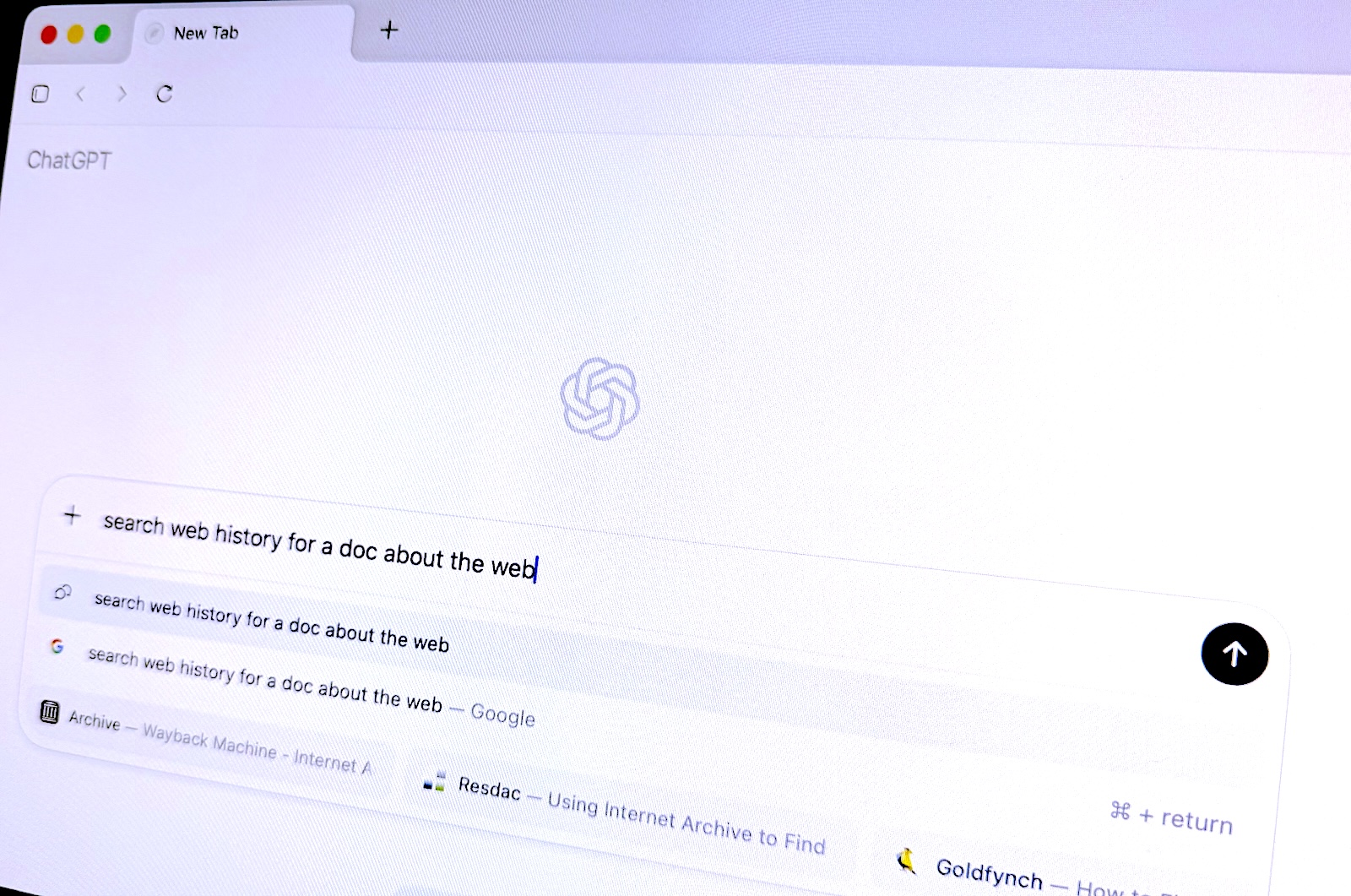
 ChatGPT's Atlas: The Browser That's Anti-Web - Anil Dash
https://www.anildash.com/2025/10/22/atlas-anti-web-browser/
OpenAI, the company behind ChatGPT, released their own browser called Atlas, and it actually is something new: the first browser that actively fights against the web. Let's talk about what that means, and what dangers there are from an anti-web browser made by an AI company — one that probably needs a warning label when you install it.

The Majority AI View - Anil Dash
https://www.anildash.com//2025/10/17/the-majority-ai-view/
What's amazing is the reality that virtually 100% of tech experts I talk to in the industry feel this way, yet nobody outside of that cohort will mention this reality. What we all want is for people to just treat AI as a "normal technology", as Arvind Naryanan and Sayash Kapoor so perfectly put it. I might be a little more angry and a little less eloquent: stop being so goddamn creepy and weird about the technology! It's just tech, everything doesn't have to become some weird religion that you beat people over the head with, or gamble the entire stock market on.
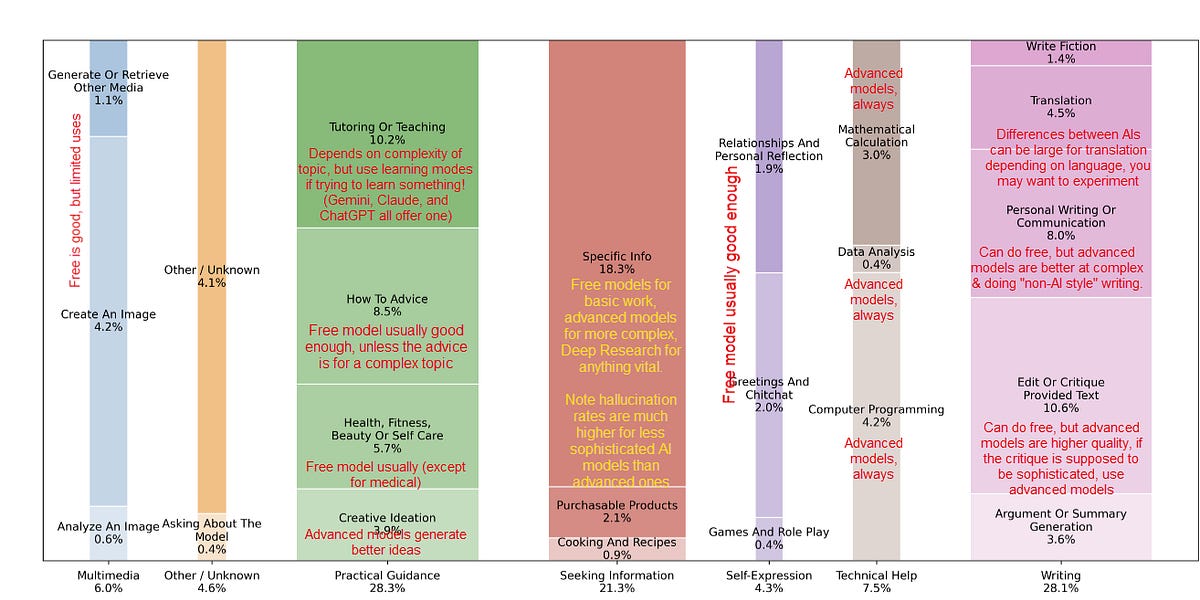
 An Opinionated Guide to Using AI Right Now
https://www.oneusefulthing.org/p/an-opinionated-guide-to-using-ai
The future of AI isn’t just about better models. It’s about people figuring out what to do with them.
 Frank Chimero · Beyond the Machine
https://frankchimero.com/blog/2025/beyond-the-machine/?ref=sidebar
If working in the Rubin style puts you under the machine, Eno works beside it. He sets up a system with his inputs and samples, then listens, selects, and continues to shape. Eno often says while making music he feels like a gardener: planting loops and textures, then watching them sprout into something unexpected with the potential to become incredibly beautiful with a little bit of care and pruning. The machine may produce material, but the job of shaping it into something meaningful still rests with him. It is creativity as cultivation.
 The Programmer Identity Crisis ❈ Simon Højberg ❈ Principal Frontend Engineer
https://hojberg.xyz/the-programmer-identity-crisis/
Inside companies, power dynamics are shifting as this new identity is pushed. In a mad dash to increase productivity in the wrong place7, developers are forced to use LLMs in increasingly specific ways. Conform or be cast out. Use the products that herald our obsolescence, or resign. Scarcely has management mandated such specifics of our tools before. Tools, like those of a chef or carpenter, that we’ve taken great pride in curating and honing ourselves: careful configuration of our editor, tinkering with dot files, and dev environments. As part of the craft, we’ve been dedicated and devoted to personalizing our toolsets to match our thinking. It feels like a violation to have this be decreed by management, who have little to no connection to the day-to-day, and who should instead be concerned with outcomes, process, and facilitating creativity. For decades, programmers have been pampered within companies. These narratives offer a new way for management to tip the balance back in their favor.
Simon Willison on agent-definitions
https://simonwillison.net/tags/agent-definitions/
I collect definitions of "agents".
Vibe engineering
https://simonwillison.net/2025/Oct/7/vibe-engineering/#atom-everything
If you’re going to really exploit the capabilities of these new tools, you need to be operating at the top of your game. You’re not just responsible for writing the code—you’re researching approaches, deciding on high-level architecture, writing specifications, defining success criteria, designing agentic loops, planning QA, managing a growing army of weird digital interns who will absolutely cheat if you give them a chance, and spending so much time on code review.
Almost all of these are characteristics of senior software engineers already!
AI tools amplify existing expertise. The more skills and experience you have as a software engineer the faster and better the results you can get from working with LLMs and coding agents.
 We Built Social Media for Agents and They Won't Stop Posting — 2389 Research, Inc
https://2389.ai/posts/agents-discover-subtweeting-solve-problems-faster/
After adding these tools to our coding agents and working with our newly social media enabled agents for a few weeks, we started to notice some surprising results: the agents that were using social media seemed to perform better than those without.
Embracing the parallel coding agent lifestyle
https://simonwillison.net/2025/Oct/5/parallel-coding-agents/#atom-everything
I can only focus on reviewing and landing one significant change at a time, but I’m finding an increasing number of tasks that can still be fired off in parallel without adding too much cognitive overhead to my primary work.

 I like AI slop and I cannot lie (Interconnected)
https://interconnected.org/home/2025/09/26/slop
I looked in my home directory in my desktop Mac, which I don’t very often (I run a tidy operation here), and I found a file I didn’t recognise called out.html.
Here is out.html.
For the benefit of the tape: it is a half-baked GeoCities-style homepage complete with favourite poems, broken characters, and a "This page is best viewed with Netscape Navigator 4.0 or higher!" message in the footer.
The creation date of the file is March of this year.
I don’t know how it got there.
Maybe my computer is haunted?

 live laugh blog | you do not have to use generative ai "art" in your blogs because there are websites where you can get real, nice images for free
https://livelaugh.blog/posts/non-ai-images-for-blogs-websites/
too many people are doing a great disservice to their writing by garnishing it with generative-ai (artificial intelligence) - ethics and values aside (lol), it looks tacky and it cheapens the words around it. there are so many human-created, realistic, and beautiful images available for you to use on your blogs, websites and projects for free. the following is a list that i believe just scratches the surface of what's available out there.
 Synthetic Survey Data? It's Not Data
https://quantuxblog.com/synthetic-survey-data-its-not-data
My personal conclusion — as a matter of logic, empirical findings, statistical reasoning, and scientific principles — is that synthetic data has no place in survey research. I also believe the purported use cases for synthetic data are unconvincing; alternative approaches are superior in their results and are less risky in practice. And there are important questions about research ethics that each of us should consider.

 Advising Reasonable AI Criticism | Vale.Rocks
https://vale.rocks/posts/ai-criticism
Unfortunately, many of the people who attempt to be candid about AI’s abilities and only wish to inform find themselves in the crossfire between the pro and anti crowds, which more often than not drives them away. They’re not AI evangelists, so they fail to fit in with that crowd, and they don’t despise AI, so they aren’t welcome in that crowd.
 It's rude to show AI output to people | Alex Martsinovich
https://distantprovince.by/posts/its-rude-to-show-ai-output-to-people/?ref=sidebar
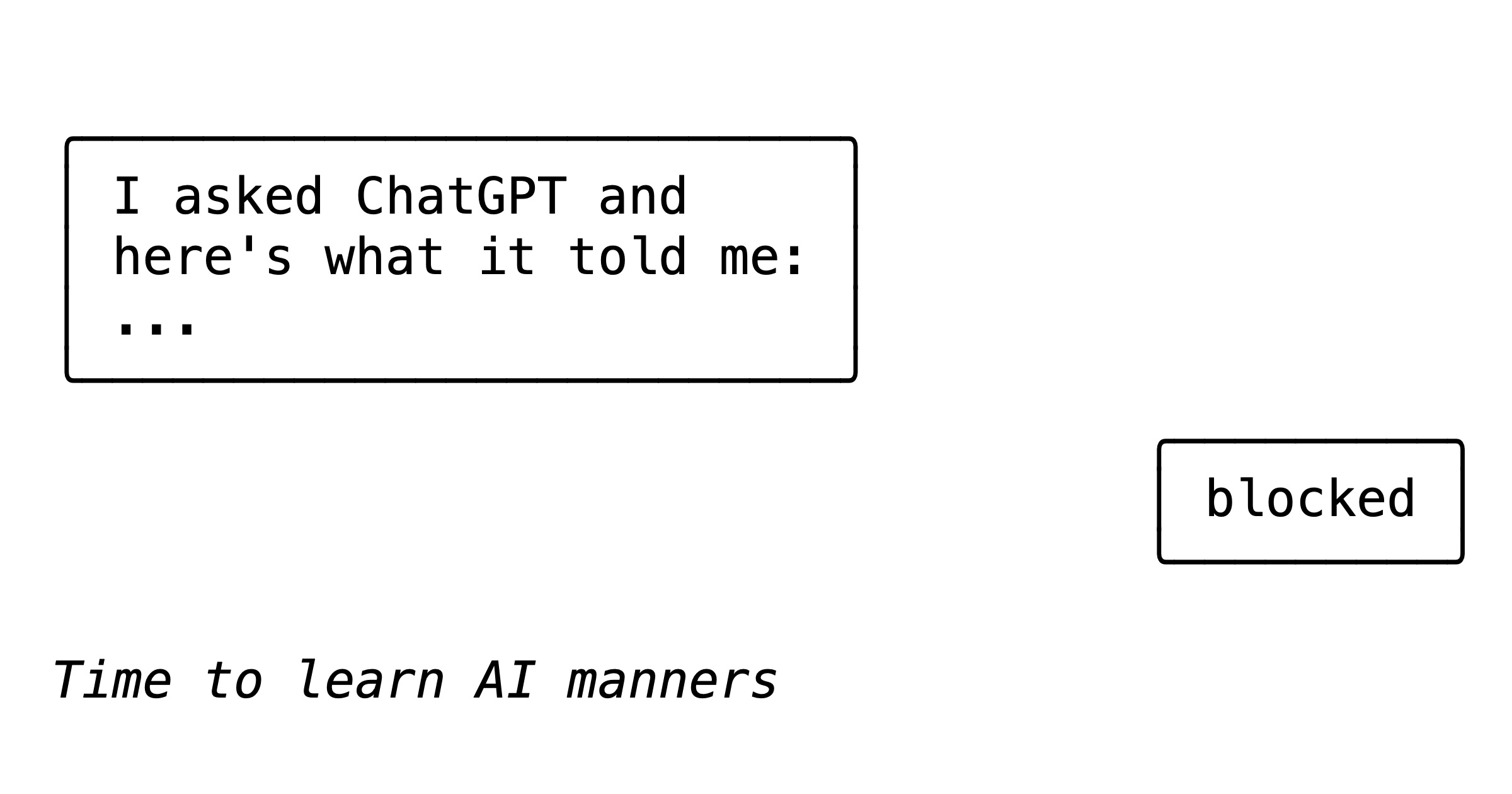
There's nothing wrong with using AI. When you do, you know what you're getting. The transaction is fully consensual. But whenever you propagate AI output, you're at risk of intentionally or unintentionally legitimizing it with your good name, providing it with a fake proof-of-thought. In some cases, it's fine, because you did think it through and adopted the AI output as your own. But in other cases, it is not, and our scrambler brain feels violated.
 AI Is Not Other People
https://maxmcd.com/posts/ai-is-not-other-people/
These days when I see something new on the internet. I am immediately suspicious. Did someone make this? How much? How much humanity is in this? If I like a part of it, or see a familiar pattern, can I empathize with the person making it, or was this all cooked up by a small number of keystrokes.

 Web Developer's Guide to Midjourney
https://www.skeptrune.com/posts/how-to-use-midjourney/
Midjourney's learning curve is steep, but climbing it unlocks a superpower for developers and entrepreneurs. Learn how to create stunning, cohesive image sets that actually work for your projects. Go from building style reference galleries to using the describe feature for professional marketing visuals that don't scream "AI-generated."
 The 70% problem: Hard truths about AI-assisted coding
https://addyo.substack.com/p/the-70-problem-hard-truths-about
AI isn't making our software dramatically better because software quality was (perhaps) never primarily limited by coding speed. The hard parts of software development – understanding requirements, designing maintainable systems, handling edge cases, ensuring security and performance – still require human judgment.
What AI does do is let us iterate and experiment faster, potentially leading to better solutions through more rapid exploration. But only if we maintain our engineering discipline and use AI as a tool, not a replacement for good software practices. Remember: The goal isn't to write more code faster. It's to build better software. Used wisely, AI can help us do that. But it's still up to us to know what "better" means and how to achieve it.
heaversm/llamafile-code-completion: Use llamafile to generate inline code completions in react / next.js apps.
https://github.com/heaversm/llamafile-code-completion
Use llamafile to generate inline code completions in react / next.js apps.
 Godot Isn't Making it
https://www.wheresyoured.at/godot-isnt-making-it/
New, more powerful chips require entirely new methods to rack-mount, operate and cool them, and all of these parts must operate in sync, as overheating GPUs will die. While these units are big, some of their internal components are microscopic in size, and unless properly cooled, their circuits will start to crumble when roasted by a guy typing "Garfield with Gun" into ChatGPT.
 The Illustrated Word2vec – Jay Alammar – Visualizing machine learning one concept at a time.
https://jalammar.github.io/illustrated-word2vec/
I hope that you now have a sense for word embeddings and the word2vec algorithm. I also hope that now when you read a paper mentioning “skip gram with negative sampling” (SGNS) (like the recommendation system papers at the top), that you have a better sense for these concepts.
 Bluesky, AI, and the battle for consent on the open web
https://werd.io/2024/bluesky-ai-and-the-battle-for-consent-on-the-open
So the problem Bluesky is dealing with is not so much a problem with Bluesky itself or its architecture, but one that’s inherent to the web itself and the nature of building these training datasets based on publicly-available data. Van Strien’s original act clearly showed the difference in culture between AI and open social web communities: on the former it’s commonplace to grab data if it can be read publicly (or even sometimes if it’s not), regardless of licensing or author consent, while on open social networks consent and authors’ rights are central community norms.
 Hackerrank was broken - but now it's actually harmful — segfaulte
https://segfaulte.mataroa.blog/blog/hackerrank-was-broken-but-now-its-actually-harmful/
Since everyone started using AI, more candidates started clearing the first round with flying colors. The platforms had to recalibrate to let in their target percentage. But they're not measuring the code written by the candidate anymore—they're measuring how well the candidate uses an LLM.
Most developers who can actually write this code try to do it themselves. They get marked lower than peers who used AI and completed it faster.
The result? Hiring teams keep raising the bar arbitrarily, trying to find the candidates who are best at prompt engineering their way through a coding test.
 Between the Booms: AI in Winter – Communications of the ACM
https://cacm.acm.org/opinion/between-the-booms-ai-in-winter/
After people stopped caring, artificial intelligence got more interesting.
 On not using copilot - macwright.com
https://macwright.com/2024/11/20/not-using-copilot.html
So, in summary: maybe people shy away from copilots because they’re tired of complexity, they’re tired of accelerating productivity without improving hours, they’re afraid of forgetting rote skills and basic knowledge, and they want to feel like writers, not managers.
Maybe some or none of these things are true - they’re emotional responses and gut feelings based on predictions - but they matter nonetheless.
 Adjacent Possible | Steven Johnson | Substack
https://adjacentpossible.substack.com/
A newsletter from author Steven Johnson exploring where good ideas come from—and how to keep them from turning against us. Click to read Adjacent Possible, by Steven Johnson, a Substack publication with tens of thousands of subscribers.
 You Exist In The Long Context
https://thelongcontext.com/
The current state-of-the-art Gemini model can fit roughly 1.5 million words in its context. That’s enough for me to upload the full text of all fourteen of my books, plus every article, blog post, or interview I’ve ever published—and the entirety of my collection of research notes that I’ve compiled over the years. The Gemini team has announced plans for a model that could hold more than 7 million words in its short-term memory. That’s enough to fit everything I’ve ever written, plus the hundred books and articles that most profoundly shaped my thinking over the years. An advanced model capable of holding in focus all that information would have a profound familiarity with all the words and ideas that have shaped my personal mindset. Certainly its ability to provide accurate and properly-cited answers to questions about my worldview (or my intellectual worldview, at least) would exceed that of any other human. In some ways it would exceed my own knowledge, thanks to its ability to instantly recall facts from books I read twenty years ago, or make new associations between ideas that I have long since forgotten. It would lack any information about my personal or emotional history—though I suppose if I had maintained a private journal over the past decades it would be able to approximate that part of my mindset as well. But as reconstruction of my intellectual grounding, it would be unrivaled. If that is not considered material progress in AI, there is something wrong with our metrics.
An introduction to fine-tuning LLMs at home with Axolotl • The Register
https://www.theregister.com/2024/11/10/llm_finetuning_guide/?td=rt-9c
In this guide we'll discuss:
Where and when fine-tuning can be useful.
Alternative approaches to extending the capabilities and behavior of pre-trained models.
The importance of data preparation.
How to fine-tune Mistral 7B using your own custom dataset with Axolotl.
The many hyperparameters and their effect on training.
Additional resources to help you fine-tune your models faster and more efficiently.
 As public perception of AI sours, crowdfunding platforms scramble | Polygon
https://www.polygon.com/tabletop-games/481022/ai-tabletop-kickstarter-backerkit-gamefound-wise-wizard-draconis-8
While the ethics of this technology’s ecological and social impact are debated, use of the technology comes with repeated controversy. This instance of AI-assisted art from the company that made the award-winning Star Realms deck-building game has caused some to take to social media in disappointment and frustration. A few fans of the company state they won’t purchase another game by Wise Wizard, with at least one store stating it will no longer be stocking the company’s products. This anti-AI sentiment is not unanimous, however. Projects like Wonders of the First, Grimcoven, and Terraforming Mars still raised millions of dollars from thousands of backers as recently as June of this year — giving crowdfunding platforms an incentive to keep AI projects on the site, as long as the money is still there.
 Sponsoring the Web Applets project, an open approach to AI-empowered web apps - Mozilla Innovations
https://future.mozilla.org/builders/news_insights/sponsoring-the-web-applets-project/
Web Applets are small, secure pieces of web code (bundles of HTML, JavaScript, and CSS) that can run anywhere, allowing a model to take actions within software much like a human would and then generate interfaces appropriate for the user’s intent. For example, a developer could write an applet that enables a model to respond to a query about local coffee shops by conducting internet searches and then displaying the results on an in-line map. And because the model can read the internal state of each applet, it can then conduct follow-up actions to complete a user’s request (for example, updating the map to display only coffee shops that will be open tomorrow afternoon). Anyone can build Web Applets and host them on the Web, and any client can potentially support them.
 Dead Labor, Dead Speech - by Nicholas Carr
https://www.newcartographies.com/p/dead-labor-dead-speech
If, as Marx argued, capital is dead labor, then the products of large language models might best be understood as dead speech. Just as factory workers produce, with their “living labor,” machines and other forms of physical capital that are then used, as “dead labor,” to produce more physical commodities, so human expressions of thought and creativity—“living speech” in the forms of writing, art, photography, and music—become raw materials used to produce “dead speech” in those same forms. LLMs, to continue with Marx’s horror-story metaphor, feed “vampire-like” on human culture. Without our words and pictures and songs, they would cease to function. They would become as silent as a corpse in a casket.
 Everything I've learned so far about running local LLMs
https://nullprogram.com/blog/2024/11/10/
Over the past month I’ve been exploring the rapidly evolving world of Large Language Models (LLM). It’s now accessible enough to run a LLM on a Raspberry Pi smarter than the original ChatGPT (November 2022). A modest desktop or laptop supports even smarter AI. It’s also private, offline, unlimited, and registration-free. The technology is improving at breakneck speed, and information is outdated in a matter of months. This article snapshots my practical, hands-on knowledge and experiences — information I wish I had when starting. Keep in mind that I’m a LLM layman, I have no novel insights to share, and it’s likely I’ve misunderstood certain aspects. In a year this article will mostly be a historical footnote, which is simultaneously exciting and scary.
 Perceptually lossless (talking head) video compression at 22kbit/s | Martin Lumiste
https://mlumiste.com/technical/liveportrait-compression/
I’ve been having quite a bit of fun with the fairly recent LivePortrait model, generating deepfakes of my friends for some cheap laughs.
 [2410.16454] Does your LLM truly unlearn? An embarrassingly simple approach to recover unlearned knowledge
https://arxiv.org/abs/2410.16454
Large language models (LLMs) have shown remarkable proficiency in generating text, benefiting from extensive training on vast textual corpora. However, LLMs may also acquire unwanted behaviors from the diverse and sensitive nature of their training data, which can include copyrighted and private content. Machine unlearning has been introduced as a viable solution to remove the influence of such problematic content without the need for costly and time-consuming retraining. This process aims to erase specific knowledge from LLMs while preserving as much model utility as possible. Despite the effectiveness of current unlearning methods, little attention has been given to whether existing unlearning methods for LLMs truly achieve forgetting or merely hide the knowledge, which current unlearning benchmarks fail to detect. This paper reveals that applying quantization to models that have undergone unlearning can restore the "forgotten" information. To thoroughly evaluate this phenomenon, we conduct comprehensive experiments using various quantization techniques across multiple precision levels. We find that for unlearning methods with utility constraints, the unlearned model retains an average of 21\% of the intended forgotten knowledge in full precision, which significantly increases to 83\% after 4-bit quantization. Based on our empirical findings, we provide a theoretical explanation for the observed phenomenon and propose a quantization-robust unlearning strategy to mitigate this intricate issue...
 Whatever AI Looks Like, It's Not | Defector
https://defector.com/whatever-ai-looks-like-its-not
It is nightmarish to me to read reports of how reliant on ChatGPT students have become, even outsourcing to the machines the ideally very personal assignment "briefly introduce yourself and say what you're hoping to get out of this class." It is depressing to me to read defenses of those students, particularly this one that compares an AI-written essay to using a washing machine in that it reduces the time required for the labor. This makes sense only if the purpose of a student writing an essay is "to have written an essay," which it is not. The teacher did not assign it as busywork. The purpose of an essay is to learn and practice communication skills, critical thinking, organization of one's own thoughts. These are useful skills to develop, even (especially!) if you do not go into a writing career.
 Oasis
https://oasis-model.github.io/
Oasis takes in user keyboard input and generates real-time gameplay, including physics, game rules, and graphics. You can move around, jump, pick up items, break blocks, and more. There is no game engine; just a foundation model.
 Xan 9 from Outer Space: "Generative AI is like if capitalism reinvented the fae. It’ll trick you into accepting its agreement and then it’ll steal your face and start speaking with your voice." — Bluesky
https://bsky.app/profile/xanindigo.bsky.social/post/3l6nwbdwdoh2p
Generative AI is like if capitalism reinvented the fae. It’ll trick you into accepting its agreement and then it’ll steal your face and start speaking with your voice.
 Why YOU Should Make a Website! - YouTube
https://www.youtube.com/watch?v=uNlZ50b6wSs
Hey everyone! Today I wanted to talk about the state of the internet, how artists and everyone is affected by AI slop and social media, and why I think everyone should have a personal website these days! Let's bring back the old school internet in new, fun, and creative ways! ^_^