 AI Isn’t Outthinking Mathematicians. It’s Out-Remembering Them.
https://davidepiffer.com/p/ai-isnt-outthinking-mathematicians
A human mathematician can hold only a small number of unfamiliar elements in mind simultaneously. An AI model can keep the entire problem statement, hundreds of intermediate equations, several abandoned approaches, definitions, constraints and earlier conclusions inside its context window.
We normally interpret the resulting performance as evidence of superior reasoning. But some of it may instead reflect the removal of one of the most important biological limits on human reasoning: our extremely restricted working-memory capacity.
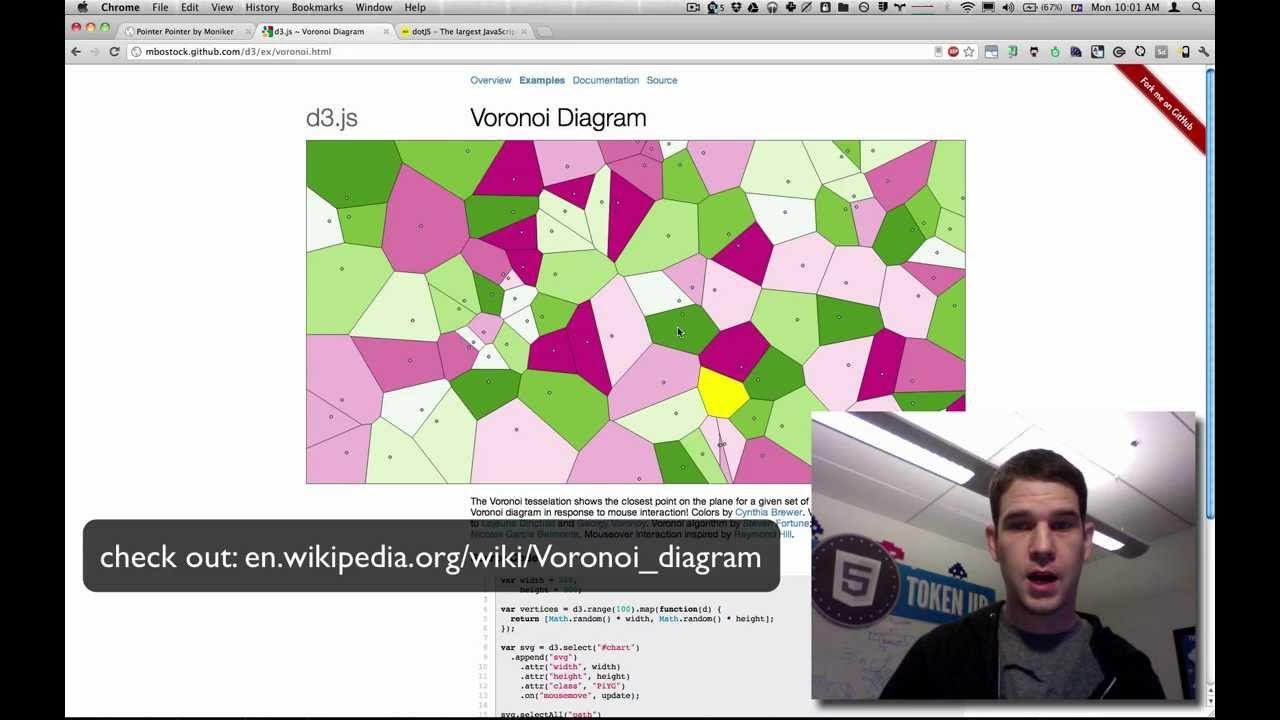
 pointerpointer.com's use of voronoi, canvas, and javascript - YouTube
https://www.youtube.com/watch?v=Z2ZXW2HBLPM
I explain a little bit behind how pointerpointer.com was built.
Can't believe I'd never seen this before, back in the day!
 Programmatics Paper Hex Calculator - Programmatics_Paper_Hex_Calculator.pdf
http://www.brutman.com/Programmatics_Paper_Hex_Calculator.pdf
 a blog by biggiemac42
https://btm.qva.mybluehost.me/building-arbitrary-life-patterns-in-15-gliders/
Select any pattern that can be built in Life – for example, the Waterbear. Begin with a small number of gliders (now 15) in an otherwise empty Game of Life universe. After enough time goes by, those gliders need to build that pattern. No extra leftover debris, no stray scaffolding, just a pure synthesis of whatever you chose.
a blog by biggiemac42
https://btm.qva.mybluehost.me/building-arbitrary-life-patterns-in-15-gliders
Select any pattern that can be built in Life – for example, the Waterbear. Begin with a small number of gliders (now 15) in an otherwise empty Game of Life universe. After enough time goes by, those gliders need to build that pattern. No extra leftover debris, no stray scaffolding, just a pure synthesis of whatever you chose.
 Imperfect Circles – Aesthetic imperfection with fractal subdivision | Rectangle World – HTML5 Canvas and JavaScript: Tutorials and Experiments
http://rectangleworld.com/blog/archives/413
Getting a computer to draw a shape in the way that a human would requires programming in some imperfection. The simple idea is to add in some randomization of drawing coordinates, which could be done in various ways. Below are two examples of imperfect circles drawn in an HTML5 canvas with JavaScript, where the imperfection has been added through the use of a fractal-like subdivision algorithm. The imperfection can be subtle, but it is enough to make the image appear to be human-drawn. Although the images are quite simple I find them quite nice to look at.
 Object/Object Intersection
http://www.realtimerendering.com/intersections.html
This page gives a grid of intersection routines for various popular objects, pointing to resources in books and on the web.
 Visual Multiplication with Lines -- Math Fun Facts
http://www.math.hmc.edu/funfacts/ffiles/10006.1.shtml
Here's a way to multiply numbers visually!
 Justin Ruckman - Fabergé Fractals by Tom Beddard, using his...
http://jruck.us/post/50942178068
Fabergé Fractals by Tom Beddard, using his WebGL-based fractal engine, Fractal Lab.
 Frog Fractions | Twinbeard Studios
http://twinbeardstudios.com/frog-fractions
This game is, what, i don't even. When you get the dragon, push down. Also, faceroll when you DDR
 general topology - Why can you turn clothing right-side-out? - Mathematics
http://math.stackexchange.com/questions/2755/why-can-you-turn-clothing-right-side-out
What properties must a garment have so that it can be turned inside-out and right-side-out?
 Persi Diaconis - Wikipedia, the free encyclopedia
http://en.wikipedia.org/wiki/Persi_Diaconis
"Persi Warren Diaconis (born January 31, 1945) is an American mathematician and former professional magician. He is the Mary V. Sunseri Professor of Statistics and Mathematics at Stanford University. He is particularly known for tackling mathematical problems involving randomness and randomization, such as coin flipping and shuffling playing cards."
 RANDOM.ORG - True Random Number Service
http://www.random.org
"Perhaps you have wondered how predictable machines like computers can generate randomness. In reality, most random numbers used in computer programs are pseudo-random, which means they are a generated in a predictable fashion using a mathematical formula. This is fine for many purposes, but it may not be random in the way you expect if you're used to dice rolls and lottery drawings."
 Converting Pi to binary - alt.math.recreational | Google Groups
http://groups.google.ch/group/alt.math.recreational/browse_thread/thread/814b73effc3d6a96/1e7724ff380e87d8#1e7724ff380e87d8
 And If You Direct Your Attention To The X-Axis, You'll Find I Have No Idea What I'm Talking About | The Onion - America's Finest News Source
http://www.theonion.com/content/opinion/and_if_you_direct_your
"In today's class, we'll be exploring the following principles: first, the Pythagorean theorem. Second, the reciprocal relationship between sine and cosine. And third, logarithmic functions and how they relate to me not having a damn clue what I've just said."
 Alkulukuja Paskova Karhu
http://alpha61.com/primenumbershittingbear
"The Prime Number Shitting Bear"
 Nabble - Re: why each erlang process sets 233 words as its default heap size?
http://www.nabble.com/Re%3A-why-each-erlang-process-sets-233-words-as-its-default-heap-size--p12803284.html
"The Erlang runtime system allocates memory for a process in increments of Fibonacci numbers."
 The NetIP Security Resource - Diffie-Helman Article
http://www.netip.com/articles/keith/diffie-helman.htm
"Each party raises the common number, which is 2 in this example ... to a random power and sends the result to the other. The received number is raised to the same random power. Note that both parties come up with the same secret key, which was never tran
 Strange but True: Infinity Comes in Different Sizes: Scientific American
http://www.sciam.com/article.cfm?articleID=DFCF15E5-E7F2-99DF-3EAAFAF2776CEFC5&chanID=sa029
"If you were counting on infinity being absolute, your number's up"
 The Tanooki » Blog Archive » Zelda Music of Golden Proportions
http://www.thetanooki.com/2007/03/03/zelda-music-of-golden-proportions
"the golden ratio is thought by many to represent a ratio of natural beauty. Buildings, human faces, and musical compositions that exhibit this ratio tend to be considered “beautiful,” regardless of whether or not the beholder realizes the presence of
 elephantintheway.jpg (JPEG Image, 604x452 pixels)
http://www.robmonroe.net/upload/2007/1/24/elephantintheway.jpg
"No. There is an elephant in the way."
 Solved: the perfect way to cut a cake - 06 November 2006 - New Scientist Tech
http://www.newscientisttech.com/article.ns?feedId=online-news_rss20&id=dn10452
"involve asking guests to tell the cake-cutter how they value different parts of the cake. For example, one guest may prefer chocolate, another may prefer marzipan."
 Polymathematics: No, I'm Sorry, It Does.
http://polymathematics.typepad.com/polymath/2006/06/no_im_sorry_it_.html
"Okay, so there's my rant. .9 repeating equals one. No, I'm sorry, it does."
 Amazon.com: Precalculus for Christian Schools: Books: Kathy D. Pilger,Ron Tagliapietra
http://www.amazon.com/gp/product/1579246141/104-3738331-5415167?n=283155&v=glance
"Worse than you may imagine"
 easing equations for dynamic tweening - ActionScript.org Forums
http://www.actionscript.org/forums/showthread.php3?s=&threadid=5312
"Here are the quadratic easing equations." Math for making things slide.
 WolframTones: How WolframTones Works
http://tones.wolfram.com/about/how.html
"WolframTones uses various Mathematica algorithms to form music out of cellular automaton patterns."
 MSN Encarta - Could You Pass 8th-Grade Math?
http://encarta.msn.com/quiz_95/Could_You_Pass_8th-Grade_Math.html
Yes, I did pass with 10/10. I had to work to remember a formula or two, but this ain't rocket science.
 Edge 165: A Madman Dreams of Turing Machines
http://www.edge.org/documents/archive/edge165.html#levin
"Gödel didn't believe that truth would elude us. He proved it would."
 PDL - The Perl Data Language
http://pdl.perl.org
"PDL (``Perl Data Language'') gives standard Perl the ability to compactly store and speedily manipulate the large N-dimensional data arrays which are the bread and butter of scientific computing."
 Cars in the next lane really do go faster
http://plus.maths.org/issue17/features/traffic/index.html
"Anthropic reasoning, the theory of how to detect, diagnose and cure the biases of observation selection effects, is a philosophical goldmine."
 Transfinite Numbers
http://www.anselm.edu/homepage/dbanach/infin.htm