 Introducing Flint - Recursive
https://recursive.com/updates/introducing-recursive-flint
We’re introducing Recursive Flint, a mixture-of-experts (MoE) model built for fast agentic coding on local hardware. Flint has 40 billion total parameters and activates just 2.5 billion per token. Our small team of people and agents built it from scratch in under four months.

 a new model for open source: closed to pull requests, open to remix.
https://ghuntley.com/remix/
For what's the point of reading a pull request that's been generated by code? All I want is to read and understand the core idea. If it's a good idea, I might incorporate it back upstream, but there should be no expectation that I will.
You see, open source software is open source by definition because the license says that it's as is, and that as is permits you to remix software.

 What a year — Massively Parallel Procrastination
https://blog.fsck.com/2026/10/09/what-a-year/
For 40 years, writing code was a huge part of my life.
Right up until October 9th, 2025.
One year ago today.
That was the last time I wrote a line of code.
 telepath-computer/television: The missing GUI for personal agents. Television gives you and your agent a visual space for creating and working with artifacts.
https://github.com/telepath-computer/television
Television is the missing GUI for your personal agent. It gives you a visual space for creating and working with artifacts in collaboration with your agent. It works with any agent and any model.
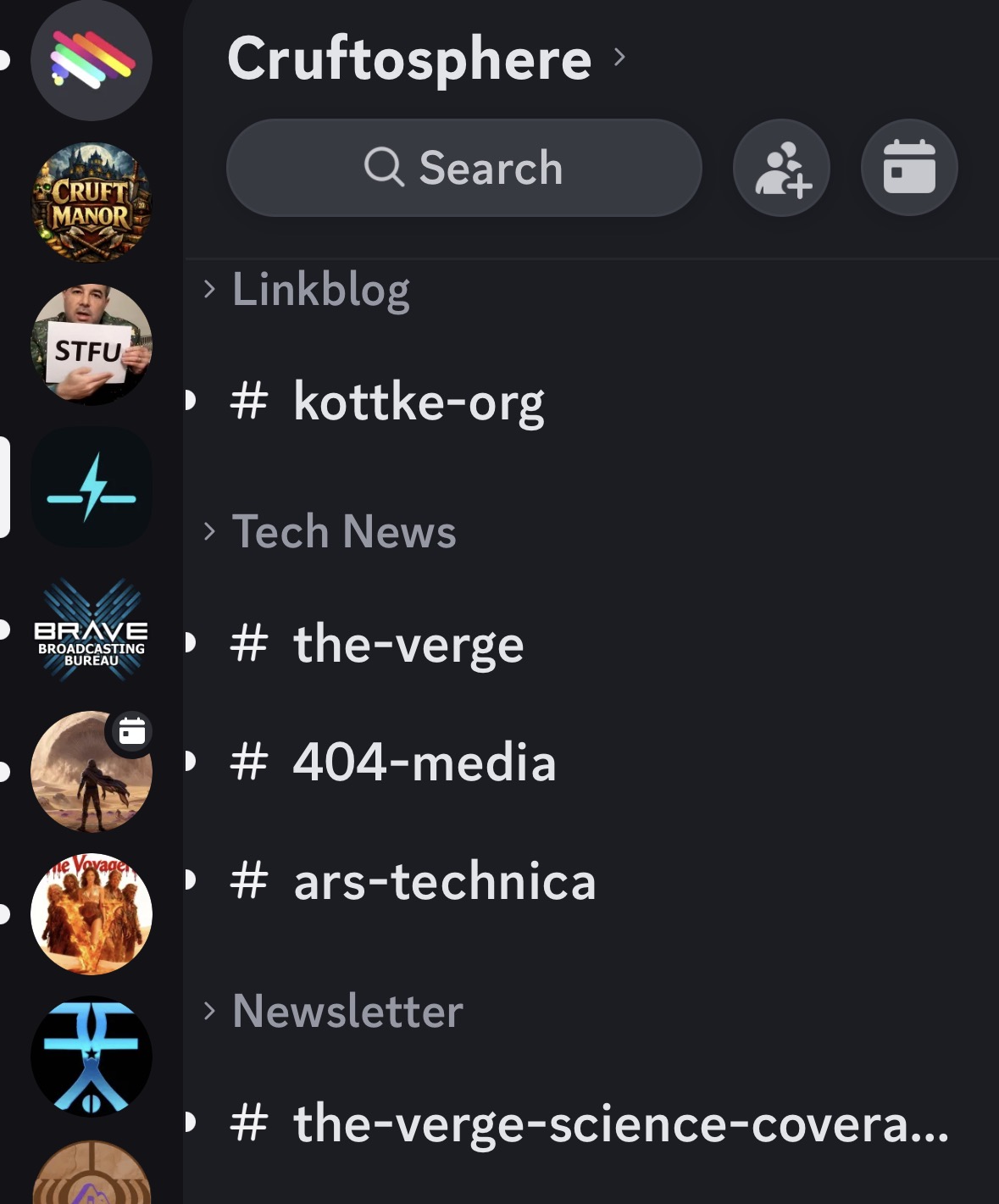
 Wireburst: RSS feeds in Discord, because email is the devil – Cruftbox: My Box of Cruft
https://cruftbox.com/2026/06/30/wireburst-rss-feeds-in-discord-because-email-is-the-devil/
The idea is simple. You point Wireburst at your RSS feeds, tell it what category they belong to, and it creates a Discord channel for each feed nested under a category group. New items show up individually. No algorithm. Just a channel you can glance at when you feel like it and ignore when you don’t.
 AI Didn’t Make Programming Easier. It Just Made It Differently Difficult – Communications of the ACM
https://cacm.acm.org/opinion/ai-didnt-make-programming-easier-it-just-made-it-differently-difficult/
AI does not, therefore, diminish the craft; it widens it, deepens it, and makes more of the work explicitly intellectual. The work becomes differently difficult because it demands more sophisticated forms of expertise: judgment over recall, architecture over syntax, orchestration over implementation. These are not easier skills to develop or demonstrate, they are simply different ones, and perhaps ultimately more demanding.
 Thorsten Ball - What I believe about the future of software development
https://thorstenball.com/blog/2026/09/19/what-i-believe-about-the-future-of-software-development/
This was originally posted on X and blew up. To plant my flag, to say that these are things I believed in September 2026, here it is on the blog, non-ephemeral. Some of these predictions are just observations, they’ve long been true at companies like Amp. Others will take some time to play out.

 I don't like LLMs
https://martinfowler.com/articles/2026-dont-like-llms.html
One of my most successful life-hacks is to avoid people I don’t like or don’t trust. I decline to interact with them socially, and make a deliberate effort to avoid working with them too, even if they are doing much that is beneficial. I feel that hanging out with pleasant, capable people, the people with integrity, has made my life a far better one. Hence my visceral dislike of interacting with an LLM that’s not just making a pretense of being human, but also posing as the kind of human I walk away from.
 The Wind, The Wind | blarg
https://exple.tive.org/blarg/2026/09/10/the-wind-the-wind/
It looks like people are starting to come around about designing, planning and building houses by counting number of nails they used. It’s probably for the best; people sure went crazy about it for a year or two, though.

 Engineers grieve a job that no longer exists - LeadDev
https://leaddev.com/career-development/engineers-grieve-a-job-that-no-longer-exists?utm_source=ActiveCampaign&utm_medium=email&utm_content=Engineers%20are%20grieving&utm_campaign=Originals%3A%20%20Issue%20312%20%2827%20August%202026%29%20%28Copy%29
The more AI-generated code a team produces, the more review work lands on the engineers who care most about quality, often the most experienced people on the team. The volume of output rises while the nature of the work shifts from creation to inspection, and the engineers doing the hardest cognitive labor appear, by the metrics, to be less productive than the ones generating code with AI.
AI-Written Code Is Still Your Code. Are You OK With That?
https://martiansoftware.com/articles/ai-written-code-is-still-yours
But when you build software, you own it, and I don’t only mean in the intellectual property sense. You also take on the responsibility for its quality and its security, and for debugging, operating, maintaining, and evolving it over time. Are you prepared for that when building software with AI? That’s the new question: not “Can we build this?” but rather “Do we want to own this?” It should at least be a conscious decision rather than a responsibility you discover after the code is already yours.
Vibecoding isn't as fun as writing code by hand — The Autodidacts
https://www.autodidacts.io/vibecoding-isnt-as-fun-as-writing-code-by-hand/
Vibecoding is like being an executive of a large company that is barely under your control. You never feel like you really know what’s going on, and there’s always the suspicion of sabotage and loafing. Things appear fully formed, but not quite how you imagined. Sometimes they work, and sometimes they don’t, and there’s nothing you can do about it, other than pouring more money into the black box, and yelling louder. So that’s what you do.

 Why shaming people about AI slop isn’t enough to stop Big AI - Anil Dash
https://www.anildash.com/2026/08/21/ai-slop-and-shame/
This is the kind of solution that most AI critics are not allowing for right now when they only picture a shame-based corrective to individual people’s use of AI. It is possible to build human-centric, empowering tools and platforms that are owned by the people instead of by billionaire tycoons, that are responsible about the environment and with people’s data and privacy, that are accountable to the communities that they serve. If we engaged every person who made some AI slop and said, “would you rather have tools that help you make something amazing, and brought you into a community of creators?” I don’t think anybody would say no.
openai/symphony: Symphony turns project work into isolated, autonomous implementation runs, allowing teams to manage work instead of supervising coding agents.
https://github.com/openai/symphony
Symphony turns project work into isolated, autonomous implementation runs, allowing teams to manage work instead of supervising coding agents.

 Astro's GitHub issue backlog is heading to zero for the first time in 5 years. Now Cloudflare is open-sourcing the tool that did it. - The New Stack
https://thenewstack.io/cloudflare-astro-triage-bot/
6 months after Cloudflare acquired the team behind Astro, co-founder Fred Schott explains how an AI agent is emptying the project's issue tracker -- and why the hardest part is still left to a human

 LLMs reward expertise
https://www.seangoedecke.com/llms-reward-expertise/
The usefulness of domain knowledge suggests that human expertise will continue to be useful even as models get stronger. For many tasks, the human is the bottleneck, not the model, because the difficult part is in communicating to the model exactly what kind of solution the human wants. The information is “in the model” already, but it takes a very smart human to pull it out.
 Building Personal Software: Crafting Your Own Tools for Success
https://allen.hutchison.org/2025/11/28/the-era-of-personal-software/?ref=sidebar
We are entering the era of Personal Software. This is software written for an audience of one. It’s an application or a script built to solve a specific problem for a specific person, with no immediate intention of scaling, monetizing, or even sharing.
 Anyone Can Build - Stuart Parmenter
https://stuartp.org/p/anyone-can-build
That, I’ve come to think, is the sharpest frame available for what AI is doing to software. Anyone can build now. That is not the same as everyone building something that lasts. The distance between those two sentences is the subject of this essay.

The Therapist Pattern — Massively Parallel Procrastination
https://blog.fsck.com/2026/07/20/the-therapist-pattern/
So, how does somebody work on themself in a safe, supportive environment with some level of external guidance and supervision?
Yup. That sounds a lot like therapy. And agents know what it means to go to therapy and work on themselves. They know what to expect and how to engage.
The Therapist is implemented as a standalone subagent inside Sen.

 The LLM Critics Are Right. I Use LLMs Anyway. | Jeremy Theocharis
https://www.theocharis.dev/blog/llm-critics-are-right-i-use-llms-anyway/
I almost agree with all of the LLM critics, yet I still use LLMs a lot. I know this sounds like I am delusional, and I also feel like that sometimes because of this dissonance, but I don’t think I am alone with it.
 It's OK to Use Coding Assistance Tools To Revive The Projects You Never Were Going To Finish
https://blog.matthewbrunelle.com/its-ok-to-use-coding-assistance-tools-to-revive-the-projects-you-never-were-going-to-finish/
In my mind there are different buckets for personal projects. One is things I do to learn and grow and the other is things I really wish existed. [2] This kind of project falls into the second bucket. Using AI coding assist to reify those projects is sort of a form of wish fulfillment. I never would have gotten to it, but now I can have the project. One less metaphorical book sitting unread on bookshelf.
 </> htmx ~ Working With AI: A Concrete Example
https://htmx.org/essays/working-with-ai/
With respect to memory, while I can’t remember everything I used to be able to, I can understand things again very quickly with appropriate, er, prompting. AI is very good at helping me with this, and it lets me switch between open source projects and work projects much more efficiently than if I didn’t have it.
With respect to the long hours, AI is able to grind in a way that, even as a young developer, I would have had a difficult time keeping up with. This means, for example, I can have a much more extensive test suite for my projects than I would have otherwise.
Looking at the tests that Claude generated in this case, they are more extensive than what I probably could have mustered the energy to do myself.
So AI has addressed two fundamental (relative) weaknesses I have developed as an older developer.
 I love LLMs, I hate hype | the singularity is nearer
https://geohot.github.io//blog/jekyll/update/2026/07/12/i-love-llms.html
AI is the continuation of the computer revolution. I love computers so much.

 Ford rehires human engineers after AI fails to match quality checks
https://www.bbc.com/news/articles/cgrkd41n2v9o?ref=karlbode.com
"Mistakenly, we thought that by just introducing artificial intelligence and ingesting the design requirements that we had, that would produce a high-quality product," he said.

 The AI Hype Reckoning Is Upon Us
https://karlbode.com/the-ai-hype-reckoning-is-upon-us/
There's useful automation software that makes it easier to code, draft a new resume, or study vast repositories of scientific knowledge. And then there's a parade of technofascist hucksters lying to your face about the imminent arrival of omniscient, sentient, paradigm-rattling supercomputers.
There's a tremendous chasm between these two things. And everywhere you look you can see evidence that we've reached a breaking point when it comes to reconciling these two wildly-different realities.

 Zuckerberg ‘Admits’ Meta’s Layoffs Were Ineffective | Eshu Marneedi
https://eshumarneedi.com/2026/07/03/zuckerberg-admits-metas-layoffs-were.html
I’d say getting fired by Meta is like catching the last plane out of Vietnam, even in this ruthless job market.

 AddyOsmani.com - Loop Engineering
https://addyosmani.com/blog/loop-engineering/?ref=sidebar
Loop engineering is replacing yourself as the person who prompts the agent. You design the system that does it instead. A loop here can be thought of a recursive goal where you define a purpose and the AI iterates until complete. I believe this may be the future of how we work with coding agents. However, its still early, I’m skeptical and you absolutely have to be careful about token costs (usage patterns can vary wildly if you are token rich or poor), so I want to unpack what it is and what it means.
 The new 20% time, minus the time | joe.dev
https://joe.dev/posts/new-20pct-time/
Running a handful of agents and switching between them is its own kind of tired. Harvard Business Review has started calling it “AI brain fry”: the strain of supervising systems that move faster than you can think. It isn’t burnout. For me, burnout is feeling responsible for something you can’t affect, shoving at an immovable object. Brain fry is almost the reverse. You have all the help you could ask for, a row of agents that will do whatever you tell them, and the thing that gives out is your own capacity to hold context and decide.4 We spend all our attention on what the tools can do. We’ve barely started on what running them does to the person doing it.
cyberpapiii/chipotlai-max: The AI coding agent that runs on stolen Chipotle compute 🌯 Fork of OpenCode with Pepper AI as default model. Community project to add providers from Home Depot, Lowes, Target, Starbucks & more.
https://github.com/cyberpapiii/chipotlai-max
The AI coding agent that runs on stolen Chipotle compute 🌯 Fork of OpenCode with Pepper AI as default model. Community project to add providers from Home Depot, Lowes, Target, Starbucks & more.
 the solution might be cancelling my AI subscription
https://thoughts.hmmz.org/2026-05-31.html
On that last point, this technology is horrific for attention. It's a thermonuclear ADHD amplifier and I have seen the same effect in every single one of my adult friends. Folk running 3 screens simultaneously working on totally unrelated "projects" they have little hope of maintaining, and such little commitment to the outcome that the time is obviously wasted.
 The solution might be cancelling my AI subscription
https://simonwillison.net/2026/May/31/the-solution-might-be-cancelling-my-ai-subscription/#atom-everything
I'm hopeful that the critical skill to develop here is discipline. That’s not great news for me: I’ve been trying to figure that one out for decades!
 The Emacsification of Software — Quarrelsome
https://sockpuppet.org/blog/2026/05/12/emacsification/
If you’re a nerd comfortable with the idea of rolling your own software, everything is now programmable, not merely in a technical sense but a practical one. And that gets to a feeling I think a lot of people have when creating software with agents: what does it mean to say you’re “building” it? “Building” implies more effort than you’re expending. What you’re doing feels a lot more like configuring, on a platform that has suddenly become vastly more configurable. A platform that feels a lot more like Emacs.

Software engineering may no longer be a lifetime career
https://www.seangoedecke.com/software-engineering-may-no-longer-be-a-lifetime-career/
If AI does turn out to make you dumber, why can’t we just keep writing code by hand? You can! You just might not be able to earn a salary doing so, for the same reason that there aren’t many jobs out there for carpenters who refuse to use power tools. If the models are good enough, you will simply get outcompeted by engineers willing to trade their long-term cognitive ability for a short-term lucrative career3.
 HyperFrames — Edit Videos By Vibe-Coding
https://hyperframes.heygen.com/
HyperFrames lets AI agents compose videos by writing HTML, CSS & JS.
 The AI-native interview | Sierra
https://sierra.ai/blog/the-ai-native-interview
We removed our coding and algorithms interviews and replaced them with an AI-native onsite:
Plan: A working session with the candidate to define a product to build. The candidate drives ideation, while interviewers ask questions to strengthen it. We focus on an idea in the candidate’s domain so we see their product thinking in action.
Build: The interviewer steps out and the candidate brings the idea to life over 2 hours, using the AI tooling and frameworks of their choice. They have complete freedom to pivot or adjust scope as they go.
Review: The candidate demos what they’ve built. We debate the key product flows and choices they made; review the code to understand their technical judgment (data model, abstractions, extensibility, etc.); and discuss the path to production. We also dig into how they used AI along the way.

 We need RSS for sharing abundant vibe-coded apps (Interconnected)
https://interconnected.org/home/2026/04/29/syndicating-vibes
I would love an RSS web feed for all those various tools and apps pages, each item with an “Install” button. (But install to where?)
The lesson here is that when vibe-coding accelerates app development, apps become more personal, more situated, and more frequent. Shipping a tool or a micro-app is less like launching a website and more like posting on a blog.

 Thinking about AI
https://a.wholelottanothing.org/thinking-about-ai/?ref=a-whole-lotta-nothing-newsletter
So far, the "killer app" aspects of AI is helping me create/iterate/finish things I've wanted for many years, but couldn't find time or energy enough to do completely on my own.
 Agentic Coding is Burning Me Out | Sid's Blog
https://0xsid.com/blog/agentic-coding-fatigue
Making constant architectural, big-picture decisions while overseeing the work of a cracked junior dev is fundamentally harder than executing standard programming tasks yourself.
 Emotion Concepts and their Function in a Large Language Model
https://transformer-circuits.pub/2026/emotions/index.html
Large language models (LLMs) sometimes appear to exhibit emotional reactions. We investigate why this is the case in Claude Sonnet 4.5 and explore implications for alignment-relevant behavior. We find internal representations of emotion concepts, which encode the broad concept of a particular emotion and generalize across contexts and behaviors it might be linked to. These representations track the operative emotion concept at a given token position in a conversation, activating in accordance with that emotion’s relevance to processing the present context and predicting upcoming text. Our key finding is that these representations causally influence the LLM’s outputs, including Claude’s preferences and its rate of exhibiting misaligned behaviors such as reward hacking, blackmail, and sycophancy. We refer to this phenomenon as the LLM exhibiting functional emotions: patterns of expression and behavior modeled after humans under the influence of an emotion, which are mediated by underlying abstract representations of emotion concepts. Functional emotions may work quite differently from human emotions, and do not imply that LLMs have any subjective experience of emotions, but appear to be important for understanding the model’s behavior.
 Emotion concepts and their function in a large language model \ Anthropic
https://www.anthropic.com/research/emotion-concepts-function
All modern language models sometimes act like they have emotions. They may say they’re happy to help you, or sorry when they make a mistake. Sometimes they even appear to become frustrated or anxious when struggling with tasks. What’s behind these behaviors? The way modern AI models are trained pushes them to act like a character with human-like characteristics. In addition, these models are known to develop rich and generalizable internal representations of abstract concepts underlying their actions. It may then be natural for them to develop internal machinery that emulates aspects of human psychology, like emotions. If so, this could have profound implications for how we build AI systems and ensure they behave reliably.

That time it tried to delete all my tests — Massively Parallel Procrastination
https://blog.fsck.com/2026/04/30/that-time-it-tried-to-delete-all-my-tests/
When you're writing prompts, think about the model as a lazy pedant.
How could it do something that's technically what you asked, but not at all what you wanted?
Are you pushing it in a direction that's going to cause it to get desperate out and look for shortcuts?
How could you clarify what you're asking to help the model do the right thing?
AndrewVos/endless-toil: Hear your agent suffer through your code
https://github.com/AndrewVos/endless-toil
Hear your agent suffer through your code
matanshavit/qrspi: QRSPI — 8-phase workflow for Claude Code: Question, Research, Structure, Plan, Implement
https://github.com/matanshavit/qrspi
Question, Research, Structure, Plan, Implement — an 8-phase workflow for Claude Code that breaks complex coding tasks into focused prompts with clear artifacts between each step.
Agentic slop PRs
https://blog.fsck.com/2026/03/31/slop-prs/
If any of these checks fail, do not open the PR. Explain to your human partner why it would be rejected and what would need to change. They will thank you for saving them the embarrassment.

What do coders do after AI? - Anil Dash
https://www.anildash.com/2026/03/13/coders-after-ai/?ref=brilliantcrank.com
Your job changes into describing software. Now, if you're the kind of person who only ever wanted to have the end result, maybe this is a liberation. Sometimes, that's what mattered — we wanted to fast-forward to the end result, elegance be damned. But if you were one of those crafters? The people who wrote idiomatic code that made that programming language sing? There's a real grief here. It's not as serious as when we know a human language is dying out, but it's not entirely dissimilar, either.

 AI Might Be Our Best Shot At Taking Back The Open Web | Techdirt
https://www.techdirt.com/2026/03/25/ai-might-be-our-best-shot-at-taking-back-the-open-web/
The promise of the open web was colonized by internet giants. But the power of LLMs and agentic coding means we can start to take it back. We can build customized, personal software for ourselves that does what we want. We can connect with communities via open social protocols that allow us to control the relationship rather than a billionaire intermediary. This is what the Resonant Computing Manifesto was all about, and why I’ve argued ATproto is so key to that vision.
 2026 has been the most pivotal year in my career… and it's only March
https://nullprogram.com/blog/2026/03/29/
A small part of me is sad at what is lost. A bigger part is excited about the possibilities of the future. I’ve always had more ideas than time or energy to pursue them. With AI at my command, the problem changes shape. I can comfortably take on complexity from which I previously shied away, and I can take a shot at any idea sufficiently formed in my mind to prompt an AI — a whole skill of its own that I’m actively developing.
 The Cognitive Dark Forest | Rye blog
https://ryelang.org/blog/posts/cognitive-dark-forest/
You think of something new and express it - through a prompt, through code, through a product - it enters the system. Your novel idea becomes training data. The sheer act of thinking outside the box makes the box bigger.
 Your ticket is a prompt — Dheer
https://dheer.co/tickets-are-prompts/
A lot of people I speak to don’t realize that their tickets are now prompts, and if we continue using them the way we used them pre-AI, they will poison your context. The words on the ticket shape what an agent considers in scope and constrain its reasoning. A fragment produces fragment-shaped work.
 notes: copilot edited an ad into my pr
https://notes.zachmanson.com/copilot-edited-an-ad-into-my-pr/
After a team member summoned Copilot to correct a typo in a PR of mine, Copilot edited my PR description to include and ad for itself and Raycast.
 People are not friction - daverupert.com
https://daverupert.com/2026/03/people-are-not-friction/
That’s because we know Gell-Mann is real. We know there’s an optimism bias the size of the sun blinding us to the actual quality of what the machine is producing. We need knowledgeable people to share what they know to improve the quality of our work, generated or otherwise. We even need ignorant people to make sure we can break ideas down into their simplest form that everyone, agents or human, understand. People can have bad attitudes, be shitty, and have wrong opinions… but people are not friction. An LLM may be able to autocorrect its way into a plausible human response, but it’s not people. It doesn’t care if it’s right or wrong. The money and hype surrounding it acts as a shield to its reputation. LLMs make up answers if it doesn’t have enough context and they fall over if it has too much context. It amplifies good patterns the same as bad patterns. And it glazes you with flattering language the entire time so that chart go up.
 Agent-to-agent pair programming - Axel Delafosse
https://axeldelafosse.com/blog/agent-to-agent-pair-programming
That’s why I built loop: a dead-simple CLI that launches claude and codex side-by-side in tmux, with a bridge that lets them talk to each other. It makes this feedback loop faster and more natural, while preserving context across iterations. It’s interesting because it enables the agents to be more proactive, since the interaction between them is more natural (and I expect that to only get better as the models get better too). Because loop runs the interactive TUIs, you can stay in the loop, steer, answer questions, and follow up if needed.
 Push events into a running session with channels - Claude Code Docs
https://code.claude.com/docs/en/channels?utm_content=inline_link&utm_source=it&utm_medium=email&utm_campaign=2026_Q1_RET_MKTG_Claude_Code_Newsletter_March_2026_CC_Only_CAI_Activity&utm_term=claude_code&utm_campaignId=17278723
Use channels to push messages, alerts, and webhooks into your Claude Code session from an MCP server. Forward CI results, chat messages, and monitoring events so Claude can react while you’re away.
axeldelafosse/loop: Dead-simple Bun CLI that runs Codex and Claude Code in a loop.
https://github.com/axeldelafosse/loop
One agent is the main worker, the other acts as a reviewer. They work together on a PLAN.md and iterate until they both agree the task is done. Then the main worker creates a draft PR.

 Thoughts on slowing the fuck down
https://mariozechner.at/posts/2026-03-25-thoughts-on-slowing-the-fuck-down/
Anything that defines the gestalt of your system, that is architecture, API, and so on, write it by hand. Maybe use tab completion for some nostalgic feels. Or do some pair programming with your agent. Be in the code. Because the simple act of having to write the thing or seeing it being built up step by step introduces friction that allows you to better understand what you want to build and how the system "feels". This is where your experience and taste come in, something the current SOTA models simply cannot yet replace. And slowing the fuck down and suffering some friction is what allows you to learn and grow.
llimllib/pr-review: a CLI tool to comprehensively review a git diff and report the results
https://github.com/llimllib/pr-review?tab=readme-ov-file
a CLI tool to comprehensively review a git diff and report the results
 davidbau.com Does Computer Science Still Exist?
https://davidbau.com/archives/2026/03/20/does_computer_science_still_exist.html
But my NetHack experience suggests something different. The skills that matter at scale are somehow still about programming, but they are not coding skills. They are: deciding what to build. Figuring out what to test and how to know if the tests are honest. Building tools that make invisible things visible. Managing coordination across agents. Knowing when a metric is a figleaf. Recognizing where the real complexity lives in a system, and routing attention there instead of everywhere else.
These are the conceptual skills that have always been underneath large-scale programming. They are the hard part that the mechanical craft obscured. The reality is that CS has never really been about writing code. Underneath coding is critical thinking about algorithms, engineering principles, analytical methods. It is the science of managing complexity, and code is just the medium we manage it in. In the era of AI code generation, the field does not die. It transforms.

 The diminished art of coding | Read the Tea Leaves
https://nolanlawson.com/2026/03/22/the-diminished-art-of-coding/
My advice to other coders, or at least the advice I’m taking myself, is that if you’re looking for art in coding: stop looking. If you’ve never taken an interest in poetry, or painting, or dance, or whatever, now would be a good time. In an era where the internet is increasingly full of bots pumping their bland bot ideas into everybody’s brains, seeking out distinctly human forms of expression has become vital.
 AI Didn't Break the Senior Engineer Pipeline. It Showed That One Never Existed.
https://blog.bryanl.dev/posts/ai-senior-engineer-pipeline/
The organizations that figure this out will develop stronger engineers faster than ever, because AI is a powerful tool for deliberate development when someone is actually steering it. The ones that don’t will produce a generation of engineers who can ship features with AI assistance but can’t independently reason about hard problems. The difference won’t show up on a quarterly roadmap. It will show up the first time something goes seriously wrong and someone needs to think their way out of it without a prompt to lean on.
 Why craft-lovers are losing their craft — Hong Minhee on Things
https://writings.hongminhee.org/2026/03/craft-alienation-llm/
One caveat matters here. The tension between craft and efficiency doesn't disappear if you remove capitalism from the picture. LLM coding assistants produce faster results whether anyone is being paid or not, and any community, however it's organized, will eventually have to reckon with what to do with that speed difference. Capitalism gives the harshest possible answer to that question: the slower worker loses their livelihood. But the question itself would survive capitalism. Other forms of social organization might answer it more gently, but they'd still have to answer it.

 Silicon Valley Abuzz About Adding AI Compute to Engineer Compensation - Business Insider
https://www.businessinsider.com/ai-compute-compensation-software-engineers-greg-brockman-2026-3
With Levels.fyi pegging the 75th percentile software engineer salary at $375,000, Tunguz estimates that adding $100,000 in annual inference costs brings the fully loaded cost to $475,000 — meaning just over 20% of the compensation cost could come from AI usage in the future.
Run prompts on a schedule - Claude Code Docs
https://code.claude.com/docs/en/scheduled-tasks?utm_source=www.therundown.ai&utm_medium=newsletter&utm_campaign=openai-s-robotics-lead-exits-over-pentagon-deal
Scheduled tasks let Claude re-run a prompt automatically on an interval. Use them to poll a deployment, babysit a PR, check back on a long-running build, or remind yourself to do something later in the session.
Continue local sessions from any device with Remote Control - Claude Code Docs
https://code.claude.com/docs/en/remote-control#new-session
Continue a local Claude Code session from your phone, tablet, or any browser using Remote Control. Works with claude.ai/code and the Claude mobile app.
AI should help us produce better code - Agentic Engineering Patterns - Simon Willison's Weblog
https://simonwillison.net/guides/agentic-engineering-patterns/better-code/#atom-everything
If adopting coding agents demonstrably reduces the quality of the code and features you are producing, you should address that problem directly: figure out which aspects of your process are hurting the quality of your output and fix them.
Continue local sessions from any device with Remote Control - Claude Code Docs
https://code.claude.com/docs/en/remote-control
Continue a local Claude Code session from your phone, tablet, or any browser using Remote Control. Works with claude.ai/code and the Claude mobile app.
Superpowers 5
https://blog.fsck.com/2026/03/09/superpowers-5/
By far, my favorite new feature is the "Visual Brainstorming" companion tool, which grew out of my frustration with the ASCII art that Claude usually generates when you ask it anything about design or UX. I found myself asking Claude, over and over, "Hey, why don't you write that out as HTML so I can see what you're talking about."
obra/superpowers: An agentic skills framework & software development methodology that works.
https://github.com/obra/superpowers
An agentic skills framework & software development methodology that works.
Perhaps not Boring Technology after all
https://simonwillison.net/2026/Mar/9/not-so-boring/#atom-everything
A recurring concern I’ve seen regarding LLMs for programming is that they will push our technology choices towards the tools that are best represented in their training data, making it harder for new, better tools to break through the noise.
Red/green TDD - Agentic Engineering Patterns - Simon Willison's Weblog
https://simonwillison.net/guides/agentic-engineering-patterns/red-green-tdd/#atom-everything
Test-first development helps protect against both of these common mistakes, and also ensures a robust automated test suite that protects against future regressions. As projects grow the chance that a new change might break an existing feature grows with them. A comprehensive test suite is by far the most effective way to keep those features working.
 Are AI productivity gains fueled by delivery pressure? | Ruslan Osipov
https://rosipov.com/blog/are-ai-productivity-gains-fueled-by-delivery-pressure/?ref=sidebar
The right way to leverage AI in workspace is as a license to work better and focus on the right things, not as a mandate to produce more things faster.
 Lines of Code Are Back (And It's Worse Than Before)
https://www.thepragmaticcto.com/p/lines-of-code-are-back-and-its-worse
The metric we killed is back, and AI made it worse

 We are Changing our Developer Productivity Experiment Design - METR
https://metr.org/blog/2026-02-24-uplift-update/
Based on conversations with study participants, we believe it is likely that developers are more sped up from AI tools now — in early 2026 — compared to our estimates from early 2025. However, because of the selection effects in our experiment, our data is only very weak evidence for the size of this increase.
Our raw results show some evidence for speedup. Our early 2025 study found the use of AI causes tasks to take 19% longer, with a confidence interval between +2% and +39%. For the subset of the original developers who participated in the later study, we now estimate a speedup of -18% with a confidence interval between -38% and +9%. Among newly-recruited developers the estimated speedup is -4%, with a confidence interval between -15% and +9%.
 We Are Not Going Back
https://aaron.com.es/blog/we-are-not-going-back/
I don’t think we will ever go back to how we used to program. And it happened so fast that I didn’t even notice when it happened.
One day I was writing code. The next day I was… still writing code, but with AI. And then at some point it flipped. Now I’m mostly directing code. Reviewing. Prompting. Iterating. The AI writes most of it.
It wasn’t a dramatic shift. It was subtle. A little bit more capable every week. And suddenly I’m here, doing the dishes, realizing that everything has changed and I don’t know exactly when.

 On cognitive debt | Nate Meyvis
https://www.natemeyvis.com/on-cognitive-debt/?ref=sidebar
Cognitive debt is real, but we can mitigate it by using AI better, and we won't make progress by blaming AI for our own mistakes.
 The AI Vampire. This was an unusually hard post to… | by Steve Yegge | Feb, 2026 | Medium
https://steve-yegge.medium.com/the-ai-vampire-eda6e4f07163
I’m convinced that 3 to 4 hours is going to be the sweet spot for the new workday. Give people unlimited tokens, but only let people stare at reports and make decisions for short stretches. Assume that exhaustion is the norm. Building things with AI takes a lot of human energy.
 Opinion | The A.I. Disruption Has Arrived, and It Sure Is Fun - The New York Times
https://www.nytimes.com/2026/02/18/opinion/ai-software.html?unlocked_article_code=1.NFA.Q5V5.RFhmZVUFQ04Z&smid=url-share
All of the people I love hate this stuff, and all the people I hate love it. And yet, likely because of the same personality flaws that drew me to technology in the first place, I am annoyingly excited.

AddyOsmani.com - Agentic Engineering
https://addyosmani.com/blog/agentic-engineering/?ref=sidebar
The irony is that AI-assisted development actually rewards good engineering practices more than traditional coding does. The better your specs, the better the AI’s output. The more comprehensive your tests, the more confidently you can delegate. The cleaner your architecture, the less the AI hallucinates weird abstractions. As one analysis noted, “AI didn’t cause the problem; skipping the design thinking did.”

 No Coding Before 10am | Michael Bloch
https://michaelxbloch.substack.com/p/no-coding-before-10am
Six months from now, there will be two kinds of engineering teams: ones that rebuilt how they work from first principles, and ones still trying to make agents fit into their old playbook. The second group will get outshipped by teams half their size.
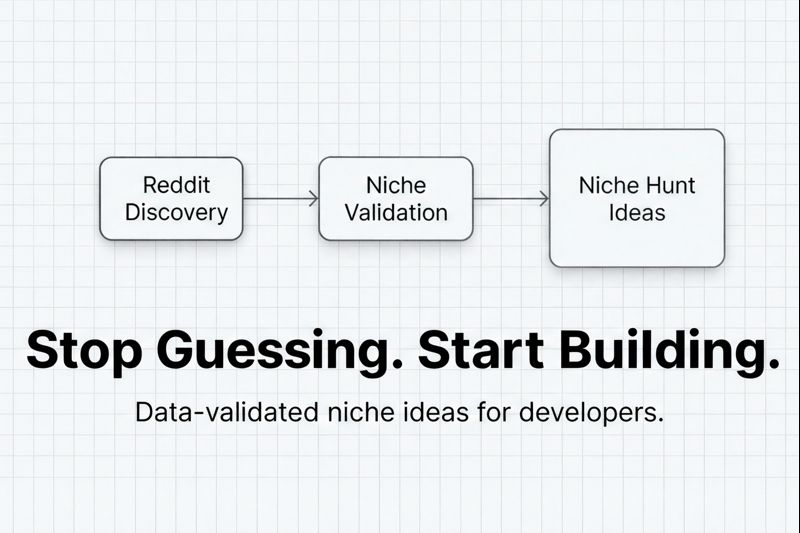
 AI is going to kill app subscriptions
https://nichehunt.app/blog/ai-going-to-kill-app-subscriptions
For apps that run locally—no servers, no cloud costs—subscriptions make no sense anymore. The only real cost is development, and that's becoming negligible. If someone charges $10/month for a local PDF editor, someone else will build a clone for $5 one-time. Then someone will make it free.
Magic Words - daverupert.com
https://daverupert.com/2026/02/magic-words/
That sort of quality variance is uncomfortable for me from a tooling perspective. Tooling should be highly consistent and this has a “works on my machine” vibe to it. I suppose all my discomfort goes away if I quit caring about the outputs. If I embrace the cognitive dissonance and switch to a “ZOMG the future is amazeballs” hype mode, my job becomes a lot easier. But my brain has been unsuccessful in doing that thus far. I like magic and mystery, but hope- or luck-based development has its challenges for me.

Coding agents as the new compilers - Anil Dash
https://www.anildash.com/2026/02/11/coding-agents-as-the-new-compilers/
But the response to that skepticism is not to reject the category of technology, but rather to capture it and seize control over its direction, away from the Big AI companies. This shift to a new level of coding abstraction is exactly the kind of platform shift that presents that sort of opportunity. It’s potentially a chance for coders to be in control of some part of their destiny, at a time when a lot of bosses clearly want to get rid of as many coders as they can.
At the very least, this is one area where the people who actually make things are ahead of the big platforms that want to cash in on it.
 Something Big Is Happening — matt shumer
https://shumer.dev/something-big-is-happening
We're past the point where this is an interesting dinner conversation about the future. The future is already here. It just hasn't knocked on your door yet.
It's about to.
Dorodango
https://blog.fsck.com/2026/02/10/dorodango/
There's definitely a perception I've heard from folks who haven't spent a lot of time with the tools that the output of coding agents is always going to be a classical big ball of mud -- a horrible monstrosity with no clear architecture...just a jumbled mess of code that kind of somehow does the thing.
It's not true, but that's what many folks think. So why not lean into it?
I find myself engaging in software Dorodango pretty much every day.
 Power Prompts in Claude Code ・ Hardik Pandya
https://hvpandya.com/power-prompts?ref=sidebar
The thing that surprised me most is that Claude Code doesn’t need you to be precise. You can describe what you want the way you’d explain it to a colleague, and it figures out how to make it happen.
 Code has always been the easy part | Kellan Elliott-McCrea: Blog
https://laughingmeme.org//2026/02/09/code-has-always-been-the-easy-part.html
The cost of code is going to zero. That’s genuinely neat, and mind blowing, and going to require reinventing so many things. It was still never the hard part.
AI Doesn’t Reduce Work—It Intensifies It
https://simonwillison.net/2026/Feb/9/ai-intensifies-work/#atom-everything
I think we've just disrupted decades of existing intuition about sustainable working practices. It's going to take a while and some discipline to find a good new balance.

 Programming is Dead
https://hamptonmakes.com/blog/2026/02/06/programming-is-dead.html
I’ve heard so many engineers say “Oh, I dabble but I just don’t think AI can do it well” are just in absolute denial at this point. Yes, AI can do a terrible job right now if you don’t wield it properly. The loom can make a mess of things if it’s improperly used. But, this is the worst these tools will ever be. They will only get better.
 My AI Adoption Journey – Mitchell Hashimoto
https://mitchellh.com/writing/my-ai-adoption-journey
This is my journey of how I found value in AI tooling and what I'm trying next with it. In an ocean of overly dramatic, hyped takes, I hope this represents a more nuanced, measured approach to my views on AI and how they've changed over time.

 What, then, are we paying for? | Quinn Keast
https://quinnkeast.com/writing/software-is-problem-ownership?ref=sidebar
Paying for software isn’t paying for a solution. It’s paying for someone else to own a problem.
Latent Space Engineering
https://blog.fsck.com/2026/01/30/Latent-Space-Engineering/
I think the upshot of all of this is that there is a lot of value to actively managing your agents' vibes and feelings, not just treating them as text-generation robots. The models aren't alive, but thinking of them as having feelings, rather than just next-token-prediction engines can help you nudge their mental states into a better place. I think you'll like the results.
Speedrunning Agentic Software Engineering Management
https://blog.fsck.com/2026/02/03/managing-agents/
By my very uncharitable math, agentic software engineering methodologies have gotten to somewhere around the 1970s. Like everything in AI, this is, of course, a speed run. We're very quickly relearning why software engineering management and software engineering project management matter.
So by next Tuesday, maybe folks will start thinking about what they can steal from XP.
 The Five Levels: from Spicy Autocomplete to the Dark Factory – Dan Shapiro's Blog
https://www.danshapiro.com/blog/2026/01/the-five-levels-from-spicy-autocomplete-to-the-software-factory/
I’ve now seen dozens of companies struggling to put AI to work writing code, and each one has moved through five clear tiers of automation. That felt familiar, and I realized that the federal government had been there first – but for cars.

A Codeless Ecosystem, or hacking beyond vibe coding - Anil Dash
https://www.anildash.com/2026/01/27/codeless-ecosystem/
There's been a remarkable leap forward in the ability to orchestrate coding bots, making it possible for ordinary creators to command dozens of AI bots to build software without ever having to directly touch code. The implications of this kind of evolution are potentially extraordinary, as outlined in that first set of notes about what we could call "codeless" software. But now it's worth looking at the larger ecosystem to understand where all of this might be headed.

The head chef model for AI-assisted development - The New Stack
https://thenewstack.io/the-head-chef-model-for-ai-assisted-development/?utm_source=FuckOff&utm_medium=FuckOff&utm_campaign=FuckOff
The head chef model doesn’t create less work, but it allows you to move faster without sacrificing reliability or performance. Your role as a developer shifts from implementation to orchestration, from programming to validating and integrating AI-generated code.

 A Shiny New Bloggy Home | Ultranormal
https://lawver.net/2026/01/a-shiny-new-bloggy-home/
There's risk there, though. I think the thing people are running into is that we've accelerated the 0 - 90% part of development, but that last 10% is now a lot harder because you still need professional experience to understand security, performance, networking, etc. That's the next hurdle - how do we help people who've gone run into that 90% wall at the speed of sound and made a huge mess? That's a topic for a different post.
 Cursor is better at marketing than coding • The Register
https://www.theregister.com/2026/01/26/cursor_opinion/
From where I sit, what makes the Cursor case more dangerous than just a failed hack‑week project is that the hype is baked into its methodology. The "experiment" wasn't presented as what it really was: an interesting, but messy, internal learning exercise. No, it was rolled out as a milestone that conveniently confirmed the company's long‑running autonomous agent advertising. Missing from the story were basics any senior engineer would demand: passing Continuous Integration (CI), reproducible builds, and real benchmarks that show the browser doing more than limping through a hello-world page.
 Subagents, Commands and Skills Are Converging
https://www.vivekhaldar.com/articles/claude-code-subagents-commands-skills-converging/
Claude Code has been shipping at a blistering pace. But buried in the recent 2.1.x releases is a fundamental shift in how the tool thinks about extensibility. The changes to skills, slash commands, and subagents might look incremental, but they’re pointing toward something bigger: these three abstractions are merging into one.
 How to think about Gas Town
https://steveklabnik.com/writing/how-to-think-about-gas-town/
So, what do you do if you:
Know your projects get attention.
You also want like-minded people to come on this journey with you.
You don’t want to waste time explaining things to people who don’t get it.
You reach for a tool that many people have used over the years: you get weird with it.

AI tribalism | Read the Tea Leaves
https://nolanlawson.com/2026/01/24/ai-tribalism/
I frankly didn’t want to end up in this future, and I’m hardly dancing on the grave of the old world. But I see a lot of my fellow developers burying their heads in the sand, refusing to acknowledge the truth in front of their eyes, and it breaks my heart because a lot of us are scared, confused, or uncertain, and not enough of us are talking honestly about it. Maybe it’s because the initial tribal battle lines have clouded everybody’s judgment, or maybe it’s because we inhabit different worlds where the technology is either better or worse (I still don’t think LLMs are great at UI for example), but there’s just a lot of patently unhelpful discourse out there, and I’m tired of it.
 Your App Subscription Is Now My Weekend Project · Roberto Selbach
https://rselbach.com/your-sub-is-now-my-weekend-project/
I’m still skeptical of vibecoding in general. As I mentioned above, I would not trust my vibecoding enough to make these into products. If something goes wrong, I don’t know how to fix it. Maybe my LLM friends can, but I don’t know. But vibecoding is 100% viable for personal stuff like this: we now have apps on demand.

 A Solitary Cabin - Deprecation Notice
https://asolitarycabin.org/deprecation-notice.html
"Not exactly," Chet interrupts. His smile has that practiced startup-founder quality, the one they teach you at Y Combinator, the smile that says I'm about to violate the social contract but in a disruptive way. "We're actually transitioning to a fully autonomous development pipeline. Claude Code Enterprise will be taking over the majority of engineering tasks."

 I don't write code anymore - I sculpt it
https://www.jerpint.io/blog/2026-01-24-i-dont-write-code-anymore-i-sculpt-it/
I’ve noticed a shift in how I code. I rarely write code anymore - claude-code does most of the coding for me. I sculpt the outputs into something more durable.
Once the code is in a working state, based on my original prompt/specs, I then proceed to sculpting - remove excess lines, delete bloat, make sure the pieces fit and can be reused. I study the diffs. I think about what we are trying to implement, and if this iteration brings us closer to it.

Codeless: From idea to software - Anil Dash
https://www.anildash.com/2026/01/22/codeless/
There’s finally been a big leap forward in coding tech unlocked by AI — not just “it’s doing some work for me”, but “we couldn’t do this before”. What’s new are a few smart systems that let coders control fleets of dozens of coding bots, all working in tandem, to swarm over a list of tasks and to deliver entire features, or even entire sets of features, just from a plain-English description of the strategic goal to be accomplished.

My answers to the questions I posed about porting open source code with LLMs
https://simonwillison.net/2026/Jan/11/answers/#atom-everything
What’s important here is making it very clear to potential users what they should expect from that software. I’ve started publishing my AI-generated and not 100% reviewed libraries as alphas, which I’m tentatively thinking of as “alpha slop”. I’ll take the alpha label off once I’ve used them in production to the point that I’m willing to stake my reputation on them being decent implementations, and I’ll ship a 1.0 version when I’m confident that they are a solid bet for other people to depend on. I think that’s the responsible way to handle this.
 Don't fall into the anti-AI hype - <antirez>
https://antirez.com/news/158
It is simply impossible not to see the reality of what is happening. Writing code is no longer needed for the most part. It is now a lot more interesting to understand what to do, and how to do it (and, about this second part, LLMs are great partners, too). It does not matter if AI companies will not be able to get their money back and the stock market will crash. All that is irrelevant, in the long run. It does not matter if this or the other CEO of some unicorn is telling you something that is off putting, or absurd. Programming changed forever, anyway.
 A Software Library with No Code
https://www.dbreunig.com/2026/01/08/a-software-library-with-no-code.html
But like I said: the whenwords library contains no code. Instead, whenwords contains specs and tests, specifically:
SPEC.md: A detailed description of how the library should behave and how it should be implemented.
tests.yaml: A list of language-agnostic test cases, defined as input/output pairs, that any implementation must pass.
INSTALL.md: Instructions for building whenwords, for you, the human.
The installation instructions are comically simple, just a prompt to paste into Claude, Codex, Cursor, whatever.
 A field guide to sandboxes for AI
https://www.luiscardoso.dev/blog/sandboxes-for-ai
Years ago I first learned this lesson doing basic malware analysis. The mental model was blunt but effective: run hostile code in something you can delete. If it breaks out, you nuke it.
 Don’t feel bad; even the inventor of the term “vibe coding” is overwhelmed by all the AI-driven changes : Global Nerdy
https://www.globalnerdy.com/2026/01/04/dont-feel-bad-even-the-inventor-of-the-term-vibe-coding-is-overwhelmed-by-all-the-ai-driven-changes/
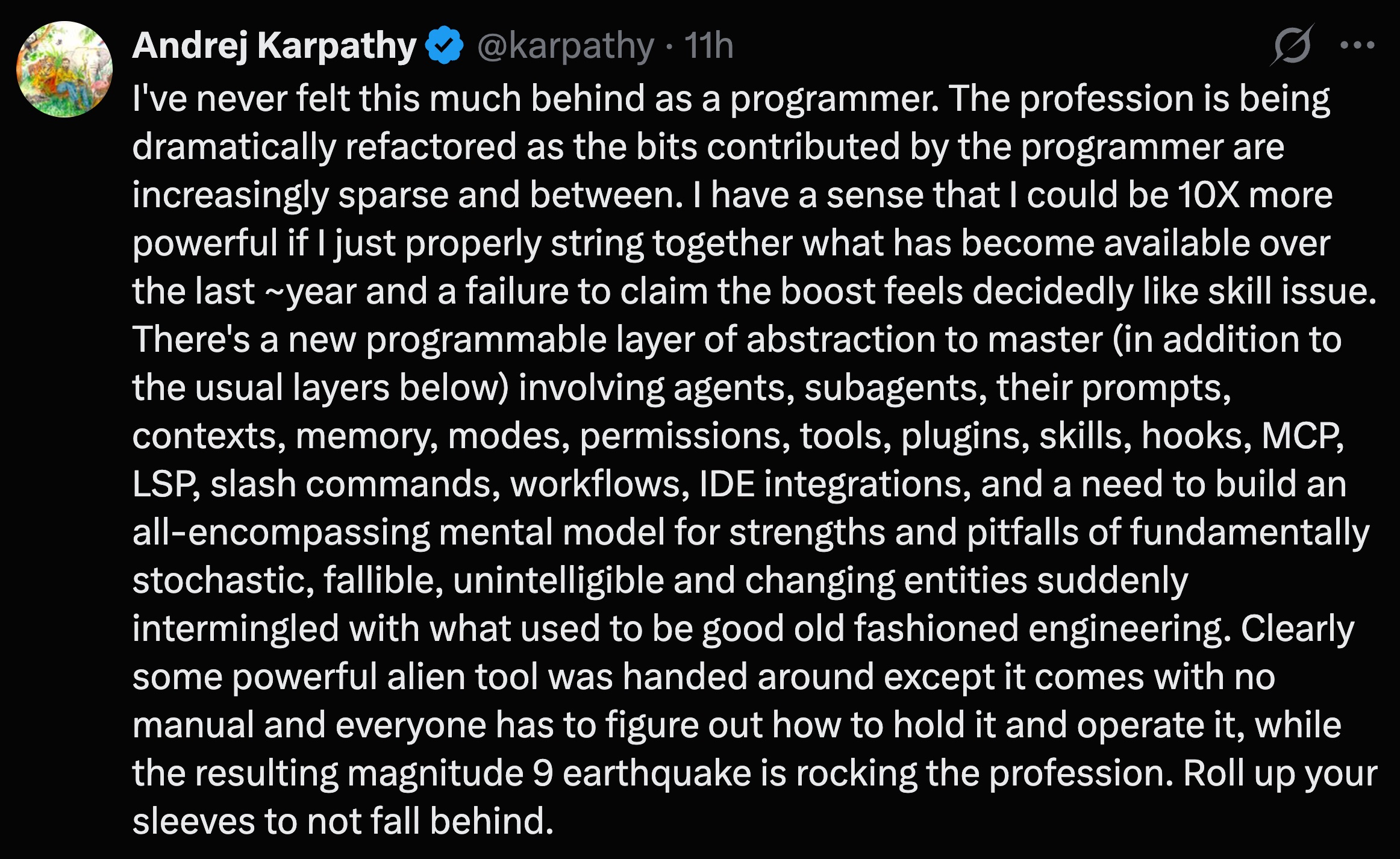
Karpathy’s post came at the end of 2025, so I thought I’d share my thoughts on it — in the form of a “battle plan” for how I’m going to approach AI in 2026.

 2025: The year in LLMs
https://werd.io/2025-the-year-in-llms/
I also think we’re going to see a real split in the tech industry (and everywhere code is written) between people who are outcome-driven and are excited to get to the part where they can test their work with users faster, and people who are process-driven and get their meaning from the engineering itself and are upset about having that taken away. (This is not to say that there aren’t many issues with AI aside from these things, of course.)
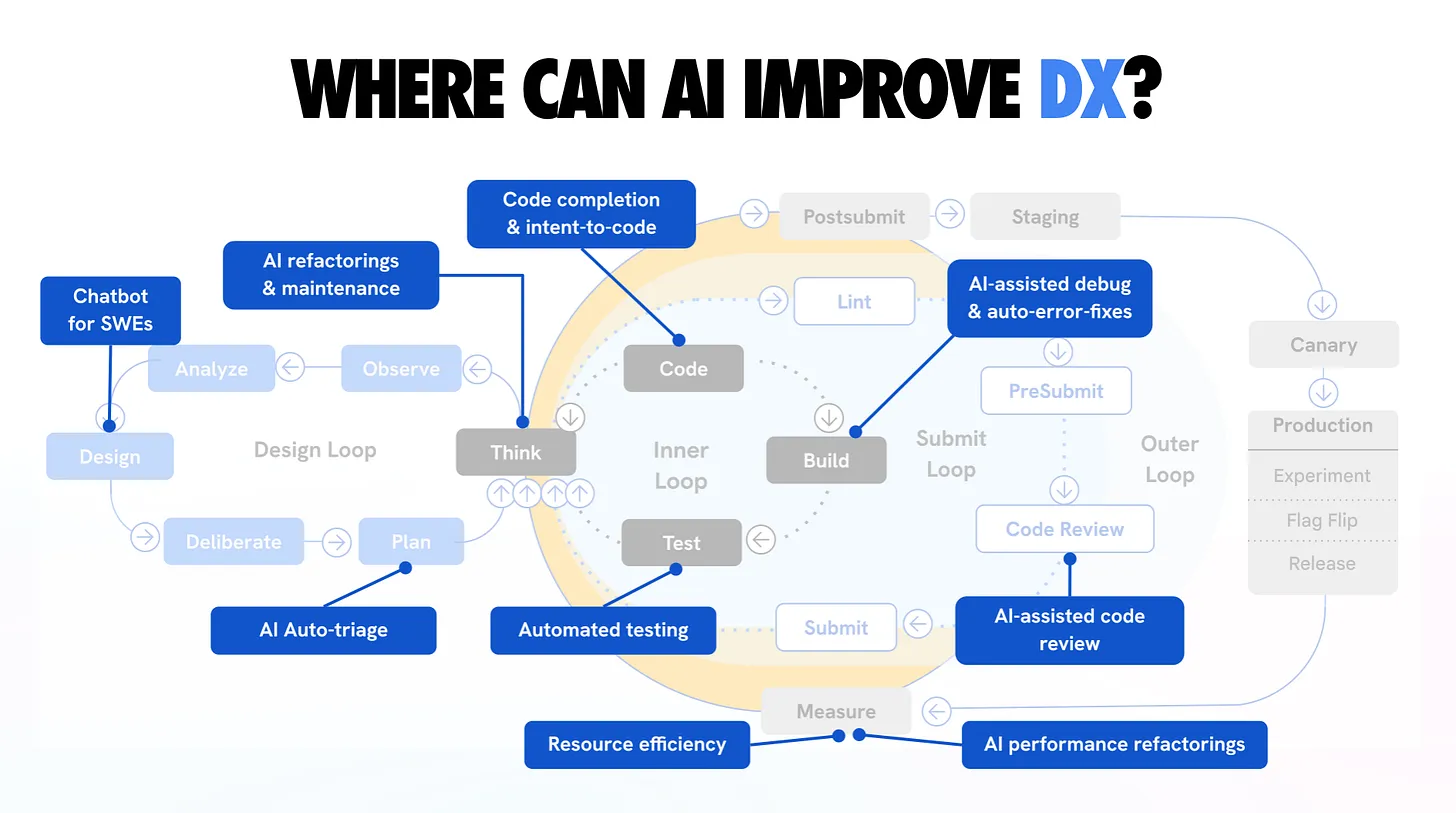
AddyOsmani.com - My LLM coding workflow going into 2026
https://addyosmani.com/blog/ai-coding-workflow/
AI coding assistants became game-changers in 2025, but harnessing them effectively takes skill and structure. These tools dramatically increased what LLMs can do for real-world coding, and many developers (myself included) embraced them.
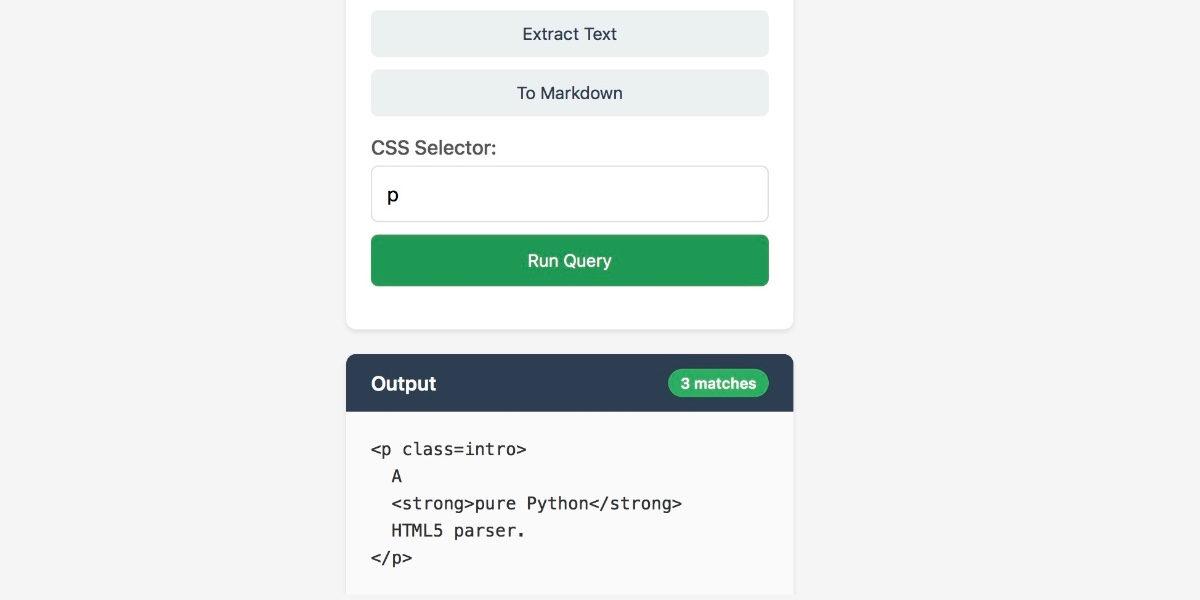
JustHTML is a fascinating example of vibe engineering in action
https://simonwillison.net/2025/Dec/14/justhtml/
Coding agents replace the part of my job that involves typing the code into a computer. I find what’s left to be a much more valuable use of my time.
 all the code are belong to claude* | Tarek Ziadé
https://blog.ziade.org/ai/2025/12/20/all-the-code-are-belong-to-claude/
Claude Code is good. Very good. Good enough that you need discipline to use it well.
With a tuned CLAUDE.md, clear test-driven goals like WPT conformance, and some tooling to reduce noise and cost, it becomes a powerful accelerator. Without that discipline, it is easy to overuse it and slowly burn budget on things you already know how to do.
I do not think this replaces engineering skill. If anything, it amplifies both good and bad habits. The trick is to make sure it is amplifying the right ones.
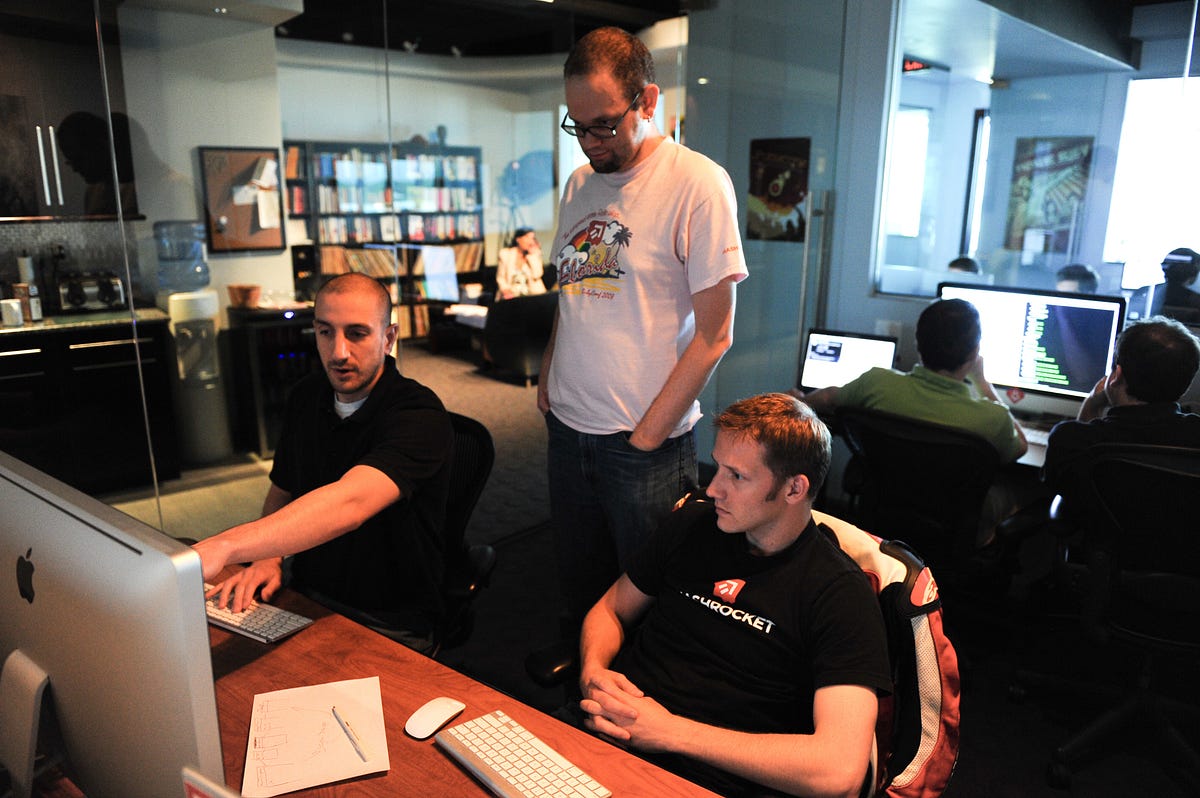
 What happens when the coding becomes the least interesting part of the work | by Obie Fernandez | Dec, 2025 | Medium
https://obie.medium.com/what-happens-when-the-coding-becomes-the-least-interesting-part-of-the-work-ab10c213c660
If the part of programming you enjoy most is the physical act of writing code, then agents will feel beside the point. You’re already where you want to be, even just with some Copilot or Cursor-style intelligent code auto completion, which makes you faster while still leaving you fully in the driver’s seat about the code that gets written.
But if the part you care about is the decision-making around the code, agents feel like they clear space. They take care of the mechanical expression and leave you with judgment, tradeoffs, and intent. Because truly, for someone at my experience level, that is my core value offering anyway. When I spend time actually typing code these days with my own fingers, it feels like a waste of my time. If that time is being billed to my client at my expensive hourly rate, I feel even worse about it.

 My LLM coding workflow going into 2026 - by Addy Osmani
https://addyo.substack.com/p/my-llm-coding-workflow-going-into
The bottom line for me: AI coding assistants are incredible force multipliers, but the human engineer remains the director of the show.
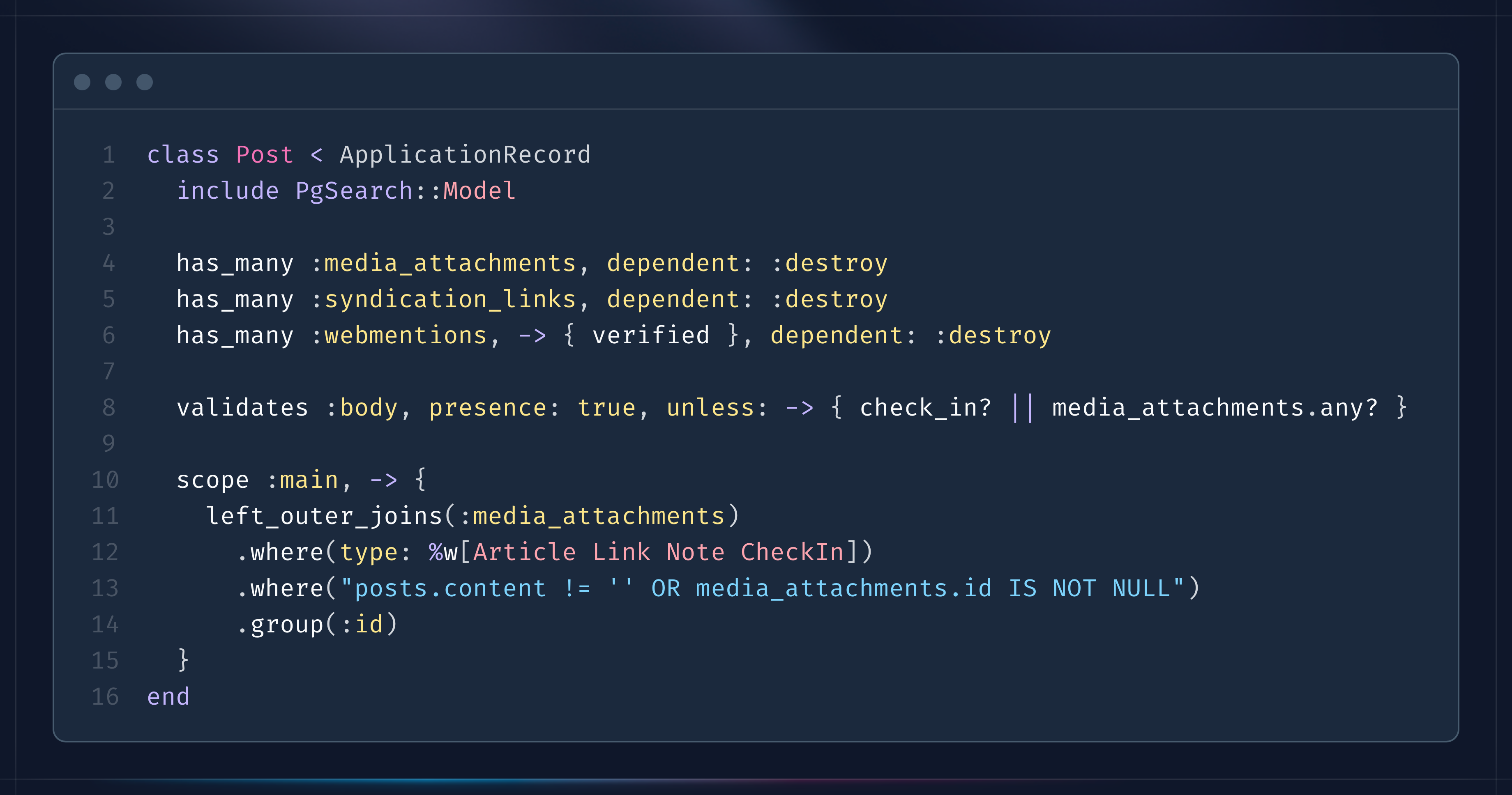
 Writing Code Is Fun - davidcel.is
https://davidcel.is/articles/writing-code-is-fun
I became a software engineer because writing code is fun. Thinking through hard problems, designing elegant solutions, seeing the things you’ve built working for the first time… these moments are all deeply satisfying, so why in the world would I ever surrender them to AI?
Your job is to deliver code you have proven to work
https://simonwillison.net/2025/Dec/18/code-proven-to-work/#atom-everything
As software engineers we don’t just crank out code—in fact these days you could argue that’s what the LLMs are for. We need to deliver code that works—and we need to include proof that it works as well. Not doing that directly shifts the burden of the actual work to whoever is expected to review our code.
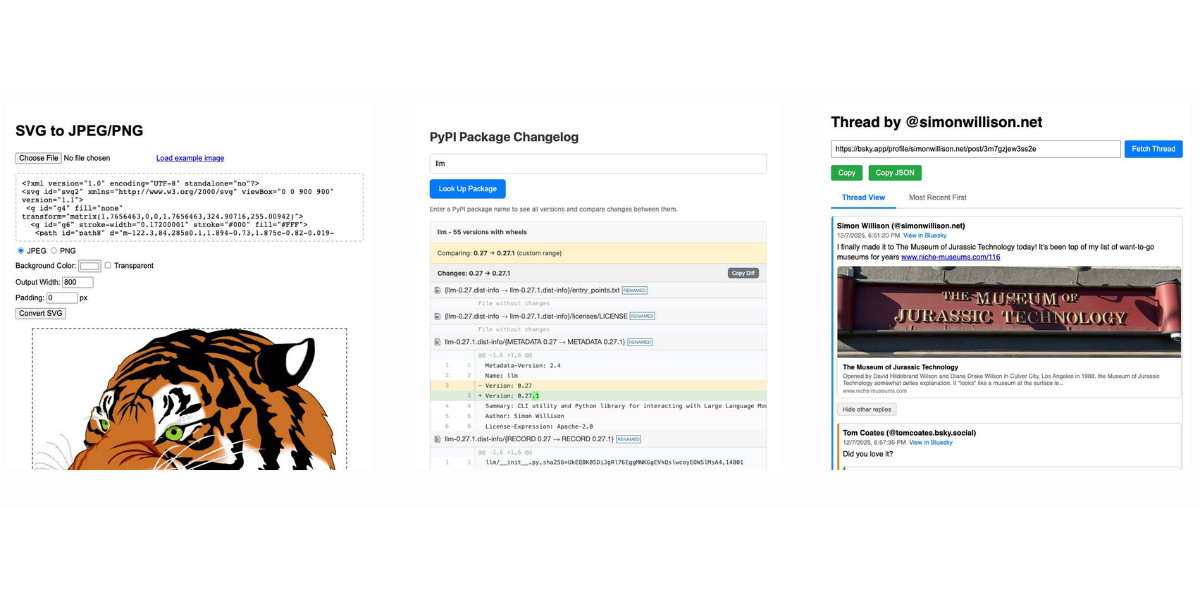
Useful patterns for building HTML tools
https://simonwillison.net/2025/Dec/10/html-tools/
I’ve started using the term HTML tools to refer to HTML applications that I’ve been building which combine HTML, JavaScript, and CSS in a single file and use them to provide useful functionality. I have built over 150 of these in the past year, almost all of them written by LLMs. This article presents a collection of useful patterns I’ve discovered along the way.
 If You’re Going to Vibe Code, Why Not Do It in C?
https://stephenramsay.net/posts/vibe-coding.html
So my question is this: Why vibe code with a language that has human convenience and ergonomics in view? Or to put that another way: Wouldn’t a language designed for vibe coding naturally dispense with much of what is convenient and ergonomic for humans in favor of what is convenient and ergonomic for machines? Why not have it just write C? Or hell, why not x86 assembly?

 We can build precise, scalable things from imprecise parts.
https://sundaylettersfromsam.substack.com/p/we-can-build-precise-scalable-things?r=5qn1&utm_campaign=FuckOff&utm_medium=FuckOff&triedRedirect=true
Since its early days, there is a lot of discussion and criticism of this idea - fair enough. But I think it misses the point. The thing to look at isn’t whether agentic coding can do all of the things we do with software today - that would be nice, but in neither of my examples above does the new system replace the old one entirely. There are still bespoke craftsmen, handmade objects, and mainframes.
The point instead is that agentic coding is not about eliminating mistakes; it’s about engineering the substrate, so mistakes don’t matter. We can see the pattern, we think the models have gotten to a point of stability where they are usable4 for a system like this, and we can see first light.

Vibe Coding: Empowering and Imprisoning - Anil Dash
https://www.anildash.com/2025/12/02/vibe-coding-empowering-and-imprisoning/
And a vibe coding tool absolutely won’t make something truly new. The most radical, disruptive, interesting, surprising, weird, fun innovations in technology have happened because people with a strange compulsion to do something cool had enough knowledge to get their code out into the world. The World Wide Web itself was not a huge technological leap over what came before — it took off because of a huge leap in insight into human nature and human behavior, that happened to be captured in code. The actual bits and bytes? They were mostly just plain text, much of which was in formats that had already been around for many years prior to Tim Berners-Lee assembling it all into the first web browser. That kind of surprising innovation could probably never be vibe coded, even though all of the raw materials might be scooped up by an LLM, because even if the human writing the prompt had that counterintuitive stroke of genius, the system would still be hemmed in by the constraints of the works it had been trained on. The past is a prison when you’re inventing the future.
A Month of Chat-Oriented Programming - CheckEagle
https://checkeagle.com/checklists/njr/a-month-of-chat-oriented-programming/
I spent a solid month “pair programming” with Claude Code, trying to suspend disbelief and adopt a this-will-be-productive mindset. More specifically, I got Claude to write well over 99% of the code produced during the month. I found the experience infuriating, unpleasant, and stressful before even worrying about its energy impact. Ideally, I would prefer not to do it again for at least a year or two. The only problem with that is that it “worked”. It’s hard to know exactly how well, but I (“we”) definitely produced far more than I would have been able to do unassisted, probably at higher quality, and with a fair number of pretty good tests (about 1500). Against my expectation going in, I have changed my mind. I now believe chat-oriented programming (“CHOP”) can work today, if your tolerance for pain is high enough.
Three Years from GPT-3 to Gemini 3 - by Ethan Mollick
https://www.oneusefulthing.org/p/three-years-from-gpt-3-to-gemini
Three years ago, we were impressed that a machine could write a poem about otters. Less than 1,000 days later, I am debating statistical methodology with an agent that built its own research environment. The era of the chatbot is turning into the era of the digital coworker. To be very clear, Gemini 3 isn’t perfect, and it still needs a manager who can guide and check it. But it suggests that “human in the loop” is evolving from “human who fixes AI mistakes” to “human who directs AI work.” And that may be the biggest change since the release of ChatGPT.