
 a new model for open source: closed to pull requests, open to remix.
https://ghuntley.com/remix/
For what's the point of reading a pull request that's been generated by code? All I want is to read and understand the core idea. If it's a good idea, I might incorporate it back upstream, but there should be no expectation that I will.
You see, open source software is open source by definition because the license says that it's as is, and that as is permits you to remix software.
 KiwiIRC - The webIRC client
https://kiwiirc.com/
KiwiIRC makes Web IRC easy.
A hand-crafted IRC client that you can enjoy. Designed to be used easily and freely.
 Why there are no releases? · nvim-treesitter/nvim-treesitter · Discussion #8627
https://github.com/nvim-treesitter/nvim-treesitter/discussions/8627
> So please, do go switch to something that doesn't require interacting with people.
OK.

 Is the Future of AI Local? | Tom Bedor's Blog
https://tombedor.dev/open-source-models/
If they can gain parity with hosted alternatives, local open source models have a compelling value proposition: fast, private, and free. This possibility has not gotten much attention: no one stands to get mega-rich from them. But the threat to current leaders is a potent one.
 AI and Trust - Schneier on Security
https://www.schneier.com/blog/archives/2023/12/ai-and-trust.html
A public model is a model built by the public for the public. It requires political accountability, not just market accountability. This means openness and transparency paired with a responsiveness to public demands. It should also be available for anyone to build on top of. This means universal access. And a foundation for a free market in AI innovations. This would be a counter-balance to corporate-owned AI.
We can never make AI into our friends. But we can make them into trustworthy services—agents and not double agents. But only if government mandates it. We can put limits on surveillance capitalism. But only if government mandates it.
 Deciphering Glyph :: The Next Thing Will Not Be Big
https://blog.glyph.im/2026/01/the-next-thing-will-not-be-big.html
So, please design your open source libraries, applications, and services to run on smaller devices, with less complexity. It will be worth your time as well as your users’.
 My answers to the questions I posed about porting open source code with LLMs
https://simonwillison.net/2026/Jan/11/answers/#atom-everything
What’s important here is making it very clear to potential users what they should expect from that software. I’ve started publishing my AI-generated and not 100% reviewed libraries as alphas, which I’m tentatively thinking of as “alpha slop”. I’ll take the alpha label off once I’ve used them in production to the point that I’m willing to stake my reputation on them being decent implementations, and I’ll ship a 1.0 version when I’m confident that they are a solid bet for other people to depend on. I think that’s the responsible way to handle this.
Self-Hosting for Everyone: A Beginner-Friendly Guide to Hosting Your Own Services
https://blog.laurahargreaves.com/self-hosting-for-everyone/
A growing number of people are discovering that hosting their own services - from a personal cloud to a blog or social platform - is empowering, surprisingly affordable, and a brilliant way to learn how the internet actually works.
About KeePassXC’s Code Quality Control – KeePassXC
https://keepassxc.org/blog/2025-11-09-about-keepassxcs-code-quality-control/
So please, be skeptical of AI. But also be skeptical of human strangers as we are to you. If our AI policy toppled your trust in us, ask yourself why you trusted us (or anyone) in the first place. You don’t know us, you trust our reputation, and we earned that by building a stable product, which we will continue to do. You have our full commitment that we will not integrate any AI features into KeePassXC, and we will not merge any code (human or AI) without tests and thorough review. We have high standards; please continue holding us to them, but let’s have a rational and informed conversation.
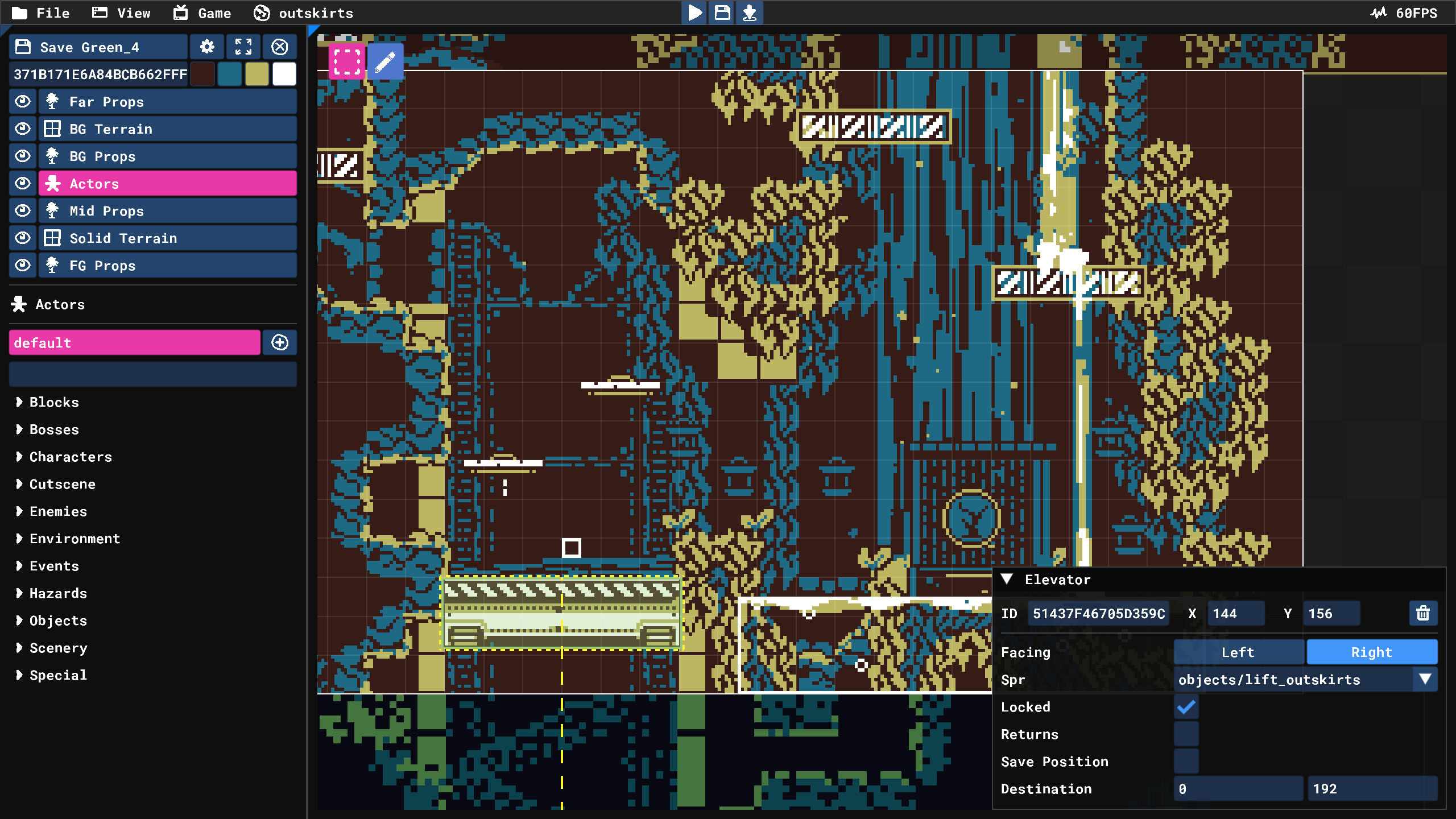
 Making Video Games in 2025 (without an engine) - Noel Berry
https://noelberry.ca/posts/making_games_in_2025/
When I share stuff I'm working on, people frequently ask how I make games and are often surprised (and sometimes concerned?) when I tell them I don't use commercial game engines. There's an assumption around making games without a big tool like Unity or Unreal that you're out there hand writing your own assembly instruction by instruction.
 Open code != working open
https://anna.flourishing.stream/2018/09/04/open-code-is-not-working-open/
Free software can’t solve the power imbalance between users and software makers alone by giving to the former the possibility to run, study, and distribute both original and modified copies. Such approach fails to acknowledge that the problems we face with proprietary software go beyond technological aspects, and that is possible to easily reproduce toxic patterns within open projects. Collaborative efforts take a lot more than just making the code available to anyone, being primarily based on human interactions and emotional labor.
 We Need Open Hosting Platforms
http://www.ianbicking.org/drafts/we-need-open-hosting-platforms.html
I don’t want to be an entrepreneur! Hell, that’s even more of a pain in the ass than giving stuff away.
 Why I'm Switching (Back) to Firefox - campaul [dot] net
http://www.campaul.net/blog/2013/03/10/why-im-switching-back-to-firefox/
Firefox today reminds me of Firefox when I first discovered it. Mozilla has once again delivered a technically superior product while completely respecting my rights as a user. Firefox is freedom.
Why I'm Switching (Back) to Firefox - campaul [dot] net
http://www.campaul.net/blog/2013/03/10/why-im-switching-back-to-firefox
Firefox today reminds me of Firefox when I first discovered it. Mozilla has once again delivered a technically superior product while completely respecting my rights as a user. Firefox is freedom.
 Be Cordial or Be on Your Way
http://kennethreitz.org/be-cordial-or-be-on-your-way.html
RT @lxt: Also, @kennethreitz says it so much more eloquently than I could:
 Main Page - Libre.fm
http://ideas.libre.fm/index.php/Main_Page
 The Javascript Trap
http://www.gnu.org/philosophy/javascript-trap.html
"You may be running non-free programs on your computer every day without realizing it—through your web browser.Many sites still use Javascript that way, but some use it for major programs that do large jobs. For instance, Google Docs downloads into your machine a Javascript program which measures half a megabyte, in a compacted form that we could call Obfuscript because it has no comments and hardly any whitespace, and the method names are one letter long. The source code of a program is the preferred form for modifying it; the real source code of this program is not available to the user."
 Vienna
http://www.vienna-rss.org/vienna2.php
"Vienna is a freeware, open source RSS/Atom newsreader for the Mac OS X operating system. It provides features comparable to commercial newsreaders, but both it and the source code are freely available for download."
 One Way in which Habari Absolutely Slaughters WordPress - Asymptomatic
http://asymptomatic.net/2008/09/09/2751/one-way-in-which-habari-absolutely-slaughters-wordpress
 Mu License
http://c2.com/cgi/wiki?MuLicense=
"If you are asking what license this software is released under, you are asking the wrong question."
 Questionable Content #1105
http://questionablecontent.net/view.php?comic=1105
"IT IS NOT A NECKBEARD IT IS A HEATSINK!"
 An Amazing Mind: The REAL reason we use Linux
http://blog.anamazingmind.com/2008/03/real-reason-we-use-linux.html
"Let me say that again. It's fun to use the command line."
 Humanized Weblog: Ten Ways to Make More Humane Open Source Software
http://humanized.com/weblog/2007/10/05/make_oss_humane
"Do ... 1. Get a Benevolent Dictator ... 2. Make the Program Usable In Its Default State ... 3. Design Around Tasks ... 4. Write a Plug-In Architecture ... 5. User Testing, User Testing, User Testing!!"
 AADL Open-Source Software | Ann Arbor District Library
http://www.aadl.org/services/devblog/downloads
"We do quite a bit of software development at AADL, and some of the work we've done may be of interest or use to other libraries."
 Open-ILS.org | Home of the Evergreen ILS.
http://www.open-ils.org
"This is information central for Evergreen, an enterprise-class Integrated Library System (ILS)." Like, for libraries with actual books.
 WTFPL - Do What The Fuck You Want To Public License
http://sam.zoy.org/wtfpl
"it allows everything and has no additional restrictions. How could life be easier? You just DO WHAT THE FUCK YOU WANT TO."
 The Open Source WRT54G Story
http://www.wi-fiplanet.com/tutorials/article.php/3562391
The story of the Linksys Wireless-G Router (model WRT54G) and how you can turn a $60 router into a $600 router is a little bit CSI and a little bit Freaks & Geeks.

 RasterWeb! - Advice for Casual Coders
http://rasterweb.net/raster/2006/08/05/advice-for-casual-coders
"Keep releasing your work to the world, we love it, really we do, but the software world has certain ways of doing things, and it would be nice if you followed a few of the existing conventions…"
 Scorched 3D - A 3D Remake Of Scorched Earth
http://www.scorched3d.co.uk/index.php
"Scorched 3D adds amongst other new features a 3D island environment and LAN and internet play."
 Evince Simply a document viewer
http://www.gnome.org/projects/evince
"Evince is a document viewer for multiple document formats. It currently supports pdf, postscript, djvu, tiff and dvi."
 ardour | the new digital audio workstation
http://ardour.org
"Ardour is a digital audio workstation. You can use it to record, edit and mix multi-track audio."
 Linux.com | GNU grep's new features
http://www.linux.com/article.pl?sid=06/05/19/1920231
"If you haven't been paying attention to GNU grep recently, you should be happily surprised by some of the new features and options that have come about with the 2.5 series."
 Freedom to Tinker - Blog Archive - Hidden Feature in Sony DRM Uses Open Source Code to Add Apple DRM
http://www.freedom-to-tinker.com/?p=940
"Sam Hocevar found conclusive evidence that part of XCP’s code was copied from a program called DRMS, which he co-authored with DVD Jon and released under the terms of the GPL open source license."
 NewsForge | Using open source software on Mac OS X
http://software.newsforge.com/software/05/09/20/166254.shtml
Wow, what a self-defeating, self-parodying pile of Linux / GNU zealots in attendance for this comment thread...
 Ned Batchelder: Get out of the zeros!
http://www.nedbatchelder.com/blog/20050203T131101.html
"I love open source software. I use a lot of open source software. But there's something that really bugs me about it: zeros."

 Porchdog Software: Howl
http://www.porchdogsoft.com/products/howl
"Howl is a cross-platform implementation of the Zeroconf networking standard. Zeroconf brings a new ease of use to IP networking."
 This APT has Super Cow Powers
http://www.eeggs.com/items/36008.html
 Firebird - Relational Database for the New Millennium
http://firebird.sourceforge.net/index.php
 This is old news, but dircproxy is being orphaned.
http://www.dircproxy.net/adopt2.html