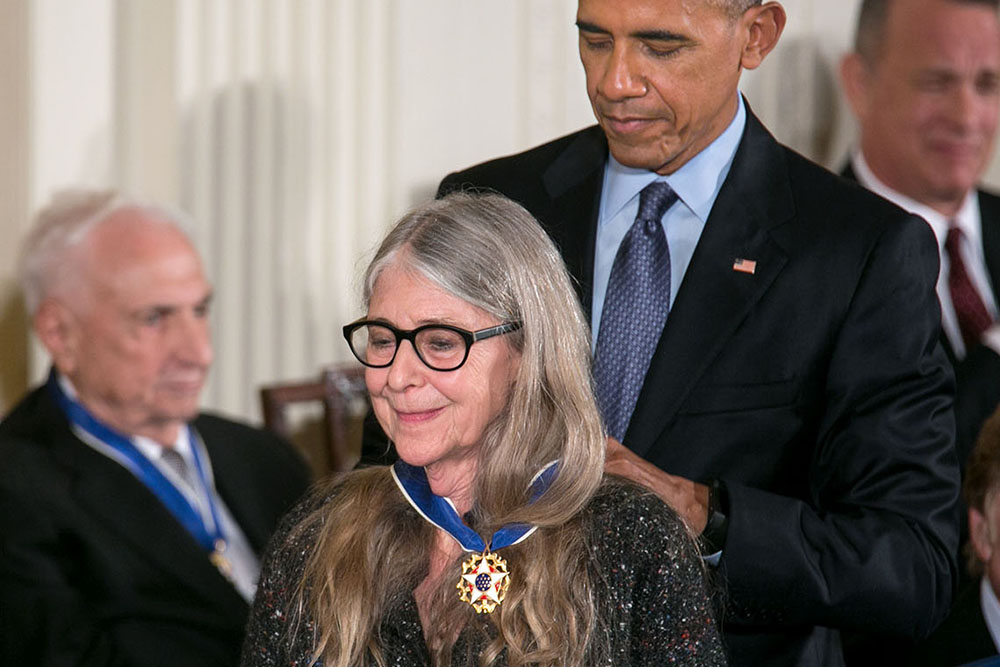
 Margaret Hamilton, computing pioneer who led software development for the Apollo program, dies at 90 | MIT News | Massachusetts Institute of Technology
https://news.mit.edu/2026/margaret-hamilton-computing-pioneer-dies-1007
Over two decades at MIT, Hamilton forged new paths in computer science and engineering. Her groundbreaking work included leading the team that programmed the first computers that took humans to the moon.
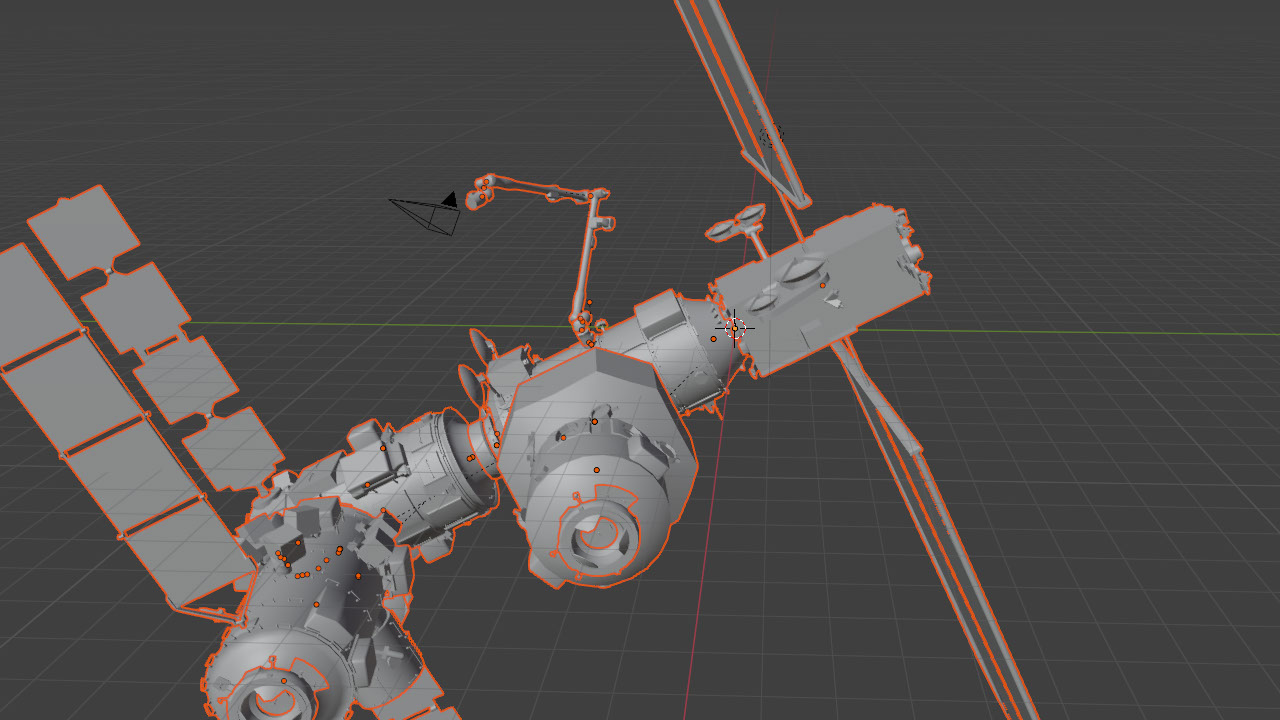
 3D Resources - NASA Science
https://science.nasa.gov/3d-resources/
The 3D Resources hub stores 3D models related to NASA's various missions. Some of these models are 3D printable! All of these assets are free to download and use. They are also mirrored on GitHub. Refer to the NASA Images and Media Usage Guidelines.
Dragonfly - NASA Science
https://science.nasa.gov/3d-resources/dragonfly/
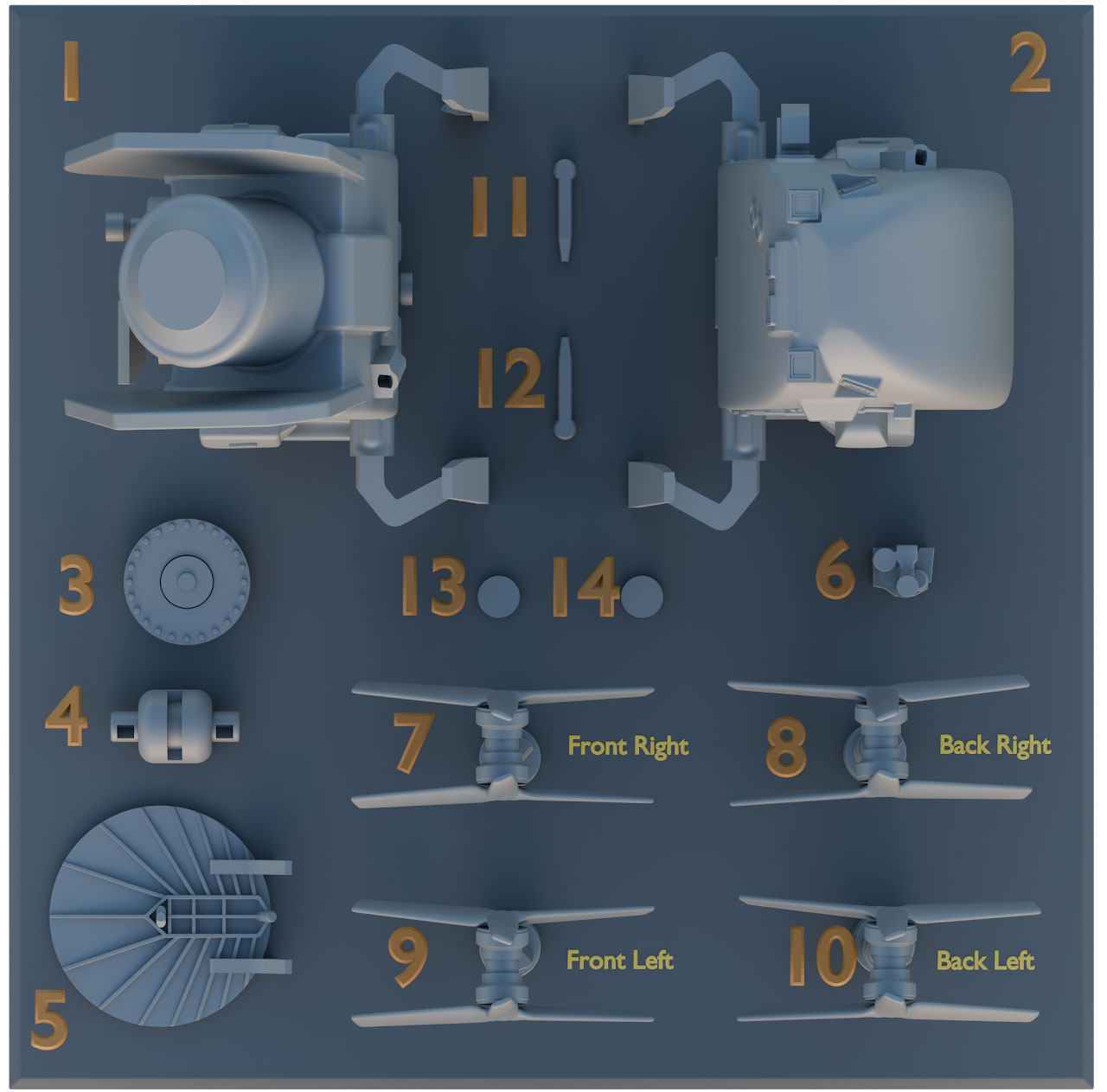
Dragonfly, the first-of-its-kind rotorcraft to explore another world, will fly to various locations on Saturn’s moon Titan and investigate the moon’s habitability.
Mars Reconnaissance Orbiter - NASA Science
https://science.nasa.gov/3d-resources/mars-reconnaissance-orbiter/
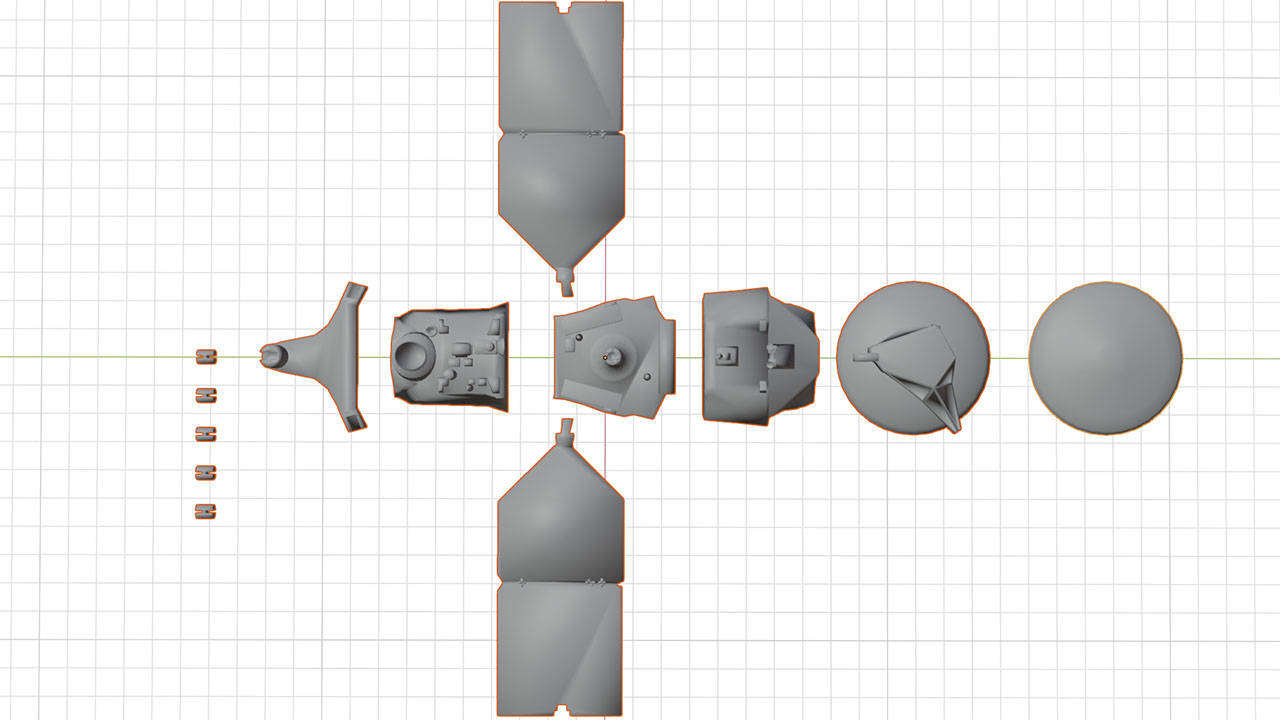
After a seven-month cruise to Mars and six months of aerobraking to reach its science orbit, Mars Reconnaissance Orbiter began seeking out the history of water on Mars with its science instruments. The instruments zoom in for extreme close-up photography of the martian surface, analyze minerals, look for subsurface water, trace how much dust and water are distributed in the atmosphere, and monitor daily global weather. The Mars Reconnaissance Orbiter mission met all its science goals in a two-year primary science phase. Two extensions, the latest beginning in 2010, have added to the bounty of science returns.
Saturn V Rocket - NASA Science
https://science.nasa.gov/3d-resources/saturn-v-rocket/
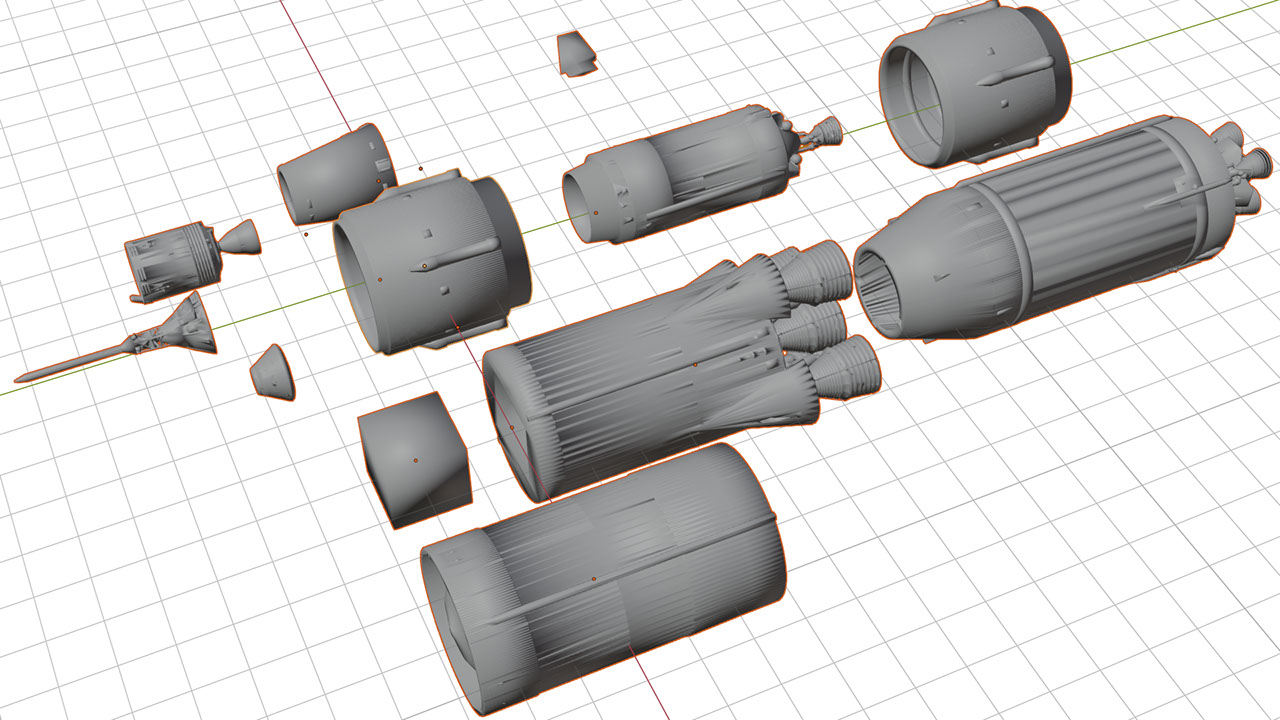
The Saturn V was a rocket NASA built to send people to the moon. The Saturn V was a type of rocket called a Heavy Lift Vehicle. That means it was very powerful. It was the most powerful rocket that had ever flown successfully. The Saturn V was used in the Apollo program in the 1960s and 1970s. It also was used to launch the Skylab space station.
Voyager - NASA Science
https://science.nasa.gov/3d-resources/voyager/
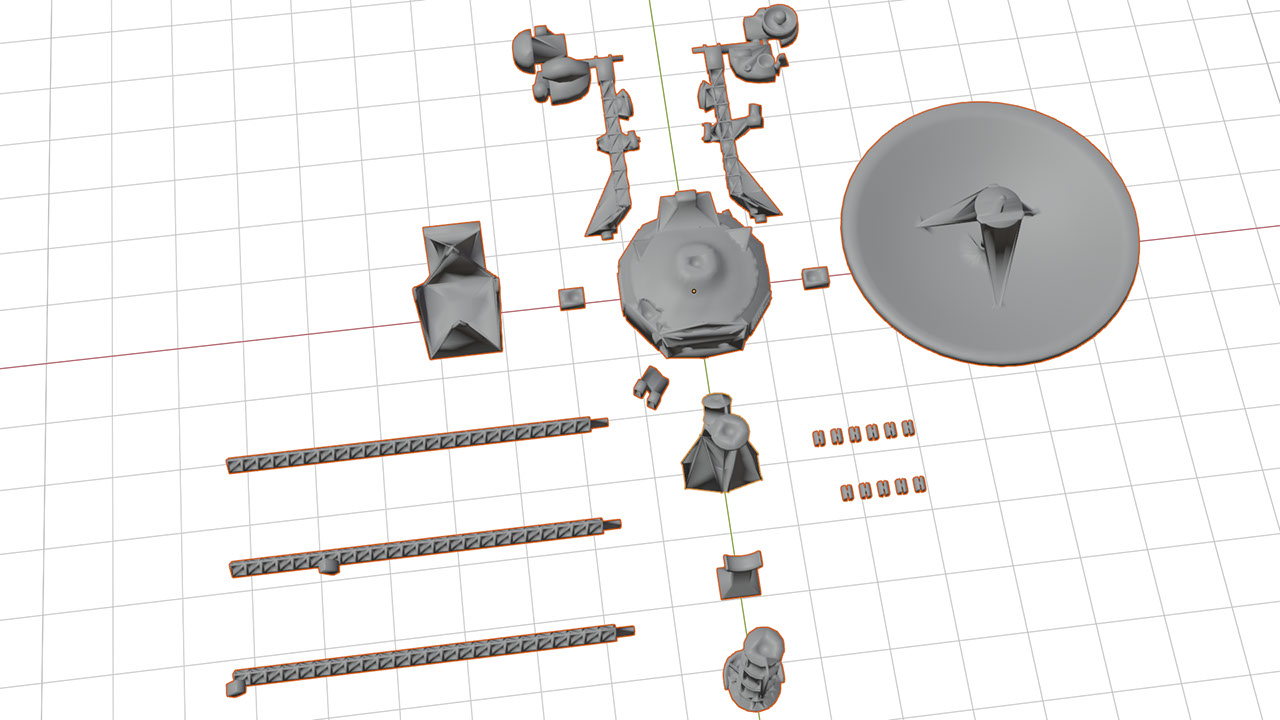
The twin spacecraft Voyager 1 and Voyager 2 were launched by NASA in separate months in the summer of 1977 from Cape Canaveral, Florida. As originally designed, the Voyagers were to conduct closeup studies of Jupiter and Saturn, Saturn's rings, and the larger moons of the two planets. After making a string of discoveries there, such as active volcanoes on Jupiter's moon Io and intricacies of Saturn's rings, the mission was extended. Voyager 2 went on to explore Uranus and Neptune, and is still the only spacecraft to have visited those outer planets.
Cassini - NASA Science
https://science.nasa.gov/3d-resources/cassini/
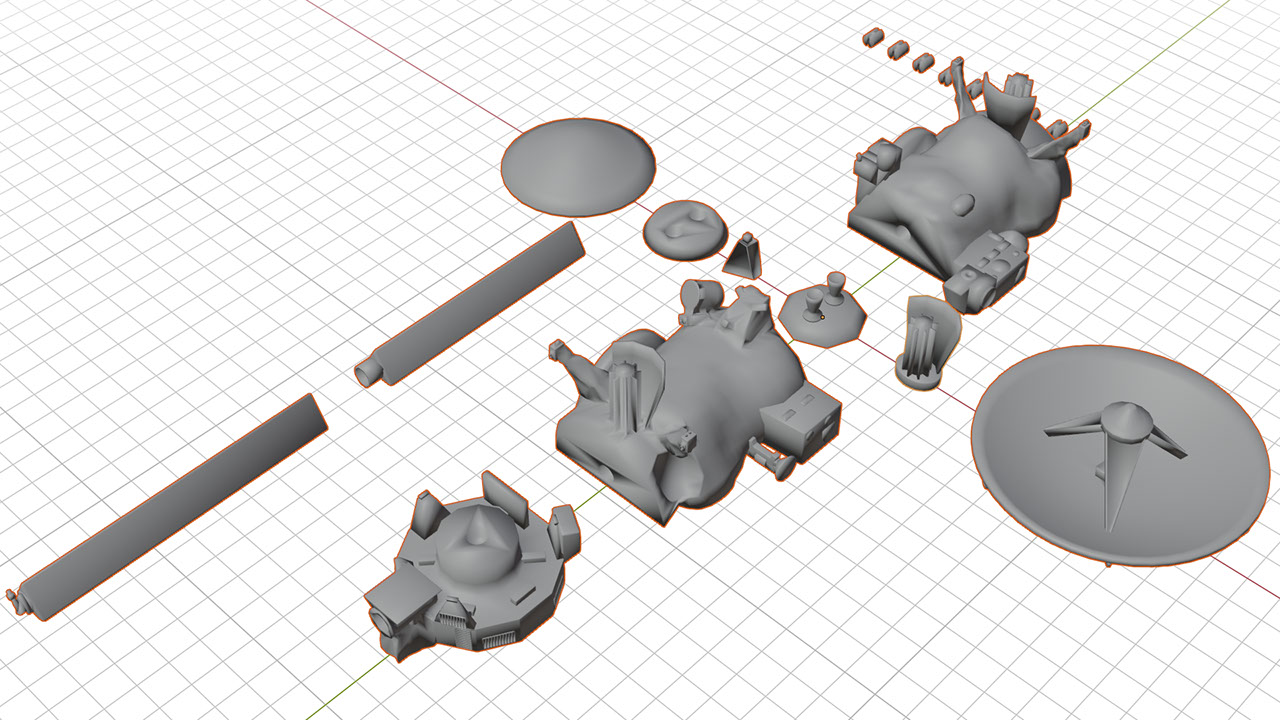
For more than a decade, NASA’s Cassini spacecraft shared the wonders of Saturn and its family of icy moons. It took us to astounding worlds where methane rivers run to a methane sea and where jets of ice and gas are blasting material into space from a liquid water ocean that might harbor the ingredients for life.
International Space Station Tools - NASA Science
https://science.nasa.gov/3d-resources/international-space-station-tools/
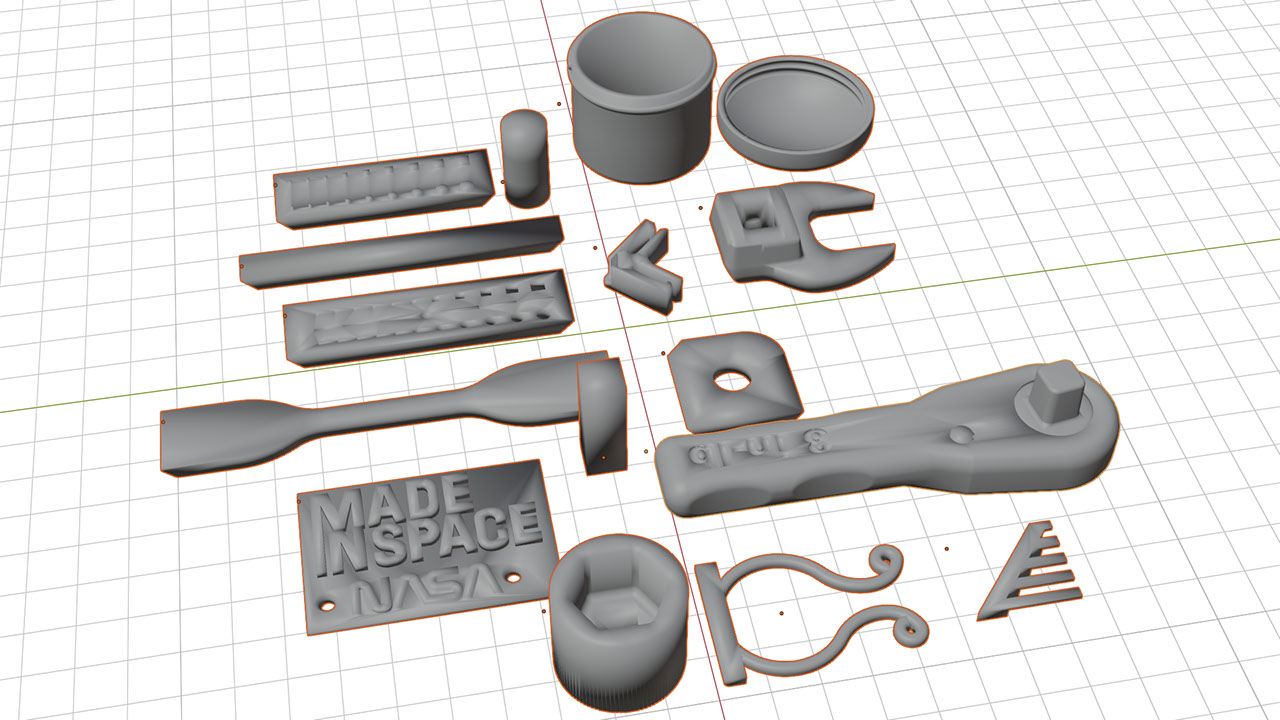
The International Space Station's 3D printer has manufactured the first 3D printed object in space, paving the way to future long-term space expeditions.
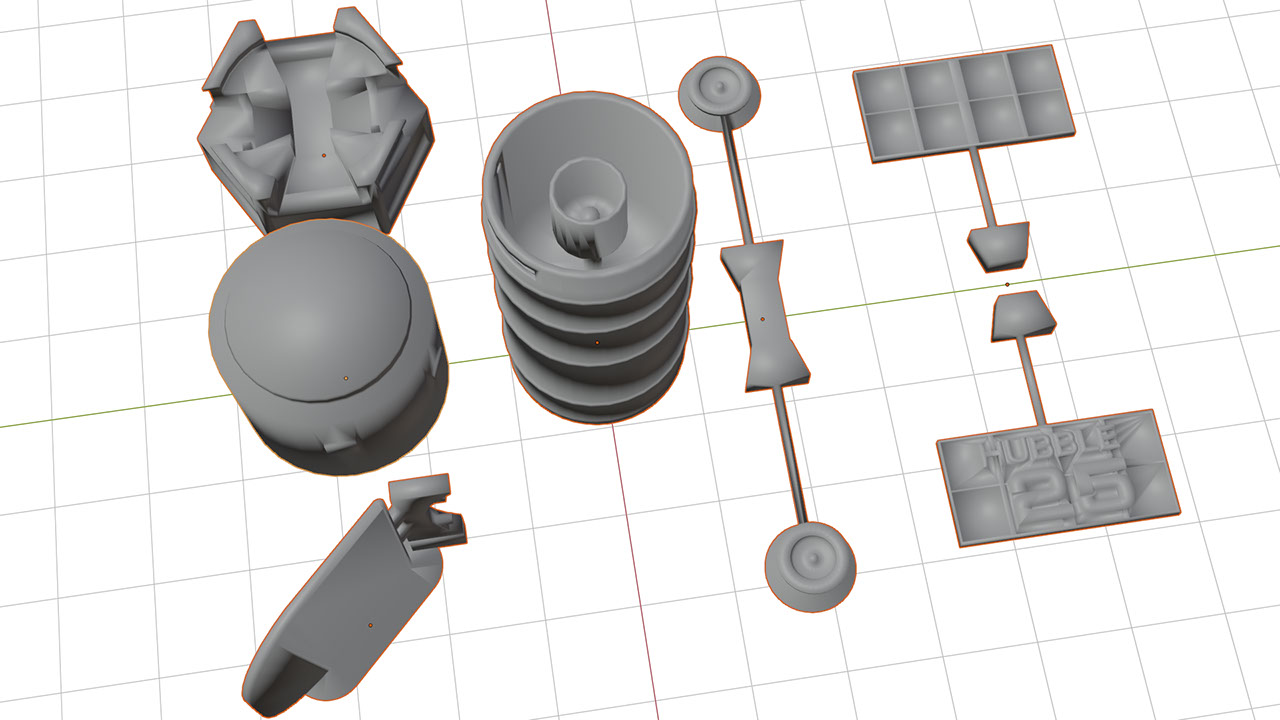
Hubble 25th Anniversary Model - NASA Science
https://science.nasa.gov/3d-resources/hubble-25th-anniversary-model/
On April 25, 1990, astronauts aboard the Space Shuttle Discovery deployed the Hubble Space Telescope into Earth orbit, and launched a new era of astronomical discovery. Now, 25 years later, we celebrate a remarkable milestone for a space observatory whose ground-breaking investigations have brought revolutionary changes in our understanding from planets, stars, nebulae, and galaxies to the very frontiers of the cosmos.
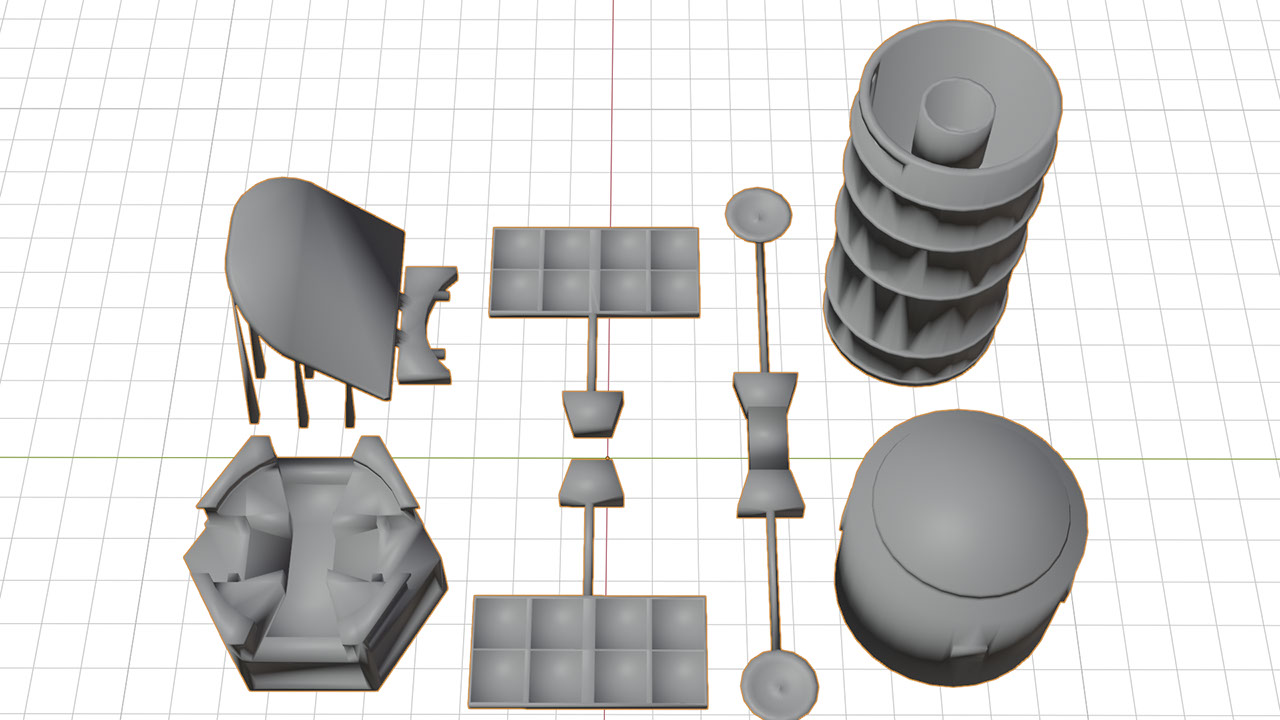
Hubble Space Telescope - NASA Science
https://science.nasa.gov/3d-resources/hubble-space-telescope/
Hubble, the observatory, is the first major optical telescope to be placed in space, the ultimate mountaintop. Above the distortion of the atmosphere, far far above rain clouds and light pollution, Hubble has an unobstructed view of the universe. Scientists have used Hubble to observe the most distant stars and galaxies as well as the planets in our solar system. Hubble's launch and deployment in April 1990 marked the most significant advance in astronomy since Galileo's telescope. Our view of the universe and our place within it has never been the same.
 Radio hams pick up Mars rover Curiosity's signals • The Register
http://www.theregister.co.uk/2011/11/28/radio_hams_curiosity_signals
Amateur radio enthusiasts using a restored dish antenna in Germany say they have successfully picked up telemetry from NASA's Mars Science Laboratory spacecraft, now outward bound for Mars carrying a one-ton nuclear powered robot rover named Curiosity towards a date with destiny in the Elysium Planitia.
NASA working on nuclear rocket for manned Mars trips • The Register
http://www.theregister.co.uk/2011/11/15/nasa_nuclear_rocket_report
Since being redirected away from Bush-era plans for a base on the Moon towards a manned Mars mission, NASA has realigned its nuclear-tech-in-space efforts away from a Moonbase powerplant and towards an atomic-powered rocket able to get astronauts to the red planet quickly, without receiving dangerous exposure to cosmic radiation.
 NASA Scientists Plan To Approach Girl By 2018 | The Onion - America's Finest News Source
http://www.theonion.com/content/video/nasa_scientists_plan_to_approach
 In the Shadow of the Moon
http://www.intheshadowofthemoon.com
remember when the whole world looked up
 Modded Recumbent Bikes Rip Through NASA Ames -
http://www.wired.com/culture/lifestyle/multimedia/2007/04/hpvrace
"Send someone to NASA Ames Research Center, and they're sure to expect rocket scientists and spaceships. But on a recent rainy morning, more than 100 budding engineers raced around Moffett Field on bikes for the annual Human Powered Vehicle Challenge."
 The Silent Speaker - Forbes.com
http://www.forbes.com/free_forbes/2006/0410/084.html?partner=yahoomag
"Jorgensen sees the day when electromagnetic sensors will be woven into the fibers of turtlenecks or rescue workers' outfits."
 BBC NEWS | Science/Nature | Mars orbiter reaches Red Planet
http://news.bbc.co.uk/2/hi/science/nature/4791006.stm
"The re-establishment of contact half an hour later was met with jubilation from the mission team at the US space agency's (Nasa) Jet Propulsion Laboratory, in Pasadena, California."
 Man Who Left NASA Says He's Under Attack - Yahoo! News
http://news.yahoo.com/s/ap/20060210/ap_on_sc/nasa_resignation
'"I have never been told to censor science, to squelch anything or to insert religion into any issue, absolutely not," said the former Bush campaign worker.' Oh, poor baby. You may not have been asked explicitly, but you did it anyway.
 A Young Bush Appointee Resigns His Post at NASA - New York Times
http://www.nytimes.com/2006/02/08/politics/08nasa.html?_r=3&oref=slogin&oref=slogin&oref=login
"George C. Deutsch, the young presidential appointee at NASA who told public affairs workers to limit reporters' access to a top climate scientist and told a Web designer to add the word "theory" at every mention of the Big Bang, resigned yesterday, agenc
 The Scientific Activist: Reporting from the Crossroads of Science and Politics: BREAKING NEWS: George Deutsch Did Not Graduate From Texas A & M University
http://scientificactivist.blogspot.com/2006/02/breaking-news-george-deutsch-did-not.html
"Through my own investigations I have just discovered that George Deutsch, the Bush political appointee at the heart of administration efforts to censor NASA scientists (most notably to prevent James Hansen from speaking out about global warming), did not
 Bad Astronomy Blog » Blog Archive » Outrage at attacks on NASA science
http://www.badastronomy.com/bablog/2006/02/04/outrage-at-attacks-on-nasa-science
"NASA is not in the business of teaching religion. They should be teaching science, and the Big Bang is definitely science."
 NASA - How We'll Get Back to the Moon
http://www.nasa.gov/missions/solarsystem/cev.html
Finally waking up from the shuttle disaster? (The whole program, that is.) "Building on the best of Apollo and shuttle technology, NASA's creating a 21st century exploration system that will be affordable, reliable, versatile, and safe."
NASA - Steve Robinson: First Podcaster From Space
http://www.nasa.gov/returntoflight/crew/robinson_podcast.html
"One day before landing, STS-114 Mission Specialist Steve Robinson transmitted the first podcast from space. "
 Idle Words: A Rocket to Nowhere
http://www.idlewords.com/2005/08/a_rocket_to_nowhere.htm
"As tempting as it is to picture a blood-spattered Canadarm flinging goat carcasses into the void, we know that the Shuttle is the fruit of what was supposed to be a rational decision making process."
 Boing Boing: Abandoned spaceship snapshots are on the way
http://www.boingboing.net/2005/07/12/abandoned_spaceship_.html
"...the Lunar Reconnaissance Orbiter (LRO) will also snap the first close-range pics of Apollo relics we've seen for three decades." But, of course, they still won't believe we've been to the moon...
 NASA Brain Bites - Munchies For Your Mind
http://spaceflight.nasa.gov/brainbite/home.html
Needs. RSS. Feed.