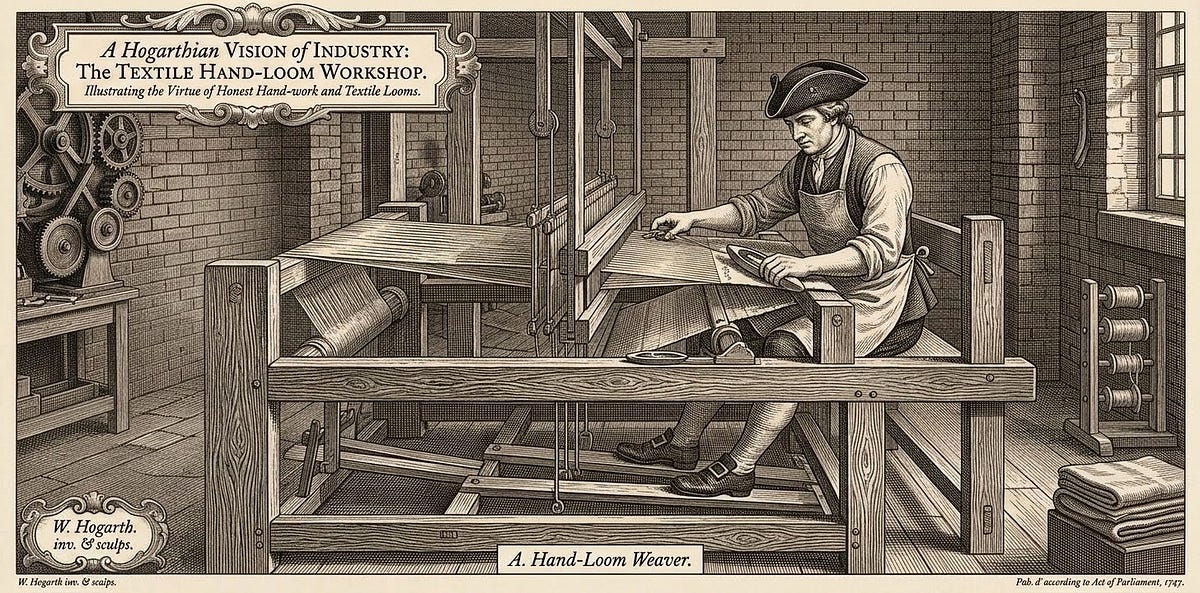
 What the AI era owes you. No one is going to save your career… | by Dan Maccarone | Oct, 2026 | UX Collective
https://uxdesign.cc/what-the-ai-era-owes-you-d472b3859bf3
This is not the pep talk anyone wants. The pep talk is that it’ll be fine, new jobs are coming, somebody’s got it handled, but that’s a lie. The reality is, nobody is coming to retrain you, but that is not the end of the story.
 The era of cmd + tab
https://era-of-cmd-tab.vercel.app/?ref=sidebar
Thoughtfulness about our craft and our relationship to the tools seems like an antidote to atrophy of mind. In an era where we can make literally whatever we want, what parts of the output or process are non-negotiables?
 AI Didn’t Make Programming Easier. It Just Made It Differently Difficult – Communications of the ACM
https://cacm.acm.org/opinion/ai-didnt-make-programming-easier-it-just-made-it-differently-difficult/
AI does not, therefore, diminish the craft; it widens it, deepens it, and makes more of the work explicitly intellectual. The work becomes differently difficult because it demands more sophisticated forms of expertise: judgment over recall, architecture over syntax, orchestration over implementation. These are not easier skills to develop or demonstrate, they are simply different ones, and perhaps ultimately more demanding.
 Thorsten Ball - What I believe about the future of software development
https://thorstenball.com/blog/2026/09/19/what-i-believe-about-the-future-of-software-development/
This was originally posted on X and blew up. To plant my flag, to say that these are things I believed in September 2026, here it is on the blog, non-ephemeral. Some of these predictions are just observations, they’ve long been true at companies like Amp. Others will take some time to play out.

 "Slop Grenades": Shopify CEO Who Pushed Staff to Use AI Is Now Horrified by What He's Wrought
https://futurism.com/artificial-intelligence/shopify-ceo-ai-workplace-staff-horrified-backfire
New reporting by Fortune revealed the disastrous results of Shopify’s all-out scramble to embrace AI nearly a year ago. After telling workers that using AI tools is a “baseline expectation” in the workplace, Lütke is now changing his tune as workers spew out AI-generated emails, memos, and code without double-checking it beforehand.
“We call those ‘slop grenades’ that people toss at each other,” Lütke said in an interview on the Knowledge Project podcast. “That’s definitely a bad thing.”
 The Wind, The Wind | blarg
https://exple.tive.org/blarg/2026/09/10/the-wind-the-wind/
It looks like people are starting to come around about designing, planning and building houses by counting number of nails they used. It’s probably for the best; people sure went crazy about it for a year or two, though.
 Staff+ engineers must rebuild team culture - LeadDev
https://leaddev.com/leadership/staff-engineers-must-rebuild-team-culture
AI is driving a shift to more autonomous work within teams, which means opportunities to establish culture that used to be automatic – time spent pairing, organizing work around shared goals, planning and designing together – now require deliberate choices.

Engineers grieve a job that no longer exists - LeadDev
https://leaddev.com/career-development/engineers-grieve-a-job-that-no-longer-exists?utm_source=ActiveCampaign&utm_medium=email&utm_content=Engineers%20are%20grieving&utm_campaign=Originals%3A%20%20Issue%20312%20%2827%20August%202026%29%20%28Copy%29
The more AI-generated code a team produces, the more review work lands on the engineers who care most about quality, often the most experienced people on the team. The volume of output rises while the nature of the work shifts from creation to inspection, and the engineers doing the hardest cognitive labor appear, by the metrics, to be less productive than the ones generating code with AI.
You should never be angry at work
https://www.seangoedecke.com/you-should-never-be-angry-at-work/
Being angry at work feels good. It feels like proof that you’re working on something that matters, and that you’re personally having an impact. If you’re angry, nobody can call you a coaster. But anger is only a local maximum. If you can find your way to a different style of working, you’ll not only be more effective, but you’ll be in a far better place to have impact on problems that actually matter.

 Remote workers report the highest well-being in study of 7,700 employees | CU Boulder Today | University of Colorado Boulder
https://www.colorado.edu/today/2026/08/12/remote-workers-report-highest-well-being-study-7700-employees
The findings also cast doubt on one of the main arguments for bringing employees back to the office: that people need to be together in person to feel connected.
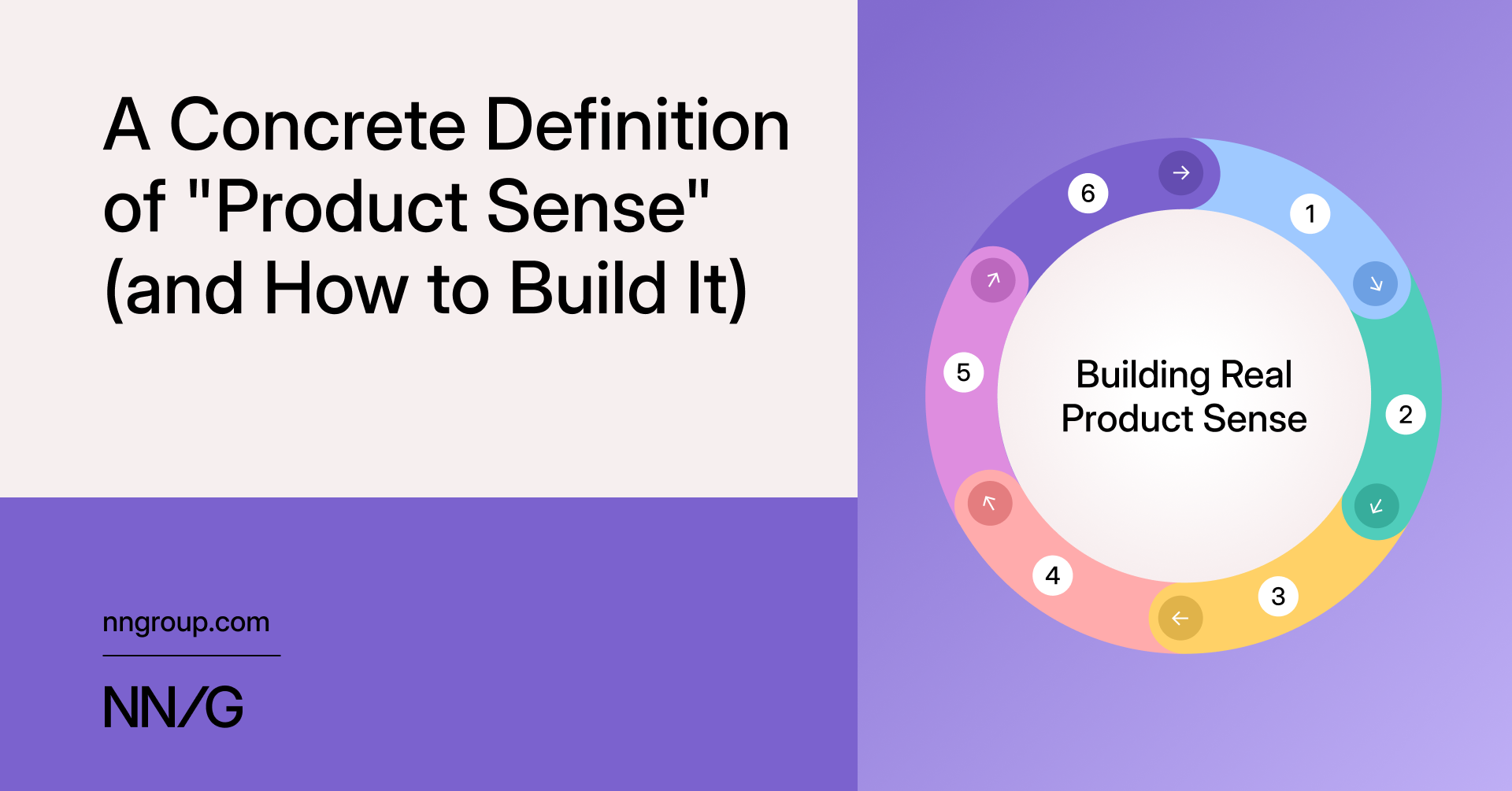
 A Concrete Definition of “Product Sense” (and How to Build It) - NN/G
https://www.nngroup.com/articles/product-sense-definition/?ref=sidebar
Product sense is the ability to recognize when current problems match past successes or failures and reliably estimate how similar solutions will affect the desired outcomes.
 The Tragedy of the Engineering Commons
https://ianreppel.org/the-tragedy-of-the-engineering-commons/
The surest way to ruin an engineering team is to believe it will survive whatever you do to it.
 Leave a failing test before you go on vacation - Freek Van der Herten's blog on Laravel, PHP and AI
https://freek.dev/3156-leave-a-failing-test-before-you-go-on-vacation
Every year I dread coming back from vacation not because of the work, but because I have no idea where I left off. A failing test, a well-written TODO, and a slow first day back are all you need to ease back in.
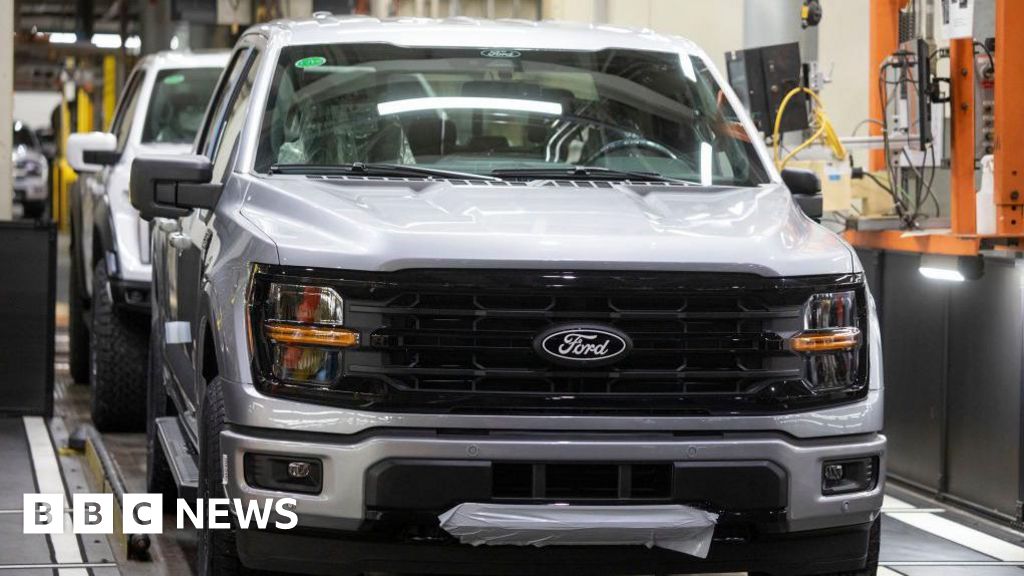
 Ford rehires human engineers after AI fails to match quality checks
https://www.bbc.com/news/articles/cgrkd41n2v9o?ref=karlbode.com
"Mistakenly, we thought that by just introducing artificial intelligence and ingesting the design requirements that we had, that would produce a high-quality product," he said.
 The AI Hype Reckoning Is Upon Us
https://karlbode.com/the-ai-hype-reckoning-is-upon-us/
There's useful automation software that makes it easier to code, draft a new resume, or study vast repositories of scientific knowledge. And then there's a parade of technofascist hucksters lying to your face about the imminent arrival of omniscient, sentient, paradigm-rattling supercomputers.
There's a tremendous chasm between these two things. And everywhere you look you can see evidence that we've reached a breaking point when it comes to reconciling these two wildly-different realities.

 Zuckerberg ‘Admits’ Meta’s Layoffs Were Ineffective | Eshu Marneedi
https://eshumarneedi.com/2026/07/03/zuckerberg-admits-metas-layoffs-were.html
I’d say getting fired by Meta is like catching the last plane out of Vietnam, even in this ruthless job market.
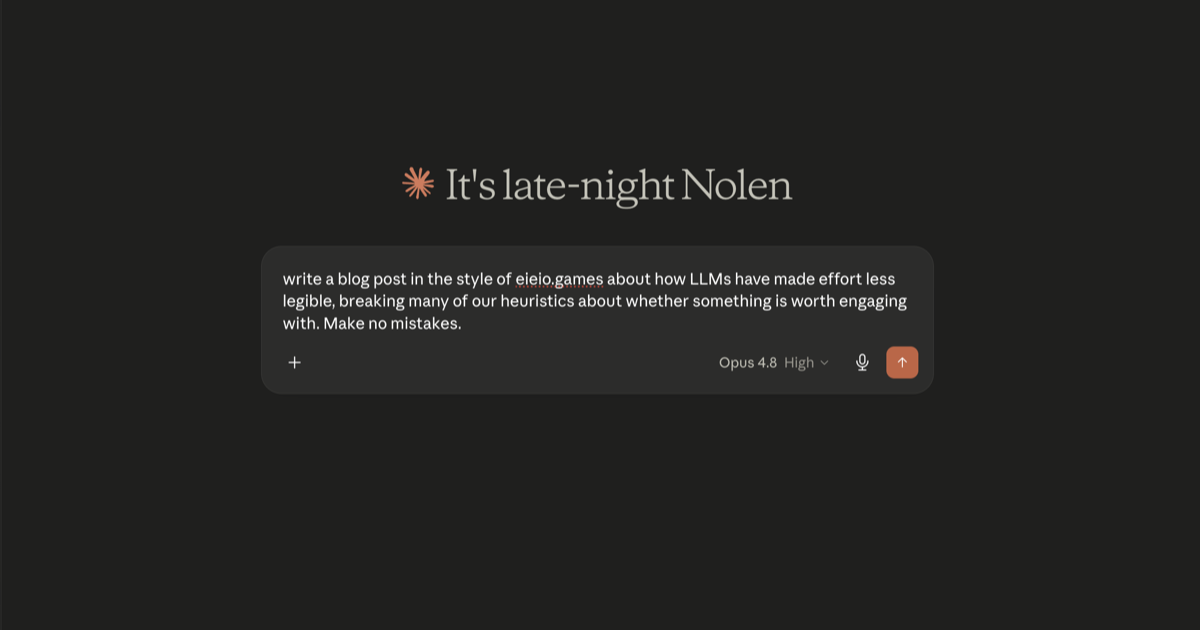
 Legibility of Effort · eieio.games
https://eieio.games/blog/legibility-of-effort/?ref=sidebar
So:
Lots of work is easier because of LLMs, and
Lots of heuristics we used to gauge effort are broken because of LLMs, so
Conveying effort to others is harder because of LLMs
And:
“Someone spent time on this” is a proxy for “this is worth engaging with” and
I appreciate projects that take a lot of effort and
I like it when people appreciate that I spent effort on something
But also:
Making a good thing still requires making lots of decisions, and
Making lots of decisions is still very hard, despite LLMs, so
Making good things is still very hard
As a creative technologist I’ve found this paralyzing. And as someone who loves novel internet projects I’ve found it frustrating. I’ve heard similar things from many of my friends.

 Boffins peg narcissistic leadership as the real driver behind 'return to office' demands
https://www.theregister.com/columnists/2026/07/01/boffins-peg-narcissistic-leadership-as-the-real-driver-behind-return-to-office-demands/5264222
Ego-driven management also relies on the old factory mentality that holds that the best workers are the ones who arrive early, work late, and are seen hustling by the bosses. Putting in 80-hour workweeks may be necessary at a startup, but in most businesses, that's as stupid as measuring programmers' productivity by lines of code or, more recently, by how many AI tokens they use.
 Why is it so hard to do my work? The challenge of attention residue when switching between work tasks
https://ideas.repec.org/a/eee/jobhdp/v109y2009i2p168-181.html
In many jobs, employees must manage multiple projects or tasks at the same time. A typical workday often entails switching between several work activities, including projects, tasks, and meetings. This paper explores how such work design affects individual performance by focusing on the challenge of switching attention from one task to another. As revealed by two experiments, people need to stop thinking about one task in order to fully transition their attention and perform well on another. Yet, results indicate it is difficult for people to transition their attention away from an unfinished task and their subsequent task performance suffers. Being able to finish one task before switching to another is, however, not enough to enable effective task transitions. Time pressure while finishing a prior task is needed to disengage from the first task and thus move to the next task and it contributes to higher performance on the next task.
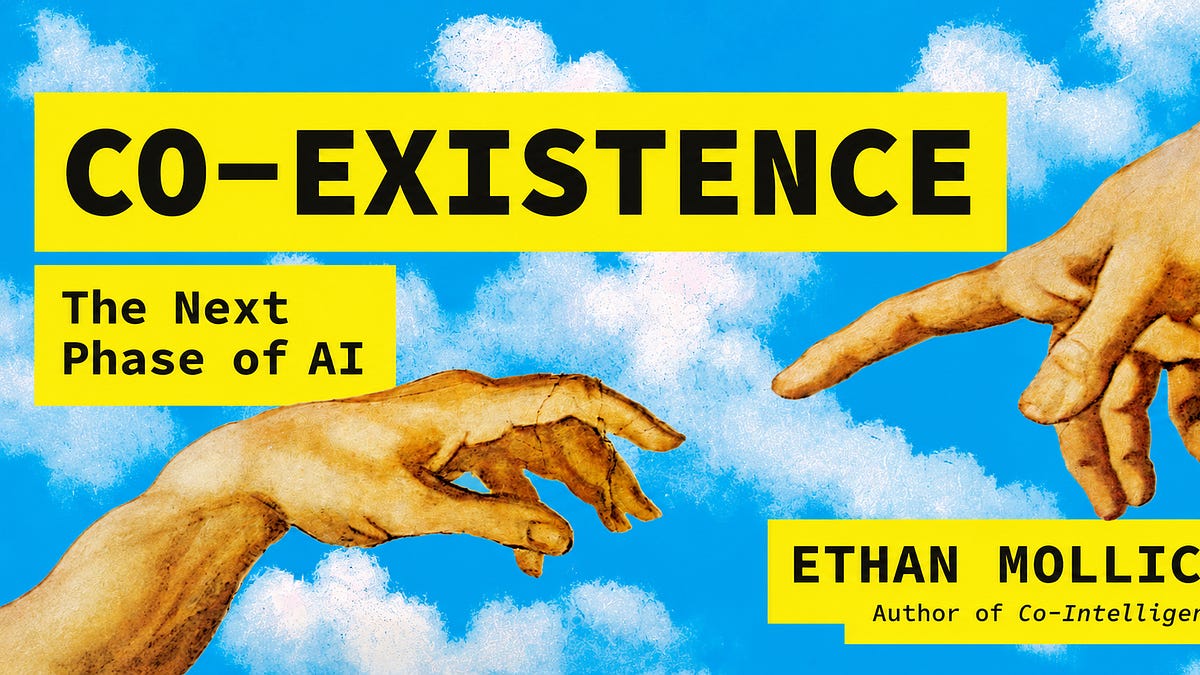
 Co-Existence and the End of Co-Intelligence
https://www.oneusefulthing.org/p/co-existence-and-the-end-of-co-intelligence
Two years ago, the question I was trying to answer was how to think alongside a new kind of intelligence. Now the questions are weirder: When should you refuse AI’s help, even when it is offering? When should you hand over the keys entirely? And what do you do when the AI is no longer just your assistant, but your reader, your critic, and the gatekeeper standing between your work and its audience? Writing this book meant living with all three questions at once, and I suspect your job will involve them soon, if it doesn’t already.
 the solution might be cancelling my AI subscription
https://thoughts.hmmz.org/2026-05-31.html
On that last point, this technology is horrific for attention. It's a thermonuclear ADHD amplifier and I have seen the same effect in every single one of my adult friends. Folk running 3 screens simultaneously working on totally unrelated "projects" they have little hope of maintaining, and such little commitment to the outcome that the time is obviously wasted.
 The solution might be cancelling my AI subscription
https://simonwillison.net/2026/May/31/the-solution-might-be-cancelling-my-ai-subscription/#atom-everything
I'm hopeful that the critical skill to develop here is discipline. That’s not great news for me: I’ve been trying to figure that one out for decades!

 No Juniors Today, No Seniors in 2031 — Blog | Filipe Brito Ferreira — Front-End Engineer
https://www.fbritoferreira.com/blog/no-juniors-today-no-seniors-in-2031/
AI didn’t kill the senior engineer. We did, by not hiring the junior who would’ve become one. Compound interest works in both directions. The per-developer cost I wrote about a month ago is one side of the meter. The unhired junior is the other, and that meter has been running since 2024 whether the dashboards report it or not.

 The good times in tech are over
https://www.seangoedecke.com/good-times-are-over/
If I had to choose, I’d definitely choose to return to the job market of the 2010s, so I can be paid more to work less and have more job security. I’m not an idiot. But the silver lining to actually having to ship is that you’re no longer living in a dream. If you’re realistic about how things work, the job of software engineering becomes much easier to understand:
Providing value to the company gets you rewarded
Not providing value to the company gets you punished
“Value to the company” means furthering the explicit plans of your company’s executives

The just-say-no engineer was a ZIRP phenomenon
https://www.seangoedecke.com/the-just-say-no-engineer-was-a-zirp-phenomenon/
Some senior and staff engineers operate as gatekeepers, slowing down development and saying no to most things
This was a critical role during ZIRP, because:
Tech companies had thousands of engineers who were empowered to do basically whatever they wanted, so without gatekeeping the systems would have fallen apart
Tech companies didn’t care that much if they got anything done
When ZIRP ended, the environment for this kind of engineer became much worse, since tech companies were now actually focused on accomplishing things and the “do whatever you want” era was over
Like with layoffs, this shift is often blamed on AI, but it would have happened even if powerful LLMs had not emerged at all. It’s an end-of-ZIRP phenomenon
 The people who care are having the hardest time
https://mailchi.mp/rawsignal/the-people-who-care-are-having-the-hardest-time?e=688b6720bf
There are lots of us out there who care. Even more if you count the ones currently pretending they don't, just to get through the day. We don't know how to tell you where to find the ones close to you, but if you already know a few, you've gotta spend more time with them. The weirdest thing about work right now is the way it seems like everyone sees this enshittification as inevitable. It isn't, and they don't. And part of how you find the energy — to care about your work, or find new work you can care about, or start a new org full of people who care — part of where that energy will come from is by fixing your inputs. The people who care are sometimes quieter than the hypebeasts, but there are lots of us and we should all hang out more.
 Programming Still Sucks. — Writing
https://www.stvn.sh/writing/programming-still-sucks-fqffhyp
Somewhere in your infrastructure is a cron job. It runs at 3am. It has been running since 2016. It does something critical. You couldn't tell me exactly what, but you know the one person who could, and they left in 2019. The comment at the top says # DO NOT CHANGE!!! Ask Ben. Ben is not reachable. Every roadmap planning session for the last four years has included "modernize legacy cron" as a candidate initiative. It has never made the cut. You have personally removed it from the list twice.
Someone keeps it running. Her name is Sara. You don't know this.
 Agentic Coding is Burning Me Out | Sid's Blog
https://0xsid.com/blog/agentic-coding-fatigue
Making constant architectural, big-picture decisions while overseeing the work of a cracked junior dev is fundamentally harder than executing standard programming tasks yourself.
 I don't want a screenshot of your Claude conversation - daverupert.com
https://daverupert.com/2026/04/claude-no/?ref=sidebar
Awhile back Hidde De Vries identified a pain point around LLM-usage in standards work which leads to something I call an asymmetry of thought. In a conversation where one person is a domain expert and one person is copy-pasting ChatGPT responses, it creates an imbalance of effort in the discussion. A second-hand burdening, like Brandolini’s Law, where debunking inaccuracies and subtly-wrongs takes more effort than creating the inaccuracies. We are, in effect, taxing experts to do quality assurance on the model’s responses. When that work is unpaid I believe this is immoral… or at least it’s a breach in social etiquette.
 What do coders do after AI? - Anil Dash
https://www.anildash.com/2026/03/13/coders-after-ai/?ref=brilliantcrank.com
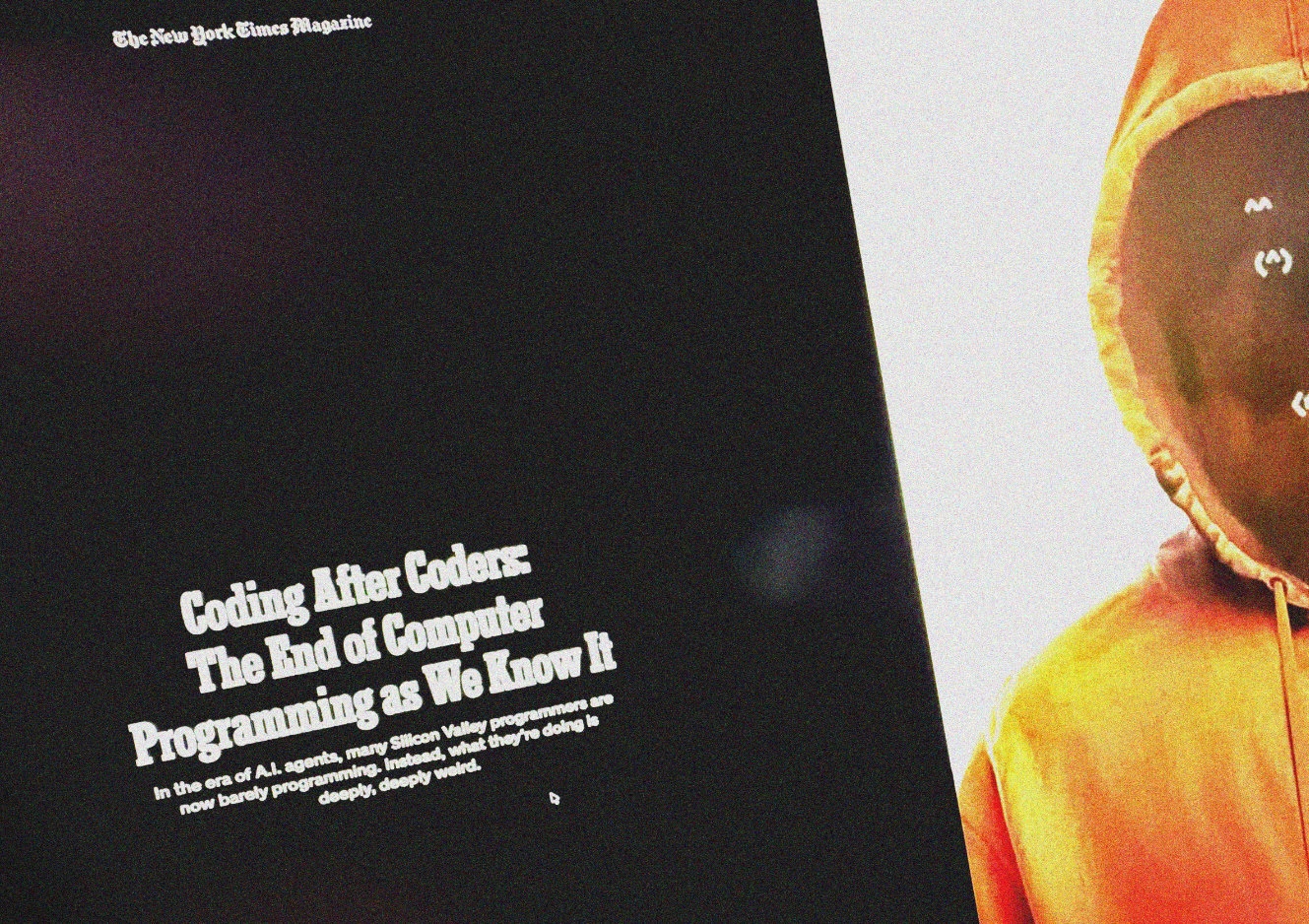
Your job changes into describing software. Now, if you're the kind of person who only ever wanted to have the end result, maybe this is a liberation. Sometimes, that's what mattered — we wanted to fast-forward to the end result, elegance be damned. But if you were one of those crafters? The people who wrote idiomatic code that made that programming language sing? There's a real grief here. It's not as serious as when we know a human language is dying out, but it's not entirely dissimilar, either.

Actually, people love to work hard - Anil Dash
https://www.anildash.com/2026/04/06/people-love-to-work-hard/
It is genuinely one of the best feelings in life to be completely exhausted while sitting next to someone who’s been right beside you, shoulder to shoulder, fighting to accomplish the same goal. I’ve known that to be true whether we were launching a new company into the world, campaigning to get a candidate we believed in elected, organizing to rally people around an issue, raising funds for an important cause, or even just trying to get people together for a big event or party.
People are not friction - daverupert.com
https://daverupert.com/2026/03/people-are-not-friction/
That’s because we know Gell-Mann is real. We know there’s an optimism bias the size of the sun blinding us to the actual quality of what the machine is producing. We need knowledgeable people to share what they know to improve the quality of our work, generated or otherwise. We even need ignorant people to make sure we can break ideas down into their simplest form that everyone, agents or human, understand. People can have bad attitudes, be shitty, and have wrong opinions… but people are not friction. An LLM may be able to autocorrect its way into a plausible human response, but it’s not people. It doesn’t care if it’s right or wrong. The money and hype surrounding it acts as a shield to its reputation. LLMs make up answers if it doesn’t have enough context and they fall over if it has too much context. It amplifies good patterns the same as bad patterns. And it glazes you with flattering language the entire time so that chart go up.
 Thoughts on slowing the fuck down
https://mariozechner.at/posts/2026-03-25-thoughts-on-slowing-the-fuck-down/
Anything that defines the gestalt of your system, that is architecture, API, and so on, write it by hand. Maybe use tab completion for some nostalgic feels. Or do some pair programming with your agent. Be in the code. Because the simple act of having to write the thing or seeing it being built up step by step introduces friction that allows you to better understand what you want to build and how the system "feels". This is where your experience and taste come in, something the current SOTA models simply cannot yet replace. And slowing the fuck down and suffering some friction is what allows you to learn and grow.
 Why craft-lovers are losing their craft — Hong Minhee on Things
https://writings.hongminhee.org/2026/03/craft-alienation-llm/
One caveat matters here. The tension between craft and efficiency doesn't disappear if you remove capitalism from the picture. LLM coding assistants produce faster results whether anyone is being paid or not, and any community, however it's organized, will eventually have to reckon with what to do with that speed difference. Capitalism gives the harshest possible answer to that question: the slower worker loses their livelihood. But the question itself would survive capitalism. Other forms of social organization might answer it more gently, but they'd still have to answer it.
 Do AI-enabled companies need fewer people? | Seldo.com
https://seldo.com/posts/do-ai-enabled-companies-need-fewer-people/?ref=sidebar
My read on this is: the startup economy is undergoing a structural transformation here. Startups are substituting compute for labor at an increasing rate. I still remain optimistic that this is going to result in a lot more companies doing a lot more things, but so far it hasn't happened. But companies' claims that they can get by with way fewer people in the age of AI does seem to be true.

 The Noble Path
https://www.joanwestenberg.com/the-noble-path/?ref=westenberg-newsletter
If you've ever made something useful and felt a pang of guilt for not monetizing it, that guilt is a symptom of the monoculture. If you've ever hesitated to share a tool because it wasn't "polished enough" for a product launch, you've been contaminated by standards that don't apply to gifts. If you've ever described your own creative work as "a side project" with that apologetic minimizing doing all the heavy lifting, you've internalized a heirarchy of value that ranks market viability above human usefulness.
 Are AI productivity gains fueled by delivery pressure? | Ruslan Osipov
https://rosipov.com/blog/are-ai-productivity-gains-fueled-by-delivery-pressure/?ref=sidebar
The right way to leverage AI in workspace is as a license to work better and focus on the right things, not as a mandate to produce more things faster.
 Lines of Code Are Back (And It's Worse Than Before)
https://www.thepragmaticcto.com/p/lines-of-code-are-back-and-its-worse
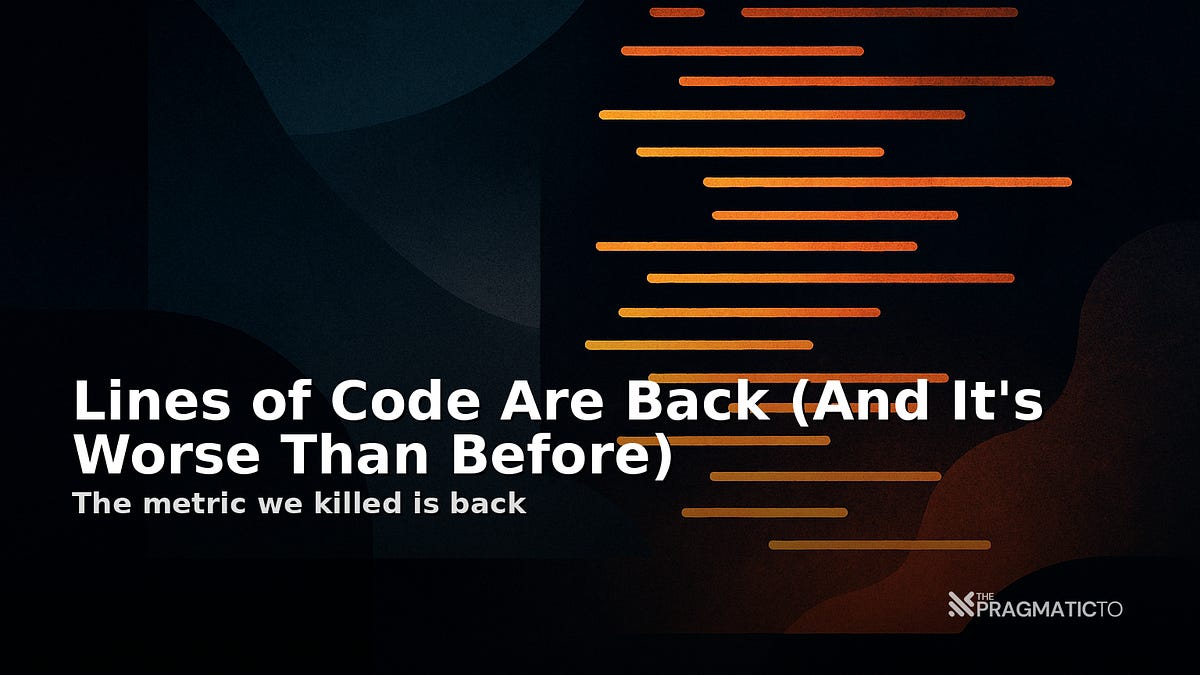
The metric we killed is back, and AI made it worse
 We Are Not Going Back
https://aaron.com.es/blog/we-are-not-going-back/
I don’t think we will ever go back to how we used to program. And it happened so fast that I didn’t even notice when it happened.
One day I was writing code. The next day I was… still writing code, but with AI. And then at some point it flipped. Now I’m mostly directing code. Reviewing. Prompting. Iterating. The AI writes most of it.
It wasn’t a dramatic shift. It was subtle. A little bit more capable every week. And suddenly I’m here, doing the dishes, realizing that everything has changed and I don’t know exactly when.
 Computers can be understood - Made of Bugs
https://blog.nelhage.com/post/computers-can-be-understood/
Computers are complex, but need not be mysteries. Any question we care to ask can, in principle and usually even in practice, be answered. Unknown systems can be approached with curiosity and determination, not fear.

 On cognitive debt | Nate Meyvis
https://www.natemeyvis.com/on-cognitive-debt/?ref=sidebar
Cognitive debt is real, but we can mitigate it by using AI better, and we won't make progress by blaming AI for our own mistakes.
 The AI Vampire. This was an unusually hard post to… | by Steve Yegge | Feb, 2026 | Medium
https://steve-yegge.medium.com/the-ai-vampire-eda6e4f07163
I’m convinced that 3 to 4 hours is going to be the sweet spot for the new workday. Give people unlimited tokens, but only let people stare at reports and make decisions for short stretches. Assume that exhaustion is the norm. Building things with AI takes a lot of human energy.
 AddyOsmani.com - Agentic Engineering
https://addyosmani.com/blog/agentic-engineering/?ref=sidebar
The irony is that AI-assisted development actually rewards good engineering practices more than traditional coding does. The better your specs, the better the AI’s output. The more comprehensive your tests, the more confidently you can delegate. The cleaner your architecture, the less the AI hallucinates weird abstractions. As one analysis noted, “AI didn’t cause the problem; skipping the design thinking did.”
 No Coding Before 10am | Michael Bloch
https://michaelxbloch.substack.com/p/no-coding-before-10am
Six months from now, there will be two kinds of engineering teams: ones that rebuilt how they work from first principles, and ones still trying to make agents fit into their old playbook. The second group will get outshipped by teams half their size.
 AI is going to kill app subscriptions
https://nichehunt.app/blog/ai-going-to-kill-app-subscriptions
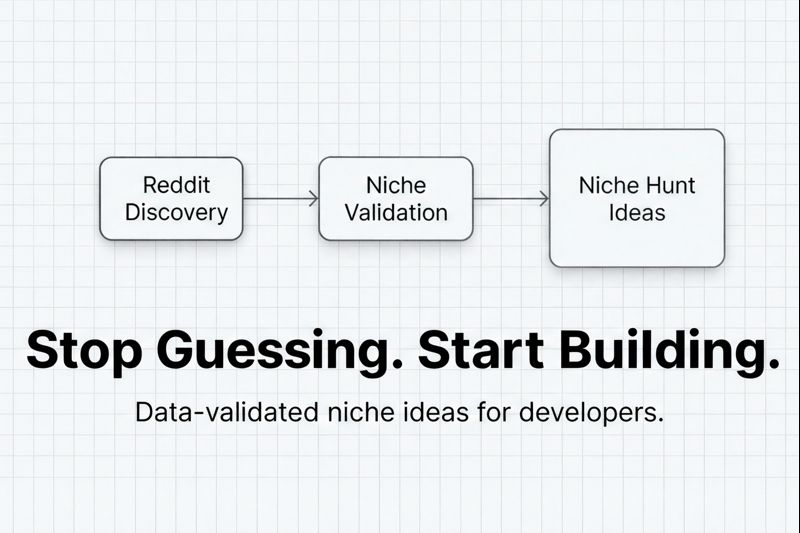
For apps that run locally—no servers, no cloud costs—subscriptions make no sense anymore. The only real cost is development, and that's becoming negligible. If someone charges $10/month for a local PDF editor, someone else will build a clone for $5 one-time. Then someone will make it free.
Magic Words - daverupert.com
https://daverupert.com/2026/02/magic-words/
That sort of quality variance is uncomfortable for me from a tooling perspective. Tooling should be highly consistent and this has a “works on my machine” vibe to it. I suppose all my discomfort goes away if I quit caring about the outputs. If I embrace the cognitive dissonance and switch to a “ZOMG the future is amazeballs” hype mode, my job becomes a lot easier. But my brain has been unsuccessful in doing that thus far. I like magic and mystery, but hope- or luck-based development has its challenges for me.

Coding agents as the new compilers - Anil Dash
https://www.anildash.com/2026/02/11/coding-agents-as-the-new-compilers/
But the response to that skepticism is not to reject the category of technology, but rather to capture it and seize control over its direction, away from the Big AI companies. This shift to a new level of coding abstraction is exactly the kind of platform shift that presents that sort of opportunity. It’s potentially a chance for coders to be in control of some part of their destiny, at a time when a lot of bosses clearly want to get rid of as many coders as they can.
At the very least, this is one area where the people who actually make things are ahead of the big platforms that want to cash in on it.
 Something Big Is Happening — matt shumer
https://shumer.dev/something-big-is-happening
We're past the point where this is an interesting dinner conversation about the future. The future is already here. It just hasn't knocked on your door yet.
It's about to.
 I miss thinking hard.
https://www.jernesto.com/articles/thinking_hard?ref=sidebar
“Vibe coding” satisfies the Builder. It feels great to see to pass from idea to reality in a fraction of a time that would take otherwise. But it has drastically cut the times I need to came up with creative solutions for technical problems. I know many people who are purely Builders, for them this era is the best thing that ever happened. But for me, something is missing.
 Code has always been the easy part | Kellan Elliott-McCrea: Blog
https://laughingmeme.org//2026/02/09/code-has-always-been-the-easy-part.html
The cost of code is going to zero. That’s genuinely neat, and mind blowing, and going to require reinventing so many things. It was still never the hard part.
AI Doesn’t Reduce Work—It Intensifies It
https://simonwillison.net/2026/Feb/9/ai-intensifies-work/#atom-everything
I think we've just disrupted decades of existing intuition about sustainable working practices. It's going to take a while and some discipline to find a good new balance.

 Work-from-office mandate? Expect top talent turnover, culture rot | CIO
https://www.cio.com/article/4119562/work-from-office-mandate-expect-top-talent-turnover-culture-rot.html
Effective collaboration can happen remotely when teams have clear norms, strong documentation, and psychological safety, she adds. “I’ve also seen teams sitting next to each other collaborate poorly because decisions are unclear or leaders equate visibility with progress,” she says. “Collaboration doesn’t automatically improve just because people share a building.”

How I estimate work as a staff software engineer
https://www.seangoedecke.com/how-i-estimate-work/
It is not possible to accurately estimate software work. Software projects spend most of their time grappling with unknown problems, which by definition can’t be estimated in advance. To estimate well, you must therefore basically ignore all the known aspects of the work, and instead try and make educated guesses about how many unknowns there are, and how scary each unknown is.

 How to know if that job will crush your soul - Anil Dash
https://www.anildash.com/2026/01/12/will-that-job-crush-your-soul/
Last week, we talked about one huge question, “How the hell are you supposed to have a career in tech in 2026?” That’s pretty specific to this current moment, but there are some timeless, more perennial questions I've been sharing with friends for years that I wanted to give to all of you. They're a short list of questions that help you judge whether a job that you’re considering is going to crush your soul or not.
 Software craftsmanship is dead
https://www.pcloadletter.dev/blog/craftsmanship-is-dead/
I feel like it's been forever since I had a conversation about craftsmanship on the job. It's possible I have just found myself in the wrong places time and time again.
Or maybe, and this is something I really fear, maybe the people who truly focus on the craft of software engineering are retiring or getting run off.

 Welcome Back to the Office. You Won’t Get Anything Done | The Walrus
https://thewalrus.ca/return-to-office-mandates/
Employers are so terrified at the prospect of their employees not working or thinking about work that they would risk cutting into their profit margins. Perhaps they are right to be afraid. If people weren’t locked up in offices for eight to ten hours a day, they might have time to take care of themselves. They might have time to reflect on whether their jobs actually bring them happiness or contribute meaningfully to the world. They might have time to discover other ways of experiencing pleasure beyond the fleeting dopamine hits occasioned by retail therapy. Instead of buying things to fill the voids in their lives, they might make art, they might experiment sexually, they might organize a protest, they might read a book, or they might spend time caramelizing onions for a leisurely dinner with their friends—and God, what a frightful world that would be.

 2025: The year in LLMs
https://werd.io/2025-the-year-in-llms/
I also think we’re going to see a real split in the tech industry (and everywhere code is written) between people who are outcome-driven and are excited to get to the part where they can test their work with users faster, and people who are process-driven and get their meaning from the engineering itself and are upset about having that taken away. (This is not to say that there aren’t many issues with AI aside from these things, of course.)

 What Actually Makes You Senior – Terrible Software
https://terriblesoftware.org/2025/11/25/what-actually-makes-you-senior/
But if you strip away the title, the salary, and the years of experience, there’s one core skill that separates senior+ engineers from everyone else: reducing ambiguity. Everything else flows from that.
 Why I Ignore The Spotlight as a Staff Engineer - Lalit Maganti
https://lalitm.com/software-engineering-outside-the-spotlight/
The tech industry loves to tell you to move fast. But there is another path. It is a path where leverage comes from depth, patience, and the quiet satisfaction of building the foundation that others stand on.
You don’t have to chase the spotlight to have a meaningful, high-impact career at a big company. Sometimes, the most ambitious thing you can do is stay put, dig in, and build something that lasts.

 The Junior Hiring Crisis | People Work
https://people-work.io/blog/junior-hiring-crisis/?ref=sidebar
When tech companies started giving engineers an alternative career path to management by letting them climb the ranks as individual contributors instead of having to be managers, I thought that was definitely the right move. Still do. However, the unintended consequence of that is that we’ve spent a decade normalizing senior engineers opting out of developing the next generation.

 How It's Made - YouTube
https://www.youtube.com/playlist?list=PL39_ud5aKSvnYDhKdB7wTDUZRiE8RaJat
Explore the fascinating world of how everyday items are manufactured and produced. From aluminum foil to contact lenses, discover how many of the things we buy and use are made.
 On Factory Tours.
https://www.scopeofwork.net/on-factory-tours/?ref=sidebar
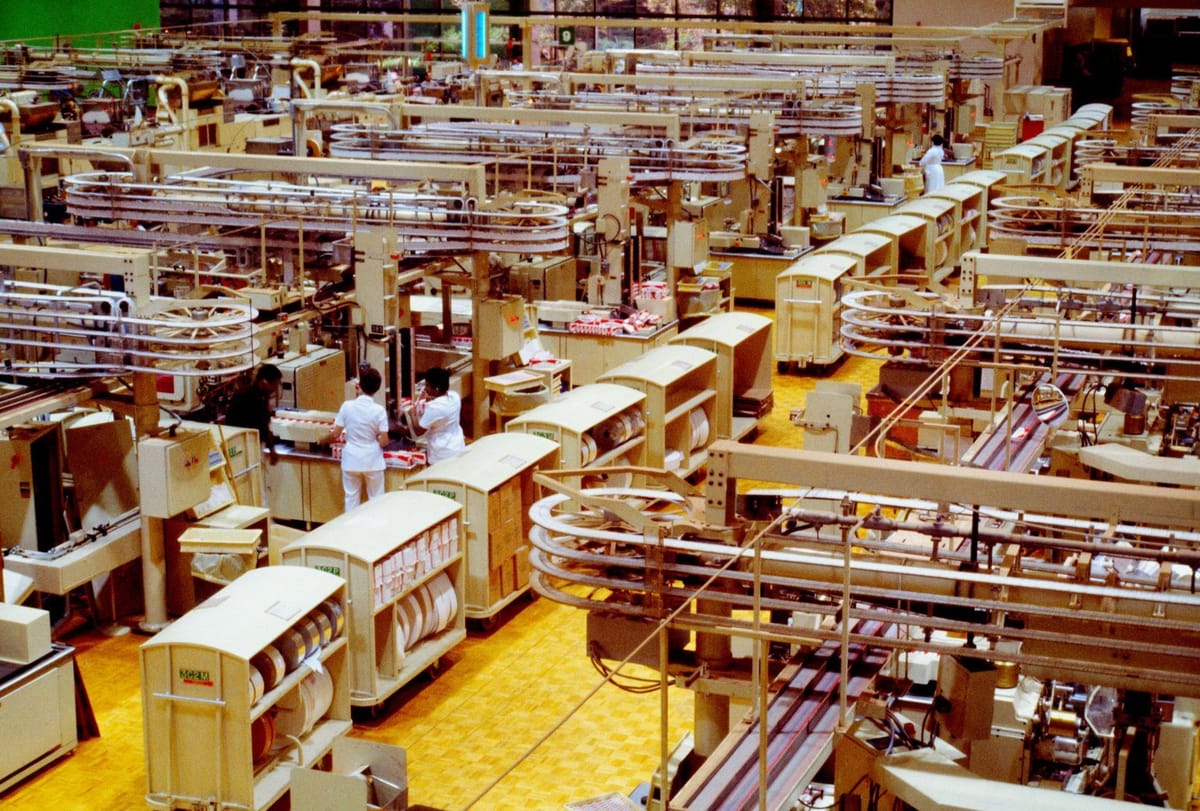
Factories, though complex societal artifacts, have an untapped magic that we should be using to encourage young people to build the future we want. Coming out of college, I had never considered working in an industrial environment. I took the interview at McMaster-Carr because I wanted the interview practice, and thought the trip to Atlanta would be cool. But seeing the facility at work — the miles of conveyor, the meticulously choreographed processes, the thinking put into every piece of the puzzle — made me excited to get involved.
The questions you need to ask before quitting your job - LeadDev
https://leaddev.com/career-development/the-questions-you-need-to-ask-before-quitting-your-job?utm_source=FuckOff&utm_medium=FuckOff&utm_content=FuckOff&utm_campaign=FuckOff
Take a step back and tease apart your current feelings. What are your likes and dislikes in this role? You know you want something new, but how new? What amount of change is going to feel like a reset? Even if you make a change, are your dislikes going to follow you?
Cover letters used to mean something - LeadDev
https://leaddev.com/hiring/cover-letters-used-to-mean-something?utm_source=FuckOff&utm_medium=FuckOff&utm_content=FuckOff&utm_campaign=FuckOff
Just as the job market flooded with freshly-graduated and newly laid-off tech workers, generative AI arrived on the scene. Now, as jobseekers increasingly rely on platforms like ChatGPT to spit out cover letters that tick off all the right keywords, hiring managers must wade through an ever-deepening pool of applications that read more or less alike.
The attention economy is inverting - by Sam Schillace
https://sundaylettersfromsam.substack.com/p/the-attention-economy-is-inverting
But what happens in the generative world? In that world, the signal is broken - a complex, well-crafted artifact is much easier to build, so it’s appearance is no longer a proxy for quality. This is a familiar effect. But the other thing that’s happening is that the attentional transaction is now “inverted” - I may have spend a small amount of my time and attention to take up a large amount of yours. I’m no longer “paying” you with attention, or transferring value to you, I’m taking it away.
I have seen the compounding teams - by Sam Schillace
https://sundaylettersfromsam.substack.com/p/i-have-seen-the-compounding-teams
The compounding comes from a “build a tool for making a tool” recursive mindset. These teams will automate everything they can, and will often tell the coding system “you’ll need a tool for that, go ahead and build and use it” - and then the system will do just that, checking it in to git and making it a permanent improvement.
 Joe Magerramov's blog: The New Calculus of AI-based Coding
https://blog.joemag.dev/2025/10/the-new-calculus-of-ai-based-coding.html
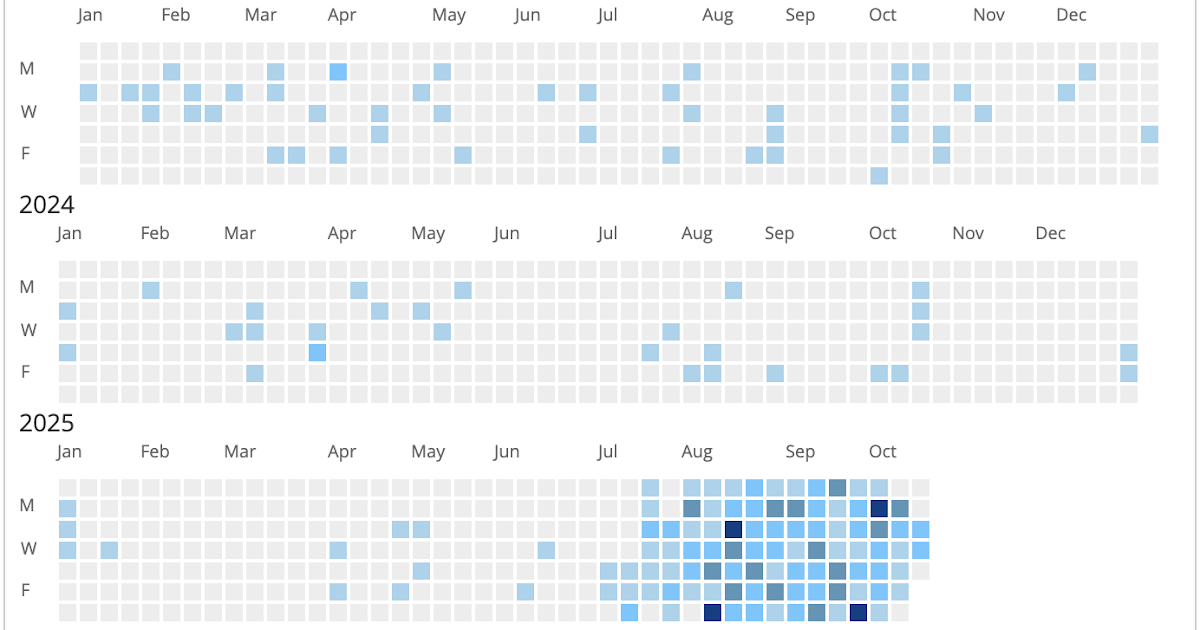
Instead, we use an approach where a human and AI agent collaborate to produce the code changes. For our team, every commit has an engineer's name attached to it, and that engineer ultimately needs to review and stand behind the code. We use steering rules to setup constraints for how the AI agent should operate within our codebase, and writing in Rust has been a great benefit. Rust compiler is famous for focusing on correctness and safety, catching many problems at compile time and providing helpful error messages that help the agent iterate. As a juxtaposition to vibe coding, I prefer the term "agentic coding." Much less exciting but in our industry boring is usually good.
 How to Run 1:1s as an Engineering Manager - Off By One
https://justoffbyone.com/posts/how-to-run-11s/
A practical, repeatable framework for running weekly engineering 1:1s using the People, Product, Process structure—with exact scripts, Notion setup, and tips for making them actually useful.
Vibe engineering
https://simonwillison.net/2025/Oct/7/vibe-engineering/#atom-everything
If you’re going to really exploit the capabilities of these new tools, you need to be operating at the top of your game. You’re not just responsible for writing the code—you’re researching approaches, deciding on high-level architecture, writing specifications, defining success criteria, designing agentic loops, planning QA, managing a growing army of weird digital interns who will absolutely cheat if you give them a chance, and spending so much time on code review.
Almost all of these are characteristics of senior software engineers already!
AI tools amplify existing expertise. The more skills and experience you have as a software engineer the faster and better the results you can get from working with LLMs and coding agents.
Embracing the parallel coding agent lifestyle
https://simonwillison.net/2025/Oct/5/parallel-coding-agents/#atom-everything
I can only focus on reviewing and landing one significant change at a time, but I’m finding an increasing number of tasks that can still be fired off in parallel without adding too much cognitive overhead to my primary work.
You're probably not that hardcore
https://mailchi.mp/rawsignal/youre-probably-not-that-hardcore
Whatever you're working towards deserves better. And so do your people. And so do you.
 meks.quest
https://meks.quest/blogs/the-theatre-of-pull-requests-and-code-review
A key part of having a reviewable PR is writing commits that tell a story. Present your changes incrementally and logically so reviewers can follow your thought process. Generic commit messages such as "add dependency," "implement file upload feature," and "address PR feedback" don’t tell much of a story and leave reviewers guessing. Why was the dependency added? What were the specific steps in creating the file uploader feature? What feedback is being addressed?
 The Rush to Return to the Office Is Stalling
https://www.msn.com/en-us/money/human-resources/the-rush-to-return-to-the-office-is-stalling/ar-AA1N1Kpa
Big companies from Microsoft to Paramount and NBCUniversal are ordering workers to show up to the office more often. If only their staffs would heed the call.
 Vibe Shift in AI Coding: Senior Developers Ship 2.5x More Than Juniors | Fastly
https://www.fastly.com/blog/senior-developers-ship-more-ai-code
 The Quiet Season
https://ashley.dev/posts/the-quiet-season/
If I could change one thing, it would be for companies to remember that humans aren’t an infinite resource. Yes, I know we’re all replaceable in the most pragmatic sense, but there’s still a cost to burning people out and swapping them for someone new. It’s a cost measured in institutional knowledge lost, in creativity dulled, in trust eroded. I’m still learning how to balance the reality that protecting my own time and energy is part of how I protect my team’s, and that stepping back doesn’t have to mean stepping away.

 Open Source is one person | Open Source Security
https://opensourcesecurity.io/2025/08-oss-one-person/
Open source, the thing that drives the world, the thing Harvard says has an economic value of 8.8 trillion dollars (also a big number). Most of it is one person. And I can promise you not one of those single person projects have the proper amount of resources they need. If you want to talk about possible risks to your supply chain, a single maintainer that’s grossly underpaid and overworked. That’s the risk. The country they are from is irrelevant.
 Live coding sucks | Mustapha Hadid
https://hadid.dev/posts/living-coding/
The engineer who froze during a 30-minute LeetCode exercise might be the same person who quietly ships flawless code, writes excellent docs, and debugs complex systems. You’re not rejecting a bad engineer, you’re rejecting someone who doesn’t perform well while being watched.

 Developing our position on AI - Blog - Recurse Center
https://www.recurse.com/blog/191-developing-our-position-on-ai
I think a useful analogy would be to compare LLMs to e-bikes. If your goal is to get somewhere quickly, an e-bike is definitely advantageous compared to a bike with no e-assist. If your goal is to become a better / stronger cyclist, an e-bike isn’t really going to help you with that.
 It's happening.
https://brilliantcrank.com/its-happening/?ref=brilliantcrank-newsletter
Let's cut through the corporate speak. These companies aren't just encouraging AI adoption—they're creating a professional caste system. There will be those who can think with machines and those who can't.
The first group will advance, lead, and thrive. The second will stagnate, struggle, and eventually be eliminated.

 Amazon Requires Ring Staff to Show AI Use to Get Promoted - Business Insider
https://www.businessinsider.com/amazon-requires-staff-show-ai-use-get-promoted-ring-2025-7?ref=brilliantcrank.com
Siminoff, in his email, said employees seeking a promotion must now describe how they have used generative AI or other AI technologies to improve customer experience or increase operational efficiency. They are also asked to cite specific AI projects they've worked on and the measurable impact achieved.
 Am I Becoming Irrelevant? - Jordi Villar
https://jordivillar.com/blog/becoming-irrelevant?ref=sidebar
You’re not irrelevant.
You’re just operating in a layer that doesn’t clap for itself.
And maybe, just maybe, the fact that your team is calm, focused, and shipping, while everything around them is chaotic, is the best evidence of your impact.
Even if no one’s naming it out loud.
 How I program with Agents - crawshaw - 2025-06-08
https://crawshaw.io/blog/programming-with-agents
It is easy for the haughty to disregard the work of gluing well-known APIs together as “not real” programming, but it has been the practical experience of my career that for every hour of truly interesting programming I can do, I have had to do 10 or more hours of dreary work with APIs, libraries, dysfunctional compilers, build systems, or obtuse package managers to actually make that hour useful. Having a tool that lets me do 30 minutes of “not real” programming by writing a few carefully constructed sentences, and lets me vacuum the kids' room while it works, preserves momentum.
 Kiro and the future of AI spec-driven software development - Kiro
https://kiro.dev/blog/kiro-and-the-future-of-software-development/
Generative and Agentic AI are poised to bring about a new wave of change. For the first time, there are tools developers can use to translate common-sense descriptions of desired program behavior into real, working systems. Many developers are using these tools already. Prompt-by-prompt, step-by step, they describe the system they want to build to AI code generators. This vibe coding approach to development has already been proven to be a powerful tool. But its power is limited because it is missing one important piece: a full vision of the bigger picture of what a program should do, and why it should do that.
Enter specification.
 Measuring the Impact of Early-2025 AI on Experienced Open-Source Developer Productivity - METR
https://metr.org/blog/2025-07-10-early-2025-ai-experienced-os-dev-study/
We conduct a randomized controlled trial (RCT) to understand how early-2025 AI tools affect the productivity of experienced open-source developers working on their own repositories. Surprisingly, we find that when developers use AI tools, they take 19% longer than without—AI makes them slower.

 I Still Use Vim. I Also Use AI. It Still Feels Like Me. - GoDaddy Blog
https://www.godaddy.com/resources/news/i-still-use-vim-i-also-use-ai-it-still-feels-like-me
Like many engineers, I’m still figuring out where AI fits best. But what’s clear is that it works best when it complements the way I already like to build software. It helps me move faster, stay in flow, and focus more on the parts of the work I enjoy, without losing the parts that matter most.
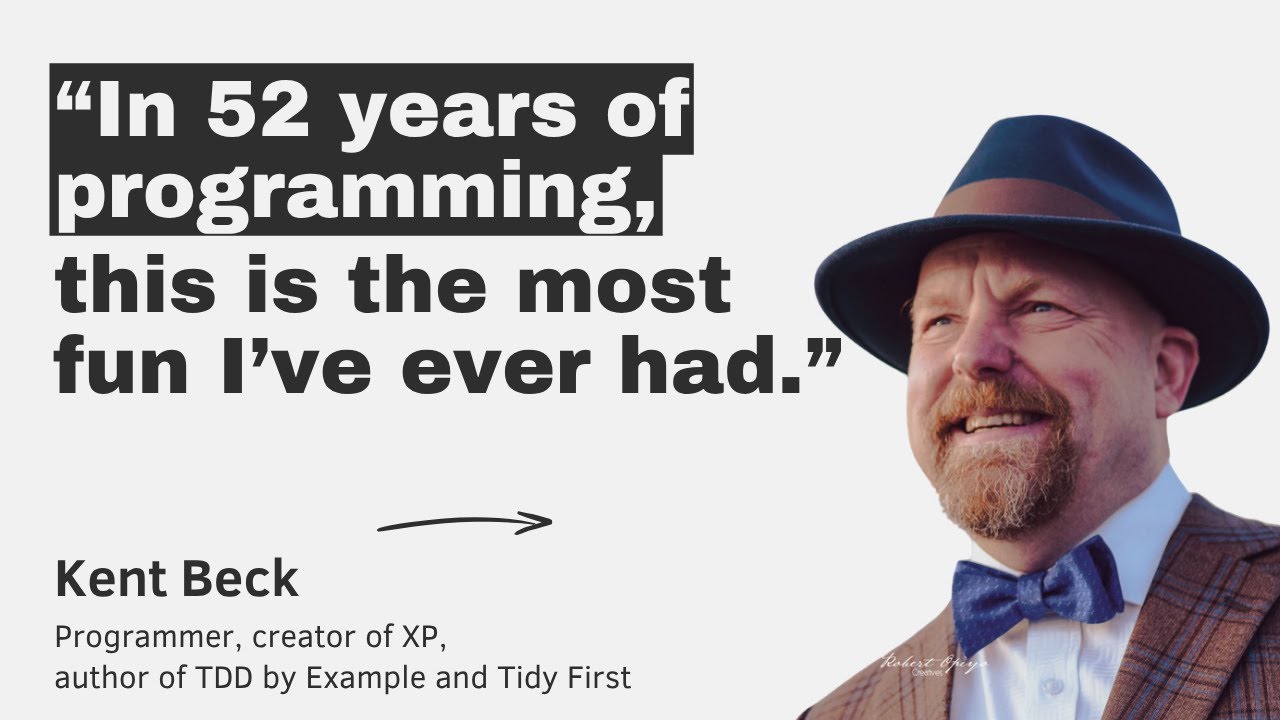
TDD, AI agents and coding with Kent Beck - YouTube
https://www.youtube.com/watch?v=aSXaxOdVtAQ&t=3713s
Now, with over five decades of programming experience, Kent is still pushing boundaries—this time with AI coding tools. In this episode of Pragmatic Engineer, I sit down with him to talk about what’s changed, what hasn’t, and why he’s more excited than ever to code.

The luxury of saying no.
https://brilliantcrank.com/the-luxury-of-saying-no/?ref=brilliantcrank-newsletter
I don’t have an issue with people being skeptical of new technology. I’m skeptical too, and so should you. We should be asking hard questions about how these systems are built, who they exploit, and who they ultimately serve. But when the critique turns into a litmus test for moral worth—when someone implies that using a tool makes you complicit, compromised, or creatively bankrupt—we’ve crossed out of analysis and into something else entirely. Something detached. Something smug.
Coping strategies for the serial project hoarder
https://simonwillison.net/2022/Nov/26/productivity/#issue-thread
The key trick is to ensure that every project has comprehensive documentation and automated tests. This scales my productivity horizontally, by freeing me up from needing to remember all of the details of all of the different projects I’m working on at the same time.
The Perfect Commit
https://simonwillison.net/2022/Oct/29/the-perfect-commit/
The commit is our principle unit of work. It deserves to be treated thoughtfully and with care.

 Stop Vibe Coding Every Damn Time! - by Aditya Oberai
https://newsletter.oberai.dev/p/stop-vibe-coding-every-damn-time
Vibe coding is what happens when you build software without understanding how anything works, relying entirely on tools to fill in the gaps. You feed ChatGPT a vague prompt, drag in some randomly generated code blocks, wire up a few buttons, and hope it works. You ship without testing. You copy code you don’t understand. You build with vibes, not logic.
AI-assisted coding, on the other hand, is intentional. You still plan your features. You still understand how your system fits together. You just move faster because you’ve got an AI pair programmer who helps with boilerplate, explains confusing concepts, and suggests things you were going to write anyway.

 Peer Programming with LLMs, For Senior+ Engineers
https://pmbanugo.me/blog/peer-programming-with-llms
This article is a collection of blog posts written by other senior or staff+ engineers exploring the use of LLM in their work, without the usual hype or buzzwords from the usual suspects. I hope you find them useful and inspiring.
 The importance of offtopic | blog.tadzik.net
https://blog.tadzik.net/the-importance-of-offtopic.html
Remote work is not rocket science. Open-source communities have been doing it for decades, and they often manage to build communities in which people would willingly spend their own money to go to a conference and actually meet their friends in person.
Getting things "done" in large tech companies | sean goedecke
https://www.seangoedecke.com/getting-things-done/?ref=sidebar
What does it mean to get things done in large companies? Most importantly, it means finishing things. How can you finish things in a world where you can keep improving systems indefinitely? It means getting them to a point where the decision-makers at the company are happy.

The Hidden Cost of AI Coding – Terrible Software
https://terriblesoftware.org/2025/04/23/the-hidden-cost-of-ai-coding/
Perhaps what we need is a new understanding of where happiness can exist in this AI-augmented world. Maybe the joy doesn’t have to disappear completely — it just shifts. Instead of finding delight in writing the perfect algorithm, perhaps we’ll discover satisfaction in the higher-level thinking about system design, in the creative process of describing exactly what we want to build, or in the human aspects of software development that AI can’t touch.
 Vibe Coding is not an excuse for low-quality work
https://addyo.substack.com/p/vibe-coding-is-not-an-excuse-for
A field guide to responsible AI-assisted development
 Horseless intelligence | Ned Batchelder
https://nedbatchelder.com/blog/202503/horseless_intelligence.html
OK, so AI doesn’t think the same way that people do. I’m fine with that. What’s important to me is that it can do some work for me, work that could also be done by people thinking. Cars (“horseless carriages”) do work that used to be done by horses running. No one now complains that cars work differently than horses.
 Literate Development: AI-Enhanced Software Engineering
https://substack.com/home/post/p-160183664
By emphasizing documentation as the primary source of truth, establishing explicit linkages between development artifacts, and employing iterative, human-guided prompting, the whole team can harness the power of LLMs while mitigating their current limitations.
 Don't compete - Inverted Passion
https://invertedpassion.com/dont-compete/
Once you overcome your desire to compete with others, you can actually just sit back and enjoy the outcomes that others compete to produce for you.
Read great books, watch interesting movies, dance to the music, use latest gadgets, and eat good food.
 1x Engineer
https://1x.engineer/
You might have already heard of a 10x engineer. Probably too often, actually. If there's such a thing as a 10x engineer, surely there must be a 1x engineer, too?
Of course there is! Let's dig into a non-exhaustive list of what qualities make up a 1x engineer.
 From where I left - <antirez>
https://antirez.com/news/144
Ok, ok: back to the point of this blog post. But perhaps the above is the *real* point, having new ideas that can be exciting.

 Employees are being marched back to the office. But why? | Life and style | The Guardian
https://www.theguardian.com/lifeandstyle/2024/dec/08/employees-are-being-marched-back-to-the-office-but-why
Like many people I thought Covid, with its stopped clock and blunt force, would bring a major reckoning. A reckoning with small things, like what we wear, and with large things, too – how we relate to each other, for example, how we consume and, crucially, how we work. But what seemed to happen, and very quickly, was that people rushed back to try to make life exactly as it was before. There was a panic to fill the empty office blocks, to repopulate the Prets and very little incentive to use the imposed pause to look around at what could be improved and what we’d got terribly wrong. I sound like a child saying this, I know, but what if the office blocks became affordable flats instead? What if we learned one single lesson? The rise of hybrid working was one of very few silver linings to the pandemic – that reach for an elusive balance and acknowledgment from employers that their workers were human beings, too.
 Egoless Engineering
https://egoless.engineering/
It shouldn’t be a radical act because results are better if we can cooperate. And life is better without cult leaders.
How do we tear down parochialism and ego?
 The First Virtual Meeting Was in 1916 - IEEE Spectrum
https://spectrum.ieee.org/virtual-meeting?ref=thebrowser.com
At 8:30 p.m. on 16 May 1916, John J. Carty banged his gavel at the Engineering Societies Building in New York City to call to order a meeting of the American Institute of Electrical Engineers. This was no ordinary gathering. The AIEE had decided to conduct a live national meeting connecting more than 5,000 attendees in eight cities across four time zones. More than a century before Zoom made virtual meetings a pedestrian experience, telephone lines linked auditoriums from coast to coast. AIEE members and guests in Atlanta, Boston, Chicago, Denver, New York, Philadelphia, Salt Lake City, and San Francisco had telephone receivers at their seats so they could listen in.
In their plaintive call for a return to the office, CEOs reveal how little they are needed | John Quiggin | The Guardian
https://www.theguardian.com/commentisfree/2024/sep/26/in-their-plaintive-call-for-a-return-to-the-office-ceos-reveal-how-little-they-are-needed
As Gideon Haigh observed 20 years ago, the era of neoliberalism has been associated with the “cult of the CEO”. The office has been the shrine of that cult. In their plaintive call for a return there, CEOs are like declining deities who see their votaries deserting them.
 The End of Affordable Travel – 2069 – Medium
https://medium.com/s/2069/the-end-of-affordable-travel-2c6301d2073d
It could well be that future generations spend a fraction of the time we do today in transit but see far more of the world. Like preindustrial humans, they may work mostly in their homes
 What's a senior engineer's job? - Julia Evans
https://jvns.ca/blog/senior-engineer/
most (all?) of the senior engineers I know take on a significant amount of helping-other-people work in addition to their individual programming work. The challenge I see me/my coworkers struggling with today isn’t so much “what?? I have to TALK TO PEOPLE?? UNBELIEVABLE.” and more “wait, how do I balance all of this leadership work with my individual contributions / programming work in a way that’s sustainable for me? How much of what kind of work should I be doing?“
What's a senior engineer's job? - Julia Evans
https://jvns.ca/blog/senior-engineer
most (all?) of the senior engineers I know take on a significant amount of helping-other-people work in addition to their individual programming work. The challenge I see me/my coworkers struggling with today isn’t so much “what?? I have to TALK TO PEOPLE?? UNBELIEVABLE.” and more “wait, how do I balance all of this leadership work with my individual contributions / programming work in a way that’s sustainable for me? How much of what kind of work should I be doing?“
 The Builder’s High – Rands in Repose
http://randsinrepose.com/archives/the-builders-high/
The Builder’s High – Rands in Repose
http://randsinrepose.com/archives/the-builders-high
 15 rules for communicating at GitHub » Ben Balter
http://ben.balter.com/2014/11/06/rules-of-communicating-at-github/
GitHub’s communication style can be summed up in one word: asynchronous.
15 rules for communicating at GitHub » Ben Balter
http://ben.balter.com/2014/11/06/rules-of-communicating-at-github
GitHub’s communication style can be summed up in one word: asynchronous.
The Old Guard – Rands in Repose
http://randsinrepose.com/archives/the-old-guard/
The Old Guard is the cultural bellwether of the company. I believe that culture is a slippery thing to fully define, but I do believe it is the responsibility of the Old Guard to not only take the time to define the key values that are the pillars of that culture, to communicate the nuance of those values over and over again, and, lastly, when it becomes apparent they are no longer serving the company, they must be willing to let those values evolve.
The Old Guard – Rands in Repose
http://randsinrepose.com/archives/the-old-guard
The Old Guard is the cultural bellwether of the company. I believe that culture is a slippery thing to fully define, but I do believe it is the responsibility of the Old Guard to not only take the time to define the key values that are the pillars of that culture, to communicate the nuance of those values over and over again, and, lastly, when it becomes apparent they are no longer serving the company, they must be willing to let those values evolve.
 To Grow Without Bureaucracy, Only Hire Fully Formed Adults.... | HomeFree AmericaHomeFree America
http://www.homefreeamerica.us/grow-without-bureaucracy-hire-fully-formed-adults/
People that make responsible decisions don’t need much, if any oversight.
To Grow Without Bureaucracy, Only Hire Fully Formed Adults.... | HomeFree AmericaHomeFree America
http://www.homefreeamerica.us/grow-without-bureaucracy-hire-fully-formed-adults
People that make responsible decisions don’t need much, if any oversight.
The Future of Work is "Turking for Uber" and you Won't Like it
http://www.homefreeamerica.us/future-work-turking-uber-wont-like/
80-90% of the work that is currently being done will be automated in the next 20-30 years.
The Future of Work is "Turking for Uber" and you Won't Like it
http://www.homefreeamerica.us/future-work-turking-uber-wont-like
80-90% of the work that is currently being done will be automated in the next 20-30 years.
 DISTRIBUTED: Remote Employees are Happier, Healthier and More Productive | Intridea Blog
http://www.intridea.com/blog/2014/6/26/distributed-remote-employees-are-happier-healthier-and-more-productive
Yep, you read that right. While it’s no surprise that remote employees are happier than their commuting counterparts, many business owners are shocked to learn distributed employees are also more productive. How could that be? It’s actually pretty simple. Psychologists have proven time and again that a happy employee is also a productive employee.
 Social loafing: A meta-analytic review and theoretical integration. - PsycNET - DOI Landing page
http://psycnet.apa.org/?&fa=main.doiLanding&doi=10.1037/0022-3514.65.4.681
"Social loafing is the tendency for individuals to expend less effort when working collectively than when working individually. A meta-analysis of 78 studies demonstrates that social loafing is robust and generalizes across tasks and S populations. A large number of variables were found to moderate social loafing. Evaluation potential, expectations of co-worker performance, task meaningfulness, and culture had especially strong influence. These findings are interpreted in the light of a collective effort model that integrates elements of expectancy-value, social identity, and self-validation theories. (PsycINFO Database Record (c) 2012 APA, all rights reserved)"
Social loafing: A meta-analytic review and theoretical integration. - PsycNET - DOI Landing page
http://psycnet.apa.org/?doi=10.1037/0022-3514.65.4.681&fa=main.doiLanding
"Social loafing is the tendency for individuals to expend less effort when working collectively than when working individually. A meta-analysis of 78 studies demonstrates that social loafing is robust and generalizes across tasks and S populations. A large number of variables were found to moderate social loafing. Evaluation potential, expectations of co-worker performance, task meaningfulness, and culture had especially strong influence. These findings are interpreted in the light of a collective effort model that integrates elements of expectancy-value, social identity, and self-validation theories. (PsycINFO Database Record (c) 2012 APA, all rights reserved)"
 Ken's Programming Blog: I Knew a Programmer that Went Completely Insane
http://startingdotneprogramming.blogspot.com/2013/04/i-knew-programmer-that-went-completely.html
It may be hard to swallow but the extra effort and hours that you put into your job as a software developer does not usually amount to someone higher up thinking you should run the company. It has been my experience that good producers are more likely to be asked to continue to produce. If they moved you to a higher position and better pay then who would produce the software?
 How the internet is making us poor – Quartz
http://qz.com/67323/how-the-internet-made-us-poor/
Barring a civilization-ending event, technology is not going to move backward. More and more of our world will be controlled by software. It’s already become so ubiquitous that, argues one of my colleagues, it’s now ridiculous to call some firms as “tech” companies when all companies depend on it so much.
How the internet is making us poor – Quartz
http://qz.com/67323/how-the-internet-made-us-poor
Barring a civilization-ending event, technology is not going to move backward. More and more of our world will be controlled by software. It’s already become so ubiquitous that, argues one of my colleagues, it’s now ridiculous to call some firms as “tech” companies when all companies depend on it so much.
 Kanban? No, it can't
http://aidylewis.heroku.com/2012/11/18/kanban-no-it-cant/
That's an... interesting perspective: "Kanban is a paternalistic project management theory that aims to set developers on the right path. It promotes the idea that the manager is the arbiter of success and the deliverer of change. And like its forbear Scrum, its major proponents are those who don’t code for a living."