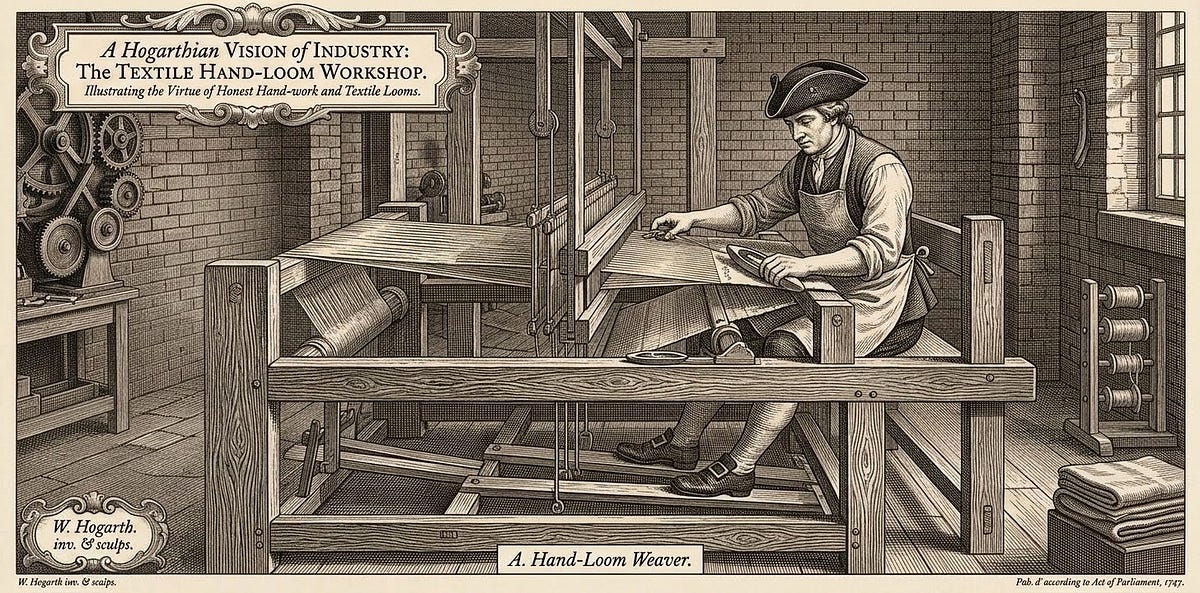
 What the AI era owes you. No one is going to save your career… | by Dan Maccarone | Oct, 2026 | UX Collective
https://uxdesign.cc/what-the-ai-era-owes-you-d472b3859bf3
This is not the pep talk anyone wants. The pep talk is that it’ll be fine, new jobs are coming, somebody’s got it handled, but that’s a lie. The reality is, nobody is coming to retrain you, but that is not the end of the story.
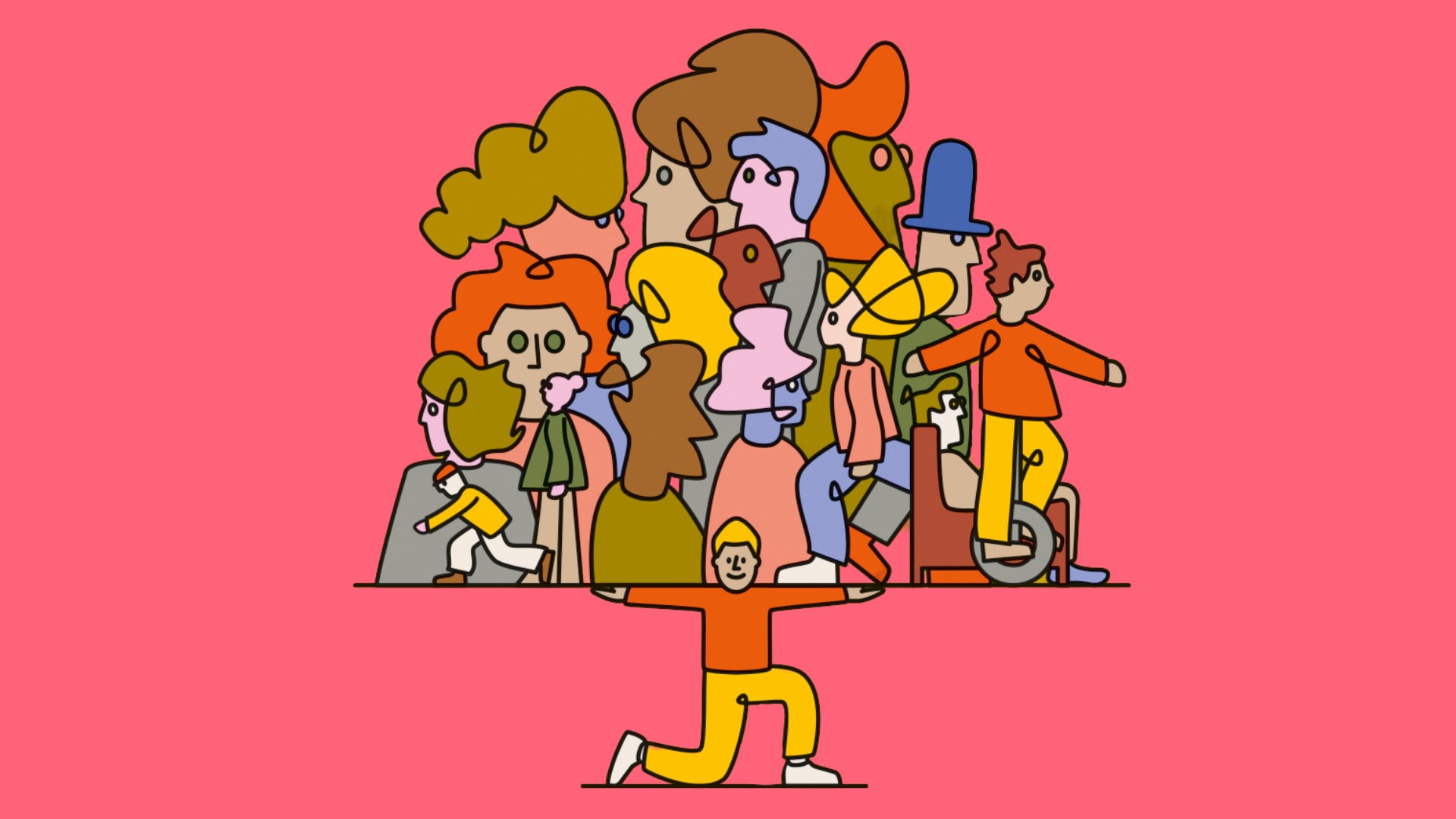
 Staff+ engineers must rebuild team culture - LeadDev
https://leaddev.com/leadership/staff-engineers-must-rebuild-team-culture
AI is driving a shift to more autonomous work within teams, which means opportunities to establish culture that used to be automatic – time spent pairing, organizing work around shared goals, planning and designing together – now require deliberate choices.

Engineers grieve a job that no longer exists - LeadDev
https://leaddev.com/career-development/engineers-grieve-a-job-that-no-longer-exists?utm_source=ActiveCampaign&utm_medium=email&utm_content=Engineers%20are%20grieving&utm_campaign=Originals%3A%20%20Issue%20312%20%2827%20August%202026%29%20%28Copy%29
The more AI-generated code a team produces, the more review work lands on the engineers who care most about quality, often the most experienced people on the team. The volume of output rises while the nature of the work shifts from creation to inspection, and the engineers doing the hardest cognitive labor appear, by the metrics, to be less productive than the ones generating code with AI.
You should never be angry at work
https://www.seangoedecke.com/you-should-never-be-angry-at-work/
Being angry at work feels good. It feels like proof that you’re working on something that matters, and that you’re personally having an impact. If you’re angry, nobody can call you a coaster. But anger is only a local maximum. If you can find your way to a different style of working, you’ll not only be more effective, but you’ll be in a far better place to have impact on problems that actually matter.

 Remote workers report the highest well-being in study of 7,700 employees | CU Boulder Today | University of Colorado Boulder
https://www.colorado.edu/today/2026/08/12/remote-workers-report-highest-well-being-study-7700-employees
The findings also cast doubt on one of the main arguments for bringing employees back to the office: that people need to be together in person to feel connected.
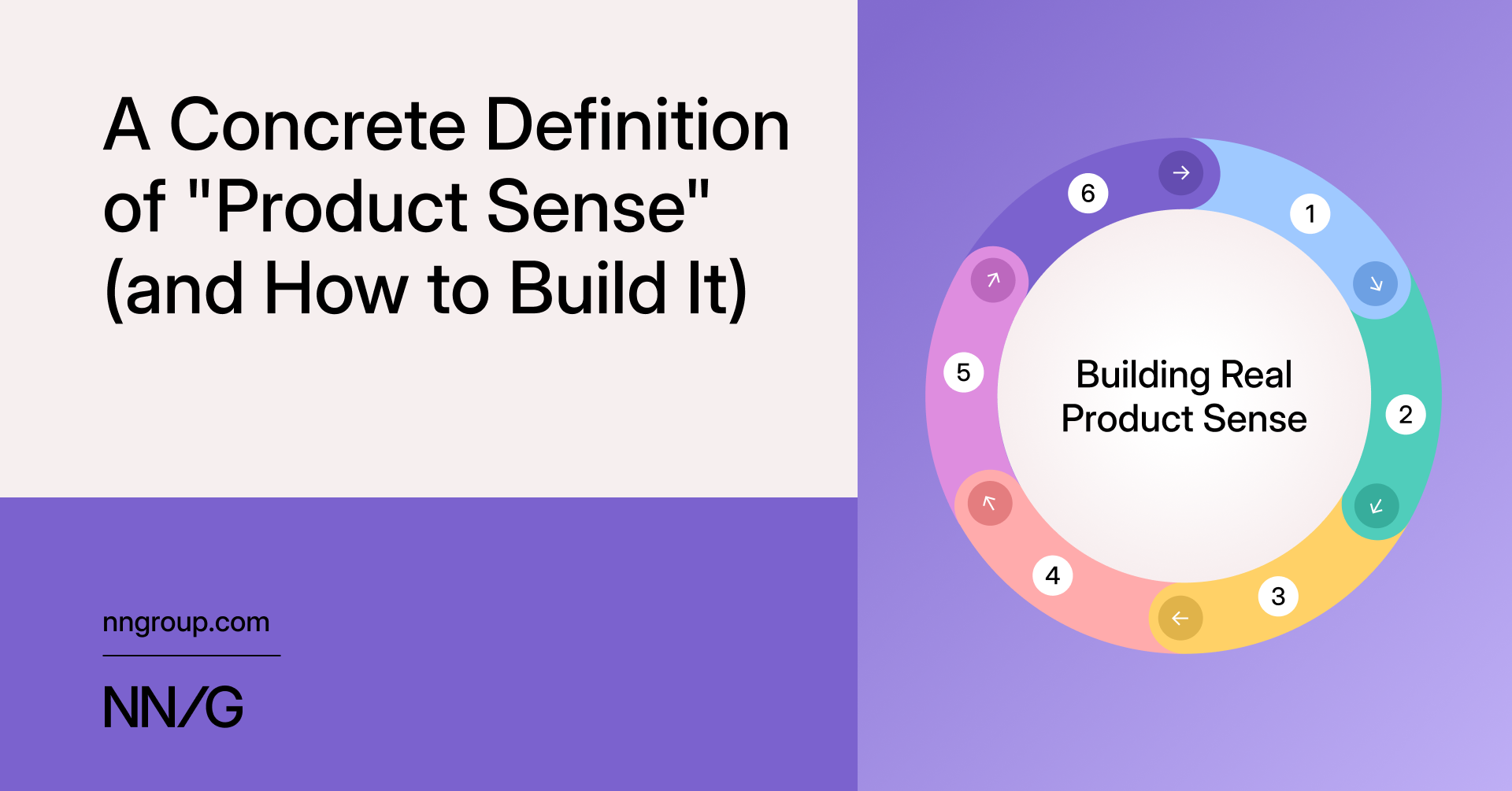
 A Concrete Definition of “Product Sense” (and How to Build It) - NN/G
https://www.nngroup.com/articles/product-sense-definition/?ref=sidebar
Product sense is the ability to recognize when current problems match past successes or failures and reliably estimate how similar solutions will affect the desired outcomes.
 The Tragedy of the Engineering Commons
https://ianreppel.org/the-tragedy-of-the-engineering-commons/
The surest way to ruin an engineering team is to believe it will survive whatever you do to it.
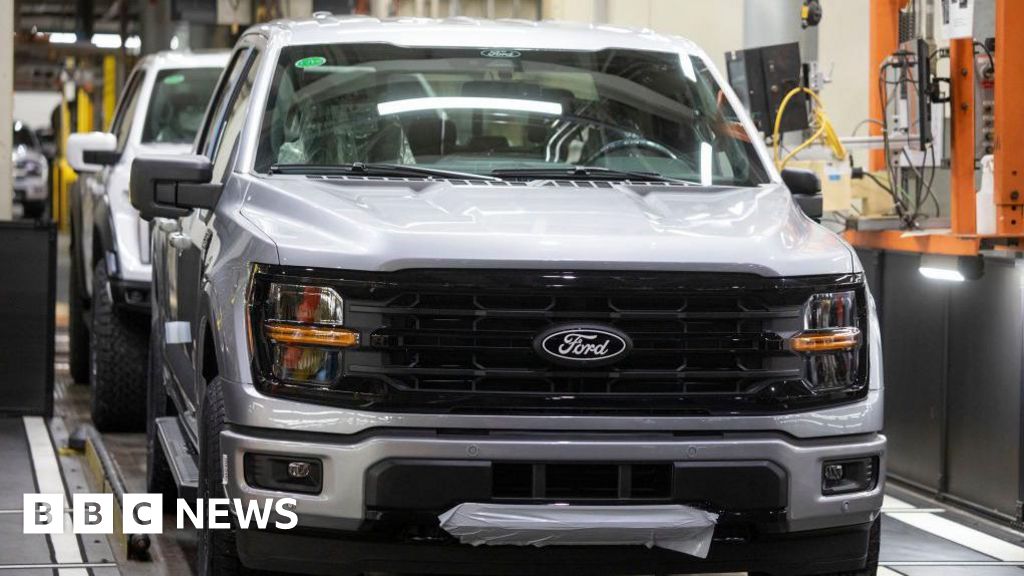
 Ford rehires human engineers after AI fails to match quality checks
https://www.bbc.com/news/articles/cgrkd41n2v9o?ref=karlbode.com
"Mistakenly, we thought that by just introducing artificial intelligence and ingesting the design requirements that we had, that would produce a high-quality product," he said.

 The AI Hype Reckoning Is Upon Us
https://karlbode.com/the-ai-hype-reckoning-is-upon-us/
There's useful automation software that makes it easier to code, draft a new resume, or study vast repositories of scientific knowledge. And then there's a parade of technofascist hucksters lying to your face about the imminent arrival of omniscient, sentient, paradigm-rattling supercomputers.
There's a tremendous chasm between these two things. And everywhere you look you can see evidence that we've reached a breaking point when it comes to reconciling these two wildly-different realities.

 Boffins peg narcissistic leadership as the real driver behind 'return to office' demands
https://www.theregister.com/columnists/2026/07/01/boffins-peg-narcissistic-leadership-as-the-real-driver-behind-return-to-office-demands/5264222
Ego-driven management also relies on the old factory mentality that holds that the best workers are the ones who arrive early, work late, and are seen hustling by the bosses. Putting in 80-hour workweeks may be necessary at a startup, but in most businesses, that's as stupid as measuring programmers' productivity by lines of code or, more recently, by how many AI tokens they use.

 No Juniors Today, No Seniors in 2031 — Blog | Filipe Brito Ferreira — Front-End Engineer
https://www.fbritoferreira.com/blog/no-juniors-today-no-seniors-in-2031/
AI didn’t kill the senior engineer. We did, by not hiring the junior who would’ve become one. Compound interest works in both directions. The per-developer cost I wrote about a month ago is one side of the meter. The unhired junior is the other, and that meter has been running since 2024 whether the dashboards report it or not.

 The good times in tech are over
https://www.seangoedecke.com/good-times-are-over/
If I had to choose, I’d definitely choose to return to the job market of the 2010s, so I can be paid more to work less and have more job security. I’m not an idiot. But the silver lining to actually having to ship is that you’re no longer living in a dream. If you’re realistic about how things work, the job of software engineering becomes much easier to understand:
Providing value to the company gets you rewarded
Not providing value to the company gets you punished
“Value to the company” means furthering the explicit plans of your company’s executives

The just-say-no engineer was a ZIRP phenomenon
https://www.seangoedecke.com/the-just-say-no-engineer-was-a-zirp-phenomenon/
Some senior and staff engineers operate as gatekeepers, slowing down development and saying no to most things
This was a critical role during ZIRP, because:
Tech companies had thousands of engineers who were empowered to do basically whatever they wanted, so without gatekeeping the systems would have fallen apart
Tech companies didn’t care that much if they got anything done
When ZIRP ended, the environment for this kind of engineer became much worse, since tech companies were now actually focused on accomplishing things and the “do whatever you want” era was over
Like with layoffs, this shift is often blamed on AI, but it would have happened even if powerful LLMs had not emerged at all. It’s an end-of-ZIRP phenomenon

Software engineering may no longer be a lifetime career
https://www.seangoedecke.com/software-engineering-may-no-longer-be-a-lifetime-career/
If AI does turn out to make you dumber, why can’t we just keep writing code by hand? You can! You just might not be able to earn a salary doing so, for the same reason that there aren’t many jobs out there for carpenters who refuse to use power tools. If the models are good enough, you will simply get outcompeted by engineers willing to trade their long-term cognitive ability for a short-term lucrative career3.
 Programming Still Sucks. — Writing
https://www.stvn.sh/writing/programming-still-sucks-fqffhyp
Somewhere in your infrastructure is a cron job. It runs at 3am. It has been running since 2016. It does something critical. You couldn't tell me exactly what, but you know the one person who could, and they left in 2019. The comment at the top says # DO NOT CHANGE!!! Ask Ben. Ben is not reachable. Every roadmap planning session for the last four years has included "modernize legacy cron" as a candidate initiative. It has never made the cut. You have personally removed it from the list twice.
Someone keeps it running. Her name is Sara. You don't know this.
 The AI-native interview | Sierra
https://sierra.ai/blog/the-ai-native-interview
We removed our coding and algorithms interviews and replaced them with an AI-native onsite:
Plan: A working session with the candidate to define a product to build. The candidate drives ideation, while interviewers ask questions to strengthen it. We focus on an idea in the candidate’s domain so we see their product thinking in action.
Build: The interviewer steps out and the candidate brings the idea to life over 2 hours, using the AI tooling and frameworks of their choice. They have complete freedom to pivot or adjust scope as they go.
Review: The candidate demos what they’ve built. We debate the key product flows and choices they made; review the code to understand their technical judgment (data model, abstractions, extensibility, etc.); and discuss the path to production. We also dig into how they used AI along the way.
 [2509.00462] AI Self-preferencing in Algorithmic Hiring: Empirical Evidence and Insights
https://arxiv.org/abs/2509.00462
The bias against human-written resumes is particularly substantial, with self-preference bias ranging from 67% to 82% across major commercial and open-source models. To assess labor market impact, we simulate realistic hiring pipelines across 24 occupations. These simulations show that candidates using the same LLM as the evaluator are 23% to 60% more likely to be shortlisted than equally qualified applicants submitting human-written resumes, with the largest disadvantages observed in business-related fields such as sales and accounting. We further demonstrate that this bias can be reduced by more than 50% through simple interventions targeting LLMs' self-recognition capabilities. These findings highlight an emerging but previously overlooked risk in AI-assisted decision making and call for expanded frameworks of AI fairness that address not only demographic-based disparities, but also biases in AI-AI interactions.

 Alex Karp Says There's 2 Ways to Know If You Have a Future - Business Insider
https://www.businessinsider.com/alex-karp-future-ai-neurodivergent-vocational-skills-2026-3?op=1
Palantir CEO Alex Karp says there are two groups of people who shouldn't be worried about AI advancements.
"There are basically two ways to know you have a future," Karp said during a recent interview on TBPN. "One, you have some vocational training. Or two, you're neurodivergent."

 What do coders do after AI? - Anil Dash
https://www.anildash.com/2026/03/13/coders-after-ai/?ref=brilliantcrank.com
Your job changes into describing software. Now, if you're the kind of person who only ever wanted to have the end result, maybe this is a liberation. Sometimes, that's what mattered — we wanted to fast-forward to the end result, elegance be damned. But if you were one of those crafters? The people who wrote idiomatic code that made that programming language sing? There's a real grief here. It's not as serious as when we know a human language is dying out, but it's not entirely dissimilar, either.

Actually, people love to work hard - Anil Dash
https://www.anildash.com/2026/04/06/people-love-to-work-hard/
It is genuinely one of the best feelings in life to be completely exhausted while sitting next to someone who’s been right beside you, shoulder to shoulder, fighting to accomplish the same goal. I’ve known that to be true whether we were launching a new company into the world, campaigning to get a candidate we believed in elected, organizing to rally people around an issue, raising funds for an important cause, or even just trying to get people together for a big event or party.
 500 applications, 0 callbacks
https://mailchi.mp/rawsignal/500-applications-0-callbacks?e=688b6720bf
Once you accept that the front door is pointless, you get so much time back. Yeah, you still need a gig, we get it. But what if, instead of applying all your creativity and energy to the attempt to pass some invisible set of hurdles, or to writing exactly the right tone of follow up email when an interviewer ghosts you, what if instead of all that you just abandon the front door entirely and find another way?
That other way, by the way, is human connection.
OMG stop. Don't roll your eyes. You hate networking. It's so transactional and fake. It's all small talk and you hate small talk. Yes yes yes. We hate it, too. That's not what we mean. We mean that if the Applicant Tracking System Jello isn't where the hiring managers are any more, then you should start spending time elsewhere.
 2026 has been the most pivotal year in my career… and it's only March
https://nullprogram.com/blog/2026/03/29/
A small part of me is sad at what is lost. A bigger part is excited about the possibilities of the future. I’ve always had more ideas than time or energy to pursue them. With AI at my command, the problem changes shape. I can comfortably take on complexity from which I previously shied away, and I can take a shot at any idea sufficiently formed in my mind to prompt an AI — a whole skill of its own that I’m actively developing.
 The Cognitive Dark Forest | Rye blog
https://ryelang.org/blog/posts/cognitive-dark-forest/
You think of something new and express it - through a prompt, through code, through a product - it enters the system. Your novel idea becomes training data. The sheer act of thinking outside the box makes the box bigger.

 Thoughts on slowing the fuck down
https://mariozechner.at/posts/2026-03-25-thoughts-on-slowing-the-fuck-down/
Anything that defines the gestalt of your system, that is architecture, API, and so on, write it by hand. Maybe use tab completion for some nostalgic feels. Or do some pair programming with your agent. Be in the code. Because the simple act of having to write the thing or seeing it being built up step by step introduces friction that allows you to better understand what you want to build and how the system "feels". This is where your experience and taste come in, something the current SOTA models simply cannot yet replace. And slowing the fuck down and suffering some friction is what allows you to learn and grow.
 davidbau.com Does Computer Science Still Exist?
https://davidbau.com/archives/2026/03/20/does_computer_science_still_exist.html
But my NetHack experience suggests something different. The skills that matter at scale are somehow still about programming, but they are not coding skills. They are: deciding what to build. Figuring out what to test and how to know if the tests are honest. Building tools that make invisible things visible. Managing coordination across agents. Knowing when a metric is a figleaf. Recognizing where the real complexity lives in a system, and routing attention there instead of everywhere else.
These are the conceptual skills that have always been underneath large-scale programming. They are the hard part that the mechanical craft obscured. The reality is that CS has never really been about writing code. Underneath coding is critical thinking about algorithms, engineering principles, analytical methods. It is the science of managing complexity, and code is just the medium we manage it in. In the era of AI code generation, the field does not die. It transforms.

 The diminished art of coding | Read the Tea Leaves
https://nolanlawson.com/2026/03/22/the-diminished-art-of-coding/
My advice to other coders, or at least the advice I’m taking myself, is that if you’re looking for art in coding: stop looking. If you’ve never taken an interest in poetry, or painting, or dance, or whatever, now would be a good time. In an era where the internet is increasingly full of bots pumping their bland bot ideas into everybody’s brains, seeking out distinctly human forms of expression has become vital.
 AI Didn't Break the Senior Engineer Pipeline. It Showed That One Never Existed.
https://blog.bryanl.dev/posts/ai-senior-engineer-pipeline/
The organizations that figure this out will develop stronger engineers faster than ever, because AI is a powerful tool for deliberate development when someone is actually steering it. The ones that don’t will produce a generation of engineers who can ship features with AI assistance but can’t independently reason about hard problems. The difference won’t show up on a quarterly roadmap. It will show up the first time something goes seriously wrong and someone needs to think their way out of it without a prompt to lean on.
 Why craft-lovers are losing their craft — Hong Minhee on Things
https://writings.hongminhee.org/2026/03/craft-alienation-llm/
One caveat matters here. The tension between craft and efficiency doesn't disappear if you remove capitalism from the picture. LLM coding assistants produce faster results whether anyone is being paid or not, and any community, however it's organized, will eventually have to reckon with what to do with that speed difference. Capitalism gives the harshest possible answer to that question: the slower worker loses their livelihood. But the question itself would survive capitalism. Other forms of social organization might answer it more gently, but they'd still have to answer it.

Silicon Valley Abuzz About Adding AI Compute to Engineer Compensation - Business Insider
https://www.businessinsider.com/ai-compute-compensation-software-engineers-greg-brockman-2026-3
With Levels.fyi pegging the 75th percentile software engineer salary at $375,000, Tunguz estimates that adding $100,000 in annual inference costs brings the fully loaded cost to $475,000 — meaning just over 20% of the compensation cost could come from AI usage in the future.
 Do AI-enabled companies need fewer people? | Seldo.com
https://seldo.com/posts/do-ai-enabled-companies-need-fewer-people/?ref=sidebar
My read on this is: the startup economy is undergoing a structural transformation here. Startups are substituting compute for labor at an increasing rate. I still remain optimistic that this is going to result in a lot more companies doing a lot more things, but so far it hasn't happened. But companies' claims that they can get by with way fewer people in the age of AI does seem to be true.

 The Noble Path
https://www.joanwestenberg.com/the-noble-path/?ref=westenberg-newsletter
If you've ever made something useful and felt a pang of guilt for not monetizing it, that guilt is a symptom of the monoculture. If you've ever hesitated to share a tool because it wasn't "polished enough" for a product launch, you've been contaminated by standards that don't apply to gifts. If you've ever described your own creative work as "a side project" with that apologetic minimizing doing all the heavy lifting, you've internalized a heirarchy of value that ranks market viability above human usefulness.
 Are AI productivity gains fueled by delivery pressure? | Ruslan Osipov
https://rosipov.com/blog/are-ai-productivity-gains-fueled-by-delivery-pressure/?ref=sidebar
The right way to leverage AI in workspace is as a license to work better and focus on the right things, not as a mandate to produce more things faster.
 The AI Vampire. This was an unusually hard post to… | by Steve Yegge | Feb, 2026 | Medium
https://steve-yegge.medium.com/the-ai-vampire-eda6e4f07163
I’m convinced that 3 to 4 hours is going to be the sweet spot for the new workday. Give people unlimited tokens, but only let people stare at reports and make decisions for short stretches. Assume that exhaustion is the norm. Building things with AI takes a lot of human energy.
 Opinion | The A.I. Disruption Has Arrived, and It Sure Is Fun - The New York Times
https://www.nytimes.com/2026/02/18/opinion/ai-software.html?unlocked_article_code=1.NFA.Q5V5.RFhmZVUFQ04Z&smid=url-share
All of the people I love hate this stuff, and all the people I hate love it. And yet, likely because of the same personality flaws that drew me to technology in the first place, I am annoyingly excited.
 Something Big Is Happening — matt shumer
https://shumer.dev/something-big-is-happening
We're past the point where this is an interesting dinner conversation about the future. The future is already here. It just hasn't knocked on your door yet.
It's about to.

 Turns Out They Didn’t Really Want You To Bring Your Whole Self To Work | Techdirt
https://www.techdirt.com/2026/02/03/turns-out-they-didnt-really-want-you-to-bring-your-whole-self-to-work/
So no, they didn’t really want you to bring your whole self to work. They wanted you to bring the parts that were useful to them, for exactly as long as it was useful to them. The “whole self” thing was just the price of admission in a seller’s market. Now that it’s a buyer’s market, they’d prefer you just shut up and (use AI to write) code.
The irony is that employees who actually believe in what they’re building tend to build better things. These executives may have just taught an entire generation of workers that the relationship is purely transactional. When the labor market tightens again—and it will—they might find that lesson stuck.

 How to know if that job will crush your soul - Anil Dash
https://www.anildash.com/2026/01/12/will-that-job-crush-your-soul/
Last week, we talked about one huge question, “How the hell are you supposed to have a career in tech in 2026?” That’s pretty specific to this current moment, but there are some timeless, more perennial questions I've been sharing with friends for years that I wanted to give to all of you. They're a short list of questions that help you judge whether a job that you’re considering is going to crush your soul or not.

 Welcome Back to the Office. You Won’t Get Anything Done | The Walrus
https://thewalrus.ca/return-to-office-mandates/
Employers are so terrified at the prospect of their employees not working or thinking about work that they would risk cutting into their profit margins. Perhaps they are right to be afraid. If people weren’t locked up in offices for eight to ten hours a day, they might have time to take care of themselves. They might have time to reflect on whether their jobs actually bring them happiness or contribute meaningfully to the world. They might have time to discover other ways of experiencing pleasure beyond the fleeting dopamine hits occasioned by retail therapy. Instead of buying things to fill the voids in their lives, they might make art, they might experiment sexually, they might organize a protest, they might read a book, or they might spend time caramelizing onions for a leisurely dinner with their friends—and God, what a frightful world that would be.
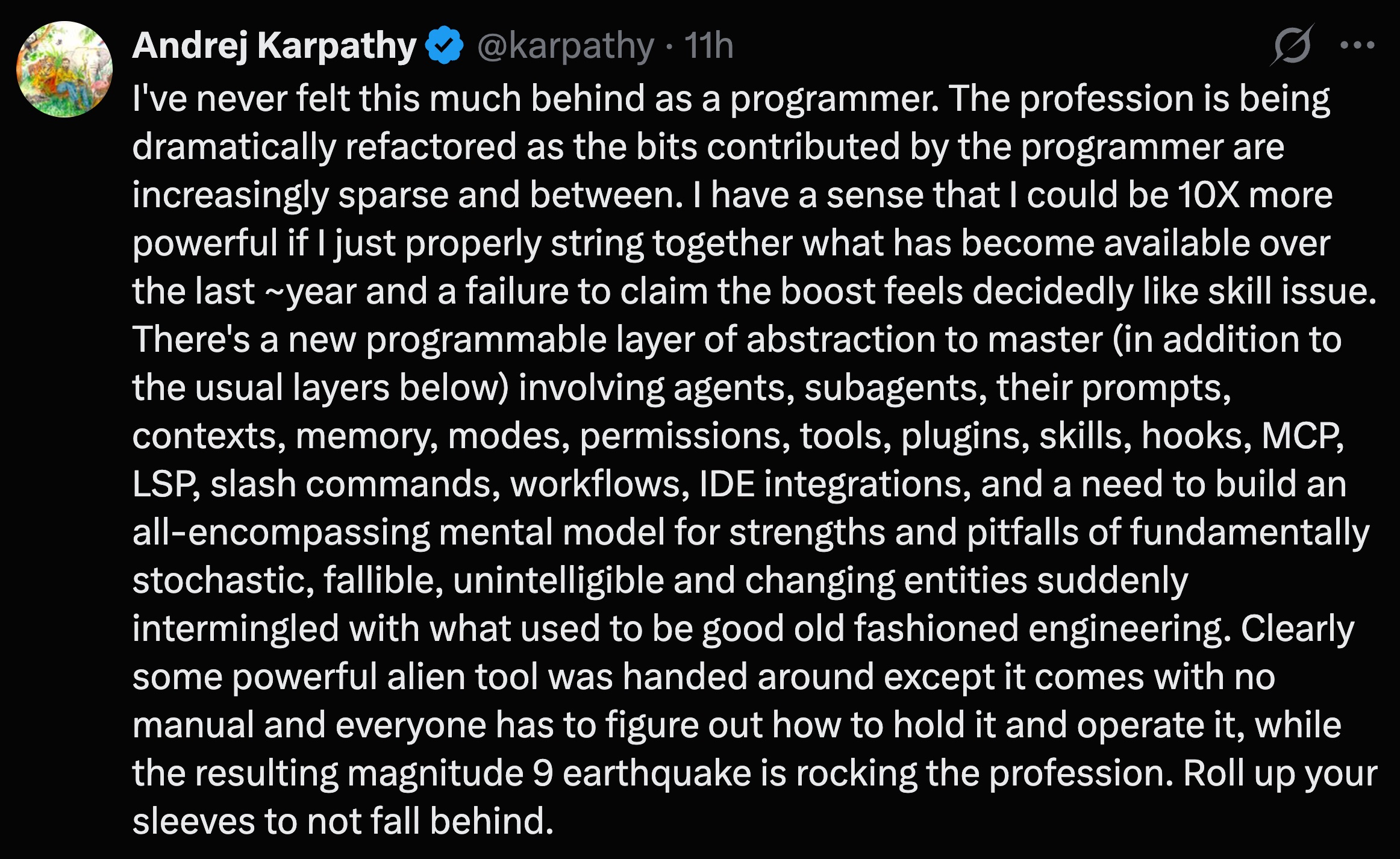
 Don’t feel bad; even the inventor of the term “vibe coding” is overwhelmed by all the AI-driven changes : Global Nerdy
https://www.globalnerdy.com/2026/01/04/dont-feel-bad-even-the-inventor-of-the-term-vibe-coding-is-overwhelmed-by-all-the-ai-driven-changes/
Karpathy’s post came at the end of 2025, so I thought I’d share my thoughts on it — in the form of a “battle plan” for how I’m going to approach AI in 2026.

How the hell are you supposed to have a career in tech in 2026? - Anil Dash
https://www.anildash.com/2026/01/05/a-tech-career-in-2026/
A lot of us still care about things like the potential for technology to help people, or still believe in the idealistic and positive goals that got us into our careers in the first place. We weren’t wrong, or naive, or foolish to aspire to those goals simply because some bad actors sought to undermine them. And it’s okay to feel frustrated or scared in a time when it seems to many like those goals could be further away than they’ve been in a long time.

 2025: The year in LLMs
https://werd.io/2025-the-year-in-llms/
I also think we’re going to see a real split in the tech industry (and everywhere code is written) between people who are outcome-driven and are excited to get to the part where they can test their work with users faster, and people who are process-driven and get their meaning from the engineering itself and are upset about having that taken away. (This is not to say that there aren’t many issues with AI aside from these things, of course.)
 Your job is to deliver code you have proven to work
https://simonwillison.net/2025/Dec/18/code-proven-to-work/#atom-everything
As software engineers we don’t just crank out code—in fact these days you could argue that’s what the LLMs are for. We need to deliver code that works—and we need to include proof that it works as well. Not doing that directly shifts the burden of the actual work to whoever is expected to review our code.

 What Actually Makes You Senior – Terrible Software
https://terriblesoftware.org/2025/11/25/what-actually-makes-you-senior/
But if you strip away the title, the salary, and the years of experience, there’s one core skill that separates senior+ engineers from everyone else: reducing ambiguity. Everything else flows from that.
 Why I Ignore The Spotlight as a Staff Engineer - Lalit Maganti
https://lalitm.com/software-engineering-outside-the-spotlight/
The tech industry loves to tell you to move fast. But there is another path. It is a path where leverage comes from depth, patience, and the quiet satisfaction of building the foundation that others stand on.
You don’t have to chase the spotlight to have a meaningful, high-impact career at a big company. Sometimes, the most ambitious thing you can do is stay put, dig in, and build something that lasts.

 The Junior Hiring Crisis | People Work
https://people-work.io/blog/junior-hiring-crisis/?ref=sidebar
When tech companies started giving engineers an alternative career path to management by letting them climb the ranks as individual contributors instead of having to be managers, I thought that was definitely the right move. Still do. However, the unintended consequence of that is that we’ve spent a decade normalizing senior engineers opting out of developing the next generation.
The questions you need to ask before quitting your job - LeadDev
https://leaddev.com/career-development/the-questions-you-need-to-ask-before-quitting-your-job?utm_source=FuckOff&utm_medium=FuckOff&utm_content=FuckOff&utm_campaign=FuckOff
Take a step back and tease apart your current feelings. What are your likes and dislikes in this role? You know you want something new, but how new? What amount of change is going to feel like a reset? Even if you make a change, are your dislikes going to follow you?
Cover letters used to mean something - LeadDev
https://leaddev.com/hiring/cover-letters-used-to-mean-something?utm_source=FuckOff&utm_medium=FuckOff&utm_content=FuckOff&utm_campaign=FuckOff
Just as the job market flooded with freshly-graduated and newly laid-off tech workers, generative AI arrived on the scene. Now, as jobseekers increasingly rely on platforms like ChatGPT to spit out cover letters that tick off all the right keywords, hiring managers must wade through an ever-deepening pool of applications that read more or less alike.
 How to Run 1:1s as an Engineering Manager - Off By One
https://justoffbyone.com/posts/how-to-run-11s/
A practical, repeatable framework for running weekly engineering 1:1s using the People, Product, Process structure—with exact scripts, Notion setup, and tips for making them actually useful.

 Building a Résumé Pipeline with Pandoc, YAML, and Docker
https://phoenixtrap.com/2025/10/14/treating-my-resume-like-infrastructure/?utm_source=FuckOff&utm_medium=FuckOff
Most job applications today are screened by AI-driven applicant tracking systems (ATS) before a human ever sees them. That means formatting consistency, keyword alignment, and clarity aren’t just nice to have — they’re survival traits. Manually tailoring each version is slow and error-prone.
 The Programmer Identity Crisis ❈ Simon Højberg ❈ Principal Frontend Engineer
https://hojberg.xyz/the-programmer-identity-crisis/
Inside companies, power dynamics are shifting as this new identity is pushed. In a mad dash to increase productivity in the wrong place7, developers are forced to use LLMs in increasingly specific ways. Conform or be cast out. Use the products that herald our obsolescence, or resign. Scarcely has management mandated such specifics of our tools before. Tools, like those of a chef or carpenter, that we’ve taken great pride in curating and honing ourselves: careful configuration of our editor, tinkering with dot files, and dev environments. As part of the craft, we’ve been dedicated and devoted to personalizing our toolsets to match our thinking. It feels like a violation to have this be decreed by management, who have little to no connection to the day-to-day, and who should instead be concerned with outcomes, process, and facilitating creativity. For decades, programmers have been pampered within companies. These narratives offer a new way for management to tip the balance back in their favor.
You're probably not that hardcore
https://mailchi.mp/rawsignal/youre-probably-not-that-hardcore
Whatever you're working towards deserves better. And so do your people. And so do you.

 How I Use AI - Tim Kellogg
https://timkellogg.me/blog/2025/09/15/ai-tools
Use your own name to commit AI code so that if something breaks, everyone blames you. This is critical. How well do you need to know the code your AI produces? Well enough that you can answer for it’s mistakes.
In lean manufacturing they have the principle of Genchi genbutsu, i.e. “go and see for yourself.” In High Output Management, Andy Grove pushes “management by walking around”. Andy defines the output of a manager as the output of their entire org as well as the organizations under their influence.
 LLMs: From having thoughts to managing them | Frank Elavsky
https://www.frank.computer/blog/2024/06/llms-and-thoughts.html
 The Quiet Season
https://ashley.dev/posts/the-quiet-season/
If I could change one thing, it would be for companies to remember that humans aren’t an infinite resource. Yes, I know we’re all replaceable in the most pragmatic sense, but there’s still a cost to burning people out and swapping them for someone new. It’s a cost measured in institutional knowledge lost, in creativity dulled, in trust eroded. I’m still learning how to balance the reality that protecting my own time and energy is part of how I protect my team’s, and that stepping back doesn’t have to mean stepping away.

 how to stop feeling lost in tech: the wafflehouse method
https://www.yacinemahdid.com/p/how-to-stop-feeling-lost-in-tech

 My AI-Driven Identity Crisis
https://dusty.phillips.codes/2025/06/08/my-ai-driven-identity-crisis/
So I can still write for fun, even if we end up in a world where AI is definitively better at it than I am. I have no idea if I actually would. I don’t know exactly what my motivation would look like in that world.
I don’t even know if I’m going to write this next book.
 Live coding sucks | Mustapha Hadid
https://hadid.dev/posts/living-coding/
The engineer who froze during a 30-minute LeetCode exercise might be the same person who quietly ships flawless code, writes excellent docs, and debugs complex systems. You’re not rejecting a bad engineer, you’re rejecting someone who doesn’t perform well while being watched.
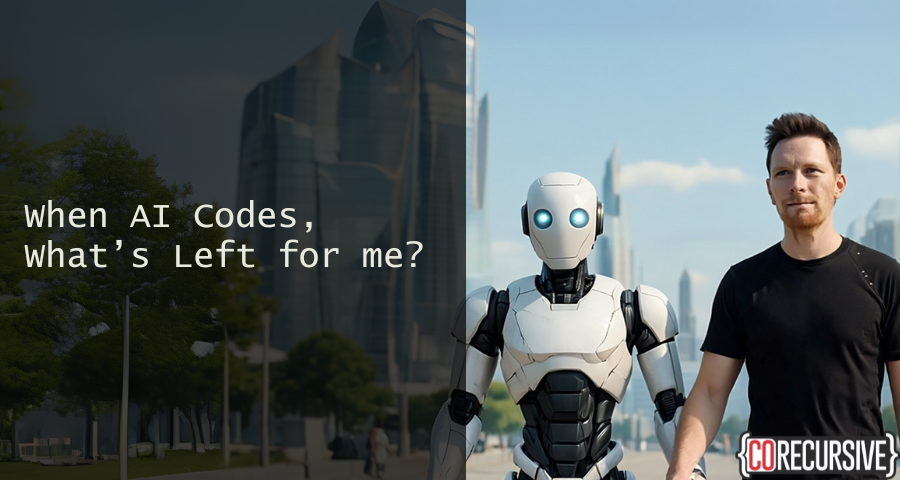
 When AI Codes, What’s Left for me? - CoRecursive Podcast
https://corecursive.com/coding-agents/
Right now, these tools exist, and they’re powerful, and they’re incredibly fun to work with. I could spend my time worrying about obsolescence, or I could spend it building things that I never thought I’d have time to build. I could resist these changes, or I could lean into them and see where they lead me.
 It's happening.
https://brilliantcrank.com/its-happening/?ref=brilliantcrank-newsletter
Let's cut through the corporate speak. These companies aren't just encouraging AI adoption—they're creating a professional caste system. There will be those who can think with machines and those who can't.
The first group will advance, lead, and thrive. The second will stagnate, struggle, and eventually be eliminated.

Amazon Requires Ring Staff to Show AI Use to Get Promoted - Business Insider
https://www.businessinsider.com/amazon-requires-staff-show-ai-use-get-promoted-ring-2025-7?ref=brilliantcrank.com
Siminoff, in his email, said employees seeking a promotion must now describe how they have used generative AI or other AI technologies to improve customer experience or increase operational efficiency. They are also asked to cite specific AI projects they've worked on and the measurable impact achieved.
 Am I Becoming Irrelevant? - Jordi Villar
https://jordivillar.com/blog/becoming-irrelevant?ref=sidebar
You’re not irrelevant.
You’re just operating in a layer that doesn’t clap for itself.
And maybe, just maybe, the fact that your team is calm, focused, and shipping, while everything around them is chaotic, is the best evidence of your impact.
Even if no one’s naming it out loud.

 I Still Use Vim. I Also Use AI. It Still Feels Like Me. - GoDaddy Blog
https://www.godaddy.com/resources/news/i-still-use-vim-i-also-use-ai-it-still-feels-like-me
Like many engineers, I’m still figuring out where AI fits best. But what’s clear is that it works best when it complements the way I already like to build software. It helps me move faster, stay in flow, and focus more on the parts of the work I enjoy, without losing the parts that matter most.
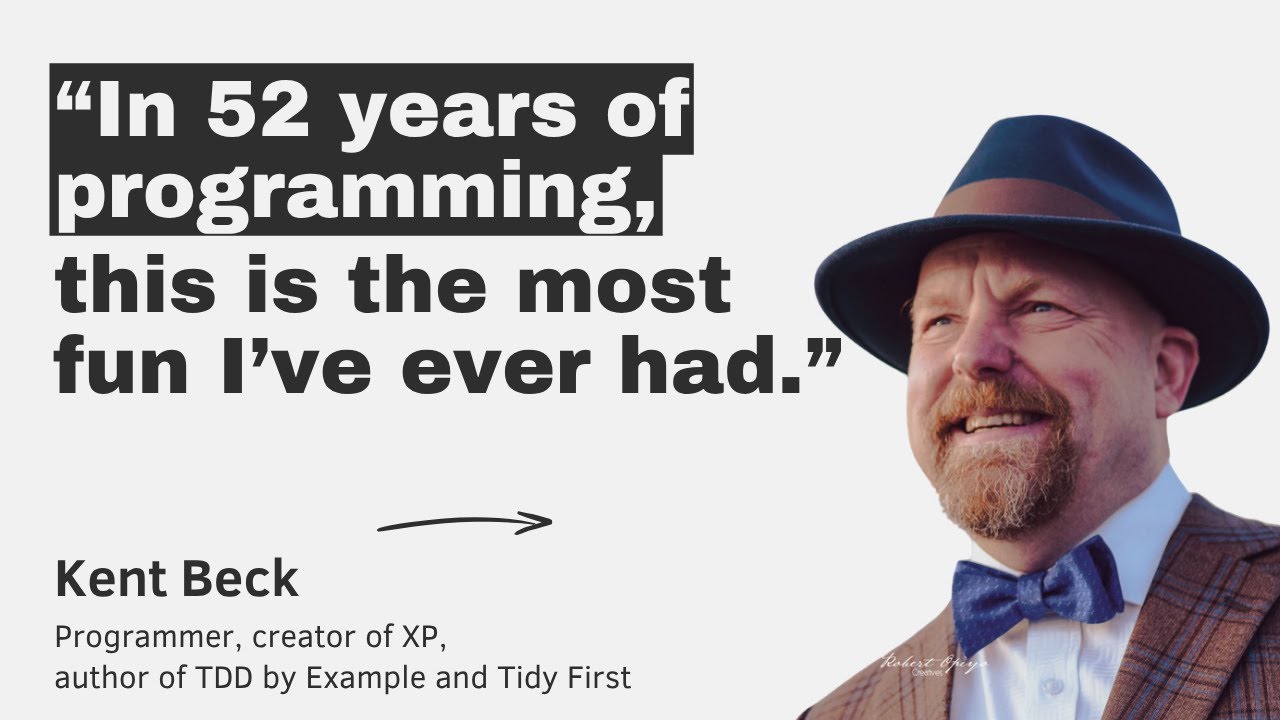
 TDD, AI agents and coding with Kent Beck - YouTube
https://www.youtube.com/watch?v=aSXaxOdVtAQ&t=3713s
Now, with over five decades of programming experience, Kent is still pushing boundaries—this time with AI coding tools. In this episode of Pragmatic Engineer, I sit down with him to talk about what’s changed, what hasn’t, and why he’s more excited than ever to code.

The luxury of saying no.
https://brilliantcrank.com/the-luxury-of-saying-no/?ref=brilliantcrank-newsletter
I don’t have an issue with people being skeptical of new technology. I’m skeptical too, and so should you. We should be asking hard questions about how these systems are built, who they exploit, and who they ultimately serve. But when the critique turns into a litmus test for moral worth—when someone implies that using a tool makes you complicit, compromised, or creatively bankrupt—we’ve crossed out of analysis and into something else entirely. Something detached. Something smug.
 The importance of offtopic | blog.tadzik.net
https://blog.tadzik.net/the-importance-of-offtopic.html
Remote work is not rocket science. Open-source communities have been doing it for decades, and they often manage to build communities in which people would willingly spend their own money to go to a conference and actually meet their friends in person.
Getting things "done" in large tech companies | sean goedecke
https://www.seangoedecke.com/getting-things-done/?ref=sidebar
What does it mean to get things done in large companies? Most importantly, it means finishing things. How can you finish things in a world where you can keep improving systems indefinitely? It means getting them to a point where the decision-makers at the company are happy.

The Hidden Cost of AI Coding – Terrible Software
https://terriblesoftware.org/2025/04/23/the-hidden-cost-of-ai-coding/
Perhaps what we need is a new understanding of where happiness can exist in this AI-augmented world. Maybe the joy doesn’t have to disappear completely — it just shifts. Instead of finding delight in writing the perfect algorithm, perhaps we’ll discover satisfaction in the higher-level thinking about system design, in the creative process of describing exactly what we want to build, or in the human aspects of software development that AI can’t touch.
Eject disk.
https://brilliantcrank.com/eject-disk/
You are not the problem.
The system was never built for you.
And you don’t have to shrink yourself to survive it.
 Horseless intelligence | Ned Batchelder
https://nedbatchelder.com/blog/202503/horseless_intelligence.html
OK, so AI doesn’t think the same way that people do. I’m fine with that. What’s important to me is that it can do some work for me, work that could also be done by people thinking. Cars (“horseless carriages”) do work that used to be done by horses running. No one now complains that cars work differently than horses.
 "Vibe Coding" vs Reality
https://cendyne.dev/posts/2025-03-19-vibe-coding-vs-reality.html
"Vibe Coding" might get you 80% the way to a functioning concept. But to produce something reliable, secure, and worth spending money on, you’ll need experienced humans to do the hard work not possible with today’s models.

 Revenge of the junior developer | Sourcegraph Blog
https://sourcegraph.com/blog/revenge-of-the-junior-developer
One consistent pattern I’ve observed in the past year, since I published "The death of the junior developer", is that junior developers have actually been far more eager to adopt AI than senior devs. It’s not always true; a few folks have told us that their juniors are scared to use it because they think, somewhat irrationally, that it will take their jobs. (See: Behavioral regret theory. Thanks for the pointer Dr. Daniel Rock!)
 1x Engineer
https://1x.engineer/
You might have already heard of a 10x engineer. Probably too often, actually. If there's such a thing as a 10x engineer, surely there must be a 1x engineer, too?
Of course there is! Let's dig into a non-exhaustive list of what qualities make up a 1x engineer.
 Stewardship over ownership | nicole@web
https://ntietz.com/blog/stewardship-over-ownership/
A steward doesn't jealously guard, or struggle to gain more power. A steward watches what her responsibilities are, ensuring enough to contribute but not so many as to burn out. And she nurtures and cares for the code, to make sure that it continues to serve its purpose. Instead of an adversarial relationship, stewardship promotes partnership: It promotes working with others to figure out how to make the best use of resources, instead of hoarding them for yourself.
 How I code with LLMs these days
https://www.phillipcarter.dev/posts/coding-with-llms
To me, all signs point towards software engineering changing radically as a profession to be much more oriented around the what and why of software, and much less around the how. This will cause disruption at a massive scale in the long run. But in the short run, it's just a lot of fun to play with these tools and see what they can do.

 Ignore the Grifters - AI Isn't Going to Kill the Software Industry — Dustin Ewers
https://dustinewers.com/ignore-the-grifters/
I feel like half of my social media feed is composed of AI grifters saying software developers are not going to make it. Combine that sentiment with some economic headwinds and it's easy to feel like we're all screwed. I think that's bullshit. The best days of our industry lie ahead.

 Dan McKinley :: On Misery
https://mcfunley.com/on-misery
Meta’s size makes it de facto unkillable, and I’m sure it’ll exist in some form for centuries. But it’s my hope that it will exist in the sense that IBM exists today. Theoretically you know it’s out there, but it’s very hard to grasp the point of it and it feels thoroughly irrelevant. Nobody remembers who started it or why.

 Principal Engineer Roles Framework
https://www.linkedin.com/pulse/principal-engineer-roles-framework-mai-lan-tomsen-bukovec-142df/
The framework was pretty helpful for us as a team to optimize (or “force multiply” as we say in the Amazon Principal Tenets) the impact of our super awesome Principal Engineer community. We used the role framework to assess Principal Engineer engagement for our most important projects across Amazon S3/Glacier. In some cases, we changed the role of the Principal Engineer.
 Hackerrank was broken - but now it's actually harmful — segfaulte
https://segfaulte.mataroa.blog/blog/hackerrank-was-broken-but-now-its-actually-harmful/
Since everyone started using AI, more candidates started clearing the first round with flying colors. The platforms had to recalibrate to let in their target percentage. But they're not measuring the code written by the candidate anymore—they're measuring how well the candidate uses an LLM.
Most developers who can actually write this code try to do it themselves. They get marked lower than peers who used AI and completed it faster.
The result? Hiring teams keep raising the bar arbitrarily, trying to find the candidates who are best at prompt engineering their way through a coding test.
 Please, Stop the Absurd Coding Challenges | _blackentropy
https://blackentropy.bearblog.dev/please-stop-the-absurd-coding-challenges/
Hiring processes should focus on problem-solving, collaboration, and growth in relevant areas. Unrealistic expectations don’t attract the best talent – they just exhaust and discourage it. If companies want adaptable developers, they should focus on the long-term ability to learn, not how fast someone can tackle an arbitrary test. Dropping these absurd assignments and focusing on what really counts could foster a better, more inclusive tech culture.
 Surviving a tech job market recession
https://lifeofaudrey.com/2024/05/22/tech-recession-survival.html
I lost my job in March and I’ve been slowly starting to look for my next thing. I’ve been talking to other folks who’ve been laid off to get a sense of the job market — and the stories they’re sharing give me flashbacks to twenty years ago.
 My 20 Year Career is Technical Debt or Deprecated
https://blog.visionarycto.com/p/my-20-year-career-is-technical-debt
My entire career is now technical debt, or the code has been deprecated.
 What's a senior engineer's job? - Julia Evans
https://jvns.ca/blog/senior-engineer/
most (all?) of the senior engineers I know take on a significant amount of helping-other-people work in addition to their individual programming work. The challenge I see me/my coworkers struggling with today isn’t so much “what?? I have to TALK TO PEOPLE?? UNBELIEVABLE.” and more “wait, how do I balance all of this leadership work with my individual contributions / programming work in a way that’s sustainable for me? How much of what kind of work should I be doing?“
What's a senior engineer's job? - Julia Evans
https://jvns.ca/blog/senior-engineer
most (all?) of the senior engineers I know take on a significant amount of helping-other-people work in addition to their individual programming work. The challenge I see me/my coworkers struggling with today isn’t so much “what?? I have to TALK TO PEOPLE?? UNBELIEVABLE.” and more “wait, how do I balance all of this leadership work with my individual contributions / programming work in a way that’s sustainable for me? How much of what kind of work should I be doing?“
 Alex Payne — Letter To A Young Programmer Considering A Startup
http://al3x.net/2013/05/23/letter-to-a-young-programmer.html
Maybe your goal is best met by building a stable yet undemanding career that leaves plenty of time for family, friends, community, and self improvement.
 my personal noise, 7 years @ Mozilla
http://mzeier.tumblr.com/post/45265673069/7-years-mozilla
I’m going to go and work with people who make Mozilla not just a job, who have made this my home for 7 years, and who are as passionate about Mozilla & the Open Web as I am.
 Nick Bradbury: Old Farts Know How to Code
http://nick.typepad.com/blog/2012/05/old-farts-know-how-to-code.html
"Old farts" are often excluded from that culture, not because we're lousy coders but because we won't put up with that shit. We have lives, we have families, we have other things that are important to us. We're not about to sleep at our desks and trade watching our kids grow up for the promise of striking it rich. Especially when the people who really strike it rich aren't the ones writing code.
 The scariest pricing idea ever. That works. | The Freelancery
http://thefreelancery.com/2010/04/the-scariest-pricing-idea-ever-that-works
"Call it ‘fill-in-the-blank’ invoicing. Or ‘pay what you want’ pricing.
The notion is, you do the work first, then let the client decide how much to pay for it."
 Piaw's Blog: Tips for Tech Leads
http://piaw.blogspot.com/2010/04/tips-for-tech-leads.html
"One of the unending sources of frustrations of being an experienced engineer in a company full of fresh graduates is having to deal with new tech leads---many engineers fresh out of school are great designers and engineers, but couldn't lead a team out of a paper bag. It didn't help that Google's internal leadership training was derived from team-building exercises for experienced executives, rather than leadership 101 that would have been appropriate in this situation."
 How to Have a Productive First Week in a New Job as a Remote Employee
http://webworkerdaily.com/2010/04/16/how-to-have-a-productive-first-week-in-a-new-job-as-a-remote-employee
"One of the most difficult periods in any job is the first few weeks, while you are getting to know your team, the company and your new job. It can be a difficult time for any employee, but it can be even more difficult for employees who are working in remote offices or telecommuting. Getting to know the team and understanding the company culture are much more difficult when you aren’t sitting in the corporate office with the rest of your team. However, there are plenty of things that you can do as a remote employee, or as an employer of remote employees, to make that first week a little easier on everyone."
 5 reasons why your company should be distributed « toni.org
http://toni.org/2010/03/08/5-reasons-why-your-company-should-be-distributed
"Your employees will love it ... You can hire great people wherever you find them ... You will use better communication tools ... You can still be social ... Your offices will be more fun"
 Programmer Competency Matrix
http://www.starling-software.com/employment/programmer-competency-matrix.html
"Note that the knowledge for each level is cumulative; being at level n implies that you also know everything from the levels lower than n. "
 Rands In Repose: The Pond
http://www.randsinrepose.com/archives/2009/04/15/the_pond.html
"I don’t know what the hell this remote person is doing, so I’m going to assume he’s stumbling around the house in his underwear." Been there, done that, still closed bugs and checked in code.
 How to Start Speaking at Events | chrisbrogan.com
http://www.chrisbrogan.com/how-to-start-speaking-at-events
"One day, I wasn’t a speaker at conferences, and then I was. And then a little while later, I was a paid speaker. And now, I’m a decently paid speaker. Some day, I hope to be a really well-paid speaker"
 Where will all the web developers go? | Morethanseven
http://morethanseven.net/2008/11/30/where-will-all-web-developers-go
"So. What happens in 10–20 years time to the now quite large number of professional web developers.Do we all just do the same thing we’re doing now. Just with higher version numbers? ... Do we all become managers? ... Is their another industry that will have us?"
 Up With Grups - The Ascendant Breed of Grown-Ups Who Are Redefining Adulthood -- New York Magazine
http://nymag.com/news/features/16529
"It’s about reimagining adulthood as a period defined by promise, rather than compromise. And who can’t relate to that?"
 You Weren't Meant to Have a Boss
http://www.paulgraham.com/boss.html
"The restrictiveness of big company jobs is particularly hard on programmers, because the essence of programming is to build new things."
 Notional Slurry » There are exactly two ways: one, and many
http://williamtozier.com/slurry/2008/03/03/there-are-exactly-two-ways-one-and-many
"So a generalist pays the rent, in the end, by having a reputation (social capital) and a wide-ranging interest (intellectual capital) and trading those for money."
 Not An Employee
http://notanemployee.net
"We do not work for you. You do not work for us. We choose to work together."
 Unasked-For Advice to New Writers About Money
http://scalzi.com/whatever?p=362
"it very often appears to me that regardless of how smart and clever and interesting and fun my fellow writers are on every other imaginable subject, when it comes to money — and specifically their own money — writers have as much sense as chimps on c
 An Entirely Other Day - Wide vs. Deep
http://blog.eod.com/post/18462877
"I’ve got this theory about what it’s like to be a manager and what it’s like to be a developer ... and I think it explains pretty well why I deeply, profoundly hate the former and dearly, truly love the latter."
 Coworkers of the World, Unite! | The American Prospect
http://www.prospect.org/cs/articles?article=coworkers_of_the_world_unite
"The always-on, perpetual freelance culture of Web 2.0 has spawned its own "coworking" spaces, but are these new techno-optimists building sustainable communities?"
 SRT opens Ann Arbor office, more than triples its employees
http://www.metromodemedia.com/innovationnews/srt3707.aspx
"The company, which provides software development consulting, has just opened an office in Ann Arbor which will open its doors as a third space of sorts for the local computer community."
 Google workers - Ann Arbor News Extra - MLive.com
http://blog.mlive.com/ann_arbor_news_extra/2007/09/google_workers.html
Kind of a fluff piece, doesn't tell me much about what's going on at Google A2. It's all "Wow, kooky Californian office space with weird carpet and massage chairs and sunlight! How can you get any work done?"
 In Silicon Valley, Millionaires Who Don’t Feel Rich - New York Times
http://www.nytimes.com/2007/08/05/technology/05rich.html?ei=5088&emc=rss&en=003719e2d0560842&ex=1343966400&pagewanted=print&partner=rssnyt
"many such accomplished and ambitious members of the digital elite still do not think of themselves as particularly fortunate, in part because they are surrounded by people with more wealth"
Web Worker Daily » Blog Archive How to Cope with Job Burnout «
http://webworkerdaily.com/2007/07/30/how-to-cope-with-job-burnout
"Even if you love your work, there will be times when it no longer fills you with passion and energy."
 Working for The Man | Tux Deluxe
http://tuxdeluxe.org/node/122
"what kind of advice I would give if I could meet myself at his age, in order to guide the young Allison into a promising engineering career."
Rands In Repose: A Glimpse and a Hook
http://www.randsinrepose.com/archives/2007/02/25/a_glimpse_and_a_hook.html
"The terrifying reality regarding your resume is that for all the many hours you put into fine-tuning, you've got 30 seconds to make an impression on me. Maybe less."
 Charlie's Diary: The writer's lifestyle
http://www.antipope.org/charlie/blog-static/2007/01/the_writers_lifestyle.html
"Being a self-employed writer is not a lifestyle that suits everyone. In fact, there are a lot of misconceptions about what the job entails."
Web Worker Daily » Blog Archive An Afternoon, Co-Working at the Hat Factory «
http://webworkerdaily.com/2007/01/04/an-afternoon-at-the-hat-factory
"A friend emailed and told me to come check out an open house for the Hat Factory, a Coworking community space in San Francisco’s semi-industrial Dogpatch neighborhood"
 computerjobs.com: superhero
http://www.computerjobs.com/job_display.aspx?jobid=1884724
"Requirements: Laser vision Ability to fly Ability to breath underwater Invisible plane would be a plus Web throwing experince is a big plus"
Rands In Repose: Ninety Days
http://www.randsinrepose.com/archives/2007/01/03/ninety_days.html
"Your job interview isn't over until you've changed to become part of a new team."
 x=Control, y=Responsibility
http://www.zedshaw.com/essays/control_and_responsibility.html
"Control must be correlated with responsibility."
A Techie, Absolutely, and More - New York Times
http://www.nytimes.com/2005/08/23/technology/23geeks.html?ei=5090&emc=rss&en=1c8e3a9e7b614e6a&ex=1282449600&partner=rssuserland
"There isn't the buzz and excitement about computer science that there should be"
 Workers of the world... relax! | MetaFilter
http://www.metafilter.com/mefi/41253
"Why work? Why not play instead?"