 The Long Linguistic Journey to 'Dagnabbit' - Atlas Obscura
https://www.atlasobscura.com/articles/what-does-dagnabbit-mean
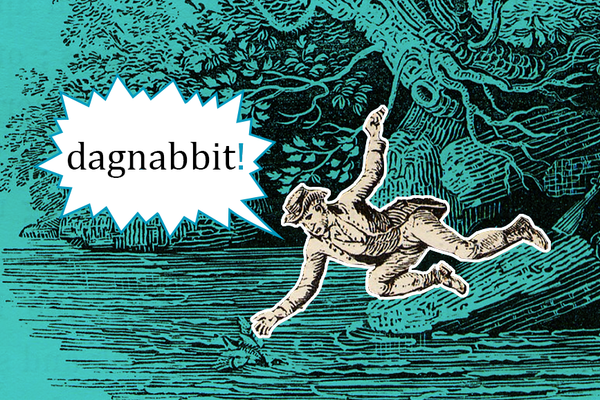
“Taboo deformation is one possible way for a word to change its meaning,” says Andrew Byrd, a professor of linguistics at the University of Kentucky who specializes in Indo-European languages. Basically, we are scared of the true names of certain beings or concepts, because to use them might mean we summon them, which we don’t want, or anger them, which we definitely don’t want, or simply make other humans mad at us, which is slightly less bad but still not ideal. The true name is powerful, and we normal humans can’t handle that power. So we avoid using the true name, but sometimes we still need to communicate with each other about those beings or concepts. That means we have to figure out a way to talk about something without using the actual word for it.
 Arete - Wikipedia, the free encyclopedia
http://en.wikipedia.org/wiki/Arete
"In its earliest appearance in Greek this notion of excellence was bound up with the notion of the fulfillment of purpose or function; the act of living up to one's full potential."
 drewspeak - like newspeak, but free » Blog Archive » The Internet Troll As The Trickster Archetype
http://www.drewspeak.com/?p=53
"There are troublemakers in all sorts of settings, in all sorts of mythologies - a troll can be equated to Loki or Anansi just as easily as they could a vitriolic bigot. Who knows? All I understand is that the Internet troll exists by the grace of those w
 the little people (22 October 2005, Interconnected)
http://interconnected.org/home/2005/10/22/the_little_people
"What if the goblins were bands of teenage boys, and fairies and elves were groups of young children?"
 Godchecker - Your Guide To The Gods. Mythology with a twist!
http://www.godchecker.com
 Disturbingly rich and deep folklore among Miami's streetkids
http://www.miaminewtimes.com/issues/1997-06-05/feature.html