 Don't couple your Go code to GitHub | Iain Cambridge
https://iain.rocks/blog/dont-couple-your-go-code-to-github
The main problem with using your git hosting location is that your code is now coupled to a hosting provider. That is, if you move your git hosting to GitLab then you have to change your code! Otherwise, you’ll be fetching the old verison. This can result in you being unable to change git hosting provider because the amount of overhead in switching. So you literally end up with your code coupled to GitHub. Which sounds completely nuts, but it’s something that is pretty much defacto in the Go community.
SSH access to Github over HTTPS | Jonathan Almeida
https://jonalmeida.com/til/github-serves-ssh-over-tls-port/
Host github.com
HostName ssh.github.com
Port 443
 withastro/triagebot-action: A GitHub Action for issue triage
https://github.com/withastro/triagebot-action
A GitHub Action for issue triage
 Playwright on GitHub Actions: The setup that actually runs fast
https://endform.dev/blog/playwright-github-actions
This piece walks through that setup end to end. By the end you will know where your time is going, have a workflow that gives useful feedback on every PR, and know the point at which sharding actually becomes worth it.
 Using YAML frontmatter - GitHub Docs
https://docs.github.com/en/contributing/writing-for-github-docs/using-yaml-frontmatter
The following frontmatter values have special meanings and requirements for GitHub Docs. There's also a schema that's used by the test suite to validate every page's frontmatter. For more information, see lib/frontmatter.ts.

docs/src/frame/lib/frontmatter.ts at main · github/docs
https://github.com/github/docs/blob/main/src/frame/lib/frontmatter.ts
The open-source repo for docs.github.com. Contribute to github/docs development by creating an account on GitHub.

 Self-hosted Forgejo Actions Runner – David Bushell – Web Dev (UK)
https://dbushell.com/2025/08/15/self-hosted-forgejo-actions-runner/
Did I mention GitHub is dead to me? I’m moving my code to a self-hosted Forgejo instance at git.dbushell.com. Today I added Actions.
Forgejo Actions are a thing like GitHub Actions for “continuous integration”. Love a bit of CI! Forgejo Actions don’t work out of the box. You need to provide a “runner” which is a machine where all the action happens inside a containerised environment.

GitHub is sinking – David Bushell – Web Dev (UK)
https://dbushell.com/2026/04/29/github-is-sinking/
GitHub is racing towards the mythical zero nines of uptime. Users are starting to notice that GitHub is now a Microsoft product. Eww!
Official uptime paints a concerning chart. The missing status page tell a far worse story. Whatever the truth, it’s impossible to miss the delightful experience that is Microsoft GitHub if you use it semi-regularly.
Why there are no releases? · nvim-treesitter/nvim-treesitter · Discussion #8627
https://github.com/nvim-treesitter/nvim-treesitter/discussions/8627
> So please, do go switch to something that doesn't require interacting with people.
OK.
 notes: copilot edited an ad into my pr
https://notes.zachmanson.com/copilot-edited-an-ad-into-my-pr/
After a team member summoned Copilot to correct a typo in a PR of mine, Copilot edited my PR description to include and ad for itself and Raycast.

 Using Homebrew to Distribute Early Access Binaries from Private Github Repositories :: LGUG2Z
https://lgug2z.com/articles/using-homebrew-to-distribute-early-access-binaries-from-private-github-repositories/
After setting up nightly builds on GitHub Actions, I wanted to create a Homebrew Tap and Formula for people who sponsor me on GitHub for early access - being able to brew install is a much more pleasant onboarding experience for a new sponsor than having to compile from source.
 Running Pull Requests in Github Codespaces - These Yaks Ain’t Gonna Shave Themselves
https://polotek.net/posts/running-pull-requests-in-github-codespaces/
Here’s the idea. I have a solo project that I’m working on, and instead of hacking away on the main branch, I’m using a full feature branch and pull request workflow to keep my changes organized. This might seem like overkill, but it’s helpful for me because I tend to bounce around and leave things half done. I can run things locally and test different things by switching between branches. But I’m also doing a lot more AI-assisted development. Locally I use Claude Code. But I’ve been experimenting with allowing Github Copilot to create PRs. I create a github issue, assign it to copilot, and it spins up in the cloud and does work. Afterwards it opens a pull request for me to review. So even though this is a “solo” project, I end up with pull requests that I didn’t write myself and I need to validate.
 My self-hosted Forgejo runner setup | I do what I can
https://mteixeira.wordpress.com/2025/02/03/my-self-hosted-forgejo-runner-setup/
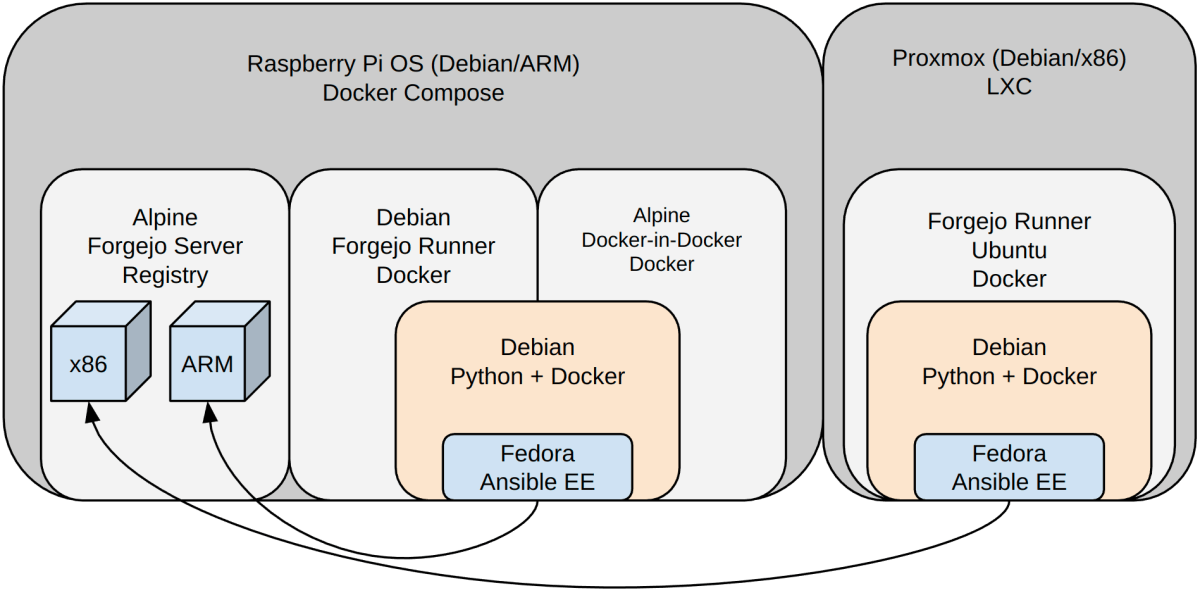
In this (very long post) I will be demonstrating how I have setup my self-hosted Forgejo runners at home using Docker Compose, Docker-in-Docker and a bonus LXC. To demonstrate with a practical example, I will be building an Ansible Execution environment, to be used in my home lab automation. There will be two versions of it: a single node, and a dual node build. Both will result in the images for two platforms/architectures (AMD64 and ARM64).
github/spec-kit: 💫 Toolkit to help you get started with Spec-Driven Development
https://github.com/github/spec-kit
 Setting up cgit with Caddy v2 - SixFoisNeuf
https://www.sixfoisneuf.fr/posts/setting-up-cgit-with-caddy2/
 What follows GitHub? · Applied Cartography
https://jmduke.com/posts/post/github-next/
I’m not well equipped to prognosticate here: all I know is that this is not the tool of the future, and whoever replaces GitHub will have a narrative arc of incumbency displacement that will feel obvious and trite in retrospect.

 Nibble Stew: Let's properly analyze an AI article for once
https://nibblestew.blogspot.com/2025/08/lets-properly-analyze-ai-article-for.html
Recently the CEO of Github wrote a blog post called Developers reinvented. It was reposted with various clickbait headings like GitHub CEO Thomas Dohmke Warns Developers: "Either Embrace AI or Get Out of This Career" (that one feels like an LLM generated summary of the actual post, which would be ironic if it wasn't awful). To my great misfortune I read both of these. Even if we ignore whether AI is useful or not, the writings contain some of the absolute worst reasoning and stretched logical leaps I have seen in years, maybe decades. If you are ever in the need of finding out how not to write a "scientific" text on any given subject, this is the disaster area for you.

 Ashley Willis – ashley.dev
https://ashley.dev/blog/
I've built my career in Open Source by focusing on people, not just projects. At GitHub, I lead Developer Relations with a commitment to helping developers grow and communities thrive. The technical challenges matter, but so do the human connections. I believe the best work happens when we make space for both.

 Supercharging Game Development with GitHub Copilot
https://timmykokke.com/blog/2025/2025-03-31-gamedev-with-copilot/?utm_source=FuckOff&utm_medium=FuckOff
Over the past year, AI-powered development tools have completely transformed how I build games. GitHub Copilot has become an essential part of my workflow when developing WebXR games with Wonderland Engine. Today, I want to share how I leverage Copilot to streamline my game development process and some practical tips to make it work better for your specific needs.
 How I write my blogs in Obsidian and publish instantly | Gautham Shankar
https://ingau.me/blog/how-i-write-my-blogs-in-obsidian-and-publish-instantly/
This setup takes a bit of initial work, but the payoff is enormous. Once it’s all set up, this workflow fades into the background - I just write, commit, and publish. No friction, no fees, and everything stays in my hands. If you’re looking for a lightweight, sustainable way to blog, this might be worth trying.
 How I use LLMs as a staff engineer | sean goedecke
https://www.seangoedecke.com/how-i-use-llms/
Personally, I feel like I get a lot of value from AI. I think many of the people who don’t feel this way are “holding it wrong”: i.e. they’re not using language models in the most helpful ways. In this post, I’m going to list a bunch of ways I regularly use AI in my day-to-day as a staff engineer.
GitHub - cheeaun/phanpy: A minimalistic opinionated Mastodon web client
https://github.com/cheeaun/phanpy
lmorchard starred cheeaun/phanpy
GitHub - infinitered/reactotron: A desktop app for inspecting your React JS and React Native projects. macOS, Linux, and Windows.
https://github.com/infinitered/reactotron
lmorchard starred infinitered/reactotron
GitHub - unadlib/mutative: Efficient immutable updates, 2-6x faster than naive handcrafted reducer, and more than 10x faster than Immer.
https://github.com/unadlib/mutative
lmorchard starred unadlib/mutative
GitHub - english1234/vstcm: The v.st Colour Mod - a colour vector generator based on the original v.st
https://github.com/english1234/vstcm
lmorchard starred english1234/vstcm

GitHub - FreshRSS/FreshRSS: A free, self-hostable news aggregator…
https://github.com/FreshRSS/FreshRSS
lmorchard starred FreshRSS/FreshRSS
GitHub - ktock/container2wasm: Container to WASM converter
https://github.com/ktock/container2wasm
lmorchard starred ktock/container2wasm
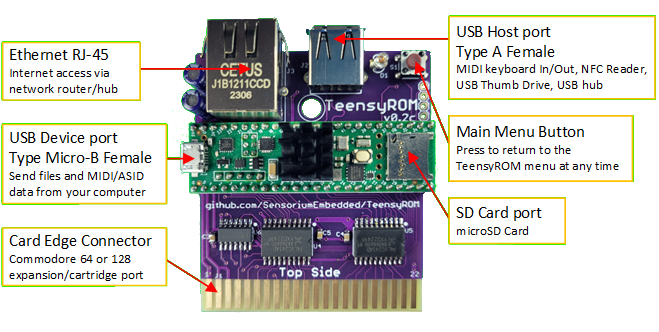
GitHub - SensoriumEmbedded/TeensyROM: TeensyROM is a ROM Emulator, Fast Loader, MIDI and Internet cartridge for Commodore64/128
https://github.com/SensoriumEmbedded/TeensyROM
lmorchard starred SensoriumEmbedded/TeensyROM
GitHub - drizzle-team/drizzle-orm: Headless TypeScript ORM with a head. Runs on Node, Bun and Deno. Lives on the Edge and yes, it's a JavaScript ORM too 😅
https://github.com/drizzle-team/drizzle-orm
lmorchard starred drizzle-team/drizzle-orm
GitHub - excalidraw/excalidraw: Virtual whiteboard for sketching hand-drawn like diagrams
https://github.com/excalidraw/excalidraw
lmorchard starred excalidraw/excalidraw

GitHub - tconbeer/harlequin: The SQL IDE for Your Terminal.
https://github.com/tconbeer/harlequin
lmorchard starred tconbeer/harlequin

GitHub - willnorris/imageproxy: A caching, resizing image proxy written in Go
https://github.com/willnorris/imageproxy
lmorchard starred willnorris/imageproxy
GitHub - mstrens/grbl_controller_esp32: grbl controller for esp32
https://github.com/mstrens/grbl_controller_esp32
lmorchard starred mstrens/grbl_controller_esp32

GitHub - superseriousbusiness/gotosocial: ***ON HOLIDAY UNTIL 2nd JAN 2023! https://github.com/superseriousbusiness/gotosocial/issues/2477 Happy new year!*** Fast, fun, ActivityPub server, powered by Go.
https://github.com/superseriousbusiness/gotosocial
lmorchard starred superseriousbusiness/gotosocial
GitHub - 11ty/is-land: A new performance-focused way to add interactive client-side components to your web site.
https://github.com/11ty/is-land
lmorchard starred 11ty/is-land
GitHub - nirui/sshwifty: Web SSH & Telnet (WebSSH & WebTelnet client) 🔮
https://github.com/nirui/sshwifty
lmorchard starred nirui/sshwifty
GitHub - johnyHV/PrusaConnect_ESP32-CAM
https://github.com/johnyHV/PrusaConnect_ESP32-CAM
lmorchard starred johnyHV/PrusaConnect_ESP32-CAM
GitHub - technobly/VEXTREME: VEXTREME - Vectrex Multicart
https://github.com/technobly/VEXTREME
lmorchard starred technobly/VEXTREME
GitHub - Mozilla-Ocho/llamafile: Distribute and run LLMs with a single file.
https://github.com/Mozilla-Ocho/llamafile
lmorchard starred Mozilla-Ocho/llamafile

GitHub - jscad/OpenJSCAD.org: JSCAD is an open source set of modular, browser and command line tools for creating parametric 2D and 3D designs with JavaScript code. It provides a quick, precise and reproducible method for generating 3D models, and is espe
https://github.com/jscad/OpenJSCAD.org
lmorchard starred jscad/OpenJSCAD.org
GitHub - openscad/openscad: OpenSCAD - The Programmers Solid 3D CAD Modeller
https://github.com/openscad/openscad
lmorchard starred openscad/openscad
GitHub - hinterdupfinger/obsidian-ollama
https://github.com/hinterdupfinger/obsidian-ollama
lmorchard starred hinterdupfinger/obsidian-ollama
GitHub - oobabooga/text-generation-webui: A Gradio web UI for Large Language Models. Supports transformers, GPTQ, AWQ, EXL2, llama.cpp (GGUF), Llama models.
https://github.com/oobabooga/text-generation-webui
lmorchard starred oobabooga/text-generation-webui
GitHub - jmorganca/ollama: Get up and running with Llama 2 and other large language models locally
https://github.com/jmorganca/ollama
lmorchard starred jmorganca/ollama

GitHub - n8n-io/n8n: Free and source-available fair-code licensed workflow automation tool. Easily automate tasks across different services.
https://github.com/n8n-io/n8n
lmorchard starred n8n-io/n8n
GitHub - ckolderup/postmarks: a single-user bookmarking website designed to live on the Fediverse
https://github.com/ckolderup/postmarks
lmorchard starred ckolderup/postmarks
GitHub - witnessmenow/ESP32-Cheap-Yellow-Display: Building a community around a cheap ESP32 Display with a touch screen
https://github.com/witnessmenow/ESP32-Cheap-Yellow-Display
lmorchard starred witnessmenow/ESP32-Cheap-Yellow-Display
GitHub - rix1337/docker-ripper: The best way to automatically rip optical disks using docker!
https://github.com/rix1337/docker-ripper
lmorchard starred rix1337/docker-ripper
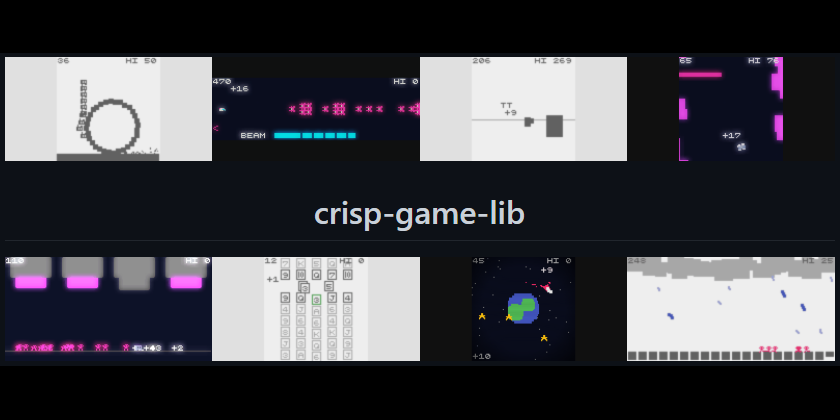
GitHub - abagames/crisp-game-lib: Minimal JavaScript library for creating classic arcade-like mini-games running in the browser
https://github.com/abagames/crisp-game-lib
lmorchard starred abagames/crisp-game-lib
GitHub - necordjs/necord: 🤖 A module for creating Discord bots using NestJS, based on Discord.js
https://github.com/necordjs/necord
lmorchard starred necordjs/necord
GitHub - azukaar/Cosmos-Server: ☁️ Secure and Easy Self-hosted platform. Take control of your data and privacy without sacrificing security and stability (Authentication, anti-DDOS, anti-bot)
https://github.com/azukaar/Cosmos-Server
lmorchard starred azukaar/Cosmos-Server
GitHub - ublue-os/obs-studio-portable: OCI container image of OBS Studio that bundles a curated collection of 3rd party plugins
https://github.com/ublue-os/obs-studio-portable
lmorchard starred ublue-os/obs-studio-portable
GitHub - achorein/expo-share-intent-demo: React Native Expo Share Intent
https://github.com/achorein/expo-share-intent-demo
lmorchard starred achorein/expo-share-intent-demo
GitHub - timedtext/expo-config-plugin-ios-share-extension: An Expo config plugin to auto-configure iOS Share Extension.
https://github.com/timedtext/expo-config-plugin-ios-share-extension
lmorchard starred timedtext/expo-config-plugin-ios-share-extension
GitHub - alinz/react-native-share-extension: react-native as an engine to drive share extension
https://github.com/alinz/react-native-share-extension
lmorchard starred alinz/react-native-share-extension

GitHub - steve-bate/activitypub-testsuite: Server-independent, fully-automated test suite primary focused on ActivityPub server compliance testing.
https://github.com/steve-bate/activitypub-testsuite
lmorchard starred steve-bate/activitypub-testsuite
GitHub - umer0586/SensorServer: Android app which let you stream various phone's sensors to websocket clients
https://github.com/umer0586/SensorServer
lmorchard starred umer0586/SensorServer
GitHub - vadimdemedes/ink: 🌈 React for interactive command-line apps
https://github.com/vadimdemedes/ink
lmorchard starred vadimdemedes/ink
GitHub - react-native-share/react-native-share: Social share, sending simple data to other apps.
https://github.com/react-native-share/react-native-share
lmorchard starred react-native-share/react-native-share
GitHub - btpf/Alexandria: A minimalistic cross-platform eBook reader built with Tauri, Epub.js, and Typescript
https://github.com/btpf/Alexandria
lmorchard starred btpf/Alexandria
GitHub - MSzturc/obsidian-advanced-slides: Create markdown-based reveal.js presentations in Obsidian
https://github.com/MSzturc/obsidian-advanced-slides
lmorchard starred MSzturc/obsidian-advanced-slides
 It's Now Possible To Sign Arbitrary Data With Your SSH Keys
https://www.agwa.name/blog/post/ssh_signatures
Did you know that you can use the ssh-keygen command to sign and verify signatures on arbitrary data, like files and software releases?
GitHub - aardappel/treesheets: TreeSheets : Free Form Data Organizer (see strlen.com/treesheets)
https://github.com/aardappel/treesheets
lmorchard starred aardappel/treesheets
GitHub - exelban/stats: macOS system monitor in your menu bar
https://github.com/exelban/stats
lmorchard starred exelban/stats

GitHub - shurco/goclone: 🌱 goclone - clone websites in a matter of seconds
https://github.com/shurco/goclone
lmorchard starred shurco/goclone
GitHub - robinmoisson/staticrypt: Password protect a static HTML page, decrypted in-browser
https://github.com/robinmoisson/staticrypt
lmorchard starred robinmoisson/staticrypt

GitHub - jakshin/mixcaster: Subscribe to Mixcloud users as RSS podcasts
https://github.com/jakshin/mixcaster
lmorchard starred jakshin/mixcaster
GitHub - andy-blum/fed-embed: A highly customizable, lightweight mastodon feed embed component
https://github.com/andy-blum/fed-embed
lmorchard starred andy-blum/fed-embed
GitHub - lmorchard/fossilizer
https://github.com/lmorchard/fossilizer
lmorchard starred lmorchard/fossilizer
GitHub - facebook/jscodeshift: A JavaScript codemod toolkit.
https://github.com/facebook/jscodeshift
lmorchard starred facebook/jscodeshift
GitHub - amethyst/rlua: High level Lua bindings to Rust
https://github.com/amethyst/rlua
lmorchard starred amethyst/rlua

GitHub - nextapps-de/flexsearch: Next-Generation full text search library for Browser and Node.js
https://github.com/nextapps-de/flexsearch
lmorchard starred nextapps-de/flexsearch
GitHub - pierpo/react-archer: 🏹 Draw arrows between React elements 🖋
https://github.com/pierpo/react-archer
lmorchard starred pierpo/react-archer
GitHub - immers-space/activitypub-express: Modular ActivityPub implementation as Express JS middleware to easily add decentralization and federation to Node apps
https://github.com/immers-space/activitypub-express
lmorchard starred immers-space/activitypub-express
GitHub - kibertoad/toad-scheduler: In-memory Node.js and browser job scheduler
https://github.com/kibertoad/toad-scheduler
lmorchard starred kibertoad/toad-scheduler
GitHub - piscinajs/piscina: A fast, efficient Node.js Worker Thread Pool implementation
https://github.com/piscinajs/piscina
lmorchard starred piscinajs/piscina
GitHub - mscdex/ssh2: SSH2 client and server modules written in pure JavaScript for node.js
https://github.com/mscdex/ssh2
lmorchard starred mscdex/ssh2
GitHub - jshemas/openGraphScraper: Node.js scraper service for Open Graph Info and More!
https://github.com/jshemas/openGraphScraper
lmorchard starred jshemas/openGraphScraper
GitHub - nodeca/nntp-server: NNTP server for readers
https://github.com/nodeca/nntp-server
lmorchard starred nodeca/nntp-server
GitHub - go-ap/fedbox: Reference implementation of an ActivityPub service using go-ap packages
https://github.com/go-ap/fedbox
lmorchard starred go-ap/fedbox
GitHub - itchyny/gojq: Pure Go implementation of jq
https://github.com/itchyny/gojq
lmorchard starred itchyny/gojq
GitHub - rebane2001/hobune: A lightweight static HTML generator for self-hosting video archives.
https://github.com/rebane2001/hobune
lmorchard starred rebane2001/hobune
GitHub - venice1200/MiSTer_SNAC2IEC: Commodore/CBM IEC Adapter for MiSTer FPGA
https://github.com/venice1200/MiSTer_SNAC2IEC
lmorchard starred venice1200/MiSTer_SNAC2IEC
GitHub - mattwebbio/orbital-sync: Synchronize multiple Pi-hole instances
https://github.com/mattwebbio/orbital-sync
lmorchard starred mattwebbio/orbital-sync
GitHub - TypeCellOS/BlockNote: A "Notion-style" block-based extensible text editor built on top of Prosemirror and Tiptap.
https://github.com/TypeCellOS/BlockNote
lmorchard starred TypeCellOS/BlockNote
GitHub - untitaker/mastodon-bookmark-rss: A small app to let you connect your mastodon bookmarks to your RSS reader.
https://github.com/untitaker/mastodon-bookmark-rss
lmorchard starred untitaker/mastodon-bookmark-rss
GitHub - michealespinola/syno.plexupdate: A script to automagically update Plex Media Server on Synology NAS
https://github.com/michealespinola/syno.plexupdate
lmorchard starred michealespinola/syno.plexupdate
GitHub - mafintosh/tar-stream: tar-stream is a streaming tar parser and generator.
https://github.com/mafintosh/tar-stream
lmorchard starred mafintosh/tar-stream
GitHub - derwiki/layoff-runbook: Being laid off can be overwhelming and it's easy to miss important tasks. This runbook will help make sure you stay on track.
https://github.com/derwiki/layoff-runbook
lmorchard starred derwiki/layoff-runbook
GitHub - mecparts/RetroWiFiModem: An ESP8266 based RS232 <-> WiFi modem with Hayes AT style commands and LED indicators
https://github.com/mecparts/RetroWiFiModem
lmorchard starred mecparts/RetroWiFiModem
GitHub - kiwphi/pop-shoot: Synthwave styled space shooter, inspired by the 80s arcades
https://github.com/kiwphi/pop-shoot
lmorchard starred kiwphi/pop-shoot
GitHub - cli/cli: GitHub’s official command line tool
https://github.com/cli/cli
lmorchard starred cli/cli
GitHub - hay-kot/mealie: Mealie is a self hosted recipe manager and meal planner with a RestAPI backend and a reactive frontend application built in Vue for a pleasant user experience for the whole family. Easily add recipes into your database by providin
https://github.com/hay-kot/mealie
lmorchard starred hay-kot/mealie
GitHub - hhursev/recipe-scrapers: Python package for scraping recipes data
https://github.com/hhursev/recipe-scrapers
lmorchard starred hhursev/recipe-scrapers
GitHub - 8bitkick/BBCMicroBot: Runs your toot on an 8-bit computer emulator
https://github.com/8bitkick/BBCMicroBot
lmorchard starred 8bitkick/BBCMicroBot
GitHub - rust3ds/cargo-3ds: Cargo command to work with Nintendo 3DS project binaries. Based on cargo-psp.
https://github.com/rust3ds/cargo-3ds
lmorchard starred rust3ds/cargo-3ds
GitHub - travisgoodspeed/gbrom-tutorial: Tutorial for extracting the GameBoy ROM from photographs of the die.
https://github.com/travisgoodspeed/gbrom-tutorial
lmorchard starred travisgoodspeed/gbrom-tutorial
GitHub - alb42/wrp: Web Rendering Proxy: Use vintage, historical, legacy browsers on modern web
https://github.com/alb42/wrp
lmorchard starred alb42/wrp
GitHub - eta-dev/eta: Embedded JS template engine for Node, Deno, and the browser. Lighweight, fast, and pluggable. Written in TypeScript
https://github.com/eta-dev/eta
lmorchard starred eta-dev/eta
GitHub - tenderlove/initial-v: It's a BMW shifter converted to a Bluetooth Keyboard that you use with Vim
https://github.com/tenderlove/initial-v
lmorchard starred tenderlove/initial-v
GitHub - bellenuit/Tootfinder: Opt-in search engine for Mastodon posts
https://github.com/bellenuit/Tootfinder
lmorchard starred bellenuit/Tootfinder
GitHub - developit/htm: Hyperscript Tagged Markup: JSX alternative using standard tagged templates, with compiler support.
https://github.com/developit/htm
lmorchard starred developit/htm
GitHub - kensanata/mastodon-archive: Archive your statuses, favorites and media using the Mastodon API (i.e. login required)
https://github.com/kensanata/mastodon-archive
lmorchard starred kensanata/mastodon-archive
GitHub - mldangelo/open-webring: Join a webring or create your own.
https://github.com/mldangelo/open-webring
lmorchard starred mldangelo/open-webring
GitHub - dustynitrate/tracetodon: A simple Mastodon bot to post procedurally-generated text using tracery, scheduled using your method of choice.
https://github.com/dustynitrate/tracetodon
lmorchard starred dustynitrate/tracetodon
GitHub - nkanaev/yarr: yet another rss reader
https://github.com/nkanaev/yarr
lmorchard starred nkanaev/yarr
GitHub - neet/masto.js: 🐘 Mastodon API client for JavaScript, TypeScript, Node.js, browsers
https://github.com/neet/masto.js
lmorchard starred neet/masto.js
GitHub - libsql/libsql: libSQL is a fork of SQLite that is both Open Source, and Open Contributions.
https://github.com/libsql/libsql
lmorchard starred libsql/libsql
GitHub - vercel/pkg: Package your Node.js project into an executable
https://github.com/vercel/pkg
lmorchard starred vercel/pkg
GitHub - cloudflare/wildebeest: Wildebeest is an ActivityPub and Mastodon-compatible server
https://github.com/cloudflare/wildebeest
lmorchard starred cloudflare/wildebeest
GitHub - lmorchard/masto-recall: a bot that indexes toots
https://github.com/lmorchard/masto-recall
lmorchard starred lmorchard/masto-recall
GitHub - benbrown/shuttlecraft: a single user activitypub server - join the federation!
https://github.com/benbrown/shuttlecraft
lmorchard starred benbrown/shuttlecraft
GitHub - geeekpi/picoBDK: For pico breadboard kit 's 2.8 inch touch screen
https://github.com/geeekpi/picoBDK
lmorchard starred geeekpi/picoBDK
GitHub - taviso/wpunix: WordPerfect for UNIX Character Terminals
https://github.com/taviso/wpunix
lmorchard starred taviso/wpunix
GitHub - woltapp/blurhash: A very compact representation of a placeholder for an image.
https://github.com/woltapp/blurhash
lmorchard starred woltapp/blurhash
GitHub - Lartsch/FediAct: Chrome/Firefox extension that simplifies interactions on other Mastodon instances than your own.
https://github.com/Lartsch/FediAct
lmorchard starred Lartsch/FediAct
GitHub - Fishwaldo/esp_ghota: esp32 OTA Component to update firmware from Github Releases
https://github.com/Fishwaldo/esp_ghota
lmorchard starred Fishwaldo/esp_ghota
GitHub - mihaiolteanu/mugur: Configurator for QMK compatible keyboards
https://github.com/mihaiolteanu/mugur
lmorchard starred mihaiolteanu/mugur
GitHub - ericchiang/pup: Parsing HTML at the command line
https://github.com/ericchiang/pup
lmorchard starred ericchiang/pup
GitHub - plausible/analytics: Simple, open-source, lightweight (< 1 KB) and privacy-friendly web analytics alternative to Google Analytics.
https://github.com/plausible/analytics
lmorchard starred plausible/analytics
GitHub - lmorchard/fediverse-webrings
https://github.com/lmorchard/fediverse-webrings
lmorchard starred lmorchard/fediverse-webrings
GitHub - antoniomika/sish: HTTP(S)/WS(S)/TCP Tunnels to localhost using only SSH.
https://github.com/antoniomika/sish
lmorchard starred antoniomika/sish
GitHub - nikolay-govorov/nanoid: A tiny, secure, URL-friendly, unique string ID generator for Rust
https://github.com/nikolay-govorov/nanoid
lmorchard starred nikolay-govorov/nanoid