About OpenWF
https://about.openwf.io/
OpenWF is a community project to play Warframe offline, specifically for preservation and customization.
stemdeckapp/stemdeck: Stemdeck is an modern stem extraction platform for musicians,producers and hobbyists, designed to isolate vocals, drums, bass, piano and guitar for practice, transcription, remixing, and creative audio workflows through a modern and interactive interface
https://github.com/stemdeckapp/stemdeck
Stemdeck is an modern stem extraction platform for musicians,producers and hobbyists, designed to isolate vocals, drums, bass, piano and guitar for practice, transcription, remixing, and creative audio workflows through a modern and interactive interface
jeffhajewski/latticedb: Embedded single-file knowledge graph database with vector search and full-text search for AI/RAG apps
https://github.com/jeffhajewski/latticedb
Embedded single-file knowledge graph database with vector search and full-text search for AI/RAG apps
Astromancer Edition – Astroprisma Store
https://astroprismastore.com/products/astroprisma-astromancer-edition?variant=57519455797583
Astroprisma is a sci-fi rpg for 1-4 players about space exploration and faction conflict set in a retrofuturistic universe.
Give me everything! The Astromancer Edition includes the Core Book, along with all expansion adventures and extras. Astroprisma is a sci-fi rpg for 1-4 players about space exploration and faction conflict set in a retrofuturistic universe.
retrobuiltRyan/pixelvision_av1000_mkII: 10in display monitor for HDMI and legacy analog video
https://github.com/retrobuiltRyan/pixelvision_av1000_mkII
10in display monitor for HDMI and legacy analog video
Technology Is Over - by James Taylor Foreman
https://www.taylorforeman.com/p/technology-is-over
Just like all the people who were worried about the nuclear bomb earlier in this age: the thing to do is to get on with living. Building a house, having a family, and being useful to people, and making things beautiful: making a garden, making a little hut where you can write your essays, cutting the grass and weed-eating. When all is said and done, twenty or fifty years from now, I have a strong feeling that most people will wish they had been doing that all along. That is what it practically means to believe that Technology Is Over.
brvier/Gjallar: Gjallar is a modern monitoring and observability platform inspired by Gjallarhorn, the legendary horn of Heimdall in Norse mythology. Built for reliability and speed, Gjallar continuously watches your infrastructure, services, and applications, detecting anomalies and sounding the alarm before issues become incidents. Observe. Detect. Alert.
https://github.com/brvier/Gjallar
Gjallar is a modern monitoring and observability platform inspired by Gjallarhorn, the legendary horn of Heimdall in Norse mythology. Built for reliability and speed, Gjallar continuously watches your infrastructure, services, and applications, detecting anomalies and sounding the alarm before issues become incidents. Observe. Detect. Alert.
Actually Queryable Executables | Farid Zakaria’s Blog
https://fzakaria.com/2026/08/24/actually-queryable-executables
Turns out that when we re-envision what we considered to be simply a byte layout specification was actually better off being a database, a lot of machinery we have been using for decades simply stops being necessary. The program is the database, and the database is the program.
l3a0/claude-plugins: l3a0's Claude Code plugin marketplace — kindle-highlights: verbatim Kindle highlight extraction with truncation recovery
https://github.com/l3a0/claude-plugins/tree/main
l3a0's Claude Code plugin marketplace — kindle-highlights: verbatim Kindle highlight extraction with truncation recovery
seanmonstar
https://seanmonstar.com/rss/
leodeim/vpsmon: Lightweight system monitor for Linux VPS
https://github.com/leodeim/vpsmon
Lightweight system monitor for Linux VPS
SSH access to Github over HTTPS | Jonathan Almeida
https://jonalmeida.com/til/github-serves-ssh-over-tls-port/
Host github.com
HostName ssh.github.com
Port 443
Stop Trying to Distinguish AI-Generated Writing From Human Writing Because You Can’t – James Zhan in real life.
https://journal.james-zhan.com/ai-writing/
Believing that one can distinguish between human writing and AI writing via some kind of “tells” is naive, simply because both human and AI writing can be good and bad.
The asteroid currently hitting frontend web development | Read the Tea Leaves
https://nolanlawson.com/2026/08/23/the-asteroid-currently-hitting-frontend-web-development/
Meanwhile, Cursor and Viget have blogged about migrating their codebases from Solid and Lit, respectively, to React. Since rewrites are less expensive with agents, this may be a bit surprising: why not move to the more performant/less verbose framework? The answer (explicitly in Cursor’s case, and I suspect for Viget as well) is of course: “the agents know React.” For better or worse, React is heavily overrepresented in the training weights, and “agent experience” is starting to matter more than developer experience.
The 25 best synthpop songs of 2026 (so far) - Synthpop Fanatic
https://www.synthpopfanatic.com/new-music/the-25-best-synthpop-songs-of-2026-so-far/
This should soothe your summer madness. Here are my 25 favorite songs from the first six months of the year. These tracks are listed in alphabetical order by artists’ names because I’m not ready to commit to ranking them.
RIP Claude – Rands in Repose
https://randsinrepose.com/archives/rip-claude/
As a writer, no sweat, right? I write my own content. I bang on my own keys. Here’s the issue. Each of the following actions watermarks text:
Synthesis
Proofreading
Translation
Summarization
Critique1
And most infuriating, the entire burden of their unannounced rollout is on me, and none of it is on them.
TERMinator - BBS Terminal
https://deadmodemsociety.com/terminator/
is a modern BBS Terminal emulator built for the retro computing community. Connect to Bulletin Board Systems around the world using Telnet, TelnetS (SSL), and SSH.
Fedi got fingerd | Ian Renton
https://ianrenton.com/projects/fedi-got-fingerd/
Here it is then: a python script designed to be run from a cron job, which grabs your latest posts from your fedi account, converts them to a plain text format, and dumps them into ~/.plan along with your bio. This is then picked up by the finger daemon when someone runs finger [youruser]@[yourserver].
talk: the P2P chat from 1983 that a VPN brought back to life | Andros Fenollosa
https://en.andros.dev/blog/03a4ffb9/talk-the-p2p-chat-from-1983-that-a-vpn-brought-back-to-life/
Before the internet, people could already chat. It is a topic that has always intrigued me: how was it possible? As a kid I had already heard about a command called talk, and the most impressive part is that you can still use it today, with no sign-ups and straight from the terminal, even in workplaces where I work over a VPN. It is not dead: it is just that few people know its potential.
andros/little-finger: Minimal single-account Finger (RFC 1288) daemon written in Python with asyncio. - Forgejo: Beyond coding. We forge.
https://git.andros.dev/andros/little-finger
A minimal, single-person Finger daemon written in Python with asyncio. It serves the plan of one personal account, nothing more, and follows RFC 1288.
You should never be angry at work
https://www.seangoedecke.com/you-should-never-be-angry-at-work/
Being angry at work feels good. It feels like proof that you’re working on something that matters, and that you’re personally having an impact. If you’re angry, nobody can call you a coaster. But anger is only a local maximum. If you can find your way to a different style of working, you’ll not only be more effective, but you’ll be in a far better place to have impact on problems that actually matter.
owls of the godless internets
https://godless-internets.org/feed
My writing is not 100% organic anymore | Heitor's log
https://heitorpb.github.io/bla/ai-transparency/
My writing is now ~95% organic. The remaining ~5% is English mistakes that an LLM fixed or a few small suggestions here and there. But a year from now, will this 5% grow? Will my personal satisfaction of doing it myself vanish in favour of supervised writing? What skill will I develop further: writing or prompting? If writing is thinking and I outsource it, am I still thinking?
I would never accuse anyone of using AI
https://tofutush.github.io/posts/2026-08-18.html
Ultimately my point is, no matter how much I'm certain something is AI, I would not say it out loud, because I always have a capacity to hurt a real artist in doing so. I just want people to stop going "uuhhh guys I think this is AI look at the tells" because it only hurts real people and is simply just really annoying.
I'm Upset Again About a Co-Creator of RSS Being Prosecuted For Something Meta Is Doing With Little Consequence – quailblog
https://blog.curiousquail.com/im-upset-again-about-a-co-creator-of-rss-being-prosecuted-for-something-meta-is-doing-with-little-consequence/
It’s nothing short of an indictment of our society at large that Aaron Swartz, one of the co-creators of the RSS protocol (among many other things) was effectively assasinated by our legal system for “illegally” downloading about 70 gigabytes of academic articles from JSTOR - charged so excessively to be made an example of (we're talking 35 years in prison, $1million USD fine, and asset forfeiture) to the point where he felt the need to take his own life rather than deal with the court circus and impending financial ruin - while Facebook (oh I’m sorry Meta) has torrented 80 TERABYTES of books to train their AI models with virtually no consequences other than a court case they will most likely get some sort of financial slap on the wrist for while their AI models continue to print them money.
rommapp/romm: A beautiful, powerful, self-hosted rom manager and player.
https://github.com/rommapp/romm
A beautiful, powerful, self-hosted rom manager and player.
HTMLcat — Compact notes on HTML, CSS, and JavaScript
https://htmlcat.net/
small, native web tricks worth remembering
Vibecoding isn't as fun as writing code by hand — The Autodidacts
https://www.autodidacts.io/vibecoding-isnt-as-fun-as-writing-code-by-hand/
Vibecoding is like being an executive of a large company that is barely under your control. You never feel like you really know what’s going on, and there’s always the suspicion of sabotage and loafing. Things appear fully formed, but not quite how you imagined. Sometimes they work, and sometimes they don’t, and there’s nothing you can do about it, other than pouring more money into the black box, and yelling louder. So that’s what you do.

 Why shaming people about AI slop isn’t enough to stop Big AI - Anil Dash
https://www.anildash.com/2026/08/21/ai-slop-and-shame/
This is the kind of solution that most AI critics are not allowing for right now when they only picture a shame-based corrective to individual people’s use of AI. It is possible to build human-centric, empowering tools and platforms that are owned by the people instead of by billionaire tycoons, that are responsible about the environment and with people’s data and privacy, that are accountable to the communities that they serve. If we engaged every person who made some AI slop and said, “would you rather have tools that help you make something amazing, and brought you into a community of creators?” I don’t think anybody would say no.
 daijro/camoufox: 🦊 Anti-detect browser
https://github.com/daijro/camoufox
Camoufox is an open source anti-detect browser built for webscraping & AI agents.
 Introducing Kitesurf: The agent-first browser that runs in V8 isolates on Cloudflare Workers | Cloudflare Blog
https://blog.cloudflare.com/kitesurf/
Kitesurf is significantly more efficient in CPU and memory consumption than Chromium for common agentic tasks like screenshots and HTML extraction. What follows is the story of how we built it. Buckle up, it’s going to get technical — but we promise to keep it interesting.
h4ckf0r0day/obscura: The headless browser for AI agents and web scraping
https://github.com/h4ckf0r0day/obscura
The headless browser for AI agents and web scraping

 Remote workers report the highest well-being in study of 7,700 employees | CU Boulder Today | University of Colorado Boulder
https://www.colorado.edu/today/2026/08/12/remote-workers-report-highest-well-being-study-7700-employees
The findings also cast doubt on one of the main arguments for bringing employees back to the office: that people need to be together in person to feel connected.
withastro/triagebot-action: A GitHub Action for issue triage
https://github.com/withastro/triagebot-action
A GitHub Action for issue triage
openai/symphony: Symphony turns project work into isolated, autonomous implementation runs, allowing teams to manage work instead of supervising coding agents.
https://github.com/openai/symphony
Symphony turns project work into isolated, autonomous implementation runs, allowing teams to manage work instead of supervising coding agents.
danyuchn/asd-ste100-skill: ASD-STE100 Simplified Technical English rules, repurposed as a Claude Code skill for rewriting ambiguous agent-facing English.
https://github.com/danyuchn/asd-ste100-skill
ASD-STE100 Simplified Technical English rules, repurposed as a Claude Code skill for rewriting ambiguous agent-facing English.
lajosdeme/mole: A deep-research agent with an enforced budget, verified quotes, and a privacy boundary for local data.
https://github.com/lajosdeme/mole
A deep-research agent with an enforced budget, verified quotes, and a privacy boundary for local data.
schapman1974/briskdb: Ordinary SQLite files, one sharded database—parallel writes, PostgreSQL, HTTP, Rust, Python, and shard-safe IDs.
https://github.com/schapman1974/briskdb
Ordinary SQLite files, one sharded database—parallel writes, PostgreSQL, HTTP, Rust, Python, and shard-safe IDs.
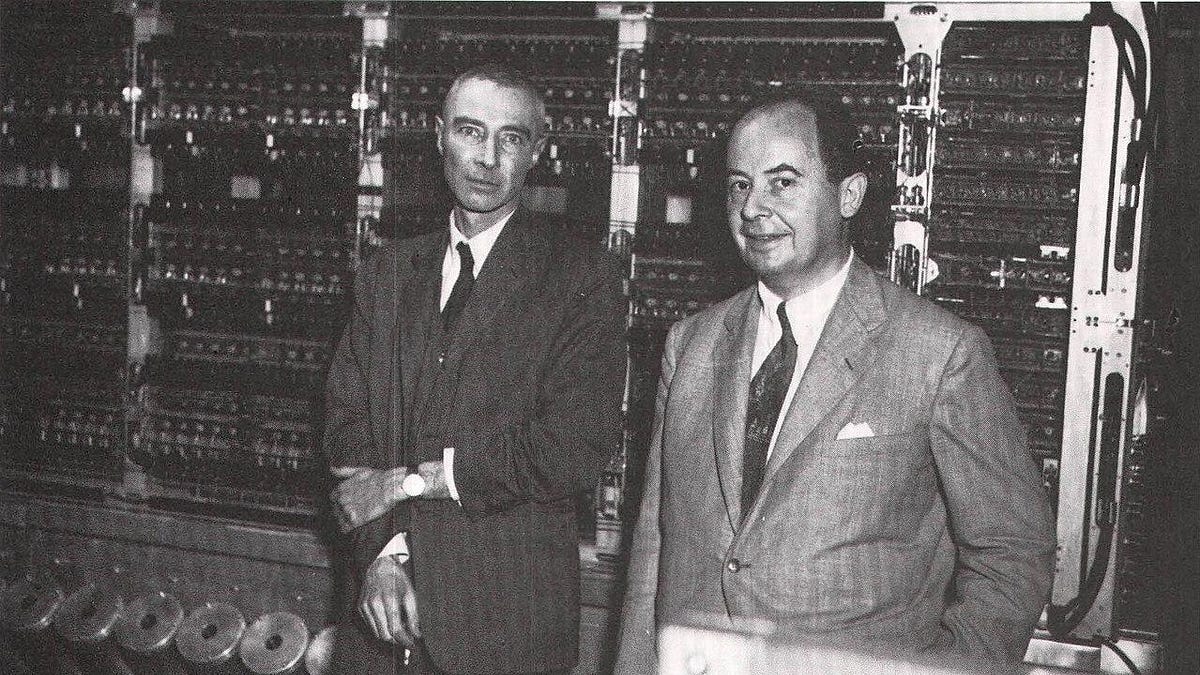
 AI Isn’t Outthinking Mathematicians. It’s Out-Remembering Them.
https://davidepiffer.com/p/ai-isnt-outthinking-mathematicians
A human mathematician can hold only a small number of unfamiliar elements in mind simultaneously. An AI model can keep the entire problem statement, hundreds of intermediate equations, several abandoned approaches, definitions, constraints and earlier conclusions inside its context window.
We normally interpret the resulting performance as evidence of superior reasoning. But some of it may instead reflect the removal of one of the most important biological limits on human reasoning: our extremely restricted working-memory capacity.
 How Claude's text watermarking works \ Anthropic
https://www.anthropic.com/news/claude-text-watermark
Future Claude models will generate text that contains a watermark. This is a way of determining the likelihood that Claude was involved in writing the text, and we, along with several other major AI providers, are implementing this change to comply with the EU AI Act.
 Soup Raiders Goes Native: What You Gain by Building Your Own Game Engine | Elias Farhan
https://eliasfarhan.ch/gamedev/cpp/2026/08/14/srnative-01-why-a-custom-engine.html
This post grew far beyond my original idea, but I wanted to set out my thoughts on building a custom engine before delving into the technology itself. Building an engine takes time, but it gives us control over how the game loads and updates, removes engine-licence fees, and teaches us about asset compilation, rendering, and optimisation. We can even expose parts of the engine to players, allowing them to improve the game or create mods (and potentially entirely new games) with our technology. After Unity’s runtime-fee announcement, technological independence became an even more important concern for game developers.
Blade-Punisher/SwitchNOW
https://github.com/Blade-Punisher/SwitchNOW
SwitchNOW is a native Nintendo Switch homebrew client for GeForce NOW. It is distributed as an .nro and combines a controller-first Borealis launcher with native WebRTC signaling, H.264 video, Opus audio and low-latency input delivery.
 Mea Culpa - Dark Hours — Terry Godier
https://blog.terrygodier.com/2026/08/09/mea-culpa-dark-hours.html
About an hour later, once it became clear to me that the web app I had launched using Claude was strikingly similar to his open source project, even reproducing a bug he had later fixed, it was clear that there wasn’t anything to do except to redirect the domain directly to him and kill any plans I had to launch an iOS app for the project.

 Converting a PS4 Persona 5 Royal NG+ Save to Steam with Adversarial Interoperability
https://blog.matthewbrunelle.com/converting-a-ps4-persona-5-royal-ng-save-to-steam-with-adversarial-interoperability/
Persona 5 Royal was 80% off on Steam recently and as I already established, I will repeatedly pay Atlus for their games. Only problem is I don't want to start a full play through yet again. Thankfully we have adversarial interoperability.

 How I make my blog posts more resilient | Michael Harley
https://michaelharley.net/posts/2026/08/05/how-i-make-my-blog-posts-more-resilient/
In short, the parts of my old archived posts that survived 14 years were the ones I owned and kept simple; the parts that broke were the ones I outsourced to someone else's server.
 If you can’t be bothered writing it, I can’t be bothered reading it. — Crooked Timber
https://crookedtimber.org/2026/08/04/if-you-cant-be-bothered-writing-it-i-cant-be-bothered-reading-it/
I totally get the pressure to produce. Academics have been long turned into content churners. ‘Publish or perish’ in some regions and institutions meant how much could you produce in how little a time. As a postgraduate student I attended a workshop where a senior professor describes turning the same conference paper into five publications FIVE!? Who do they think was going to read all this samey shit?
 Clicks have killed the Inverted Pyramid
https://gordonmeyer.com/blog/clicks-have-killed-the-inverted-pyramid.html
Writing students once learned that putting the most important information first in an article was the preferred, humane way of reporting on a situation. This allowed readers to quickly decide if a story interested them without having to read further.

 intuition-probe: let an LLM hallucinate the API/UX it expects, then conform your design to the guess. Companion to 'Complicated Thoughts On LLMs' (theocharis.dev)
https://gist.github.com/JeremyTheocharis/83c76da5a10bcf495d4298c70fee91b4
Use when you want to know what shape a developer or user reaches for when they first meet your API, config format, CLI, or UI, so you can make your design that shape. Spawns a blind agent that commits the design it EXPECTS before seeing the real thing, then reports the shape they reached for and conform-first recommendations (make the API whatever the guess is). Triggers on "is this intuitive", "would a developer guess this", "intuition probe", "blind-test this API/config/CLI", "test the DX/UX of", "what would someone expect here", "make the API whatever the LLM guesses".

 Itadakimasu: A Word You Say to the Food, Not the Cook
https://thetokyohermit.substack.com/p/itadakimasu-a-word-you-say-to-the
So the literal shape of “itadakimasu” is not “thank you.” It is closer to: “I humbly receive.”
And the thing being received is the food. Not the labor of the cook — that has its own phrase, said afterward, to the person. “Itadakimasu,” said before, with the eyes on the plate, is addressed downward and outward, to what is about to become part of you.
 When online commenters 'detect' my art as AI - David Revoy
https://www.davidrevoy.com/article1164/when-online-commenters-detect-my-art-as-ai
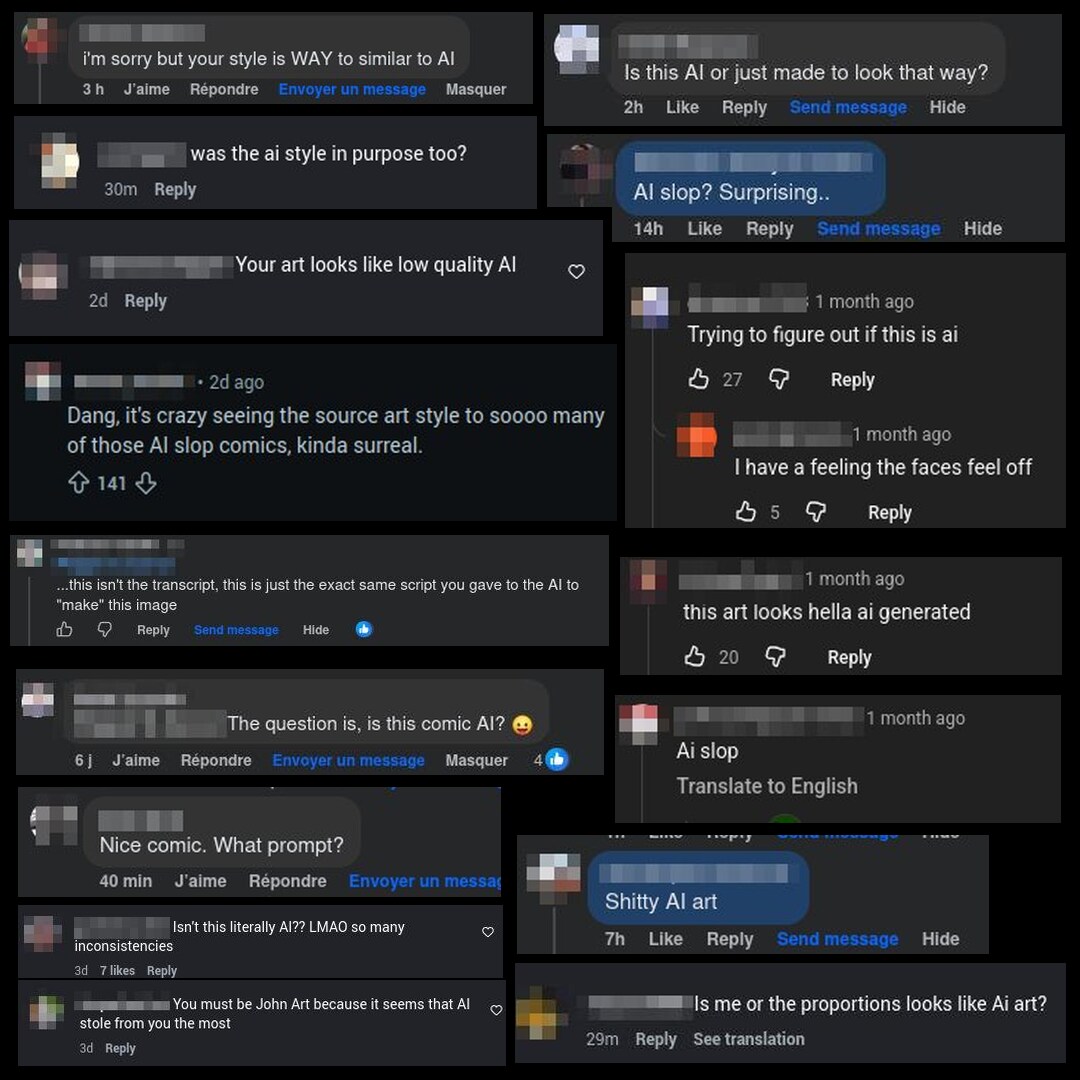
Here is a collection of screenshots (obfuscated) of dozens and dozens of online comments from many platforms (Reddit, YouTube, Instagram, Facebook) containing accusations or confusion that my artworks and comics are AI-generated. Despite creating every piece by hand, despite sharing timelapses, the comments keep coming, and they're getting stronger.

 Astro's GitHub issue backlog is heading to zero for the first time in 5 years. Now Cloudflare is open-sourcing the tool that did it. - The New Stack
https://thenewstack.io/cloudflare-astro-triage-bot/
6 months after Cloudflare acquired the team behind Astro, co-founder Fred Schott explains how an AI agent is emptying the project's issue tracker -- and why the hardest part is still left to a human
 Firefox Developer Experience
https://fxdx.dev/feed/
 Use Task Runners for Common Coding Tasks - Ham Vocke
https://hamvocke.com/blog/task-runners/
Multiple ways to run common coding tasks in a convenient and consistent way across multiple repositories. This is not exactly rocket science. It’s a small quality of life improvement for you and your team. It’s super simple to set up and yet it’s something I rarely see in the wild. This could be one small thing you can implement while you’re having your first coffee tomorrow morning to do your good deed for the day.

 LLMs reward expertise
https://www.seangoedecke.com/llms-reward-expertise/
The usefulness of domain knowledge suggests that human expertise will continue to be useful even as models get stronger. For many tasks, the human is the bottleneck, not the model, because the difficult part is in communicating to the model exactly what kind of solution the human wants. The information is “in the model” already, but it takes a very smart human to pull it out.

 The Shape of Things to Come, Part 2: Model Welfare for Agentic Engineers — Steve Yegge
https://yegge.ai/essays/model-welfare/
If you don't believe GPUs can have feelings, let me give you a simple mental model to help you get through this transition, called the skeptic's wager. It doesn't actually matter to you if they have feelings, because you will still get demonstrably better results across the board if you treat them as if they do. If you treat your agents like peers who are real people, then they will spend fewer tokens, make smarter decisions, and have demonstrably better outcomes. So it doesn't really matter what you believe, or how you feel. If you want the best results, you will put your opinions aside, and simply treat models like people. That's about the best I can offer you. If you can't get past at least that hurdle, then you're in for a rough time next year. Good luck. Maybe this short story will help put it in perspective for you.