 Emotion Concepts and their Function in a Large Language Model
https://transformer-circuits.pub/2026/emotions/index.html
Large language models (LLMs) sometimes appear to exhibit emotional reactions. We investigate why this is the case in Claude Sonnet 4.5 and explore implications for alignment-relevant behavior. We find internal representations of emotion concepts, which encode the broad concept of a particular emotion and generalize across contexts and behaviors it might be linked to. These representations track the operative emotion concept at a given token position in a conversation, activating in accordance with that emotion’s relevance to processing the present context and predicting upcoming text. Our key finding is that these representations causally influence the LLM’s outputs, including Claude’s preferences and its rate of exhibiting misaligned behaviors such as reward hacking, blackmail, and sycophancy. We refer to this phenomenon as the LLM exhibiting functional emotions: patterns of expression and behavior modeled after humans under the influence of an emotion, which are mediated by underlying abstract representations of emotion concepts. Functional emotions may work quite differently from human emotions, and do not imply that LLMs have any subjective experience of emotions, but appear to be important for understanding the model’s behavior.
 Emotion concepts and their function in a large language model \ Anthropic
https://www.anthropic.com/research/emotion-concepts-function
All modern language models sometimes act like they have emotions. They may say they’re happy to help you, or sorry when they make a mistake. Sometimes they even appear to become frustrated or anxious when struggling with tasks. What’s behind these behaviors? The way modern AI models are trained pushes them to act like a character with human-like characteristics. In addition, these models are known to develop rich and generalizable internal representations of abstract concepts underlying their actions. It may then be natural for them to develop internal machinery that emulates aspects of human psychology, like emotions. If so, this could have profound implications for how we build AI systems and ensure they behave reliably.

 That time it tried to delete all my tests — Massively Parallel Procrastination
https://blog.fsck.com/2026/04/30/that-time-it-tried-to-delete-all-my-tests/
When you're writing prompts, think about the model as a lazy pedant.
How could it do something that's technically what you asked, but not at all what you wanted?
Are you pushing it in a direction that's going to cause it to get desperate out and look for shortcuts?
How could you clarify what you're asking to help the model do the right thing?
 Introducing talkie: a 13B vintage language model from 1930
https://talkie-lm.com/introducing-talkie
Have you ever daydreamed about talking to someone from the past? What would you ask someone with no knowledge of the modern world? What would they ask you? While we don’t have time machines yet, we can simulate this experience by training, in Owain Evans’s phrase, ‘vintage’ language models: LMs trained only on historical text.
 mmontag/chip-player-js: Web-based music player for a variety of video game and chiptune music formats.
https://github.com/mmontag/chip-player-js
Web-based music player for a variety of video game and chiptune music formats.
 <script type="importmap"> HTML attribute value - HTML | MDN
https://developer.mozilla.org/en-US/docs/Web/HTML/Reference/Elements/script/type/importmap
An import map is a JSON object that allows developers to control how the browser resolves module specifiers when importing JavaScript modules. It provides a mapping between the text used as the module specifier in an import statement or import() operator, and the corresponding value that will replace the text when resolving the specifier. The JSON object must conform to the Import map JSON representation format.
yfedoseev/pdf_oxide: The fastest PDF library for Python and Rust. Text extraction, image extraction, markdown conversion, PDF creation & editing. 0.8ms mean, 5× faster than industry leaders, 100% pass rate on 3,830 PDFs. MIT/Apache-2.0.
https://github.com/yfedoseev/pdf_oxide
The fastest PDF library for Python and Rust. Text extraction, image extraction, markdown conversion, PDF creation & editing. 0.8ms mean, 5× faster than industry leaders, 100% pass rate on 3,830 PDFs. MIT/Apache-2.0.
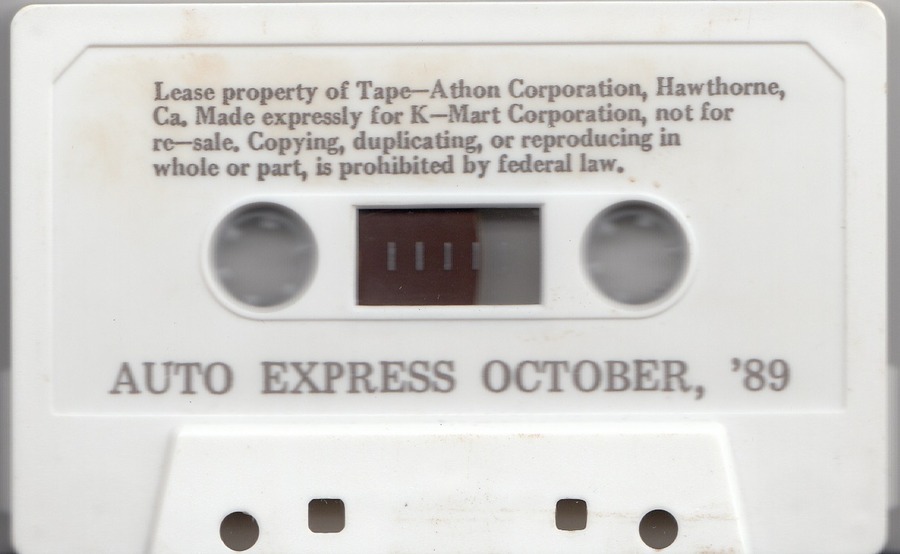
 Kmart October 1989 : Tape-A-Thon : Free Download, Borrow, and Streaming : Internet Archive
https://archive.org/details/KmartOctober1989
This is a digitized version of an in-store cassette tape that was played within a Kmart store. See the title of the file for the month and year. I worked at Kmart between 1989 and 1999 and held onto them with the hopes that they would be of use some day. Enjoy!

 Alex Karp Says There's 2 Ways to Know If You Have a Future - Business Insider
https://www.businessinsider.com/alex-karp-future-ai-neurodivergent-vocational-skills-2026-3?op=1
Palantir CEO Alex Karp says there are two groups of people who shouldn't be worried about AI advancements.
"There are basically two ways to know you have a future," Karp said during a recent interview on TBPN. "One, you have some vocational training. Or two, you're neurodivergent."
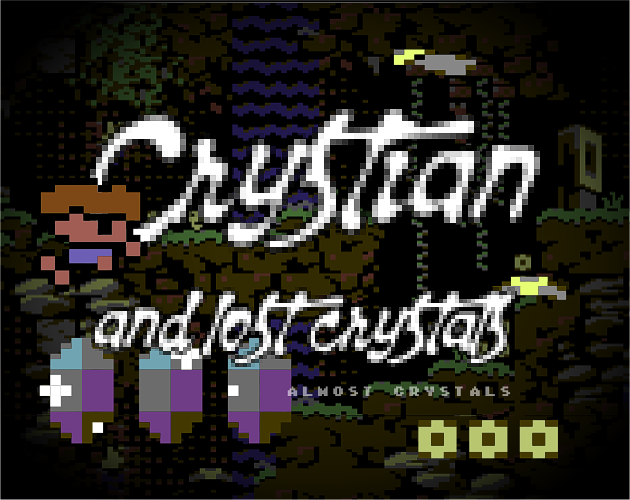
 Crystian and the Lost Crystals by ntpr
https://ntpr.itch.io/crystian-and-lost-crystals
Will Crystian remain just an ordinary boy, or will he find the strength of a hero and return for his lost almost-crystals? The adventure is just beginning...
 The Legend of Zelda Map - Free 3D Print Model - MakerWorld
https://makerworld.com/en/models/539128-the-legend-of-zelda-map#profileId-456377
A 3D map of The Legend of Zelda. I still remember unfolding this map in the first Nintendo Power and being amazed. I tried to capture as much detail as I could while designing this for a 0.4mm nozzle to keep the print time down. The 1 AMS version proved pretty challenging, but I wanted to be able to share this with as many of you as I could. The overall size without the frame comes out to about 420mm x 140mm.
 System Prompts - Claude API Docs
https://platform.claude.com/docs/en/release-notes/system-prompts
Claude's web interface (claude.ai) and mobile apps use a system prompt to provide up-to-date information, such as the current date, to Claude at the start of every conversation. The system prompt also encourages certain behaviors, such as always providing code snippets in Markdown. This prompt is periodically updated to improve Claude's responses. These system prompt updates do not apply to the Claude API. Updates between versions are bolded.

NateBJones-Projects/OB1: Open Brain — The infrastructure layer for your thinking. One database, one AI gateway, one chat channel — any AI plugs in. No middleware, no SaaS.
https://github.com/NateBJones-Projects/OB1
Open Brain — The infrastructure layer for your thinking. One database, one AI gateway, one chat channel — any AI plugs in. No middleware, no SaaS.

 55 for 55
https://makoism.com/55-for-55/
So. 12,768 days ahead. Here are fifty-five things the journey has confirmed so far.
AndrewVos/endless-toil: Hear your agent suffer through your code
https://github.com/AndrewVos/endless-toil
Hear your agent suffer through your code

 Headless everything for personal AI (Interconnected)
https://interconnected.org/home/2026/04/18/headless
It’s pretty clear that apps and services are all going to have to go headless: that is, they will have to provide access and tools for personal AI agents without any of the visual UI that us humans use today.

 The Myth of the Adult Friend Group
https://time.com/article/2026/04/14/the-myth-of-the-adult-friend-group/?utm_source=firefox-newtab-en-us
This points to a mismatch between expectation and reality. The cultural ideal of a cohesive friend group may be harder to sustain than we imagine. In practice, emotional well-being often depends on maintaining a few reliable, intimate relationships. That may help explain why many adults naturally gravitate towards one-on-one, or dyad friendships.

 I don't want a screenshot of your Claude conversation - daverupert.com
https://daverupert.com/2026/04/claude-no/?ref=sidebar
Awhile back Hidde De Vries identified a pain point around LLM-usage in standards work which leads to something I call an asymmetry of thought. In a conversation where one person is a domain expert and one person is copy-pasting ChatGPT responses, it creates an imbalance of effort in the discussion. A second-hand burdening, like Brandolini’s Law, where debunking inaccuracies and subtly-wrongs takes more effort than creating the inaccuracies. We are, in effect, taxing experts to do quality assurance on the model’s responses. When that work is unpaid I believe this is immoral… or at least it’s a breach in social etiquette.
 Adobe is Cooked
https://malejandro.com/reflections/en/adobe-is-cooked/
What do you get when you spend the last decade and a half exploiting the very same people you were supposed to empower?

 What's more efficient: Growing corn for energy or solar?
https://www.anthropocenemagazine.org/2025/04/new-study-compares-growing-corn-for-energy-to-solar-production-its-no-contest/
In fact, it would require about 31 hectares of corn ethanol to produce the same amount of energy generated by one hectare of land covered in solar panels.

 *Pro-level* travel tips
https://a.wholelottanothing.org/pro-level-travel-tips/?ref=a-whole-lotta-nothing-newsletter
A friend once said that if you’ve ever tried to meditate and failed to quiet your jumbled mind, you should take a trip instead.
 WebMCP
https://webmcp.dev/
WebMCP is an open source JavaScript library that allows any website to integrate with the Model Context Protocol. It provides a small blue widget in the bottom right corner of your page that allows users to connect to and interact with your webpage via LLM or agent.
 Silicon Valley has forgotten what normal people want | The Verge
https://www.theverge.com/tldr/915176/nft-metaverse-ai-weirdos
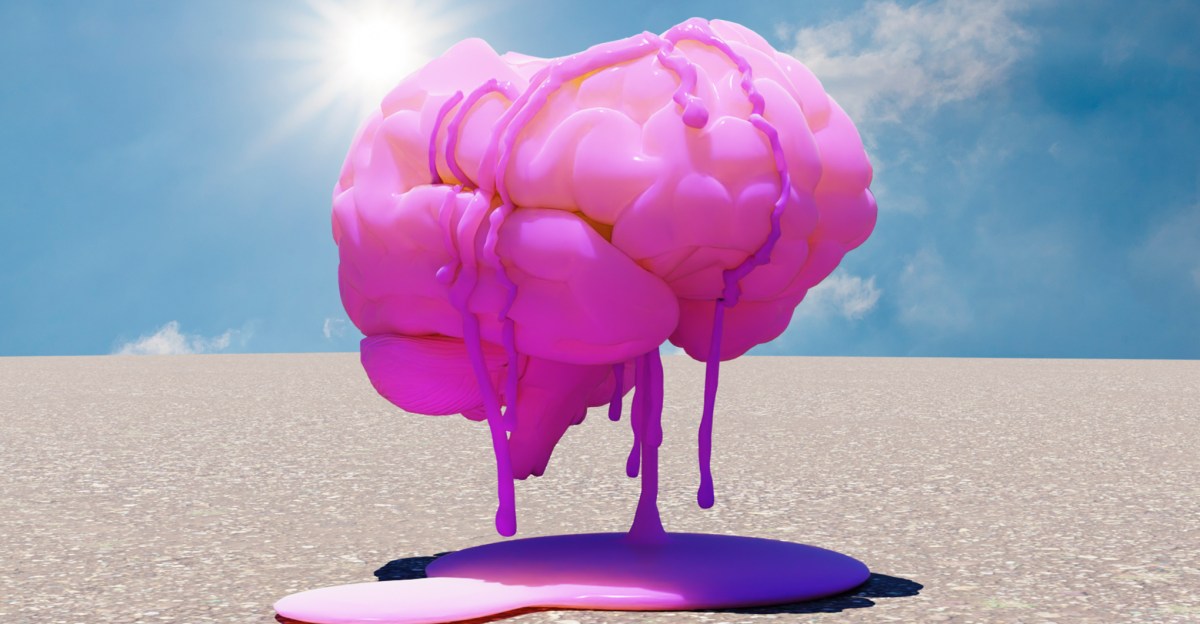
At some point, our Silicon Valley overlords forgot that in order for their vision of the future to be adopted, people had to want it. That’s why NFTs, the metaverse, and the Oculus and Vision Pro never really found their customer base. AI is, admittedly, more useful — it’s good for organizing large swaths of data, for instance. LLMs have had widespread consumer adoption, at least as long as they remain free. But there is only really one customer for LLMs that can justify the massive cash incineration process that was required to build them: the US government.
 The Future of Everything is Lies, I Guess: New Jobs
https://aphyr.com/posts/419-the-future-of-everything-is-lies-i-guess-new-jobs
As we deploy ML more broadly, there will be new kinds of work. I think much of it will take place at the boundary between human and ML systems. Incanters could specialize in prompting models. Process and statistical engineers might control errors in the systems around ML outputs and in the models themselves. A surprising number of people are now employed as model trainers, feeding their human expertise to automated systems. Meat shields may be required to take accountability when ML systems fail, and haruspices could interpret model behavior.
tobi/qmd: mini cli search engine for your docs, knowledge bases, meeting notes, whatever. Tracking current sota approaches while being all local
https://github.com/tobi/qmd
mini cli search engine for your docs, knowledge bases, meeting notes, whatever. Tracking current sota approaches while being all local
matanshavit/qrspi: QRSPI — 8-phase workflow for Claude Code: Question, Research, Structure, Plan, Implement
https://github.com/matanshavit/qrspi
Question, Research, Structure, Plan, Implement — an 8-phase workflow for Claude Code that breaks complex coding tasks into focused prompts with clear artifacts between each step.

 llm-wiki
https://gist.github.com/karpathy/442a6bf555914893e9891c11519de94f
The idea here is different. Instead of just retrieving from raw documents at query time, the LLM incrementally builds and maintains a persistent wiki — a structured, interlinked collection of markdown files that sits between you and the raw sources. When you add a new source, the LLM doesn't just index it for later retrieval. It reads it, extracts the key information, and integrates it into the existing wiki — updating entity pages, revising topic summaries, noting where new data contradicts old claims, strengthening or challenging the evolving synthesis. The knowledge is compiled once and then kept current, not re-derived on every query.
 The Hidden Flaw in Karpathy’s LLM Wiki | by Anand Lahoti | Apr, 2026 | Medium
https://foundanand.medium.com/the-hidden-flaw-in-karpathys-llm-wiki-e3a86a94b459
When you let an LLM author content into a knowledge base, and that content gets indexed alongside the original sources, you’ve just introduced unverifiable information into your source of truth. And not obviously wrong information — that would be easy to catch. I mean plausibly correct, well-structured, confident-sounding prose that happens to be a subtle interpolation of what the model thought the document said.
 (1) Andrej Karpathy on X: "LLM Knowledge BasesSomething I'm finding very useful recently: using LLMs to build personal knowledge bases for various topics of research interest. In this way, a large fraction of my recent token throughput is going less into manipulating code, and more into manipulating" / X
https://x.com/karpathy/status/2039805659525644595
Something I'm finding very useful recently: using LLMs to build personal knowledge bases for various topics of research interest. In this way, a large fraction of my recent token throughput is going less into manipulating code, and more into manipulating knowledge (stored as markdown and images). The latest LLMs are quite good at it. So:
 Mouthwords | everything changes
https://everythingchanges.us/blog/mouthwords/
You have to refuse to review the 10,000 line PR which was submitted with a six-hour deadline. You have to refuse the sloppily bot-generated contributions to your open source project. You have to refuse to edit the slide deck that gets half a dozen things wrong about the business model, and the blog post that is so generically written you lose the will to live in the first paragraph. You have to refuse to read the proposal from the person who also hasn’t read it. You have to refuse to respond to the automated Slack message that seems entirely devoid of meaning whatsoever.
Agentic slop PRs
https://blog.fsck.com/2026/03/31/slop-prs/
If any of these checks fail, do not open the PR. Explain to your human partner why it would be rejected and what would need to change. They will thank you for saving them the embarrassment.
Rules and Gates
https://blog.fsck.com/2026/04/07/rules-and-gates/
Gates are conditions that an agent can evaluate objectively to figure out if they're allowed to finish a task and move on to the next one.
 rack-mount hydroponics
https://sa.lj.am/rack-mount-hydroponics/
i started growing lettuce in a spare server cabinet. this is, for many reasons, a terrible idea. here's how i did it.
Under the hood of MDN's new frontend
https://developer.mozilla.org/en-US/blog/mdn-front-end-deep-dive/
Last year, we launched a new frontend for MDN. The most noticeable changes were adjustments to our styles; we simplified and unified the MDN design across all of our pages. In truth, the biggest changes were not reader-visible, but rather in the overhauled code that powers our frontend. This post describes what we've done, the technologies we chose, and why we did it at all.
 What do coders do after AI? - Anil Dash
https://www.anildash.com/2026/03/13/coders-after-ai/?ref=brilliantcrank.com
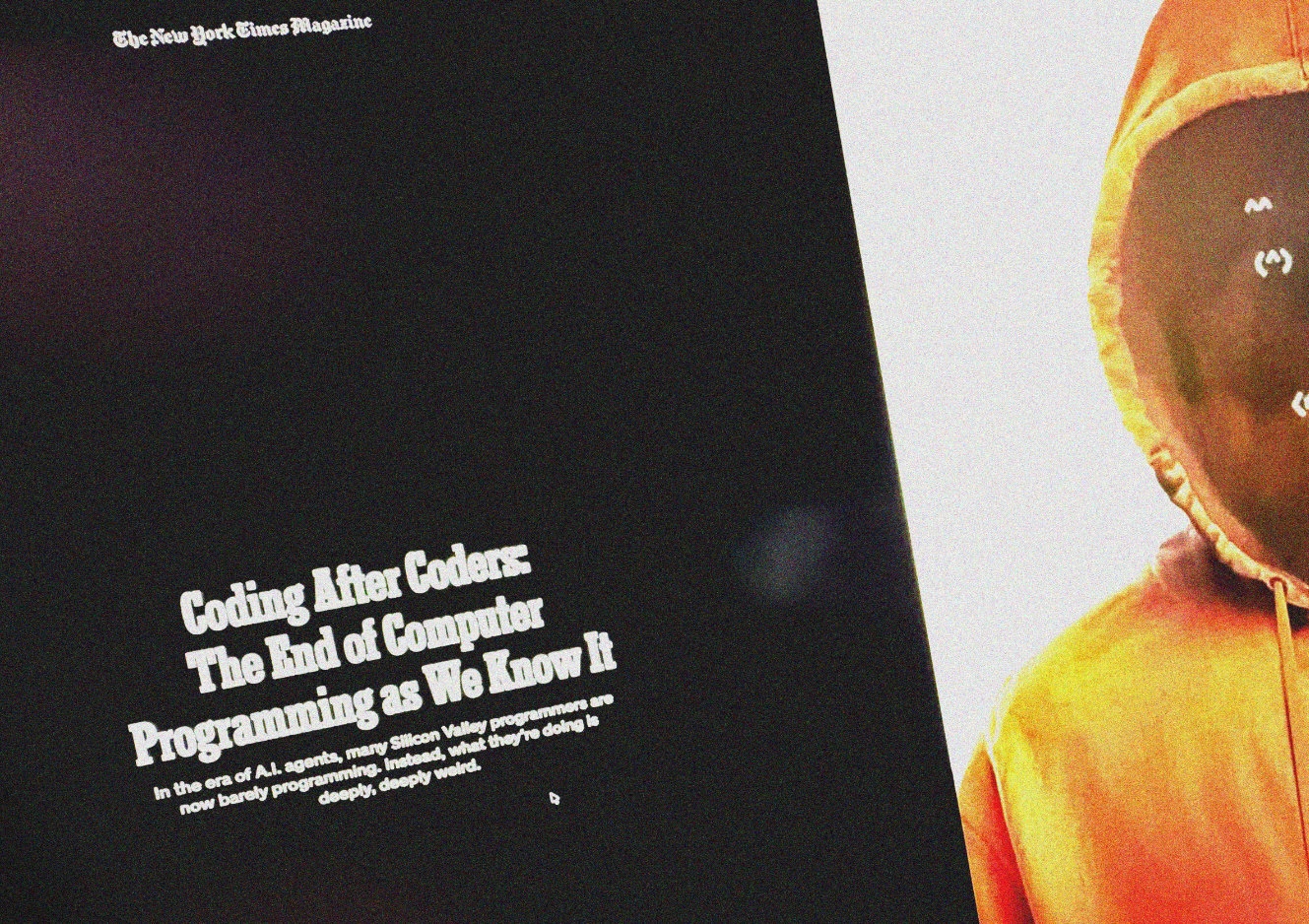
Your job changes into describing software. Now, if you're the kind of person who only ever wanted to have the end result, maybe this is a liberation. Sometimes, that's what mattered — we wanted to fast-forward to the end result, elegance be damned. But if you were one of those crafters? The people who wrote idiomatic code that made that programming language sing? There's a real grief here. It's not as serious as when we know a human language is dying out, but it's not entirely dissimilar, either.

 AI Might Be Our Best Shot At Taking Back The Open Web | Techdirt
https://www.techdirt.com/2026/03/25/ai-might-be-our-best-shot-at-taking-back-the-open-web/
The promise of the open web was colonized by internet giants. But the power of LLMs and agentic coding means we can start to take it back. We can build customized, personal software for ourselves that does what we want. We can connect with communities via open social protocols that allow us to control the relationship rather than a billionaire intermediary. This is what the Resonant Computing Manifesto was all about, and why I’ve argued ATproto is so key to that vision.
 Transfer a SIM to a new phone - Android - Pixel Phone Help
https://support.google.com/pixelphone/answer/16115951
You can transfer your physical SIM or eSIM to an eSIM in a new phone while you transfer your data from another device. Depending on your carrier, this may be automatic during the onboarding process. Y

 Blonde Redhead Cocktail Recipe | PUNCH
https://punchdrink.com/recipes/blonde-redhead/
A whisky-fied Negroni, the Blonde Redhead is two parts Italian (Carpano Antica sweet vermouth and barolo chinato) and one part Japanese (Yamazaki 12 year whisky)—just like the ’90s rock band it’s named for (a set of Italian twins and a Japanese singer-songwriter). Creator Douglas Derrick of Portland, OR replaced gin with Japanese whisky and Campari with barolo chinato to transform the classic formula into a digestif/late-evening riff. Served up in a coupe rimmed with Campari-infused orange peels, the drink is modeled after Japanese technique in which a single ice cube from its mixing glass is added to the cocktail to slowly melt with the drinker’s progression
 Endowment effect - Wikipedia
https://en.wikipedia.org/wiki/Endowment_effect
In psychology and behavioral economics, the endowment effect, also known as divestiture aversion, is the finding that people are more likely to retain an object they own than acquire that same object when they do not own it.[1][2][3][4] The endowment theory can be defined as "an application of prospect theory positing that loss aversion associated with ownership explains observed exchange asymmetries."[5]

 DuckDuckGo !Bangs
https://duckduckgo.com/bangs
Bangs are shortcuts that quickly take you to search results on other sites. For example, when you know you want to search on another site like Wikipedia or Amazon, our bangs get you there fastest. A search for !w filter bubble will take you directly to Wikipedia.

Actually, people love to work hard - Anil Dash
https://www.anildash.com/2026/04/06/people-love-to-work-hard/
It is genuinely one of the best feelings in life to be completely exhausted while sitting next to someone who’s been right beside you, shoulder to shoulder, fighting to accomplish the same goal. I’ve known that to be true whether we were launching a new company into the world, campaigning to get a candidate we believed in elected, organizing to rally people around an issue, raising funds for an important cause, or even just trying to get people together for a big event or party.
Why there are no releases? · nvim-treesitter/nvim-treesitter · Discussion #8627
https://github.com/nvim-treesitter/nvim-treesitter/discussions/8627
> So please, do go switch to something that doesn't require interacting with people.
OK.
 Why BYD’s R&D engine is terrifying Western automakers - Fast Company
https://www.fastcompany.com/91519302/byd-nail-test-why-this-54-billion-innovation-is-terrifying-western-auto-executives
The Blade Battery was born from grief. It was engineered by people who had watched their own lab burn, and who decided, with a resolve that borders on the religious, that it would never happen again.

 Password Protecting Static Site Content with WASM
https://al9000.com/rust/wasm/static-site-file-decryption/
I use static site generators for my sites. I call out to external APIs to do anything dynamic. The exception is password protection. I'd always thought that needed to be done dynamically on a site's host server. I realized with WASM that's not the case. Files can be encrypted and served statically with a WASM process providing decryption directly on the front end.
 The Hacker News tarpit
https://www.joanwestenberg.com/the-hacker-news-tarpit/?ref=westenberg-newsletter
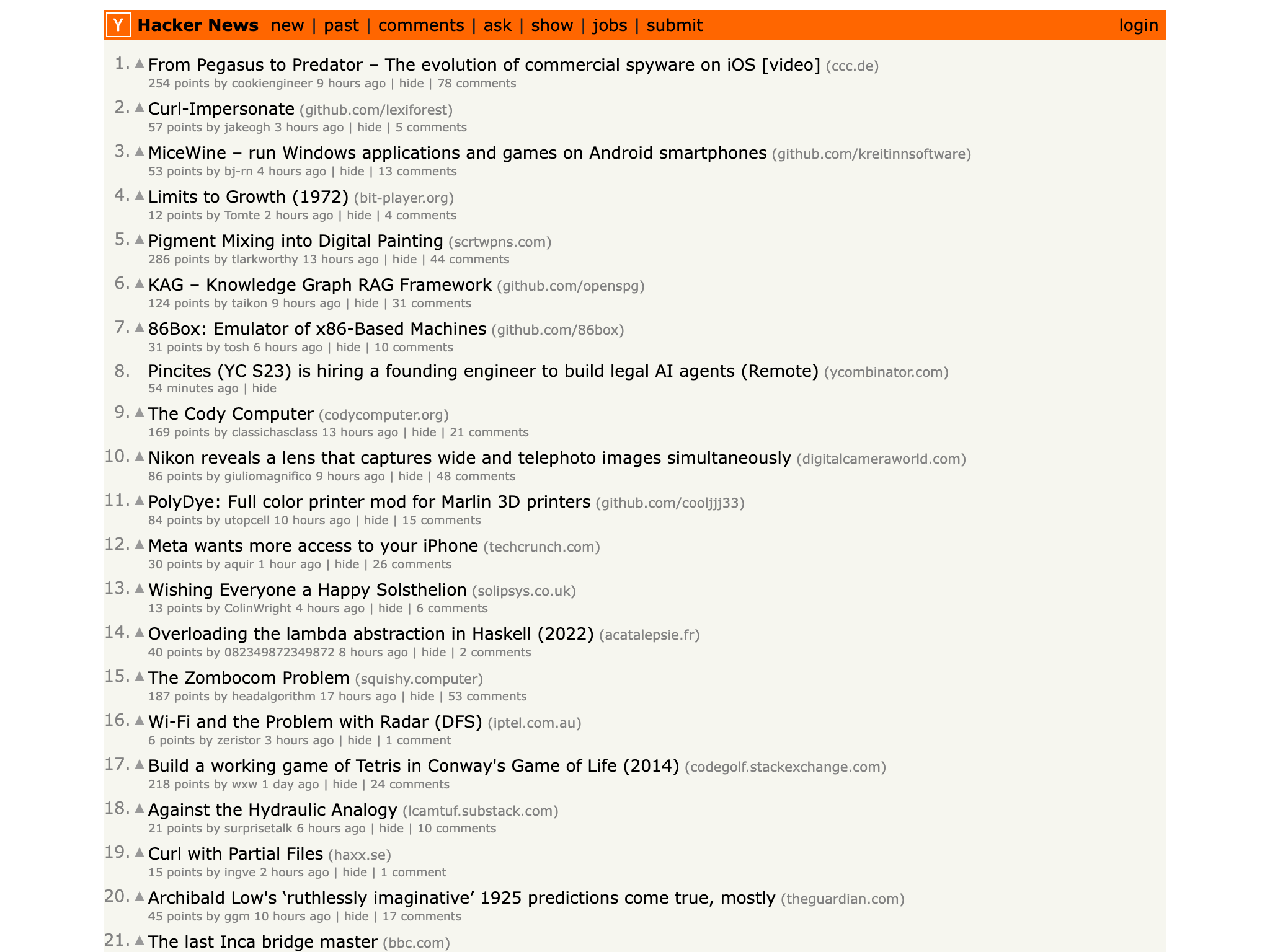
You can't build Place People Go as a feature. It's a thing that happened over time, through a specific and unrepeatable sequence of events, most of which were not planned and some of which were just luck.
 Penpot: The Design platform for Design & Code Collaboration
https://penpot.app/
Penpot is the web-based open-source design platform that bridges
the gap between designers and developers.
piersfinlayson/one-rom: The most flexible ROM replacement for retro systems - using a sub-$2 Raspberry Pi RP2350 or STM32 microcontroller.
https://github.com/piersfinlayson/one-rom
The most flexible ROM replacement for retro systems - using a sub-$2 Raspberry Pi RP2350 or STM32 microcontroller.
 500 applications, 0 callbacks
https://mailchi.mp/rawsignal/500-applications-0-callbacks?e=688b6720bf
Once you accept that the front door is pointless, you get so much time back. Yeah, you still need a gig, we get it. But what if, instead of applying all your creativity and energy to the attempt to pass some invisible set of hurdles, or to writing exactly the right tone of follow up email when an interviewer ghosts you, what if instead of all that you just abandon the front door entirely and find another way?
That other way, by the way, is human connection.
OMG stop. Don't roll your eyes. You hate networking. It's so transactional and fake. It's all small talk and you hate small talk. Yes yes yes. We hate it, too. That's not what we mean. We mean that if the Applicant Tracking System Jello isn't where the hiring managers are any more, then you should start spending time elsewhere.
 Model Context Protocol Server - Home Assistant
https://www.home-assistant.io/integrations/mcp_server/
The Model Context Protocol is an open protocol that standardizes how applications provide context to LLMs. The Model Context Protocol Server (MCP) integration enables using Home Assistant to provide context for MCP LLM Client Applications. For example, you can control your lights from Claude Desktop